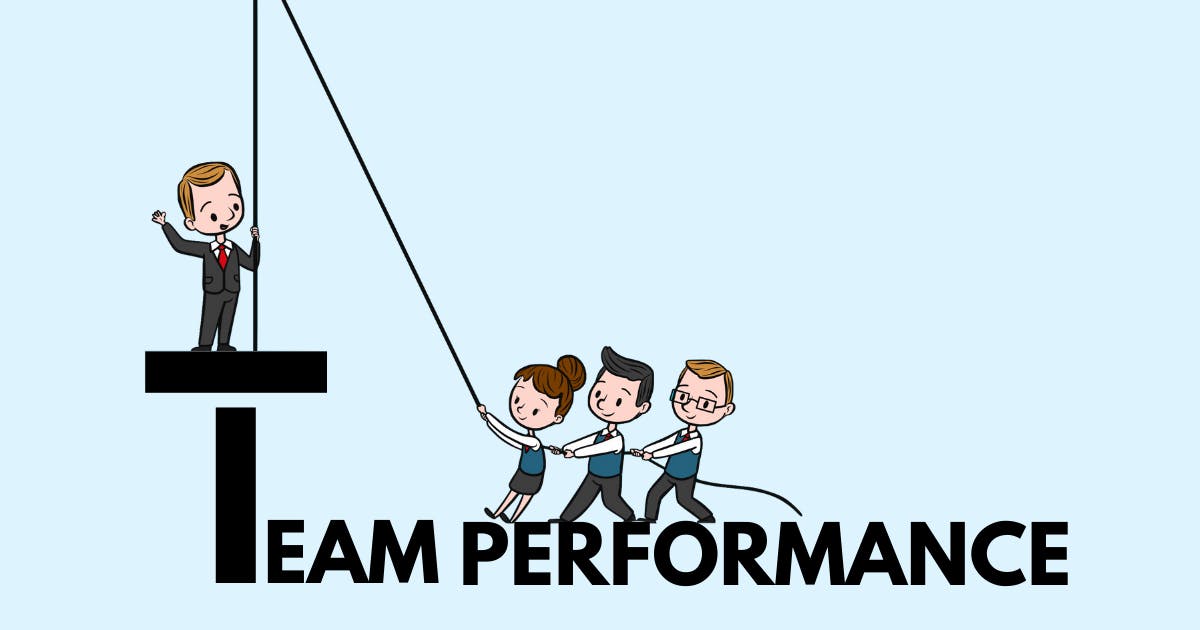
Hiring talented people with the right attitude and right skills is not enough, they also need the right environment to thrive—are leaders in the organization only focused on business deliverables or do they also invest in their team’s learning and growth? Do they encourage people to speak up and share their disagreements or do they shut down voices that differ with their own perspective? Are people in the team clear on their priorities and aligned with a long-term vision or do they react to work that shows up each day? Are mistakes and failures looked down upon leading to blame games and complaining attitude or do people in the team take accountability for their actions and focus on finding the best path forward?
A team’s performance isn’t just based on the skills, knowledge and experience of its members, how those skills are put to use matters as much. If people in the team spend all the time firefighting, they’ll never have the time to build stable products. If they’re told to play safe and avoid taking risks, they’ll never build the grit to handle challenges, navigate complexity and the resilience to tackle obstacles on the way. If they aren’t given opportunities above their comfort zone with fear of failure, they’ll never build the skills at the next level.
Leaders play a very big role in this as they shape the culture of the organization—how they communicate with their teams, what messages do they convey, how they seek alignment and what they do when things don’t work out as expected. Their behaviors and actions have a huge impact on their teams as everything they say and do carries a substantial weight—their words are taken more seriously, their actions are analyzed in great detail and their behavior sets the tone for what behaviors are acceptable and what won’t be tolerated.
People play by the rules set by their leaders and over a period of time these rules become the unspoken truth that shapes a team’s performance. High performing teams have leaders who pay close attention to this aspect—they consciously adopt habits that eliminate friction, confusion and mediocrity and replace them with harmony, clarity and excellence.
Exemplary leaders know that if they want to gain commitment and achieve the highest standards, they must be models of the behavior they expect of others.
― James M. Kouzes
If you want to elevate your team’s performance, look internally to your leadership habits—they shape not only the culture, but also the outcomes your team achieves.
Spend time solutioning, not blaming or complaining
When things go wrong at work or don’t work out as expected, what’s your first reaction? Do you blame others? Do you complain about them and try to prove their fault? Do you use sarcasm, belittling or other deprecating behaviors to express your dissatisfaction and disappointment?
Blaming and complaining makes you spend time and energy justifying the result, criticizing people or repeating concerns while not paying attention to the problem or working out a solution that will move you forward. Offloading responsibility to others can take the pressure off and make you feel good in the moment, but it also takes away your ability to drive results.
This negativity and the attitude to target others and disparage them for failures doesn’t stop with you, your team learns to use it as an excuse too—problems linger on, long debates ensue and delivery deadlines are missed as finger-pointing and blame shifting becomes the norm of the day. Team productivity and performance takes a hit as more time is spent in escalating problems than resolving them.
To elevate your team's performance,
- What problem exists?
- What did we do or not do that caused this to occur?
- What solutions have we tried?
- What worked, what didn’t work?
- Do we need a new strategy?
- Can we experiment?
- What other alternatives we haven’t considered yet?
Shifting from problem to problem-solving, from complaining to resolving and from blaming to ownership leads to better decisions, effective solutions and improves productivity of everyone involved—quick alignment, faster resolutions and less meetings saves a lot of time and energy which can be put to use in doing real work. Solutioning mindset also creates a healthy work environment as the focus is on finding the best possible solution and not proving who’s right.
If you took one-tenth the energy you put into complaining and applied it to solving the problem, you'd be surprised by how well things can work out... Complaining does not work as a strategy. We all have finite time and energy. Any time we spend whining is unlikely to help us achieve our goals. And it won't make us happier.
― Randy Pausch
If as a leader, your habit is to burden others by assigning blame, finding faults or subjecting them to criticism, you teach your team to abdicate responsibility and waste time complaining, instead of solving problems. Stop promoting a defeatist mindset. Channel your team’s energy into problem-solving instead.
Manage energy and attention by setting and reviewing priorities
How do you manage your team’s priorities—do you keep pushing more and more work onto their plates without taking anything off? Do you let them drown under the pressure of unfiltered requests from others? Do you leave them to manage their workload without providing clarity on the mission of the team and how each task fits into those goals?
When priorities are not well-defined or they keep changing often, time and energy and effort gets wasted. Ad hoc work in the form of last minute requests, urgent issues and other unplanned tasks eats into people’s time preventing them from making progress on important work commitments. Inconsequential work is done at the cost of important activities. Poor decisions are made. Time demands and conflicting requests add to further stress and anxiety.
Trying to do more does not enhance a team’s performance, it reduces their impact. They miss deadlines, quality suffers and mistakes shoot up as they try to squeeze in too much work within too less time. The disappointment of not meeting commitments and the stress of unfinished work also takes a toll on your team's health and mental well-being—people feel burnt out and exhausted which further diminishes their ability to contribute effectively.
To elevate your team’s performance, don’t just set priorities, review them often:
- Clearly define goals for the team and each team member. Agree on a common measure of success.
- Communicate team’s mission often. Make sure they understand how their role and work is important to the team.
- Give them clarity on what deserves their attention and what must be pushed aside. Empower them to say no to work that does not align with their goals.
- Review their priorities often to get them back on track when they steer off course. Remind them of the importance of staying on the path.
When leaders are involved in defining their team’s priorities, they communicate the importance of managing them. People learn to value time and how to put it to good use. They understand the need for saying no, even though it may disappoint a few people. They make time for important work instead of letting ad hoc work run their day. Prioritization builds a sense of control over the schedule, which keeps them focused and engaged.
Effective team leaders work creatively with each team member to ensure they understand the following issues: Why this task is important to the organization. Why this team task is important to them personally. Why they (their role) are important to the team. Who the other team members are and why they are important to the mission of the team.
― Pat MacMillan
Your team’s attention is an asset. Don’t let it be derailed by letting others control their schedule. Define what matters, why it matters and how to put their time and energy to good use. Review and re-prioritize often.
Encourage risk-taking by normalizing vulnerability and building trust
How do you make decisions when there’s ambiguity or uncertainty involved or when the path ahead has many unknowns and challenges? Do you reject risky opportunities and stick to the familiar? Do you ignore creative ideas and lean towards solutions that have worked before? Do you choose safety over growth?
Choosing an easy path over a bold one, sticking to the status quo and refusing to navigate the uncharted territory keeps you moving without progress. You fail to adapt to the future and its needs. Your short-term desire to avoid discomfort keeps you busy without heading in the direction which will lead to long-term growth. Avoiding risks promotes mediocrity.
You can minimize chances of failure by sticking to the known, but letting fear of failure or making mistakes prevent you from investing in growth opportunities signals need for invulnerability and perfection. Playing safe conveys the message that risk-taking behavior is not supported or encouraged. Soon, team members make safety their goal too. They stop sharing unconventional ideas, start leaning towards tried-and-tested approaches, try to hide mistakes and let go of opportunities that require taking a risk. The team's performance takes a major hit because they keep taking the easy path over hard choices.
To elevate your team’s performance, stop treating vulnerability as a weakness and start promoting risk-taking within boundaries:
- Establish clear boundaries on the kind of risks they can take on their own, risks that require your involvement and risks that are out of scope.
- Frame failures and mistakes as opportunities to learn—identify what went wrong, why did it occur and the measures that need to be put in place to prevent it from happening again.
- Devise experimentation strategies to minimize the impact of uncertainty and make more data driven decisions.
- Support making choices with long-term growth, not those that relieve short-term pain.
- Encourage speaking up, sharing disagreements and voicing differences of opinion to evaluate different perspectives before locking down on a decision.
If it’s worth it, it’s going to be hard. Growth can never be risk-free. Safety brings comfort, but it also limits growth. The most important thing when building risk-taking capacity within the team is making people feel safe to take risks without fear of reprisal—if they worry that failures will reflect badly on their competence or that they will be disparaged for making mistakes, they’ll stop taking chances or investing in activities with more potential for growth. Trust your team, show your support.
High Performance Leaders KNOW that their #1 people focus, validated by neuroscience, is ensuring that people feel safe on a deep level. Because if they don't ensure feeling safe, the drive for excellence, and creative ability, is curtailed.
― Tony Dovale
Model vulnerability as a prerequisite for doing worthwhile work, not a personal weakness. Challenge your team to embrace radical new opportunities, think creatively outside conventional wisdom and lean towards breakthrough solutions. Risk-taking appetite is built by actually taking risks, not sitting inside a comfort zone.
Delegate responsibilities beyond current skill set
How do you distribute work within the team? Do you assign it based on their knowledge and experience? Do you give them tasks they already know how to do? Do you only delegate responsibilities that match their current skill set?
Delegation not only enables you as a leader to get more done, it’s also an excellent opportunity to expand your team’s skill set. However, if you limit their scope to work they already know how to do well, they’ll never build the skills required to excel at the next level. Without the opportunity to navigate challenges, they’ll never develop creative thinking skills. Without facing obstacles, they’ll not build the resilience to continue and not give up. Without dealing with the expectations to perform at the next level, they’ll not learn how to handle stress and pressure.
Failing to delegate not only keeps you super busy with work that could have been handled by your team, it also conveys a message that you don’t trust them enough. Lack of trust, lack of opportunities and lack of support turns into
To elevate team’s performance, give them work that makes them a little uncomfortable without pushing them too far into panic zone:
- Identify work that people in your team might be well suited to perform based on their potential, not current skill set.
- When delegating, provide complete clarity on the expectations, requirements and a measurable success criteria.
- Be around to support and guide. Delegation does not imply abdication, you’re still responsible for the outcomes your team achieves.
- Whenever you decide to do something yourself, ensure it’s work that only you can do and should do. Don’t let fear of not meeting expectations or a sense of perfectionism get in the way of effective delegation.
Delegation enables you to pay attention to high leverage activities while enabling your team to step up and grow in their role. When people are given the opportunity to handle higher level responsibilities, they rarely disappoint. Knowing that you have placed your trust in them and are around to support makes them energized to put their best effort and not let you down. Delegation is both empowering and impactful. It challenges and motivates your team to do better, while leaving you with ample time to think strategically and plan for the future—a true win/win.
Leadership is not always about getting things done “right.” Leadership is about getting things done through other people. Leaders miss opportunities to play to their strengths because they haven’t figured out that great leaders work through other leaders, who work through others. Leadership is about multiplying your efforts, which automatically multiplies your results.
― Andy Stanley
You can’t scale as a leader and grow your team if delegation is not your primary strategy. Build a team that trusts you with their growth—give them challenging work that will require them to stretch, build new skills and develop courage and conviction. Delegate and empower. Don’t limit their potential.
Summary
- Leaders are role models for their teams. What they do carries much more weight than what they say. You have to be careful of the message your behaviors and actions convey to your teams because it can tremendously impact their productivity and performance.
- When you use blame and complaints to express your dissatisfaction, your team learns to use them as an excuse too. Time and energy is wasted in fingerpointing instead of finding solutions. Shift from victim mentality to being a creator—teach your team the value of problem solving.
- If you let your team be bombarded with ad hoc requests and last minute issues without helping them re-prioritize, they may try to do–it-all. But too much work ultimately takes a toll on their performance—they start missing deadlines, quality suffers and too much work leads to exhaustion. Help your team make commitments they can keep—review priorities often and teach them to say no to work that does not align with their goals.
- When risk-taking behavior is discouraged in the team, creative thinking and innovation takes a back seat. Tasks are completed, projects are delivered but the organization does not move forward. The team settles into mediocrity as no one pushes them to do more. The drive for excellence fades away. Utilize your team’s potential by choosing bold ideas over safe ones, making hard choices with long-term growth and not leaning towards tried-and-tested solutions and turning failures and mistakes into learning lessons, not a sign of incompetence or lack of talent.
- If you avoid delegating work to your team that’s outside their comfort zone, they’ll never learn to step up and embrace higher level responsibilities. Without the opportunity to expand their skill set, they’ll be stuck in their role which will soon turn into a source of frustration. Trust your team to handle next level challenges. Don’t confine them by limiting their impact.
Follow me here or on LinkedIn for more stories.
[story continues]
tags