
If you have ever worked on a serious web application, internal tools, fintech platforms, analytics dashboards, or B2B SaaS, you already know one thing. Tables are never just tables.
What starts as a simple requirement to display rows and columns quickly turns into filtering, sorting, editing, exporting, keyboard navigation, performance tuning, and accessibility concerns. At that point, building everything from scratch stops being realistic. This is where JavaScript data grids come in.
However, there is an important nuance that is often ignored in technical comparisons. Most real products do not stay purely open source forever.
You might start with a community edition, but as soon as your product grows, customers ask for advanced filtering, Excel export, complex data grouping, auditability, or guaranteed support. If your grid does not have a clear commercial path, you risk hitting a wall or rewriting core parts of your application.
In this article, I look at five JavaScript data grids that are open source at their core, but also offer a commercial upgrade path. The goal is not to promote paid licenses, but to help you choose a grid that will not block your product two or three years down the road.
All grids below are evaluated from a developer’s point of view, focusing on real usage, feature depth, documentation, community, and long-term viability.
Why Datagrids Matter (Still)
Datagrids are the backbone of data-heavy applications:
- Admin panels
- Financial dashboards
- Reporting tools
- Data management interfaces
A good grid gives you:
- Performance (virtual scrolling, large datasets)
- Usability (keyboard navigation, resizing, pinning)
- Productivity (filtering, sorting, inline editing)
- Consistency across teams and projects
A bad grid becomes a permanent source of tech debt.
Selection Criteria
I evaluated each grid based on:
- Feature depth in the free/open-source version
- Ease of setup and learning curve
- Documentation quality
- Community size and activity
- Availability of free support (GitHub, forums)
- Commercial upgrade path (if needed later)
No rankings. No winners. Just trade-offs.
1. AG Grid (Community + Enterprise)
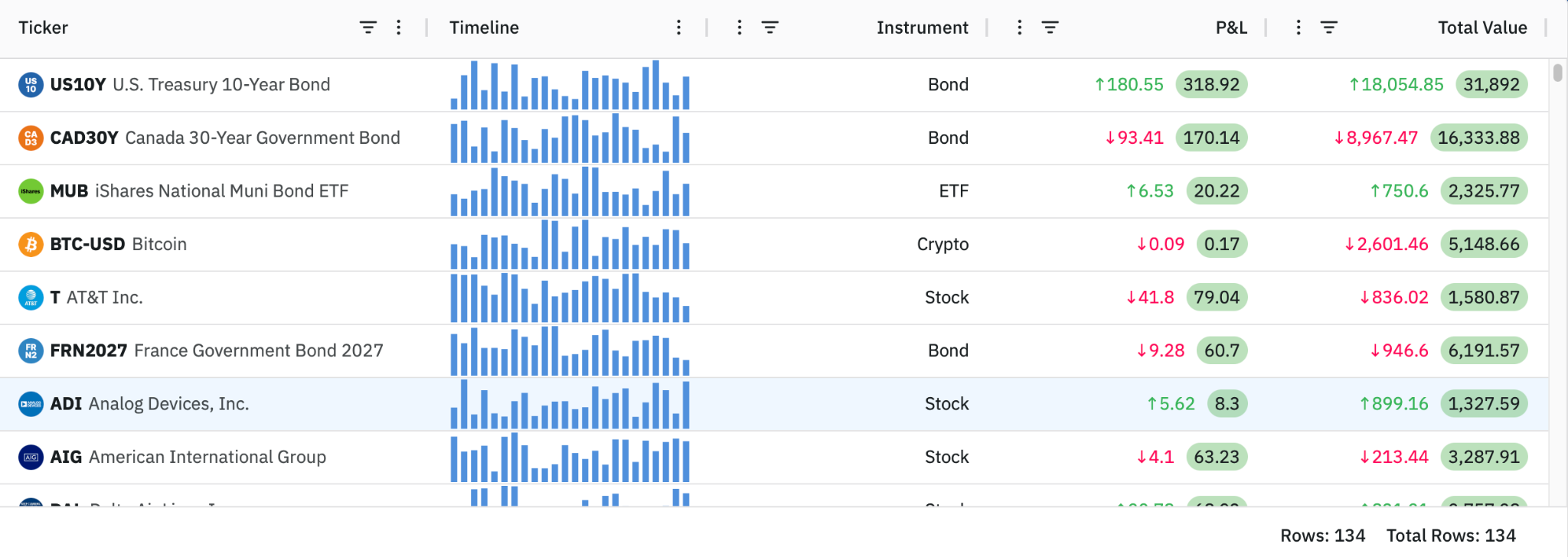
AG Grid is probably the most well-known datagrid in the JavaScript ecosystem.
It supports React, Angular, Vue, and vanilla JS, and it’s extremely feature-rich, even before you look at the enterprise tier.
What works well
- Excellent performance with large datasets
- Mature API and predictable behavior
- Strong framework integrations
- Lots of examples and demos
Even the Community version covers basics like sorting, filtering, editing, and virtualization.
Limitations to be aware of
Many advanced features are locked behind Enterprise:
- Row grouping and aggregation
- Excel export
- Advanced filters
- Integrated charts
And this matters:
AG Grid’s enterprise licensing is one of the most expensive on the market.
If you know upfront that you’ll need enterprise features, that cost should be part of your architectural decision.
Learning curve & docs
- Documentation is extensive, sometimes overwhelming
- Steep learning curve for complex use cases
- Large community, lots of Stack Overflow answers
2. Webix Grid (GPL + Commercial)
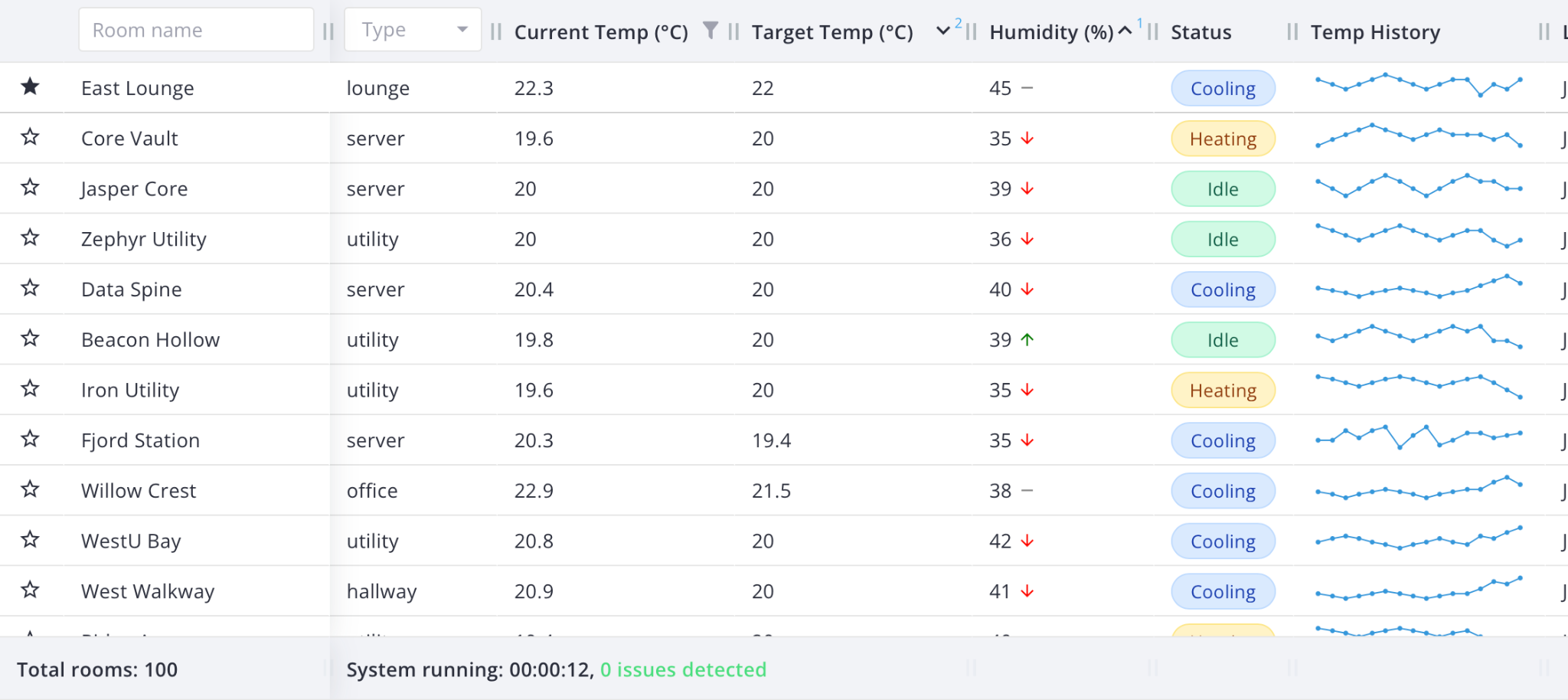
Webix Grid often flies under the radar, which is surprising.
Functionally, it sits very close to AG Grid, both target complex, data-heavy business apps. In practice, they are direct competitors.
What stands out
- Very rich feature set even in the open-source version
- Built-in editing, filtering, sorting, grouping
- Strong performance with large datasets
- Consistent API across the whole Webix UI ecosystem
Unlike many grids, Webix feels like a framework-level component, not just a table.
Open source vs commercial
The GPL version is powerful, but once you need proprietary usage or enterprise support, you move to a commercial license.
Compared to AG Grid:
- Feature overlap is surprisingly high
- Commercial licensing is significantly more affordable
- Upgrade path feels less “punitive”
Docs & community
- Clear, example-driven documentation
- Smaller community than AG Grid, but very focused
- Free support via forum is active and practical
If you’re building internal tools or B2B products and want a grid that scales with your app complexity, Webix is worth serious consideration.
3. Handsontable (Open Core, Spreadsheet-First)
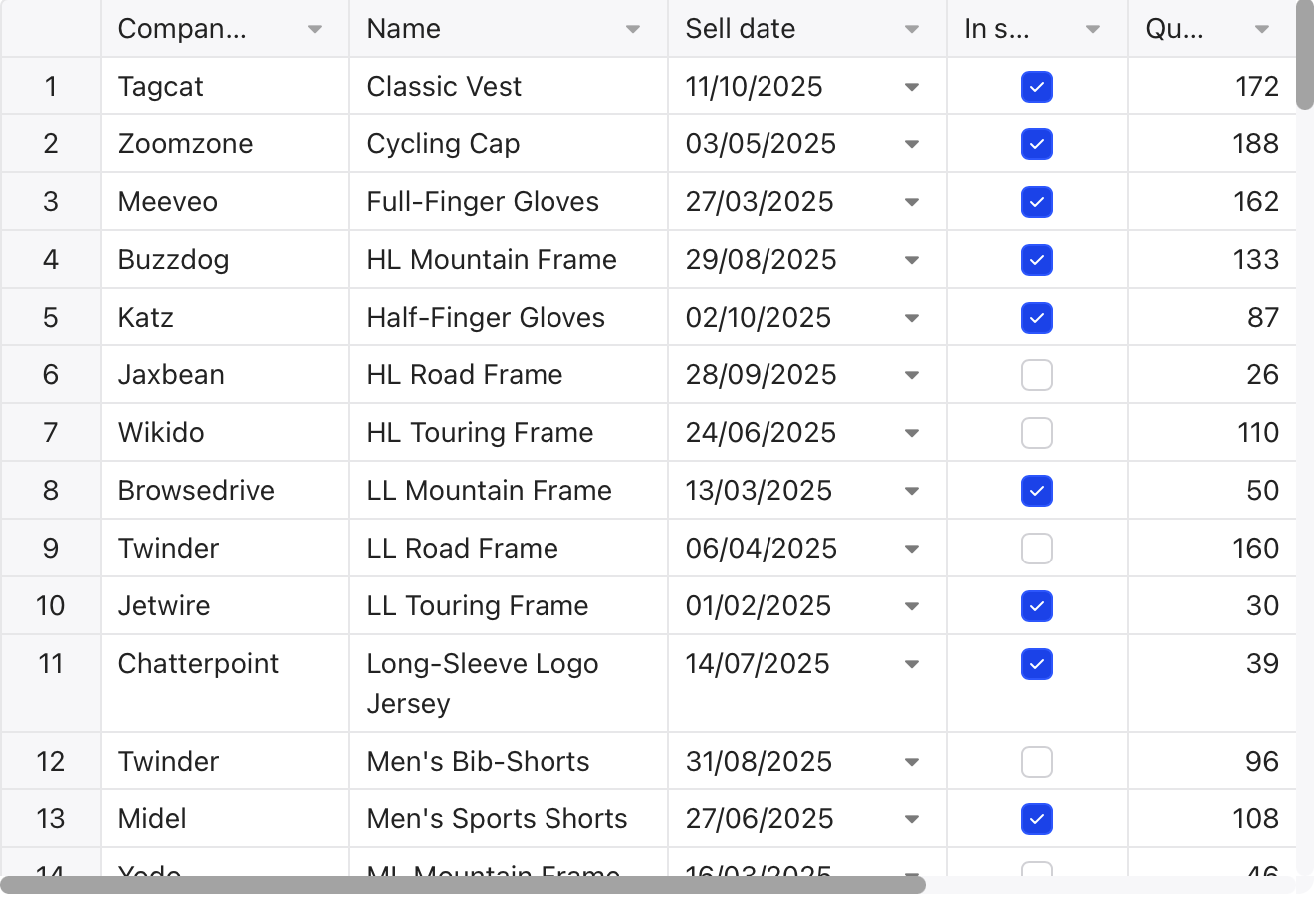
Handsontable is less of a “datagrid” and more of a spreadsheet engine for the web.
If your users expect Excel-like behavior, this one feels familiar immediately.
Strengths
- Excellent cell editing experience
- Keyboard navigation feels natural
- Formulas, cell types, validation
- Great for data-entry-heavy workflows
Trade-offs
- Free version is limited
- Many essential features require a paid license
- Styling and theming are more constrained
- Not ideal for classic “dashboard grids”
Learning curve & docs
- Clear documentation
- Spreadsheet concepts may feel heavy if you just need tables
- Smaller but very specialized community
Handsontable shines when your grid is the product, not just part of it.
4. MUI X Data Grid, Community and Pro
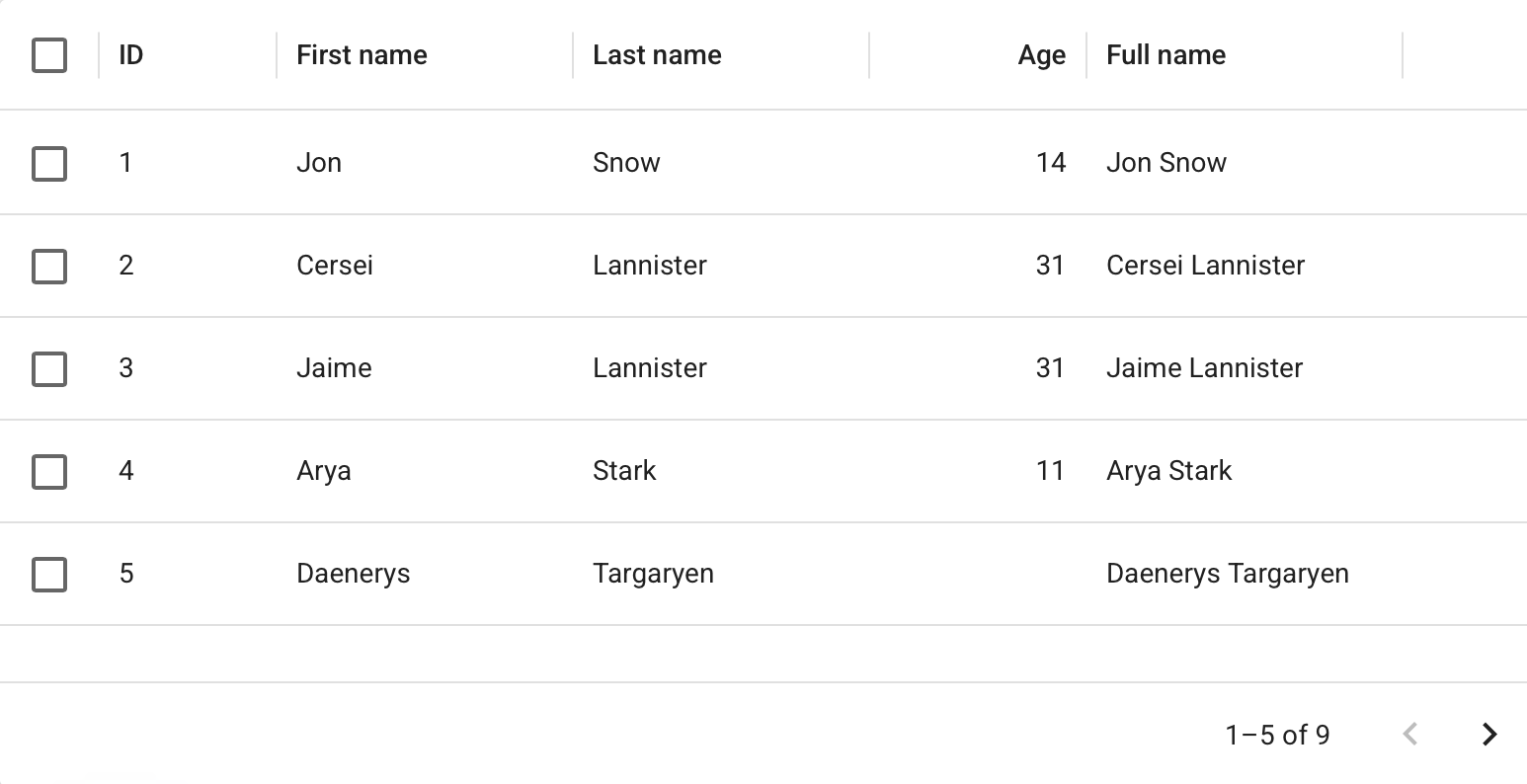
MUI X Data Grid is part of the Material UI ecosystem and feels like a natural choice if you already build applications with MUI components.
The open source Community version provides a solid baseline. You get sorting, filtering, pagination, column resizing, and a generally polished experience that looks production ready out of the box.
What works well
- Clean and predictable API for React developers
- Strong alignment with Material UI design patterns
- Good default performance for typical admin and dashboard use cases
For many internal tools and smaller products, the Community version is often enough to get started.
Commercial upgrade
The Pro and Premium versions unlock more advanced features such as row grouping, tree data, advanced filtering, data export, and improved performance for large datasets.
Pricing is more approachable than some enterprise focused grids, but the scope is clearly React only.
Trade-offs
- React exclusive, no support for other frameworks
- Customization is more constrained compared to framework agnostic grids
- Documentation is solid, but mostly focused on common scenarios
MUI X Data Grid is a strong option if your stack is already centered around React and Material UI.
5. Kendo UI Grid, Open Core and Commercial
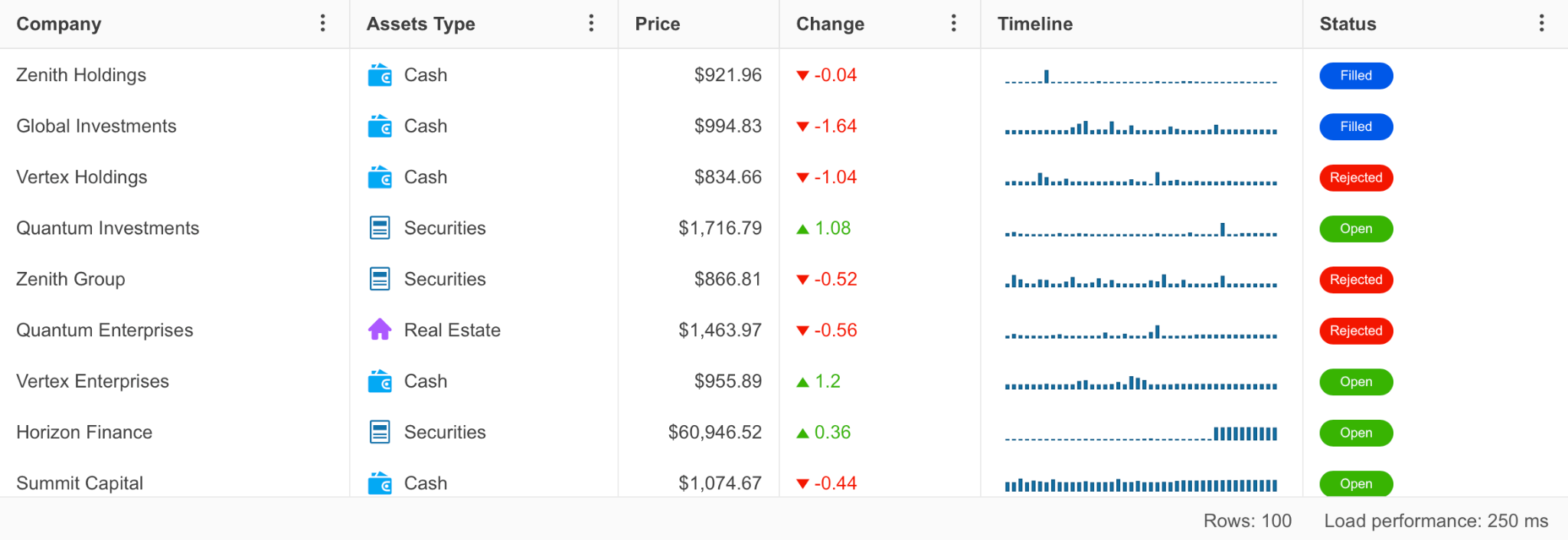
Kendo UI Grid is part of the larger Kendo UI component suite and has a long history in enterprise web development.
This grid feels less like a standalone library and more like a building block in a complete UI ecosystem.
Strengths
- Very stable and mature behavior
- Excellent and structured documentation
- Well tested handling of complex edge cases
- Support for React, Angular, Vue, and jQuery
The open core version allows you to start building without immediate licensing concerns.
Commercial side
The commercial license gives access to the full feature set, long term support, SLA options, and predictable upgrade paths. This is clearly designed for long living enterprise products.
Downsides
- Developer experience feels heavier than more modern grids
- Less flexibility in architectural decisions
- Pricing can be high if you need the full UI suite
Kendo UI Grid is best suited for enterprise teams that value stability, support, and long term guarantees over experimentation.
Final Thoughts: Think Beyond “Free”
Choosing a JavaScript data grid is rarely just a technical decision. It is a product decision.
Open source grids are an excellent starting point, but most successful applications eventually need features, guarantees, or support that go beyond community editions. Ignoring this early can lead to expensive migrations later.
AG Grid and Webix Grid stand out as the closest competitors in the full-featured business grid space, offering similar capabilities but very different licensing philosophies. Handsontable dominates spreadsheet-like use cases where data entry is the core experience. MUI X Data Grid fits naturally into React and Material UI based products, while Kendo UI Grid targets long term enterprise stability.
There is no universally correct choice. The right grid is the one that fits not only your current requirements, but also the direction your product is likely to take in the future.
[story continues]
tags