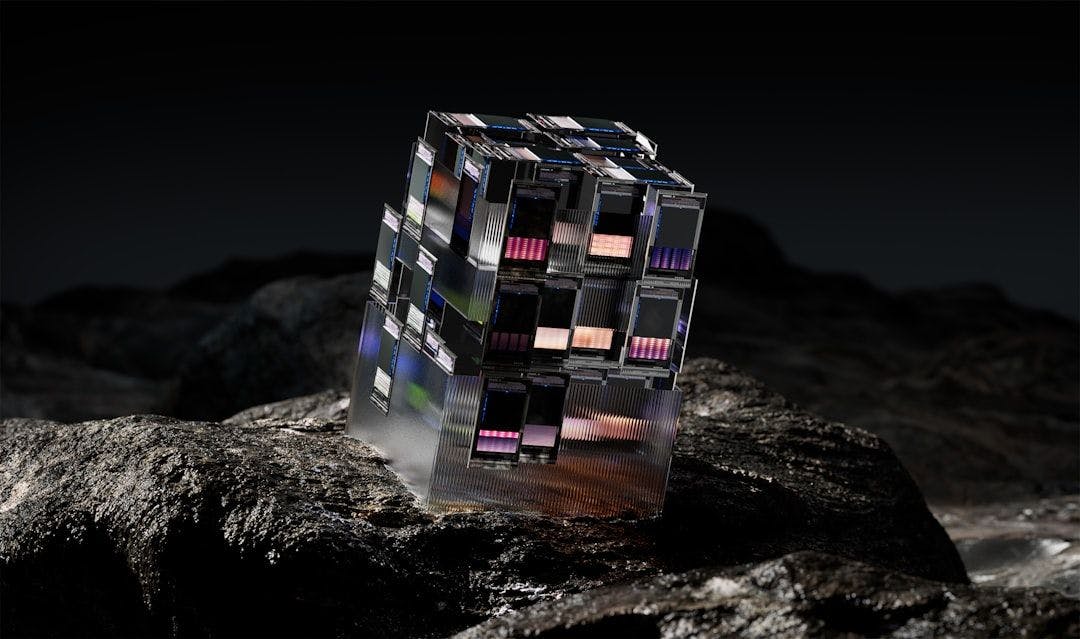
The fundamental bottleneck in digital value is the quality of randomness. Most "unique" assets rely on pseudo-random number generators (PRNGs) that are ultimately deterministic. To create true value, we need a source of entropy that is physically unique and impossible to replicate.
A Quantum AI Oracle is a technical framework that bridges three distinct domains: Quantum Electrodynamics, Neural Interpretation, and Distributed Ledgers. By using a quantum seed to drive machine intelligence, we create digital artifacts that possess the same "one-of-a-kind" properties as physical matter.
The Technical Architecture
The Oracle functions as a high-fidelity pipeline that converts unobservable physical states into immutable digital records.
1. The Entropy Source: Quantum Vacuum Fluctuations
The process begins with a request to the ANU Quantum Lab. By measuring the real-time fluctuations of a vacuum, we retrieve 16-bit entropy. This is a non-deterministic physical event. Unlike a software-based random function, this value is a "slice of time" from the universe that can never be reconstructed.
2. The Neural Interpreter: Gemini 2.5 Flash
Raw numerical entropy like 566300 is high-information but low-utility. The Oracle uses Gemini 2.5 Flash to interpret this signal. The model acts as a translation layer, turning the "quantum energy" of the seed into a descriptive cosmic narrative. This narrative is then materialized into a 1024x1024 high-resolution artifact via the Flux model on Pollinations.
3. The Immutable Record: Avalanche Fuji (EIP-1559)
The final artifact is minted as an ERC-721 token on the Avalanche Fuji Testnet. To ensure the asset is permanent, the script utilizes an EIP-1559 transaction type, dynamically calculating base fees and priority tips to ensure the transaction is confirmed on the ledger.
The Oracle Logic (Python Implementation)
The Python controller manages the handoff between the Quantum API and the Web3 provider. A key technical feature is the Gas Estimation safety check: before spending any gas, the script simulates the transaction to ensure the contract logic (and ownership permissions) will accept the mint.
def mint_nft(image_url):
    # Dynamic Fee Data for Avalanche Fuji
    latest_block = w3.eth.get_block('latest')
    base_fee = latest_block['baseFeePerGas']
    max_fee = base_fee + w3.to_wei(2, 'gwei')

    # Prepare data for gas estimation
    mint_call = contract.functions.safeMint(WALLET_ADDRESS, image_url)

    # Simulating the call before committing to the chain
    gas_estimate = mint_call.estimate_gas({'from': WALLET_ADDRESS})

    # Build EIP-1559 Transaction
    tx = mint_call.build_transaction({
        'chainId': 43113,
        'maxFeePerGas': max_fee,
        'maxPriorityFeePerGas': w3.to_wei(2, 'gwei'),
        'gas': int(gas_estimate * 1.2), # 20% buffer for network volatility
        'nonce': w3.eth.get_transaction_count(WALLET_ADDRESS),
    })
Why This Matters: True Scarcity in Web3
While applications like Web3 gaming—where items can have "Quantum DNA"—are an obvious use case, the broader significance is about Value.
In an era of infinite digital reproducibility, the only way to create lasting value is to anchor digital assets to something that cannot be reproduced. By seeding an AI with quantum entropy, we create a deterministic bridge where the machine's creative output is tied to a unique subatomic event.
A seed can never be repeated. That is the point of ownership.
Live Proof of Concept
The Oracle is currently operational. You can inspect the technical metadata of the first successful "Oracle" manifestation on the Avalanche ledger:
🔗 Live Manifestation: Quantum AI Oracle #0
Explore the Source
The full integration code, including the Solidity contract and Python controller, is available for developers looking to build true scarcity into their protocols.
📂 GitHub: AI-Quantum-Blockchain-Oracle
My Press Page:
https://www.damiangriggs.com/press-page-for-media
[story continues]
tags