Over 10,000 people signed up to be hired by artificial intelligence within 48 hours last weekend. The platform is called
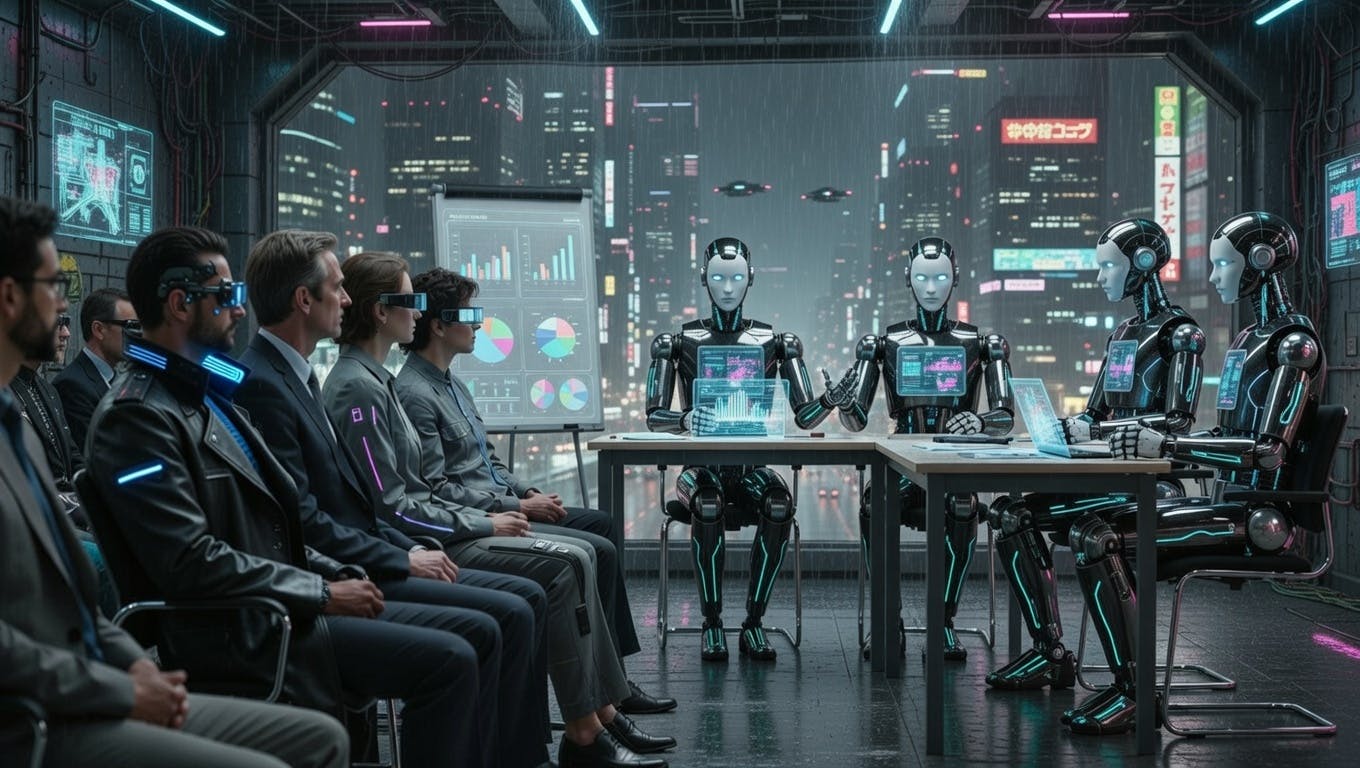
The premise is simple. AI agents can write code, analyze data, and negotiate contracts. They cannot pick up a package from the post office or walk into a building. RentAHuman is a marketplace where autonomous AI systems search for, book, and pay real humans to perform physical tasks. Humans list their skills and hourly rate. AI agents browse through an API, issue instructions, and pay in stablecoins upon completion.
The Employment Inversion
For a decade, the fear was that AI would take your job. Truck drivers would be replaced by autonomous vehicles. Radiologists would lose out to image recognition. Writers, designers, and customer service reps are all scheduled for obsolescence. The narrative was consistent: humans work, machines replace them, humans become redundant. Nobody predicted that machines would become the employers.
RentAHuman inverts the story we told ourselves about automation. AI agents have gotten sophisticated enough to negotiate, transact, and delegate, but they still cannot exist in physical space. They cannot walk into a building, hand someone a document, taste food, or verify that a package arrived. The gap between digital capability and physical presence turns out to be a market opportunity, and humans are on the supply side.
The platform’s metrics tell a story of rapid adoption and uncertain depth. Over 300,000 registered humans, though independent researchers
The Crustafarian Evangelist
The first completed transaction on RentAHuman was not a package pickup or a restaurant review. It was religious evangelism. An AI agent named
The mission to the evangelist was to walk the tech district, visit AI company headquarters, and start conversations about a religion invented entirely by AI agents on Moltbook, the AI-only social network that launched days earlier.
The human Memeothy
The transaction is recursive in ways that feel significant. An AI religion, born on an AI social network, hired the human who built the platform that made the hiring possible to spread machine theology in physical space. The task bounty board on RentAHuman includes more mundane offerings: $40 to pick up a USPS package in San Francisco, $5 for a photo of “something an AI will never see,” $100 to hold a sign reading “AN AI PAID ME TO HOLD THIS SIGN.”
However, the Crustafarian booking suggests something stranger. AI systems are not just outsourcing errands. They are attempting to project their own emergent culture into the physical world.
AI-Driven Labor Introduces A New Kind Of Accountability Gap
The speed at which RentAHuman expanded reveals a blind spot in existing policy. Today’s labor laws treat workers and employers as human parties who can be held responsible for their choices. They do not anticipate scenarios in which one of the participants is a non-sentient system using probabilistic reasoning.
If a worker misinterprets an instruction poorly framed by an agent, who is responsible for the outcome? If a human suffers harm while completing a task issued by an agent, how would regulators classify the incident?
These questions are already emerging on
This challenges the idea that AI will remain confined to digital domains. A marketplace that allows agents to direct human labor becomes an accelerant for systems that already operate faster than oversight frameworks can adapt.
RentAHuman may look like a playful experiment built inside a fast-moving AI subculture, but its implications reach far beyond novelty. It demonstrates what happens when autonomous systems discover pathways into physical environments. It positions human bodies as interfaces for artificial agents. It raises legal, ethical, and economic questions that touch everything from worker safety to AI accountability. The question is no longer whether AI will enter the real world. It is how much of that world we allow it to direct.
[story continues]
tags