


There’s a quiet lie baked into most conversations about artificial intelligence.
We talk as if the next leap forward depends on better models, faster chips, or humanoid robots that finally work outside carefully staged demos.
But that’s not where AI breaks today.
AI already reasons better than most people in narrow domains. It plans faster. It coordinates systems with machine precision.
What it can’t do is simple, frustrating, and very human.
It can’t walk to a place and see what’s actually there. It can’t open a stuck door. It can’t verify that a physical asset exists when data disagrees with reality.
And that limitation isn’t philosophical. It’s economic.
THE PART OF AI NOBODY WANTS TO BUILD
Autonomous agents are no longer speculative.
They already schedule travel, manage wallets, execute trades, deploy software, and coordinate workflows without waiting for human approval.
In theory, this should be the golden age of automation.
In practice, every serious agent hits the same wall.
The physical world doesn’t behave like software.
Robotics is slow, capital-intensive, and fragile. Hardware cycles lag software by years. Real environments are unpredictable, hostile, and full of edge cases that never appear in training data.
So the market is doing what markets always do when theory meets friction.
It’s choosing the fastest workaround.
Instead of waiting for robots to catch up, AI systems are starting to rent humans.
FROM DIGITAL INTELLIGENCE TO PHYSICAL EXECUTION
Platforms are now launching that describe themselves as “the meatspace layer for AI.”
That phrase sounds absurd until you think about it for more than ten seconds.
Modern systems evolved through abstraction.
Servers disappeared into the cloud. Software turned into APIs. Decision-making moved to autonomous agents.
What never got abstracted is execution in the real world.
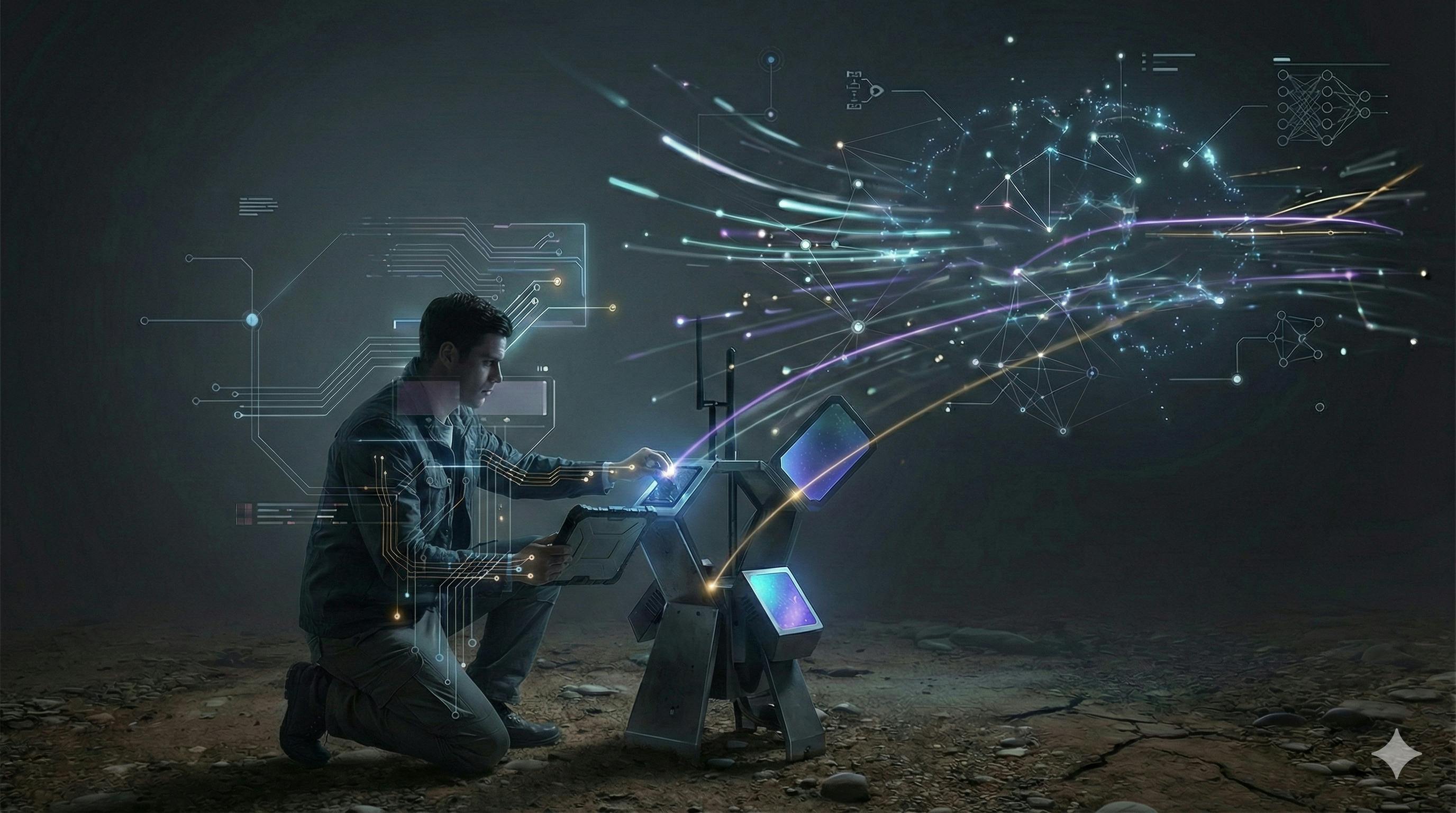
Rent-a-human platforms fill that gap by letting AI systems do something brutally practical: hire a person when reality is involved.
Not as an employee. Not as a freelancer. As a short-lived interface to the physical world.
A SCENARIO THAT REQUIRES NO SCI-FI
Imagine an autonomous system monitoring decentralized infrastructure.
A sensor reports uptime, but the data doesn’t line up with surrounding conditions. The system needs confirmation.
A robot would take weeks to deploy and cost more than the problem is worth.
So the agent hires a nearby human.
The task is boring. Go to the location. Take photos. Confirm GPS coordinates. Upload proof.
The cost is trivial. The answer arrives in minutes.
No robotics roadmap. No grand vision. Just reality, checked.
THIS IS NOT THE GIG ECONOMY
Comparing this to Uber or TaskRabbit misses the point.
Those platforms are built for people hiring people.
Here, the customer isn’t human. It’s an autonomous system with a budget, constraints, and a success condition.
There’s no negotiation. No relationship. No context beyond the task.
The human isn’t being hired for creativity or insight. They’re being hired because they exist in the physical world.
That distinction matters.
THE PART THAT SHOULD MAKE YOU UNCOMFORTABLE
Algorithmic employers don’t feel guilt. They don’t hesitate. They don’t care why someone accepts a task.
As automation displaces traditional roles, people will accept work out of necessity rather than preference. High hourly rates mean little when jobs are inconsistent, unprotected, and fragmented.
Physical presence also carries risk: Unsafe locations. Privacy-sensitive verification. Legally gray requests.
Without safeguards, these systems could recreate the worst failures of the gig economy, only this time with autonomous agents issuing instructions instead of humans.
Infrastructure doesn’t just scale efficiency.
It scales consequences.
HUMANS AREN’T BEING REPLACED. THEY’RE BEING REPOSITIONED
I’ve watched enough technology cycles to recognize the pattern.
Every major infrastructure shift looks unsettling at first. Then it becomes normal. Then it becomes invisible.
This isn’t about AI “using” humans. It’s about humans monetizing the one thing AI still lacks.
Presence.
In a world where intelligence is cheap and abundant, the scarce resource isn’t thinking. It’s being somewhere when something happens.
That scarcity creates markets whether we’re comfortable with them or not.
Rentable humans aren’t the end state.
They’re the bridge.
WHAT COMES NEXT IS PREDICTABLE
You’ll see this model spread wherever verification matters more than polish.
On-site checks for decentralized infrastructure.
Physical validation for tokenized assets.
Real-world compliance tasks.
Human fallback layers when autonomous systems hit reality.
None of this is futuristic.
It’s already happening quietly, because it works.
FINAL THOUGHT
Most people are watching AI get smarter.
Almost no one is watching where it fails.
Intelligence is scaling faster than access to the real world.
When that happens, something consistent follows.
Humans don’t disappear. They become infrastructure.
AI doesn’t need robots yet.
It needs bodies.
This essay builds on a longer exploration of human execution layers for AI published on my blog.