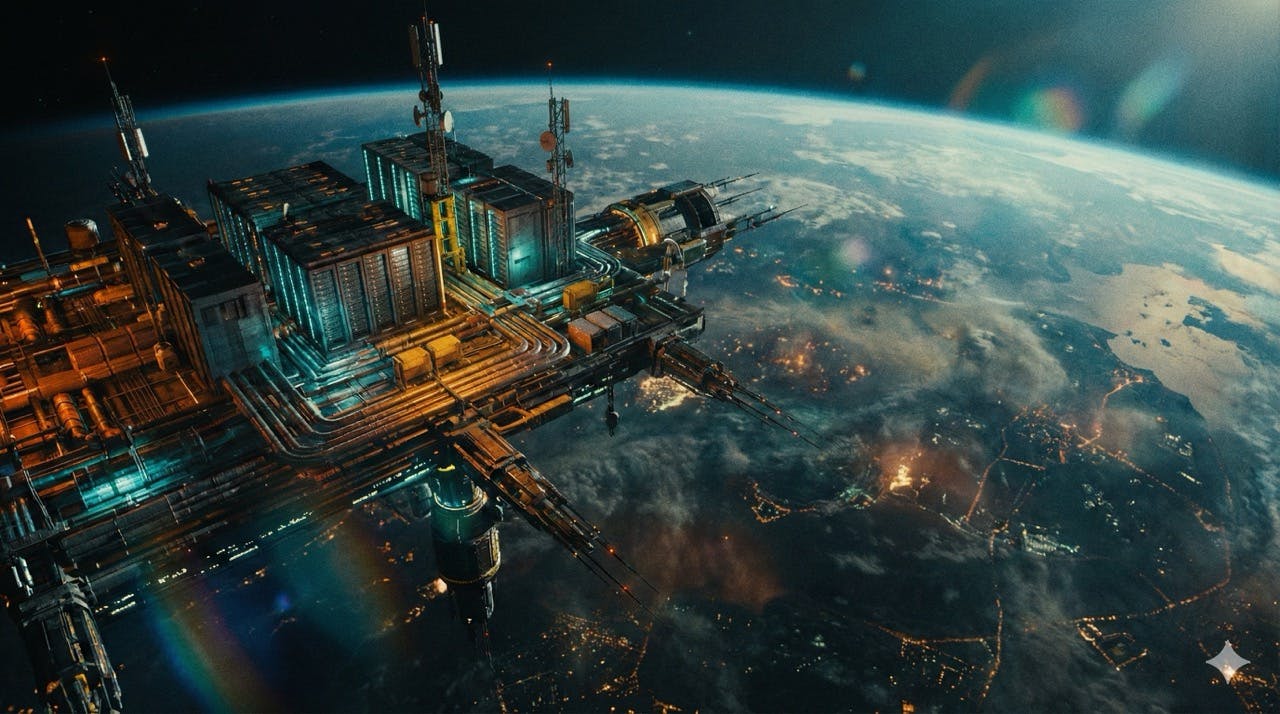
The Thermodynamic Ceiling
The accelerating AI revolution, pushing computational demand beyond Moore's Law into the "AI Supercycle," is straining terrestrial infrastructure. Hyperscale data centers, once symbols of progress, are now viewed as "thermodynamic parasites" due to their unsustainable consumption of gigawatt-level power and millions of gallons of potable water, issues the current grid and aquifers cannot support.
By 2025, the AI industry's energy crisis became the key technological constraint. Training and interference for massive LLMs demands energy comparable to small countries, overloading the terrestrial "cloud." Transmission line saturation delays new data centers in Northern Virginia for years, while Ireland and Singapore have imposed moratoriums, effectively halting digital expansion.
The solution, emerging from a convergence of rapidly decreasing launch costs and rising energy prices, is a radical inversion of the status quo: if the cloud cannot grow on Earth, it must migrate to the only environment where energy is limitless, cooling is passive, and land is free. The industry is looking up.
This report analyzes the new Orbital Compute sector, focusing on the $1.25 trillion February 2026 merger of SpaceX and xAI and mapping challengers like Starcloud, Lonestar, and K2 Space. We examine the engineering difficulties of "running hot" in a vacuum, radiative cooling physics, the economic challenge of launching depreciating silicon ("iPhone problem"). Please stay to the end for the highlights from the most recent interview with Elon Musk where he talks about the benefits and challenges of running a space datacenter.
What follows is not merely a market analysis; it could well be a blueprint of the next industrial revolution, where the primary export of Low Earth Orbit (LEO) ceases to be communications and becomes intelligence itself.
Part I: The Titan’s Move – The SpaceX & xAI Singularity
The history of the commercial space industry will likely be bifurcated into "Pre-Merger" and "Post-Merger" eras. On February 2, 2026, the speculative era of space data centers ended, and the industrial era began.
1.1 The $1.25 Trillion Vertical Integration
The announcement that SpaceX acquired xAI 1 did not just create a corporate behemoth; it validated a technological architecture that had been dismissed as science fiction only months prior. The merger, valuing the combined entity at $1.25 trillion, represents the ultimate vertical integration of Energy, Transport, and Application.
To understand the magnitude of this shift, one must analyze the symbiotic inefficiencies that existed prior to the deal. SpaceX was a logistics company (Starship) and a telecommunications utility (Starlink) searching for a customer massive enough to utilize the immense lift capacity of its next-generation rockets. xAI was a software company facing a terrestrial energy wall, unable to secure the gigawatts of power needed to train Grok 4 and beyond without waiting years for grid upgrades.
The merger closes the loop. SpaceX is no longer just the "trucking company" delivering other people's satellites; it is now the primary customer of its own infrastructure.
- The Launch Subsidy: By internalizing xAI, SpaceX can deploy orbital data centers at the marginal cost of a Starship launch (fuel and refurbishment) rather than the market price. This creates an insurmountable economic moat against competitors like Google, who must pay retail rates for launch capacity.
- The Anchor Tenant: A data center is a capital-intensive asset that requires high utilization to be profitable. xAI provides a guaranteed, insatiable workload (training and inference for Grok) that ensures the orbital clusters never sit idle.3
- The Network Effect: The Starlink constellation, already consisting of over 10,000 satellites, provides the optical backhaul necessary to move petabytes of training data and inference results between orbit and Earth.4
1.2 The "Million Satellite" Vision and the Kardashev Step
Regulatory filings and public statements surrounding the merger have unveiled an ambition that borders on the terraforming of orbital space. Elon Musk has outlined a roadmap to deploy a constellation of up to one million satellites dedicated to AI compute.5
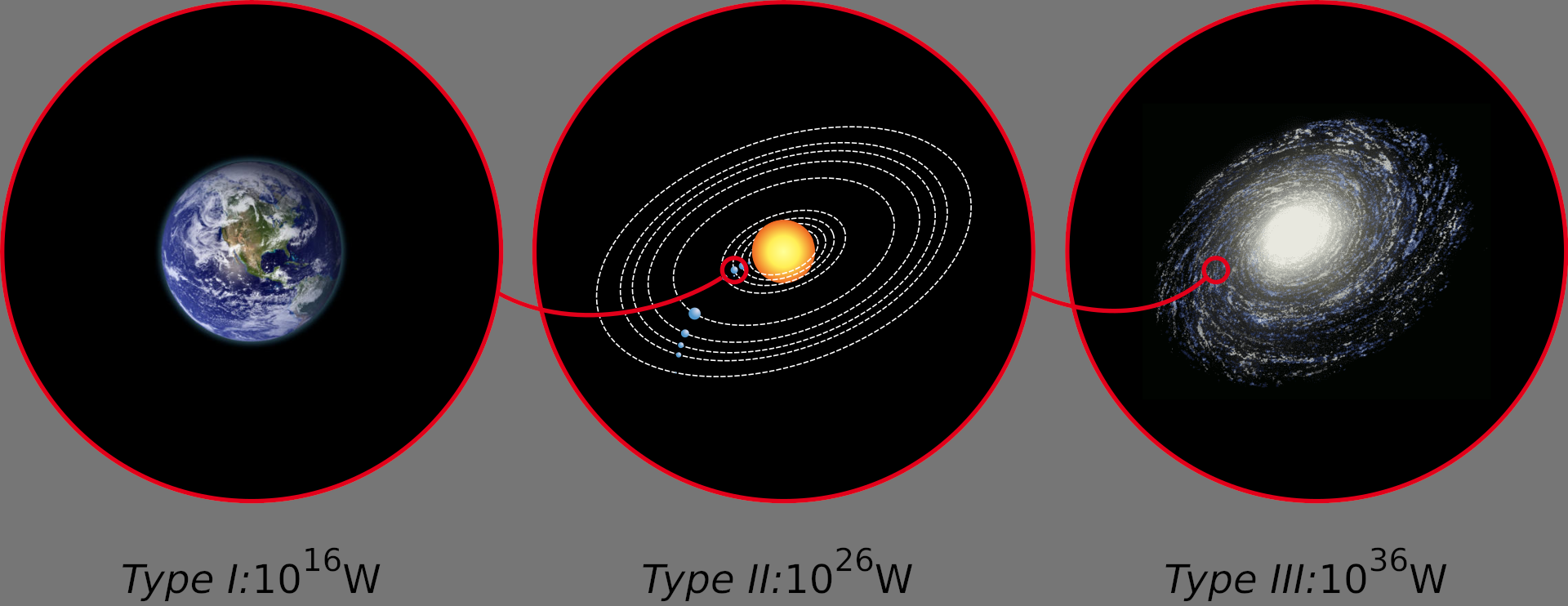
This proposal is effectively a "Kardashev Type I" engineering project—an attempt to harness a significant fraction of the solar energy falling on Earth’s orbital shell for computational work.
- Scale: For context, as of 2024, there were fewer than 10,000 active satellites in orbit. A million-satellite constellation would require a launch cadence of unheard-of frequency.
- Starship as the Enabler: This vision is physically impossible without the Starship launch vehicle. The Falcon 9, capable of lifting ~18 tons to LEO, is insufficient for the mass of shielded, liquid-cooled data centers. Starship, with a design goal of 150+ tons to orbit and rapid reusability, is the only vehicle capable of lifting the millions of tons of hardware required.7
- The Timeline: While the "million satellite" figure is a long-term goal (likely 2040s), the immediate roadmap involves the deployment of specialized clusters—"Constellations of Compute"—starting as early as 2027-2028.7
1.3 The Economics of Ascent: The $200/kg Threshold
The entire business model of orbital computing rests on a single variable: Launch Cost per Kilogram.
Deep research into the economic modeling of this sector reveals a specific "crossover point" where space becomes cheaper than Earth.
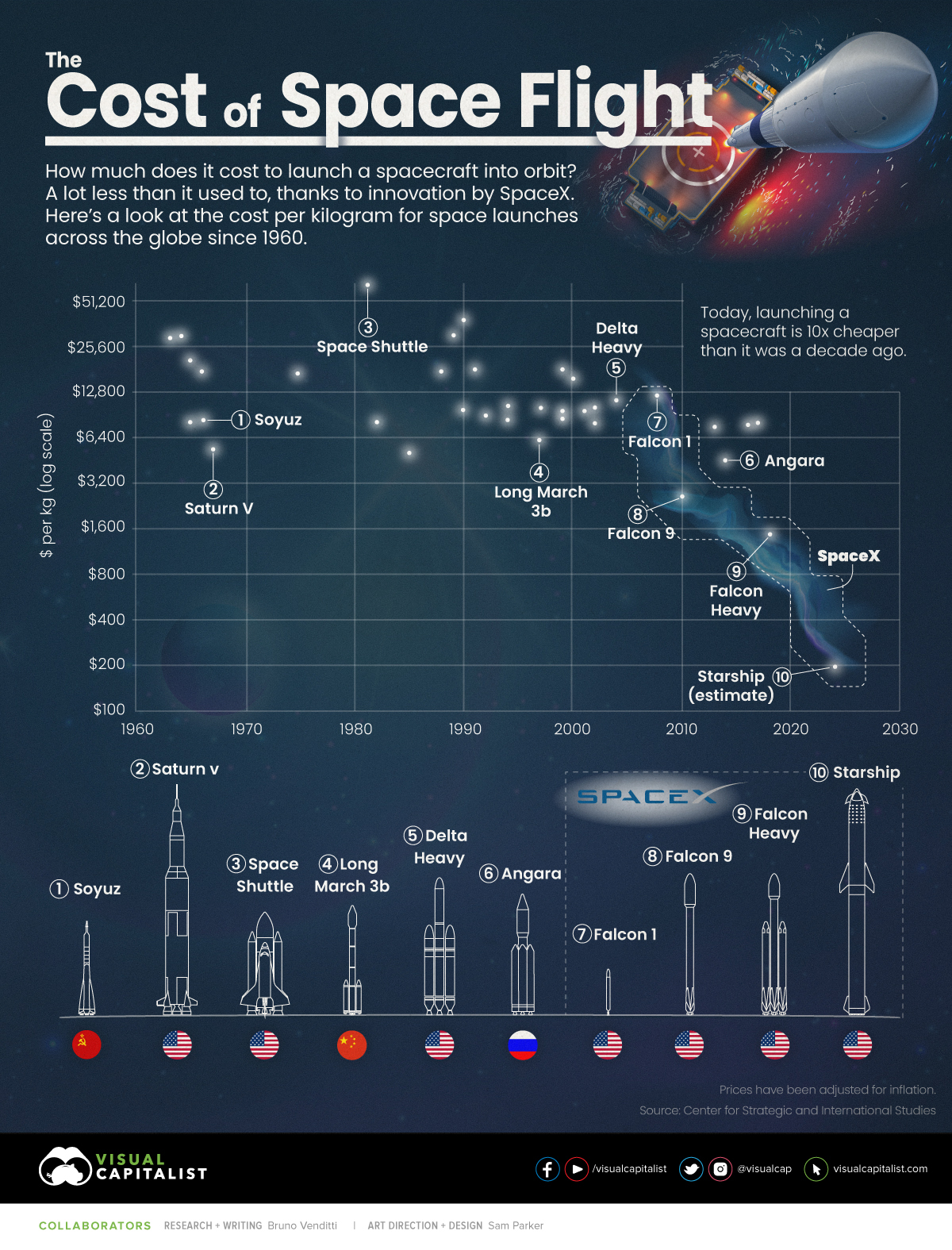
Table 1: The Economic Crossover Analysis
|
Cost Factor |
Terrestrial Hyperscale Data Center |
Orbital Data Center (SpaceX/xAI Model) |
|---|---|---|
|
Capital Expenditure (Capex) |
Moderate (Buildings, Cooling, Grid Connection) |
Extreme (Launch, Satellite Bus, Rad-Hardening) |
|
Operating Expenditure (Opex) |
High (Electricity @ $0.05-$0.15/kWh, Water, Staff) |
Near Zero (Free Solar, Passive Cooling, few Staff) |
|
Energy Source |
Grid (Coal/Gas/Renewable Mix) |
Direct Solar (AM0 Spectrum) |
|
Cooling Mechanism |
Chillers/Evaporative (Energy/Water Intensive) |
Radiative (Passive, Infinite Heat Sink) |
|
Lifespan |
10-15 Years (Hardware Refreshed) |
5-7 Years (Hardware Burned Up) |
The Break-Even Formula: Researchers at Google and financial analysts have modeled that if launch costs fall to approximately $200/kg, the Total Cost of Ownership (TCO) for an orbital data center over a 5-year period becomes competitive with a terrestrial facility.1
- Current Reality: Falcon 9 retail costs are ~$2,700/kg.
- Starship Promise: Musk and industry analysts project Starship could drive costs down to $200/kg by 2027 and potentially $100/kg by 2028.8
- The Implication: At $100/kg, space is not just "greener" or "sovereign"; it is fundamentally cheaper. This economic inversion is the engine driving the VC frenzy.
Part II: The Engineering of the Void – Solving Physics
To the layperson, the challenge of space is getting there. To the data center engineer, the challenge is existing there. A modern GPU is essentially a resistive heater that does math. On Earth, we manage this heat with the movement of fluids (air and water). In space, there is no air, and water freezes or boils instantly if uncontained. The engineering challenges of the "Space Cloud" are among the most difficult in modern physics.
2.1 The Thermal Bottleneck: Radiating into the Abyss
The most persistent myth about space is that it is "cold." While the cosmic background temperature is indeed 3 Kelvin (-270°C), space itself is a vacuum—a perfect thermal insulator. Heat cannot conduct away; it cannot convect away. It can only leave via thermal radiation.
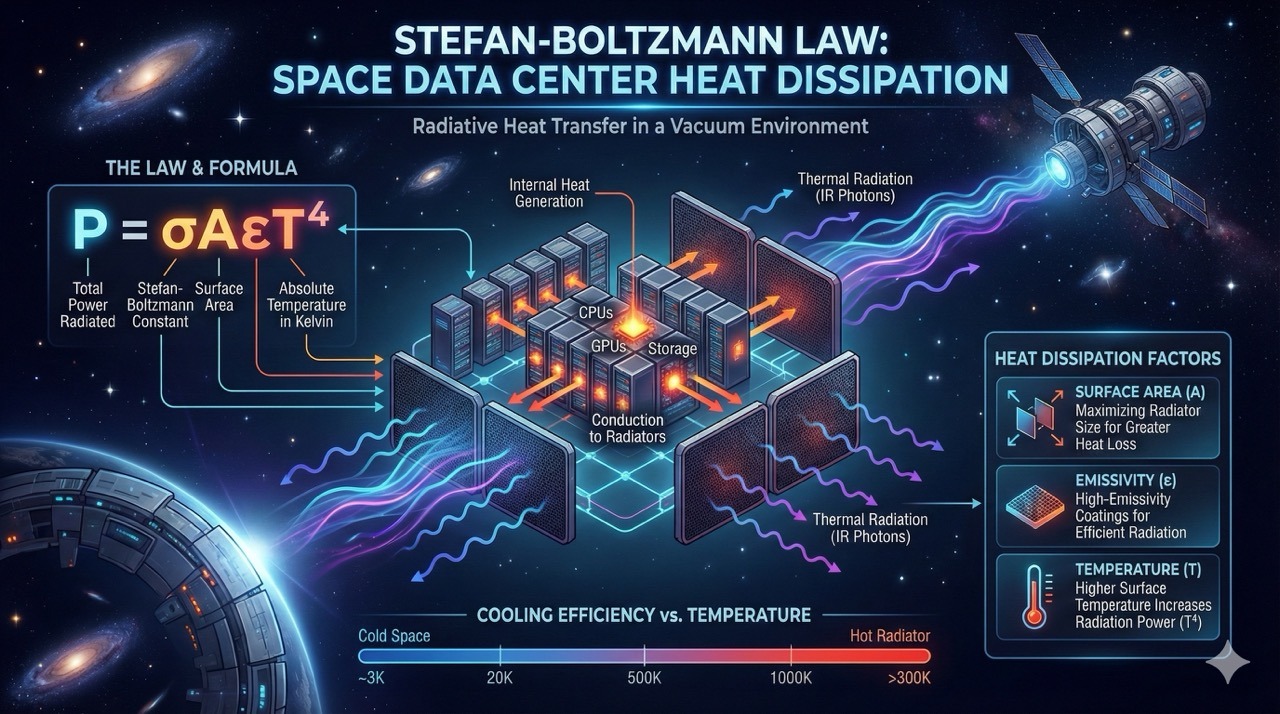
The Physics of Stefan-Boltzmann:
The power radiated by a surface is governed by the Stefan-Boltzmann law:

The Conflict: To radiate a lot of heat, you want high Temperature.However, silicon chips (GPUs) degrade rapidly above 85°C (358K). This creates a brutal engineering constraint: we must reject kilowatts of heat while keeping the radiator relatively cool.
- The Surface Area Problem: A single NVIDIA H100 generates ~700W of heat. To radiate this at an operating temperature of 50°C (323K) requires roughly 1 square meter of radiator surface facing deep space.9
- The "Black Plate" Solution: Startups like Starcloud are developing "Black Plate" technology—high-emissivity coatings (up to 0.98) applied to massive deployable panels. A 1m x 1m black plate at 20°C radiates approximately 838 Watts (from both sides).10 This implies that for every rack of servers, there must be a "wing" of radiators spanning tens of meters.
2.2 The Radiation Gauntlet: TID and SEUs
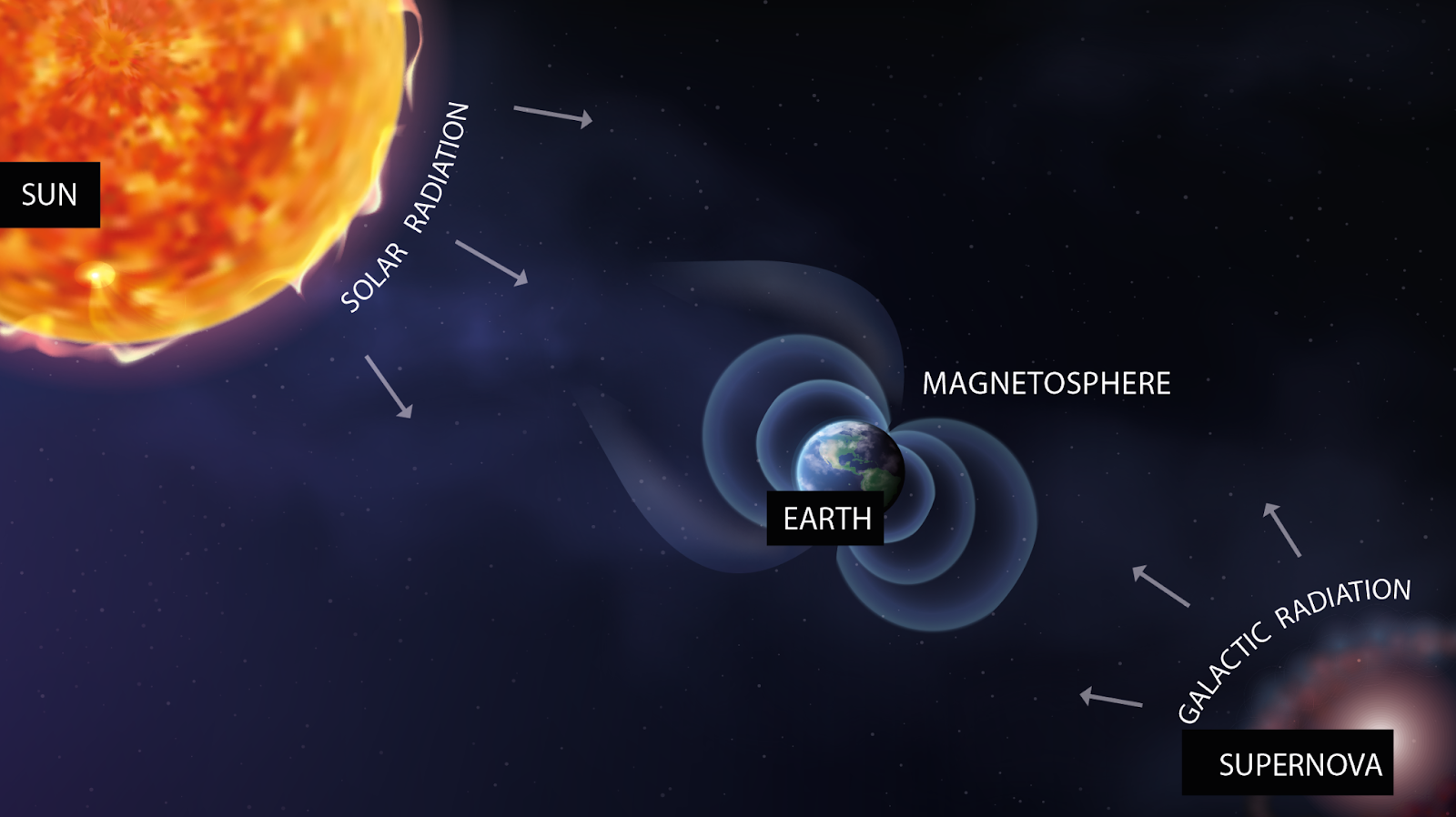
Once thermal balance is achieved, the environment attacks the silicon itself.
- Total Ionizing Dose (TID): The cumulative accumulation of radiation degrades the oxide layers in transistors, causing threshold voltage shifts. Eventually, the chip simply stops switching.
- Single Event Upsets (SEUs): High-energy particles (protons, heavy ions) strike a memory cell, flipping a bit from 0 to 1. In banking, this is catastrophic. In AI training, it is manageable but problematic.
- The Shielding Ratio: The current industry standard, pioneered by Starcloud and adopted by SpaceX designs, is a mass budget of 1 kg of shielding per 1 kW of compute.12 This shielding is not just aluminum; it often involves graded-Z materials (layers of different atomic weights) or hydrogen-rich polymers (like polyethylene) to scatter protons.
- Software Resilience: The hardware cannot be perfect. The solution is software. Engineers are developing "fault-tolerant" training algorithms where the neural network training process can identify and ignore corrupted weights, effectively "healing" the model around the brain damage caused by cosmic rays.13
2.3 The Power Paradox: Sun-Synchronous Orbits
While cooling is the constraint, power is the abundance.
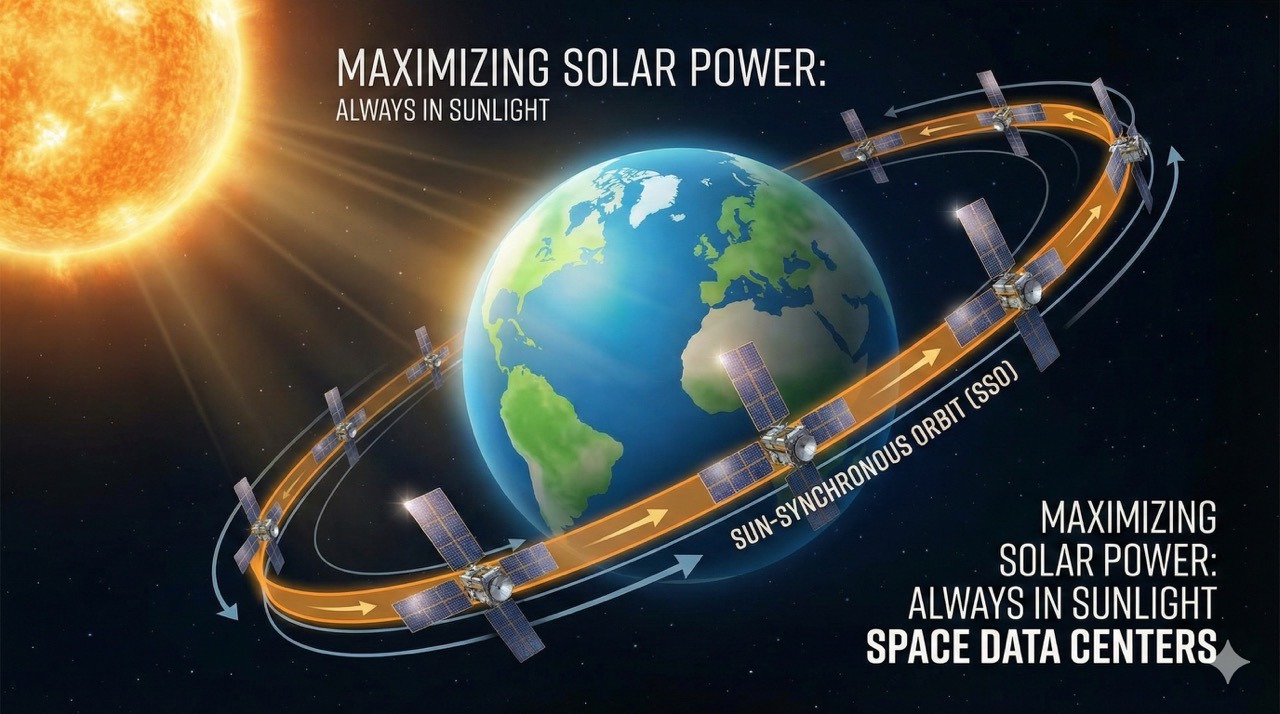
- The Dawn-Dusk Orbit: To avoid the need for massive batteries (which are heavy and degrade), space data centers target Sun-Synchronous Orbits (SSO) along the terminator line (the divide between day and night). In this orbit, the satellite never enters the Earth's shadow. It sees the sun 24/7/365.
- AM0 Intensity: Solar panels in orbit receive "Air Mass Zero" (AM0) irradiance (~1,360 W/m²), roughly 40% more energy than panels on Earth's surface, which lose energy to atmospheric scattering.11
- The Structure: This necessitates a satellite design that is essentially a giant 2D plane: solar panels facing the sun on one side, and radiators facing the cold darkness of deep space on the perpendicular axis.
Part III: The Ecosystem – Startups, Moon Bases, and Space Stations
While SpaceX provides the heavy lift, a vibrant ecosystem of startups is filling the niches of the orbital compute stack. These companies range from "pure play" data center operators to lunar archivists.
3.1 Starcloud (formerly Lumen Orbit): The 5GW Megastructure

Starcloud is the bellwether of the dedicated orbital data center market. Founded in 2024 and backed by Y Combinator, the company has moved aggressively from whitepapers to hardware.14
- The Technology: Starcloud’s core innovation is the "Flying Radiator" architecture. Their whitepaper proposes a modular cluster that scales to 5 Gigawatts of capacity. The physical structure of such a cluster would be immense—a 4km by 4km array of interlinked modules, making it the largest man-made object in history, dwarfing the ISS.10
- Starcloud-1 Mission: In November 2025, Starcloud launched a 60kg demonstrator satellite carrying a terrestrial NVIDIA H100 GPU.15
- Result: The mission successfully trained a small AI model (on the complete works of Shakespeare) and ran inference on Google's Gemma model while in orbit.
- Significance: This proved that standard, non-rad-hardened data center GPUs can survive the launch vibration and operate in the thermal vacuum environment, validating the "COTS in Space" thesis.
- Business Model: Starcloud aims to be the "AWS of Space," selling raw compute capacity to AI labs.
3.2 Lonestar Data Holdings: The Lunar Fort Knox
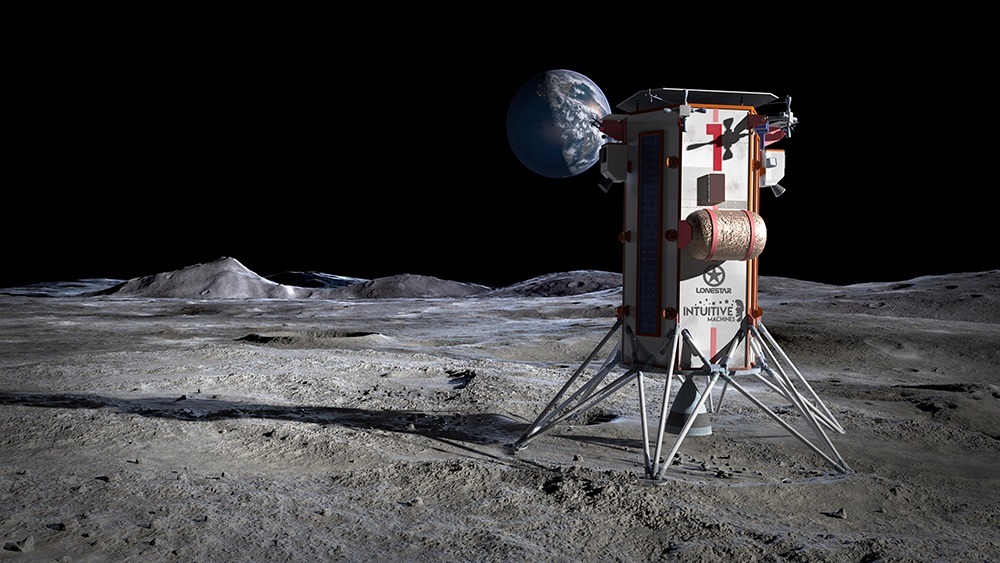
While Starcloud pursues compute, Lonestar pursues storage. Their thesis is resilience: Earth is prone to war, natural disasters, and cyberattacks. The Moon is safe.17
- The Mission: Disaster Recovery as a Service (DRaaS). Lonestar archives critical data (sovereign records, banking ledgers, cultural archives) on the lunar surface and in cislunar orbit.
- The Roadmap:
- Partnerships: Lonestar operates a "fabless" model, placing payloads on landers built by Intuitive Machines and satellites built by Sidus Space.17
- Lava Tubes: The long-term vision involves placing data centers inside lunar lava tubes. These natural caverns provide kilometers of rock shielding, protecting servers from the brutal lunar temperature swings (-173°C to +127°C) and cosmic radiation.19
- Valuation: The company has secured significant seed and Series A funding, with contracts valued at over $120 million for lunar data storage services.18
3.3 Axiom Space: The Edge of Discovery
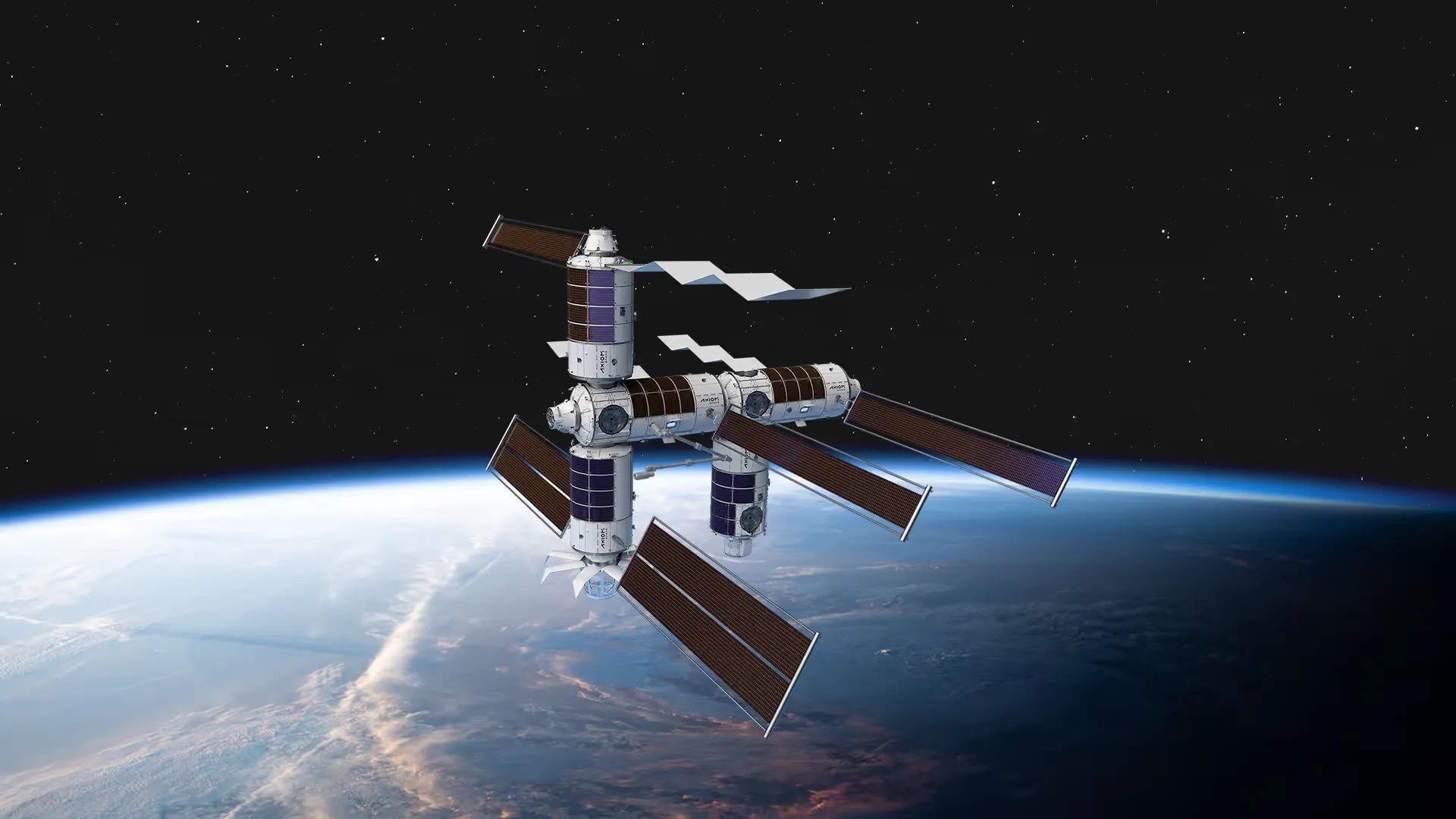
Axiom Space is best known for building the commercial successor to the ISS, but their "Orbital Data Center" (ODC) division is a critical piece of the puzzle.20
- The Use Case: Edge Computing. Scientific experiments on space stations—such as protein crystallization or fiber optic manufacturing—generate massive datasets. Downlinking petabytes of raw video and sensor data is expensive and slow.
- The Solution: Axiom, in partnership with Red Hat and Microchip, installs server nodes directly on the station. Researchers process the data in orbit and downlink only the results.
- The Human Advantage: Unlike Starcloud’s unmanned satellites, Axiom’s servers are inside pressurized modules. If a drive fails, an astronaut can replace it. This allows for upgradability but comes at a staggering cost per cubic meter.
3.4 K2 Space: The Bus for the Heavy Lift Era
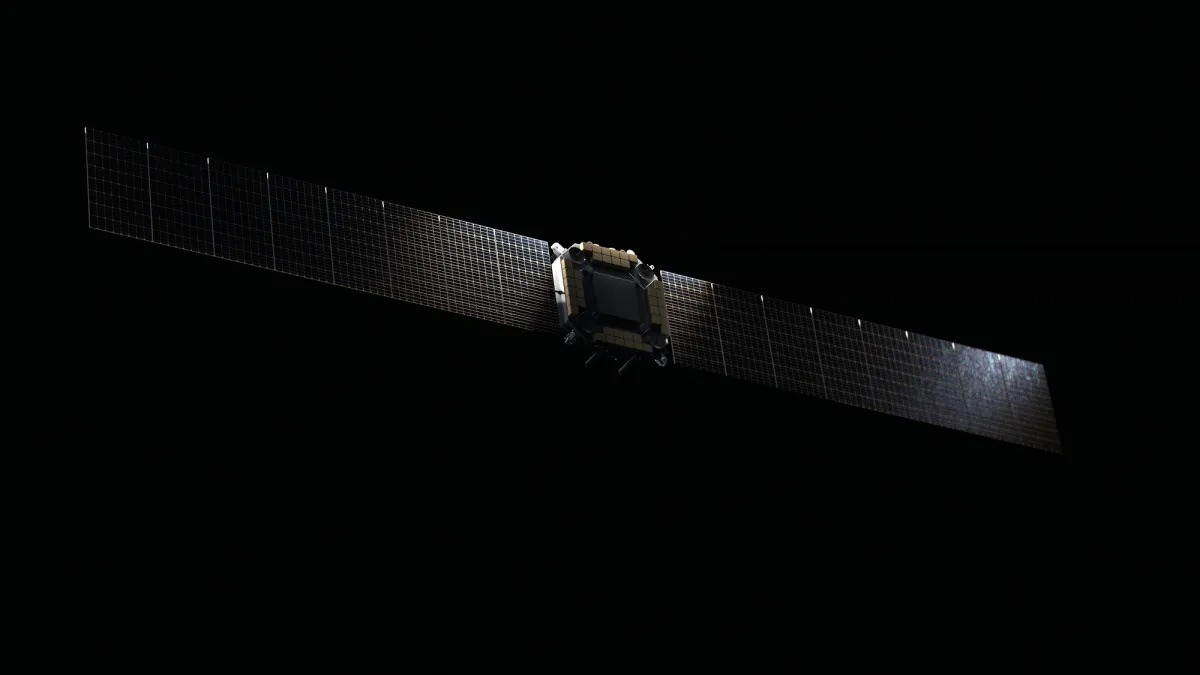
The "iPhone problem" of space is that satellites have historically been bespoke, hand-crafted artisans. K2 Space is industrializing the chassis.21
- The "Monster" Class: K2 Space has raised $250 million (Series C) to build "Mega-Class" satellite buses designed specifically for the Starship era.
- Philosophy: "Mass is cheap." Instead of spending millions to shave grams, K2 builds heavy, rugged satellites that maximize power generation and thermal rejection. Their buses are designed to carry the heavy, hot payloads of data centers and massive telecom arrays.
3.5 EnduroSat: The Pick-and-Shovel Provider
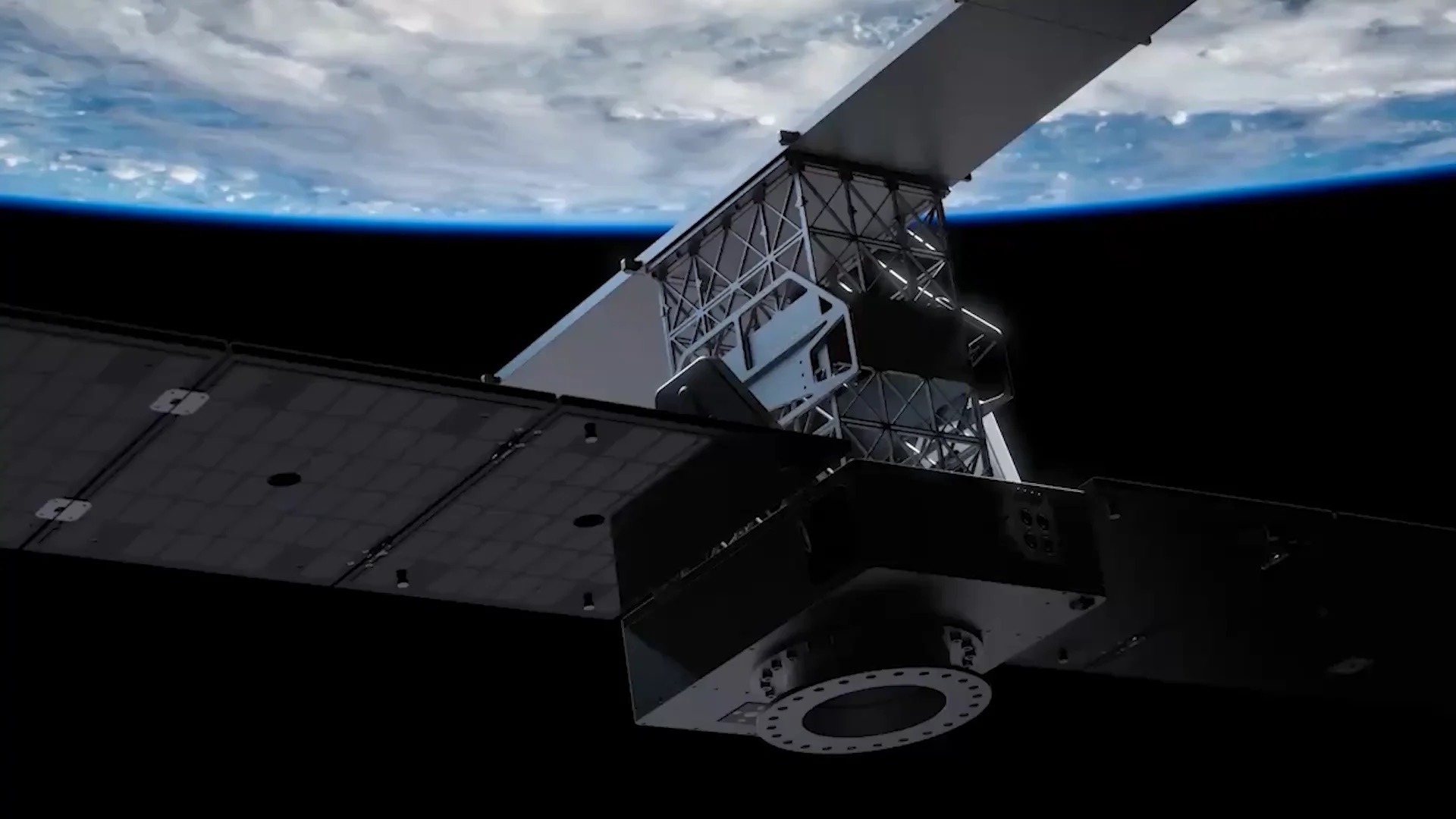
Bulgarian manufacturer EnduroSat has raised $104 million to scale its "ESPA-class" satellite production.22 They provide the "commodity" satellite platforms—the generic trucks that carry the compute payloads for various startups. Their new "Space Center" in Sofia is designed to churn out satellites at automotive rates, supporting the constellations planned by the data center operators.
3.7 Competitive comparison
Table 2: Key Entity Summary
|
Entity |
Primary Focus |
Key Roadmap Milestone |
Status |
|---|---|---|---|
|
SpaceX / xAI |
Integrated Launch & Compute |
"Million Satellite" Constellation |
Merged Feb 2026; Dominant Player |
|
Starcloud |
5GW Orbital Clusters |
Starcloud-1 (H100 in Space) |
Operational Prototype; YC Backed |
|
Lonestar |
Lunar Data Storage/DRaaS |
Data centers in Lava Tubes |
Payload Contracts Signed; Series A |
|
Axiom Space |
ISS Edge Compute Nodes |
Commercial Station Module |
Operational on ISS; Partnered w/ Red Hat |
|
K2 Space |
Heavy-Lift Satellite Bus |
"Monster" Class Bus for Starship |
Series C ($250M); Manufacturing Scaling |
Part IV: The Economics of Obsolescence – The "iPhone" Problem
A terrestrial data center refreshes its hardware every 3-4 years. A satellite typically launches once and operates for 10-15 years. This mismatch creates the "iPhone Problem" of space compute.
4.1 The Cycle Mismatch
Moore's Law (and its AI accelerator equivalent, "Jensen's Law") dictates that GPU performance doubles roughly every 18 months.
- The Risk: If a company launches a $100 million cluster of H100s in 2026, by 2029 those chips are obsolete. Terrestrial competitors will be running B200s or "Rubin" class chips, operating 10x faster. The space-based company is left with "junk in orbit"—expensive, slow hardware that cannot be upgraded.
4.2 The Solution: Disposable Satellites
The industry is shifting toward a Rapid Deprecation Model.
- Short Lifespans: Instead of designing satellites for 15 years, data center satellites are designed for 3-5 years.
- De-orbiting: At the end of the GPU's useful economic life, the satellite uses onboard propulsion to lower its orbit and burn up in the atmosphere.
- The Cost Requirement: This model only works if the satellite bus and launch are cheap enough to be treated as consumable items. This reinforces the dependency on the $200/kg launch price. If the satellite costs $500 million to build and launch, you must keep it for 10 years. If it costs $20 million, you can burn it in 3.
4.3 VC Investment Trends
Venture Capital has shifted from "Deep Tech" speculation to "Infrastructure" scaling.27
- 2021-2024: Seed rounds for concepts (Lumen Orbit, Lonestar).
- 2025-2026: Massive Series B/C rounds for infrastructure (K2 Space's $250M, EnduroSat's $104M).
- The Thesis: Investors are betting that the "Space Data Center" is the next "Cell Tower." It is real estate development. The winners will be those who secure the orbital slots, the spectrum, and the cheap launch contracts.
Part V: The Legal Void – Data Havens and Flags of Convenience
The final frontier of space data is not engineering; it is jurisdiction.
5.1 The "Data Haven" Theory
The Outer Space Treaty (OST) of 1967 states that space is "the province of all mankind," but it also establishes that the "Launching State" retains jurisdiction over the object.28
- The Loophole: Corporations are exploring the "Flag of Convenience" model used in maritime shipping. If a US company launches a data center via a subsidiary registered in a "Data Haven" nation (a country with lax data laws, no extradition, or no copyright enforcement), and launches it from a neutral spaceport, whose laws apply to the data on that server?.29
- Use Cases:
- Copyright Evasion: Training AI models on copyrighted data (books, movies) outside the jurisdiction of US or EU courts.
- Privacy: Storing crypto keys or banking data in a jurisdiction where no terrestrial government can issue a search warrant or seize the physical hardware.
5.2 Regulatory Collision
We anticipate a major clash between terrestrial regulators (like the EU's GDPR enforcers) and space providers. If a German citizen's data is processed on a satellite owned by a Cayman Islands subsidiary of a US company, transiting via a laser link over China, the legal complexity is infinite. Space represents the ultimate "Offshore" account.
Part VI: Elon Musk’s hot take 2/6/2026
From a
According to Elon Musk, the exponential growth of AI chip production is on a collision course with a hard physical limit: Earth’s stagnant electricity supply. While chip output grows exponentially, electrical generation (outside of China) has remained effectively flat. This impending energy bottleneck is the primary driver behind the radical proposal to move AI data centers into orbit, a transition Musk predicts will make space the most economically compelling location for AI within 30 to 36 months.
The Benefits: Infinite Power and Regulatory Freedom The primary advantage of space-based data centers is superior access to energy. Musk argues that solar panels in space are approximately five times more effective than on Earth because they face no atmospheric interference, no clouds, no seasonality, and most importantly, no day-night cycle. This continuous illumination eliminates the need for massive battery storage, which Musk suggests makes the entire power system effectively "10 times cheaper" than terrestrial alternatives.
Beyond raw energy, space offers a regulatory escape valve. Earth-based data centers are currently bogged down by land acquisition issues, slow utility permitting, and the difficulty of building new power plants (specifically due to a global backlog in casting turbine blades). In contrast, space has no "zoning laws" or neighbors to disturb. Furthermore, the hardware itself can be simplified; without wind, rain, or gravity to withstand, space-based solar arrays can be built without heavy glass or rigid framing, significantly reducing their manufacturing cost.
The Challenges: Launch Logistics and The Chip Supply Chain However, the engineering hurdles to achieve this vision are immense. The most immediate challenge is launch volume. To deploy a relevant scale of power—around 100 gigawatts of capacity per year—SpaceX would need to conduct approximately 10,000 Starship launches annually. This equates to roughly one launch every hour, requiring a fleet of dozens of Starships operating continuously.
The second major bottleneck is the supply chain for compute. Even if the power and launch constraints are solved, the world must produce enough silicon to utilize that power. Musk estimates this requires 100 gigawatts' worth of chips annually, necessitating a massive scale-up in semiconductor fabrication (logic and especially memory) that currently does not exist.
Finally, the hostile environment of space presents unique engineering constraints. Data centers must be radiation-tolerant and capable of dissipating massive amounts of heat through radiators rather than air cooling. Additionally, because "servicing calls" are impossible, hardware must be screened rigorously for "infant mortality" on Earth before launch, as any failure in orbit is permanent. Musk also notes that terrestrial interconnects (like Infiniband) must be replaced by orbital laser links to maintain high-speed data transfer between clusters.
Conclusion: The Sky is the Limitless Limit
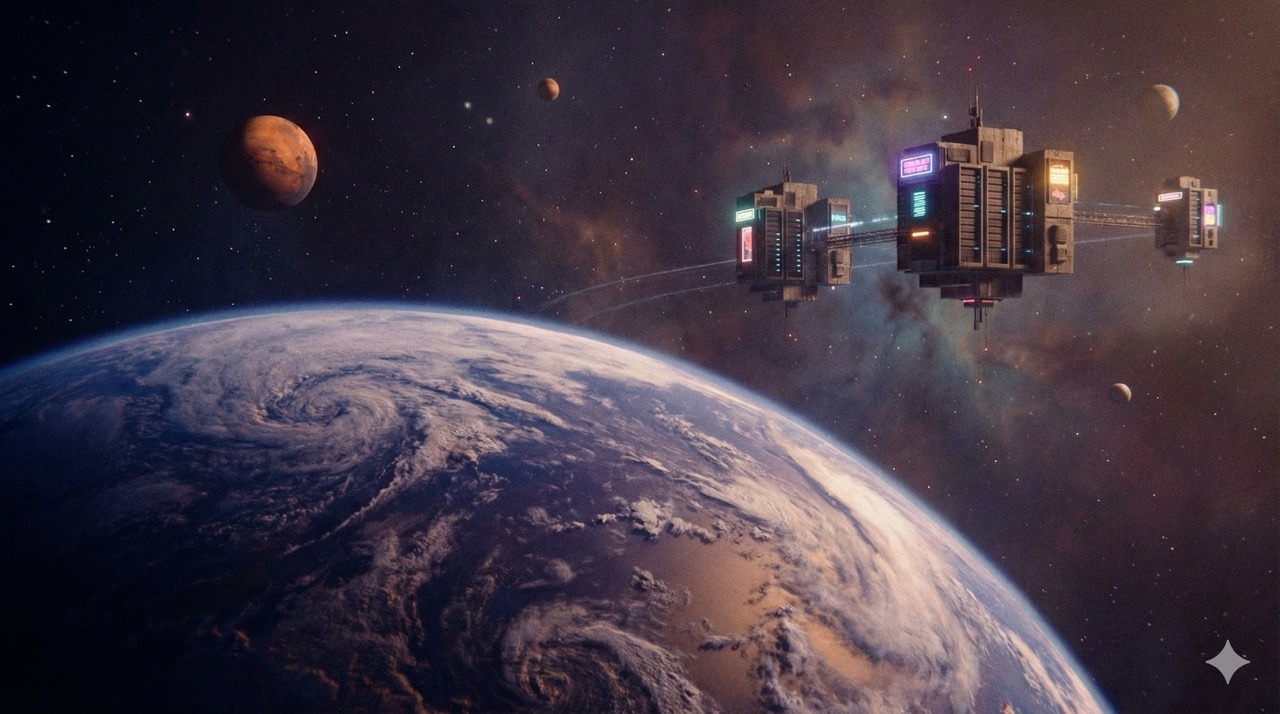
The merger of SpaceX and xAI is the starting gun for a race that will reshape the global computational infrastructure. We are witnessing the transition from the "Communication Era" of space (Satcom/Starlink) to the "Computation Era."
The challenges are formidable. We must learn to cool gigawatts of heat in a vacuum, shield delicate nanometer-scale transistors from the fury of the sun, and build structures larger than the ISS using robots. But these are engineering problems, not impossibilities.
The drivers—insatiable AI energy demand, water scarcity, and the plummeting cost of launch—are inexorable. SpaceX and xAI merger might be able to prove the economic viability.
By 2035, looking up at the night sky, one might not just see stars. One might be looking at the physical embodiment of the internet itself—a constellation of thinking machines, bathing in eternal sunlight, processing the sum of human knowledge in the silence of the void.
References
- Data centers in space makes no sense - CivAI Blog,
https://civai.org/blog/space-data-centers - SpaceX acquires xAI in record-setting deal as Musk looks to unify AI and space ambitions,
https://indianexpress.com/article/technology/tech-news-technology/spacex-acquires-xai-in-record-setting-deal-as-musk-looks-to-unify-ai-and-space-ambitions-10510309/ - SpaceX merges with Musk’s AI firm xAI as he pushes plans for space-based AI,
https://indianexpress.com/article/world/spacex-merges-with-musks-ai-firm-xai-as-he-pushes-plans-for-space-based-ai-10510141/ - Elon Musk merges SpaceX, xAI to build space data centers. What to ...,
https://www.spokesman.com/stories/2026/feb/04/elon-musk-merges-spacex-xai-to-build-space-data-ce/ - SpaceX vs. Google: The Race for AI Data Centers in Space - Trending Topics,
https://www.trendingtopics.eu/spacex-vs-google-the-race-for-ai-data-centers-in-space/ - SpaceX Takes First Step Towards A Type II Civilization On The Kardashev Scale With Plans To Launch 1 Million New Satellites - Wccftech,
https://wccftech.com/spacex-takes-first-step-towards-a-type-ii-civilization-on-the-kardashev-scale-with-plans-to-launch-1-million-new-satellites/ - SpaceX acquires xAI in a bid to make orbiting data centers a reality — Musk plans to launch a million tons of satellites annually, targets 1TW/year of space-based compute capacity | Tom's Hardware,
https://www.tomshardware.com/tech-industry/artificial-intelligence/spacex-acquires-xai-in-a-bid-to-make-orbiting-data-centers-a-reality-musk-plans-to-launch-a-million-tons-of-satellites-annually-targets-1tw-year-of-space-based-compute-capacity - The Largest M&A Deal in History - Brownstone Research,
https://www.brownstoneresearch.com/bleeding-edge/the-largest-ma-deal-in-history/ - Why Putting AI Data Centers in Space Doesn't Make Much Sense - Reddit,
https://www.reddit.com/r/space/comments/1pix4md/why_putting_ai_data_centers_in_space_doesnt_make/ - Space-Based Datacenters Take The Cloud Into Orbit | Hackaday,
https://hackaday.com/2025/06/19/space-based-datacenters-take-the-cloud-into-orbit/ - Why we should train AI in space - White Paper - GitHub Pages,
https://starcloudinc.github.io/wp.pdf - Can You Really Put a Data Center in Space? (yeah probably) - Medium,
https://medium.com/@Elongated_musk/orbital-data-centers-on-starlink-feasibility-outlook-a97d1a4e3a2f - Can someone enlighten me, how is it cheaper to build data centers in space than on earth? : r/Anthropic - Reddit,
https://www.reddit.com/r/Anthropic/comments/1quvyar/can_someone_enlighten_me_how_is_it_cheaper_to/ - Starcloud pitches orbital datacenters as cheaper, cooler, and cleaner - Blocks and Files,
https://blocksandfiles.com/2025/10/23/starcloud-orbiting-datacenters/ - Starcloud: Data centers in space - Y Combinator,
https://www.ycombinator.com/companies/starcloud - Nvidia backed Starcloud successfully trains first AI in space. H100 GPU confirmed running Google Gemma in orbit (Solar-powered compute) : r/singularity - Reddit,
https://www.reddit.com/r/singularity/comments/1pjb4ow/nvidia_backed_starcloud_successfully_trains_first/ - Lonestar Data Holding (Eayst Noa) - Factories in Space,
https://www.factoriesinspace.com/lonestar - Sidus Space Signs Extended and Amended Preliminary $120M Agreement with Lonestar for Lunar Data Storage Spacecraft,
https://sidusspace.com/2025/04/02/sidus-space-signs-extended-and-amended-preliminary-120m-agreement-with-lonestar-for-lunar-data-storage-spacecraft/ - KIO Data Centers drives the future of data security with a strategic alliance in the space with Lonestar.,
https://kiodatacenters.com/en/newsroom-en/kio-data-centers-drives-the-future-of-data-security-with-a-strategic-alliance-in-the-space-with-lonestar - Axiom Space, Spacebilt Announce Orbital Data Center Node Aboard International Space Station,
https://www.axiomspace.com/release/axiom-space-spacebilt-announce-orbital-data-center-node https://www.prnewswire.com/news-releases/k2-space-raises-250m-at-3b-valuation-to-roll-out-a-new-class-of-high-capability-satellites-302638936.html#:\~:text=Founded by former SpaceX engineers,Partners%2C and Alpine Space Ventures. - EnduroSat raises $104M to accelerate satellite production in Sofia Space Center | Vestbee,
https://www.vestbee.com/insights/articles/enduro-sat-raises-104-m-to-accelerate-satellite-production-in-new-sofia-space-center - Gamma-Ray and AntiMatter Survey(GRAMS) experiment - arXiv,
https://arxiv.org/html/2512.14913v1 - (PDF) The GRAMS (Gamma-Ray and AntiMatter Survey) Project - ResearchGate,
https://www.researchgate.net/publication/373202989_The_GRAMS_Gamma-Ray_and_AntiMatter_Survey_Project - GRAMS | Gamma-Ray and AntiMatter Survey | Astrophysical observations with MeV gamma rays and indirect dark matter searches with antimatter,
https://grams.sites.northeastern.edu/ - Enhancing Astrophysical MeV Gamma-Ray Detection with GRAMS,
https://fermi.gsfc.nasa.gov/science/mtgs/symposia/eleventh/program/fri/Poudyal_GRAMS_overview_Fermi11.pdf - Orbital Data Centers 2026: Capital Shifts to Infrastructure,
https://enkiai.com/ai-market-intelligence/orbital-data-centers-2026-capital-shifts-to-infrastructure - 2222 (XXI). Treaty on Principles Governing the Activities of States in the Exploration and Use of Outer Space, including the Moon and Other Celestial Bodies - UNOOSA,
https://www.unoosa.org/oosa/en/ourwork/spacelaw/treaties/outerspacetreaty.html - Registration of Space Objects | Oxford Research Encyclopedia of Planetary Science,
https://oxfordre.com/planetaryscience/oso/viewentry/10.1093$002facrefore$002f9780190647926.001.0001$002facrefore-9780190647926-e-95?p=emailAKB1D3DTBTYic&d=/10.1093/acrefore/9780190647926.001.0001/acrefore-9780190647926-e-95
[story continues]
tags