TL;DR —
Researchers at Beeble AI have developed a method for improving how light and shadows can be applied to human portraits in digital images.
Authors:
(1) Hoon Kim, Beeble AI, and contributed equally to this work;
(2) Minje Jang, Beeble AI, and contributed equally to this work;
(3) Wonjun Yoon, Beeble AI, and contributed equally to this work;
(4) Jisoo Lee, Beeble AI, and contributed equally to this work;
(5) Donghyun Na, Beeble AI, and contributed equally to this work;
(6) Sanghyun Woo, New York University, and contributed equally to this work.
Editor's Note: This is Part 4 of 14 of a study introducing a method for improving how light and shadows can be applied to human portraits in digital images. Read the rest below.
Table of Links
- Abstract and 1. Introduction
- 2. Related Work
- 3. SwitchLight and 3.1. Preliminaries
- 3.2. Problem Formulation
- 3.3. Architecture
- 3.4. Objectives
- 4. Multi-Masked Autoencoder Pre-training
- 5. Data
- 6. Experiments
- 7. Conclusion
Appendix
- A. Implementation Details
- B. User Study Interface
- C. Video Demonstration
- D. Additional Qualitative Results & References
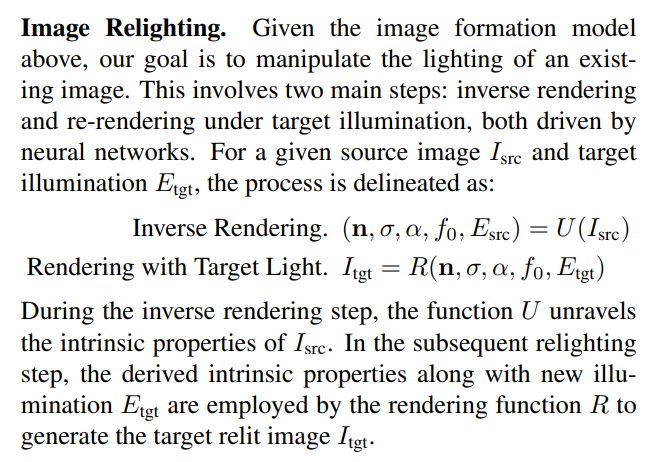
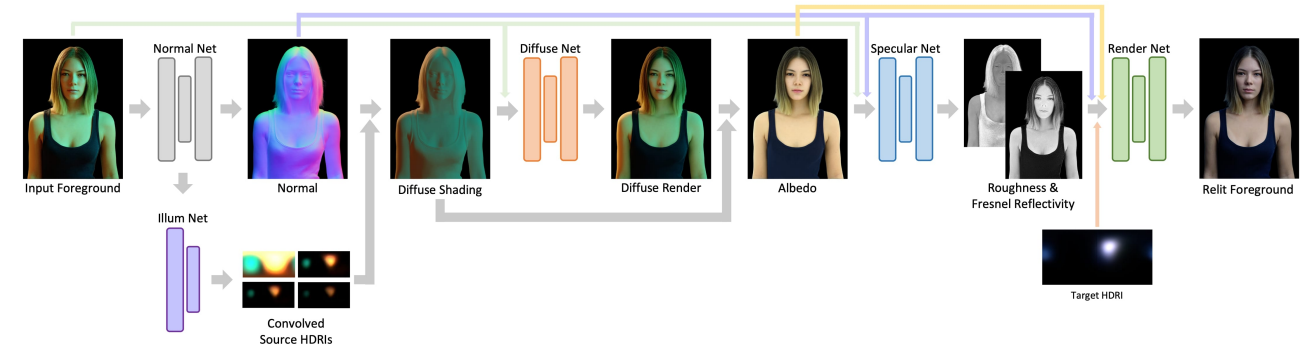
3.2. Problem Formulation
This paper is available on arxiv under CC BY-NC-SA 4.0 DEED license.
[story continues]
Written by
@autoencoder
Research & publications on Auto Encoders, revolutionizing data compression and feature learning techniques.
Topics and
tags
tags
self-supervised-learning|relighting|human-portrait-relighting|physics-guided-architecture|cook-torrance-model|light-surface-interactions|switchlight-framework|self-supervised-pre-training
This story on HackerNoon has a decentralized backup on Sia.
Transaction ID: lBuPXa5hMff6RFSV8bovOO1G-6sAR8qweQs--eqknnY