This story on HackerNoon has a decentralized backup on Sia.
Transaction ID: 6jbT3HVKl9HLHNIDKovctti-T7KYE_KfRrbQ4mNwVlU
Cover

Bernstein’s Concentration Inequality In Equivalence Testing

Written by @computational | Published on 2024/12/9

TL;DR
The paper provides Proof of Claim using concentration inequality.

Authors:

(1) Diptarka Chakraborty, National University of Singapore, Singapore

(2) Sourav Chakraborty, Indian Statistical Institute, Kolkata;

(3) Gunjan Kumar, National University of Singapore, Singapore;

(4) Kuldeep S. Meel, University of Toronto, Toronto.

Abstract and 1 Introduction

2 Notations and Preliminaries

3 Related Work

4 An Efficient One-Round Adaptive Algorithm and 4.1 High-Level Overview

4.2 Algorithm Description

4.3 Technical Analysis

5 Conclusion

6 Acknowledgements and References

A Missing Proofs

B An O(log log n)-query fully adaptive algorithm

A MISSING PROOFS
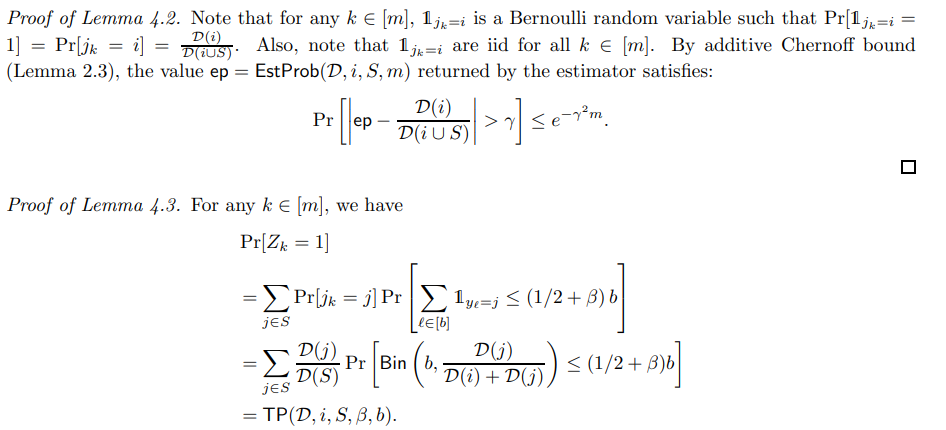
Therefore, by additive Chernoff bound (Lemma 2.3), the value et = EstTail(D, i, S, β, b, m) returned by the algorithm satisfies

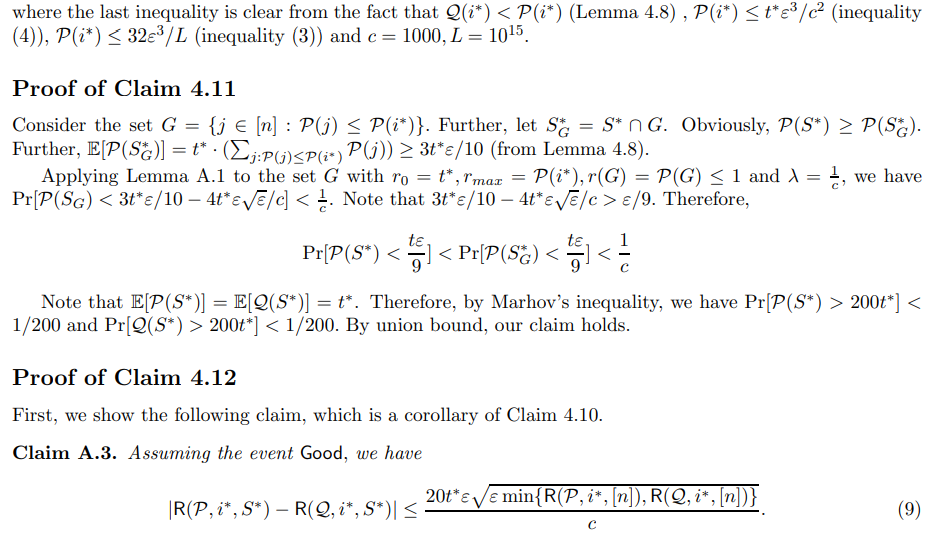
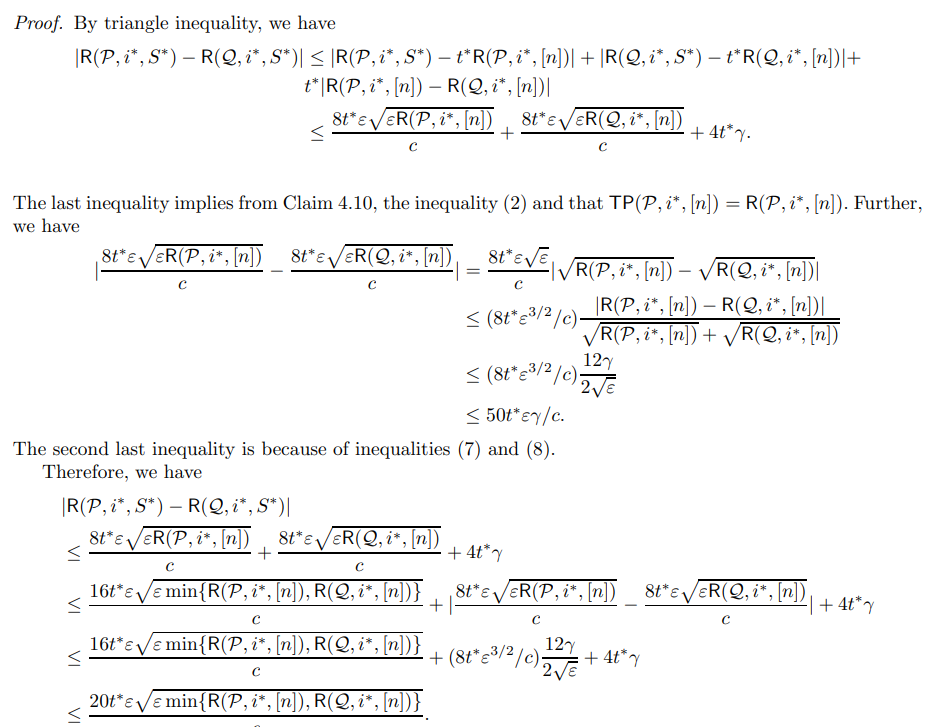
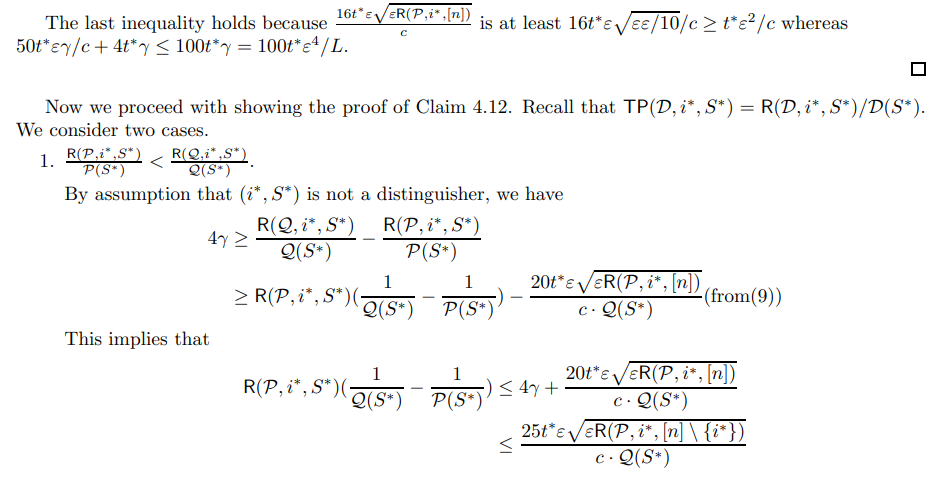
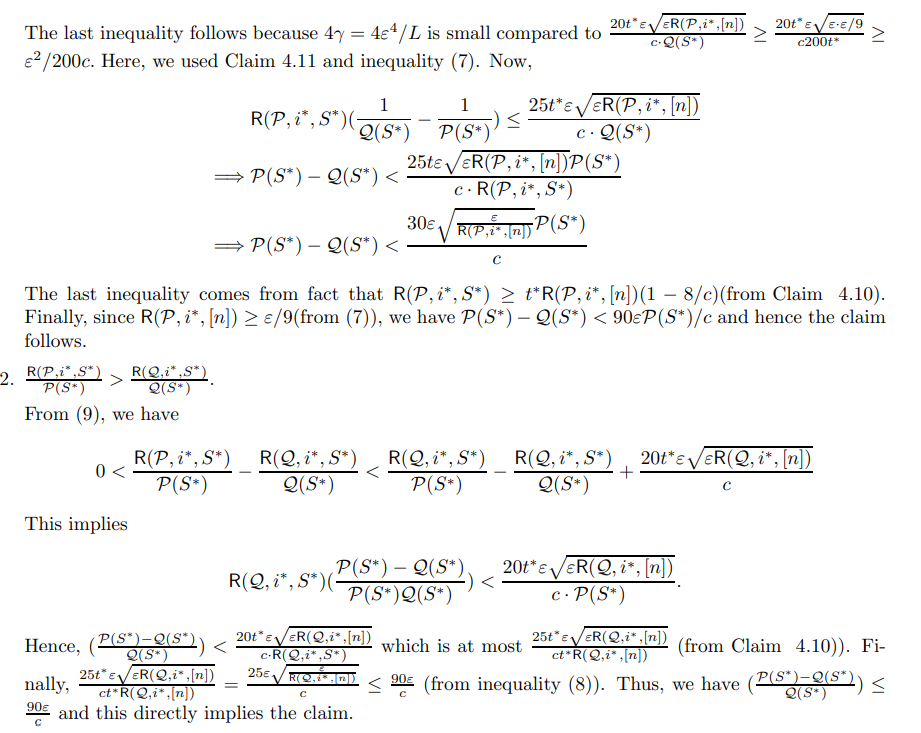
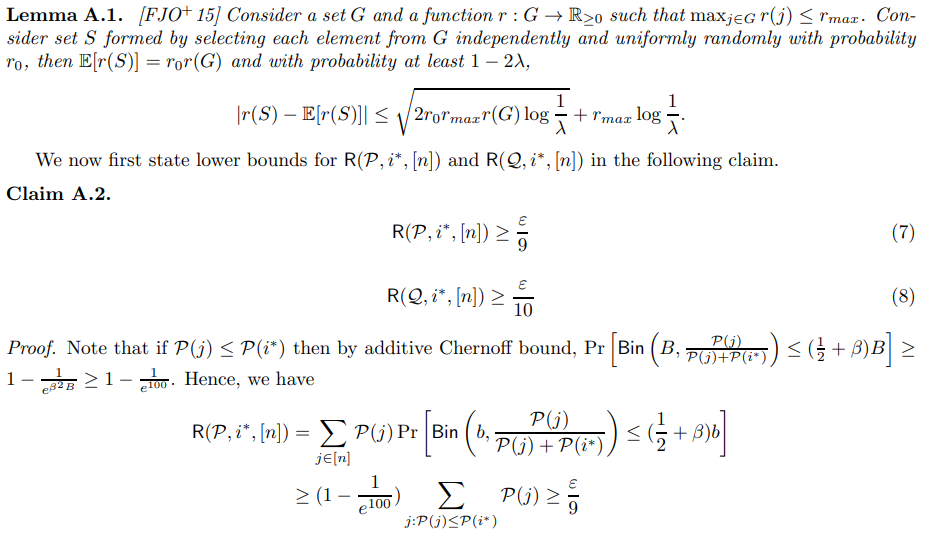
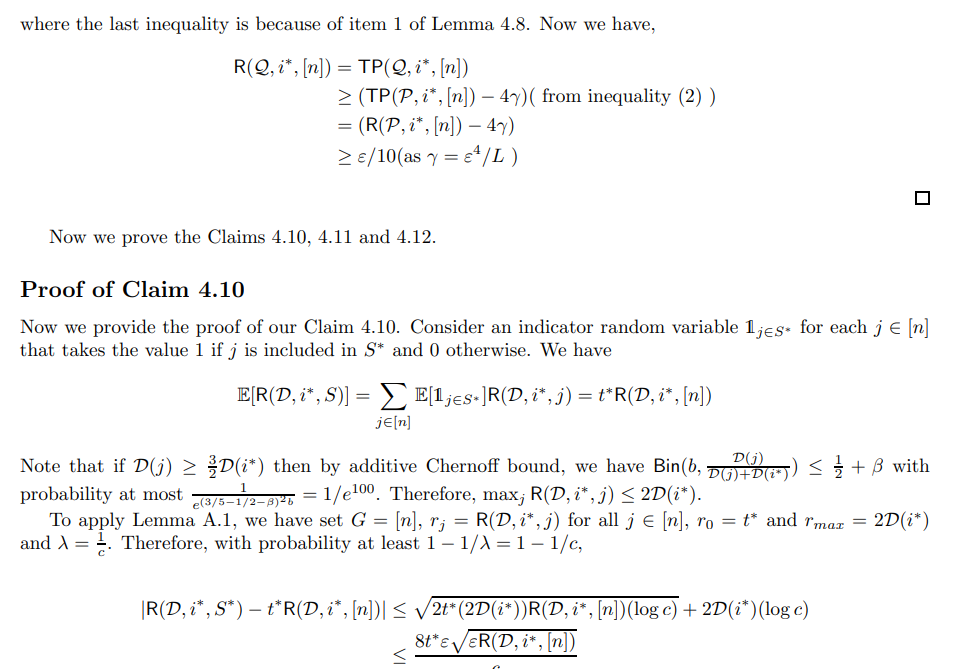
To prove Claims 4.10, 4.11 and 4.12, we will use the following concentration inequality that directly follows from Bernstein’s concentration inequality.
This paper is available on arxiv under CC BY-NC-SA 4.0 DEED license.

[story continues]


Written by
@computational
Computational: We take random inputs, follow complex steps, and hope the output makes sense. And then blog about it.

Topics and
tags
statistis|equivalence-testing|algorithm-design|concentration-inequality|bernstein-inequality|adaptive-testing|parallel-computing|software-testing-method
This story on HackerNoon has a decentralized backup on Sia.
Transaction ID: 6jbT3HVKl9HLHNIDKovctti-T7KYE_KfRrbQ4mNwVlU