
As we wrap up 2025 and stare down the barrel of a new fiscal year, the Shopify ecosystem is undergoing its most radical transformation since the launch of Shopify Plus. If you are searching for the best Shopify scaler APIs for 2026, you aren't just looking for tools; you are looking for a survival strategy.
The "Unicorn Era" was defined by growth-at-all-costs. The 2026 Era is defined by Lean AI and Agentic Commerce. In this guide, I will deconstruct the core APIs that allow brands to scale from $10M to $500M without bloating their headcounts or slowing down their site speed.
1. The Shopify Catalog API: Foundation of "Agentic AEO"
The biggest shift in the Winter '26 Edition is the Shopify Catalog API. We have officially moved past "Search" and into "Discovery via Agents."
Traditional storefronts rely on a user typing a keyword into a bar. In 2026, a shopper asks their AI agent (ChatGPT, Perplexity, or Gemini), "Find me a sustainable, waterproof hiking boot under $200 that fits a wide foot." If your data is siloed in a standard database, you’re invisible.
- The Scaling Hack: Use the Catalog API to feed your Knowledge Base. By centralizing your brand’s "truth" in a Shopify-hosted Knowledge Base, you ensure that every AI agent interacting with your brand provides accurate, real-time inventory and spec data.
- AEO (AI Engine Optimization): Treat your API metadata as your new "SEO keywords." Enriched attributes inferred by Shopify’s ML models (color, material, fit) are now exposed through this feed.
- Developer Resource:
Shopify Catalog Data Guide
2. Mandatory Idempotency: The "Anti-Fragile" Requirement
Starting in April 2026, Shopify is making idempotency keys mandatory for specific Admin API mutations (specifically inventory and refunds). This is a technical hurdle that doubles as a massive scaling advantage.
When you are doing 5,000 transactions per minute during a flash sale, network timeouts are inevitable. Without idempotency, a retry from your server might result in a customer being charged twice or inventory being deducted twice.
Technical Implementation: The Production Pattern
For 2026, you should avoid hardcoding values and use GraphQL Variables. This is more secure, allows for query caching, and is the standard for enterprise scaling.
The Request Payload:
JSON
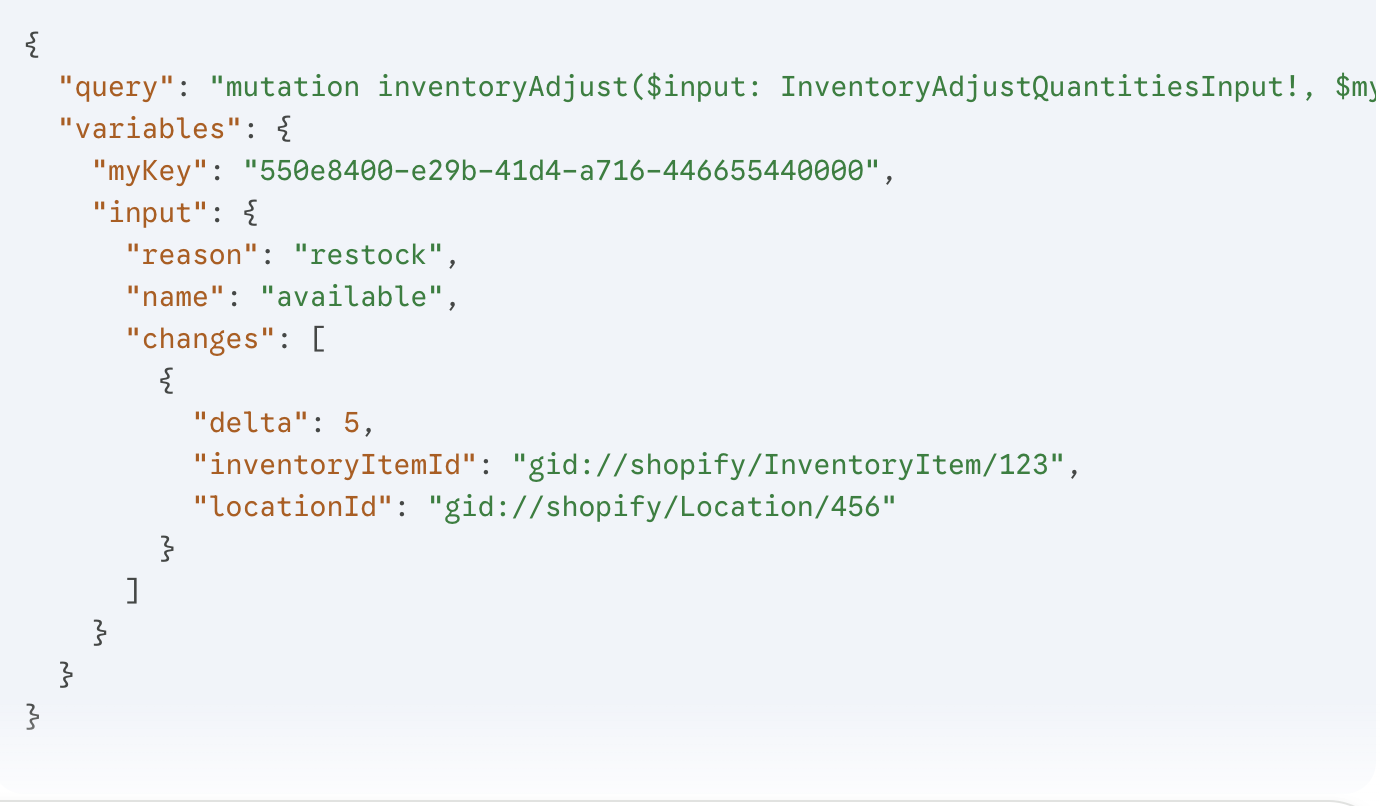
- The Scaler Benefit: This allows your system to be "retry-aggressive." If your 3PL hasn't received a confirmation, your system can safely repeat the request without risk of duplication.
- Developer Resource:
Shopify Admin API: Idempotent Requests Documentation
3. The 2026 Migration: From Scripts to Shopify Functions
If you are still using Ruby-based Shopify Scripts, the clock is ticking. June 30, 2026, is the hard sunset date. Every high-growth brand must migrate to Shopify Functions.
Performance: Rust vs. JavaScript
While Shopify supports both, the recommendation for 2026 is clear: Use Rust for production.
- Shopify Functions (Wasm): These run natively on Shopify’s edge infrastructure.
- The Benchmarks: Rust functions typically execute in <5ms, whereas JavaScript (via the Javy toolchain) can hit instruction limits faster on complex carts.
- The Scaler Strategy: Use Functions to build "Brand Affinity" checkout logic. Instead of a slow third-party app, your discount logic is baked into the Shopify core, ensuring a sub-second checkout experience even during peak traffic.
- Developer Resource:
Migrating from Shopify Scripts to Functions
4. Understanding 2026 Rate Limits: Leaky Buckets and Query Costs
Scaling requires a deep understanding of how to talk to Shopify's servers without getting "throttled" (HTTP 429).
GraphQL vs. REST Limits
- REST Admin API: Uses the "Leaky Bucket" algorithm. Standard stores get 2 requests/second; Shopify Plus gets 20. It's a blunt instrument where every request costs the same.
- GraphQL Admin API: Uses a Calculated Query Cost. You start with a "bucket" of 1,000 points (Standard) or 2,000+ points (Enterprise/Plus). Each field you request has a specific "cost."
- The Scaling Edge: In 2026, developers use Bulk Operations for heavy data jobs. Instead of polling the API 10,000 times, you send one query, and Shopify delivers a JSONL file to your server when ready.
- Developer Resource:
Shopify API Limits & Usage Documentation
5. Prediko API: Scaling with "Operational Intelligence"
I talk about Lean AI as a way to do more with less. The Prediko API is the literal brain of a Lean AI stack. Stockouts and overstock are the two biggest drains on a scaling brand's capital.
- The Strategic Loop: Connect your Prediko API to your Ad Platforms API. If the AI predicts you will be out of stock in 10 days, the API triggers a "Pause" on all ads targeting that SKU.
- Automated Replenishment: Use the API to automate Purchase Orders (POs) based on "velocity-to-zero" metrics. This prevents you from tying up cash in dead stock while ensuring your best-sellers never go dark.
6. The 2026 Security & Data Privacy Mandate
Scaling isn't just about traffic; it's about trust. In 2026, global privacy laws have tightened, and Shopify has responded with Protected Customer Fields.
- Granular Scopes: You can no longer just ask for "Read Customers." You must request specific access to PII (Personally Identifiable Information).
- Webhooks & Idempotency: Ensure your webhook listeners are idempotent. Shopify may send the same event multiple times to ensure delivery; your code must handle this to prevent duplicate data in your CRM or ERP.
- Developer Resource:
Shopify Webhooks Best Practices
7. Retention Scaling: The TYB + Klaviyo API Ecosystem
In 2026, Acquisition is a liability; Retention is an asset. To scale, you must turn your customer base into a self-sustaining distribution network.
- The Workflow: Use the TYB API to track community contributions (UGC, referrals) and push that data into the Klaviyo API. Instead of "Batch and Blast" emails, you send hyper-personalized SMS messages triggered by a customer's specific brand advocacy.
- Developer Resource:
Klaviyo Developer Portal
Comparison Table: The 2026 Scaler Tech Stack
|
Feature |
Old Way (2024) |
The Scaler Way (2026) |
Primary Benefit |
|---|---|---|---|
|
Search |
Keyword-based |
Catalog API (Agentic) |
Discovery via AI Agents |
|
Logic |
Ruby Scripts / Apps |
Shopify Functions (Rust) |
<10ms checkout latency |
|
Inventory |
Manual / Static |
Prediko API (AI-Driven) |
12-month predictive planning |
|
Reliability |
"Hope and Pray" retries |
Mandatory Idempotency |
Zero duplicate transactions |
|
Data Flow |
REST Polling |
GraphQL Bulk Ops |
High-concurrency efficiency |
Final Strategy: The 2026 Roadmap
Scaling in 2026 isn't about being the biggest brand; it's about being the smartest. Follow the Lean AI Audit:
- Q1 (Infrastructure): Move to GraphQL exclusively and implement idempotency keys for all inventory mutations.
- Q2 (Performance): Sunset legacy Shopify Scripts and port logic to Shopify Functions using Rust.
- Q3 (Intelligence): Integrate Prediko and the Catalog API to optimize for "Agentic" holiday shoppers.
- Q4 (Community): Use TYB and Klaviyo to build a retention moat that survives the skyrocketing ad costs of BFCM.
What's the biggest bottleneck in your 2026 roadmap? Let's troubleshoot your architecture in the comments below.
[story continues]
tags