


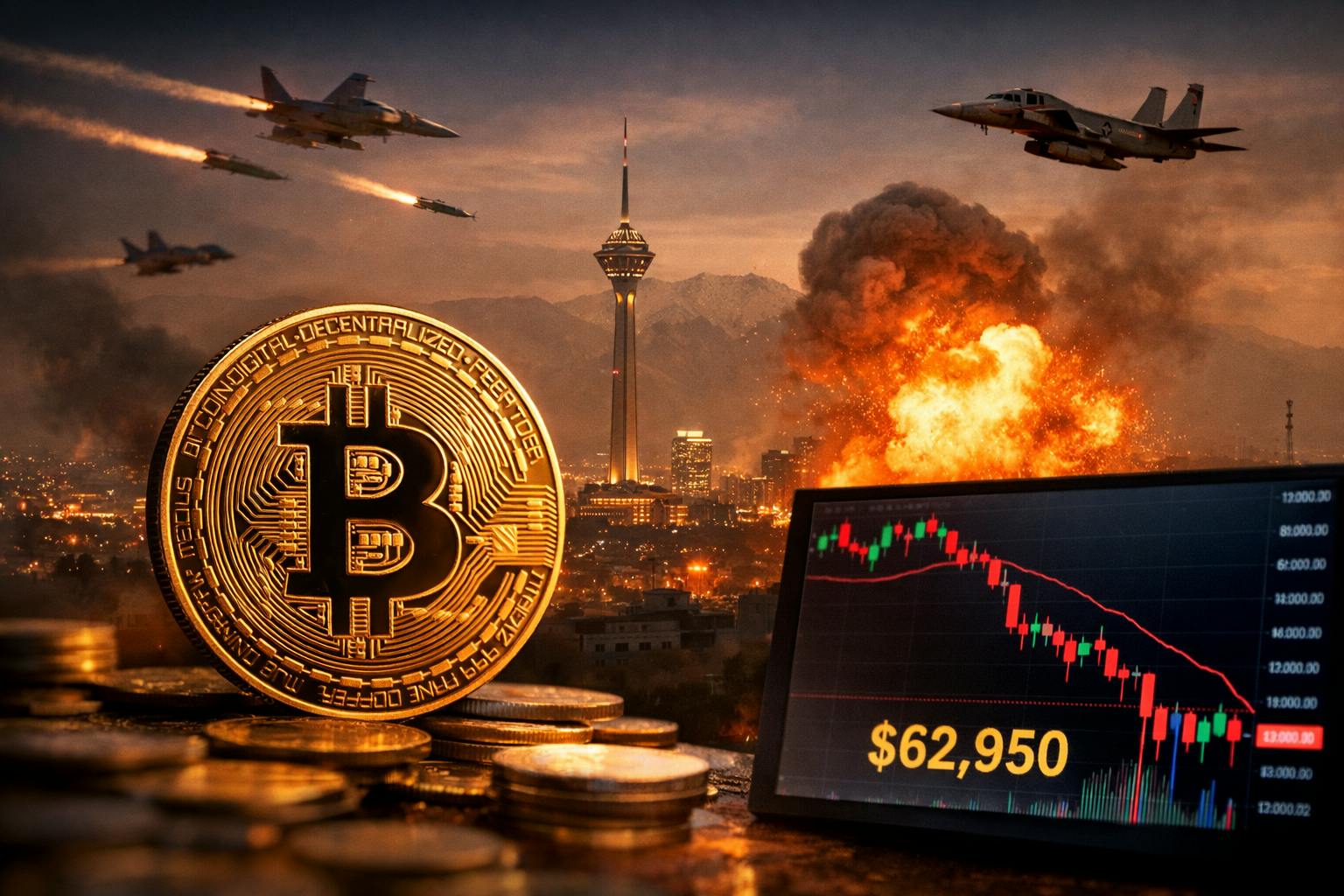
Bitcoin drifted lower toward the $63,000 level after reports emerged that the United States and Israel carried out coordinated strikes on targets inside Iran, intensifying geopolitical tensions across the Middle East and unsettling global financial markets.
The cryptocurrency, which had been trading comfortably above $65,000 earlier, fell sharply as investors reacted to the news. Risk assets across the board faced selling pressure as traders moved capital into safer instruments amid fears of a wider regional conflict.
Sudden Risk-Off Move Hits Crypto
Geopolitical shocks often trigger rapid market repricing, and digital assets were no exception. Bitcoin declined within hours of the developments, while major altcoins posted steeper losses, reflecting heightened uncertainty and reduced appetite for speculative positions.
Market participants noted that crypto derivatives platforms experienced a spike in volatility, with leveraged positions unwinding as prices moved lower. Such liquidations tend to accelerate downward momentum during periods of panic selling.
Not Acting Like a Safe Haven
Although Bitcoin is sometimes promoted as “digital gold,” its short-term behavior continues to mirror that of a high-risk asset during crises. Instead of rallying, the asset typically falls alongside equities when investors seek liquidity and safety.
Traditional safe havens such as gold and the U.S. dollar strengthened, highlighting a defensive shift in investor sentiment.
Key Levels to Watch
Despite the drop, Bitcoin remained above the psychologically important $60,000 threshold, a level analysts view as critical for maintaining the broader bullish structure that has developed in recent months.
Traders are now watching geopolitical developments closely. Any signs of escalation—or de-escalation—could drive the next major move.
Outlook Remains Uncertain
In the near term, Bitcoin’s direction will likely be tied to global risk sentiment rather than crypto-specific factors. Continued instability could keep markets volatile, while diplomatic progress may help restore confidence.
For now, the episode underscores how quickly external events can ripple through digital asset markets, even as long-term adoption trends remain intact.