Legally blind and discouraged by traditional art teachers, I turned to abstract painting during a mental health crisis. Now, I use generative AI to digitally remaster my physical paintings, blending human emotion with machine precision.
I am Damian Griggs. I am an artist with limited vision (20/400 with no peripheral view lost after a stroke at the age of 18 and losing sight after 19th birthday), a survivor of a mental breakdown, and perhaps surprisingly, an enthusiastic user of Artificial Intelligence in my creative process.
There is a lot of debate right now about whether AI is "killing" art. My experience is the exact opposite. For me, AI doesn't replace the creative spark; it acts as the ultimate accessibility tool, helping me frame and finish the raw emotions I put onto a physical canvas.
My process is a hybrid of analog energy and digital remastering. I paint physical works, focusing on texture and movement to compensate for the colors I struggle to see. Then, I collaborate with Gemini to complete the vision.
Here is the story behind the strokes.
The Ghost of Bob Ross and Middle School Critics
Like so many kids, my Saturday mornings were defined by the transition from cartoons to the calming voice of Bob Ross on OPB. I loved the way he created worlds out of nothing. I wanted to paint those "happy little trees."
But the art education system can be brutal to budding creatives who don't fit a specific mold. In middle school, my attempts at realism were met with low grades and discouragement from my teacher. I wasn't painting "correctly." That experience pushed me away from landscapes and towards something where there were fewer rules: abstraction.
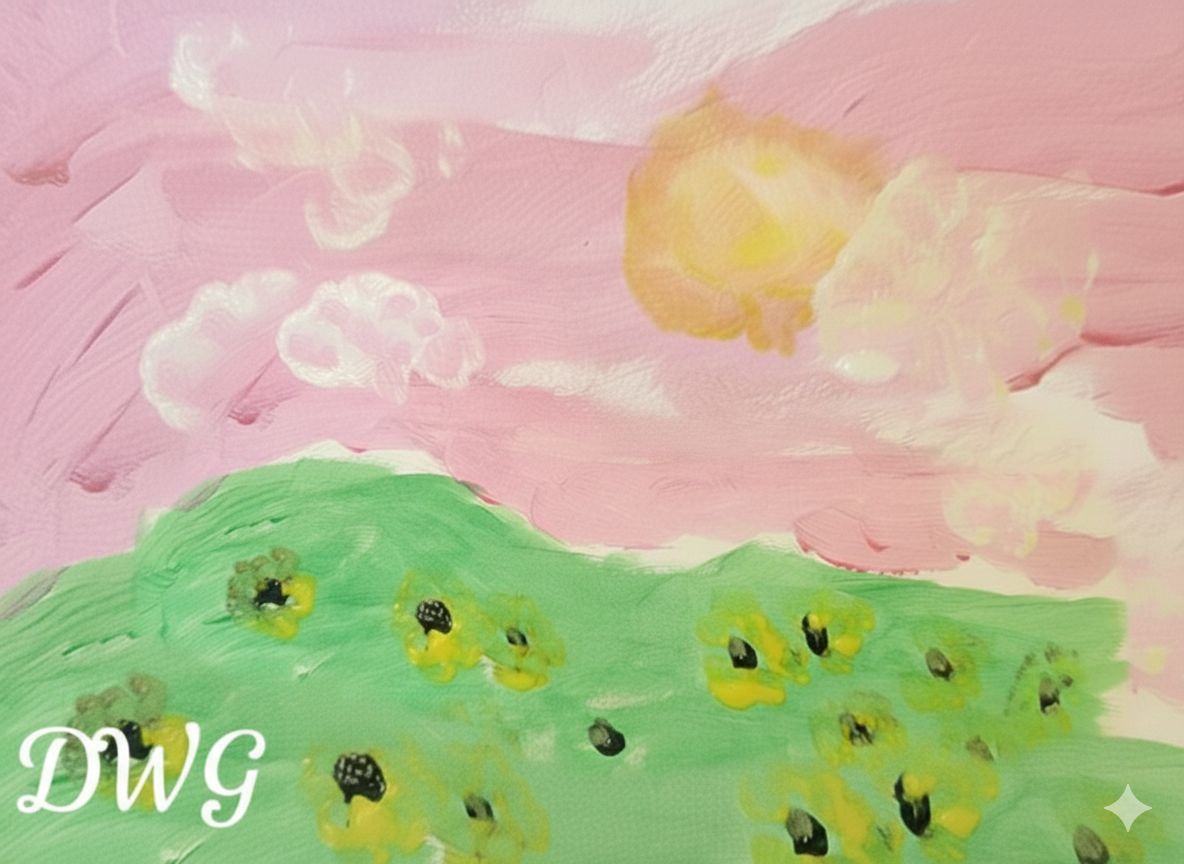
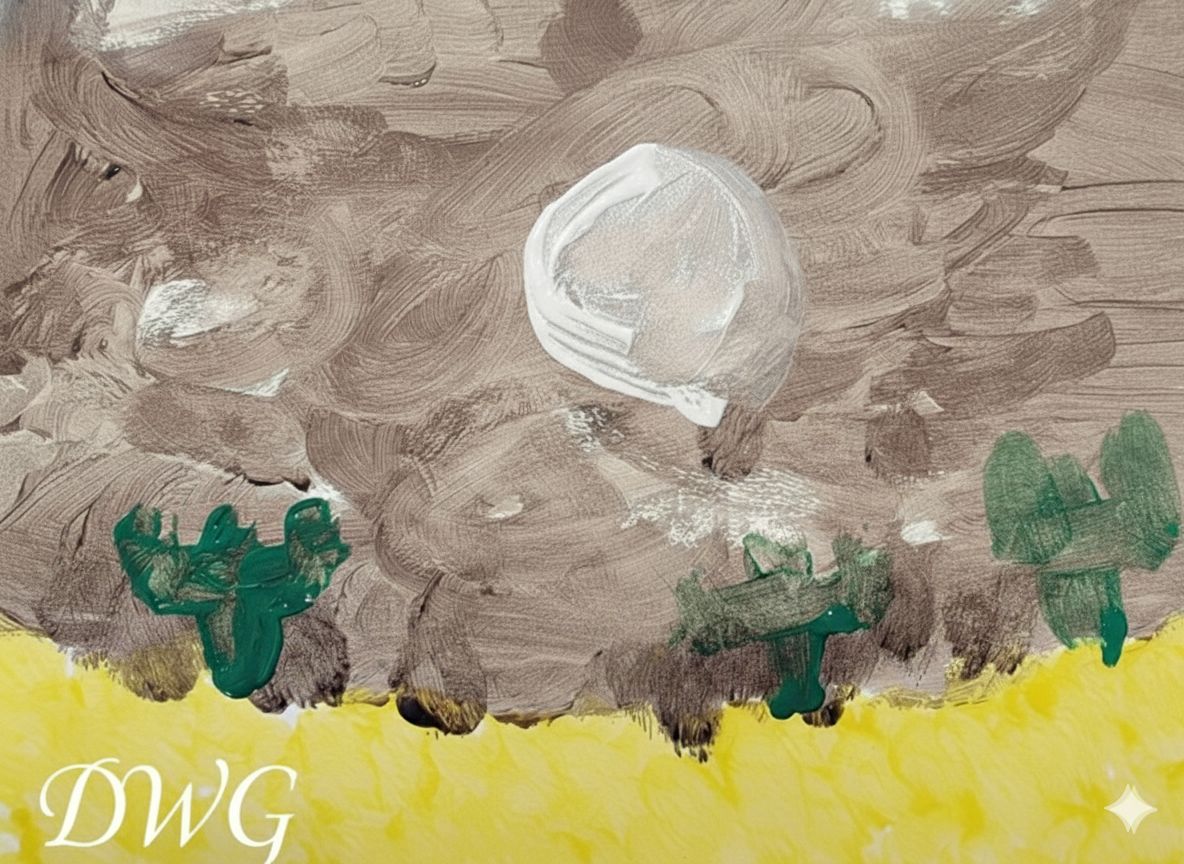
Yet, the love for those Bob Ross horizons never truly left me. Recently, I returned to those landscapes, applying the textural, energetic style I developed later in life to the scenes I loved as a kid.
Finding Beauty in the Breakdown
My move into deep abstraction wasn't just an artistic choice; it was a necessity born of crisis.
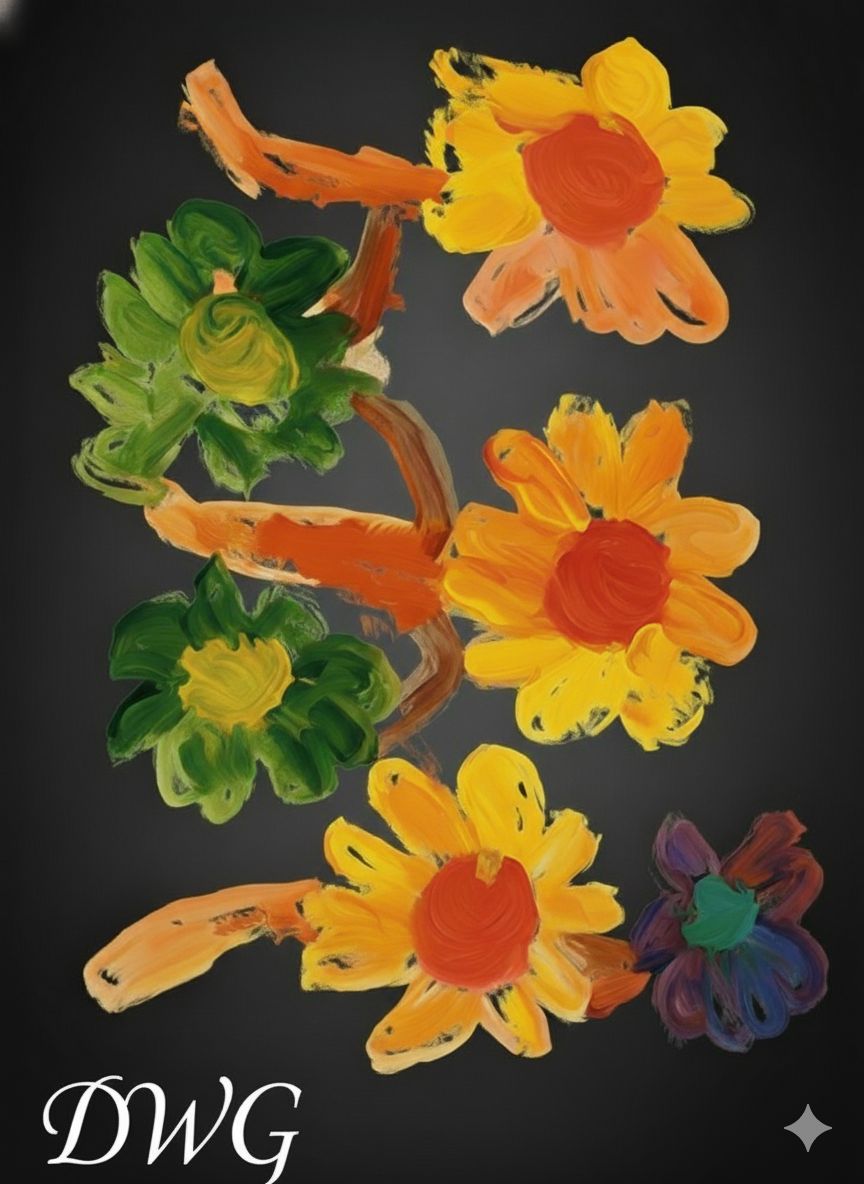
The original painting for the image below was created inside the Cedar Hills Mental Hospital. I had just suffered a mental breakdown that led to me dropping out of Portland State University. I was at a low point, struggling to see a future.
During a group art therapy session, I decided to try painting again. Because of my vision—20/400 is considered legally blind—I didn't think I was capable of creating something traditionally "beautiful." I couldn't rely on precise sight, so I had to rely on logic and feeling.
I know that texture makes things interesting. I approach painting very logically: if I can't see the fine details, I will paint in wild, heavy strokes that match my energy at the moment.
I asked them to play Louis Armstrong's "What a Wonderful World." Listening to that song, in that place, I started thinking intensely about the simple beauty of flowers, and I just let the brush move.
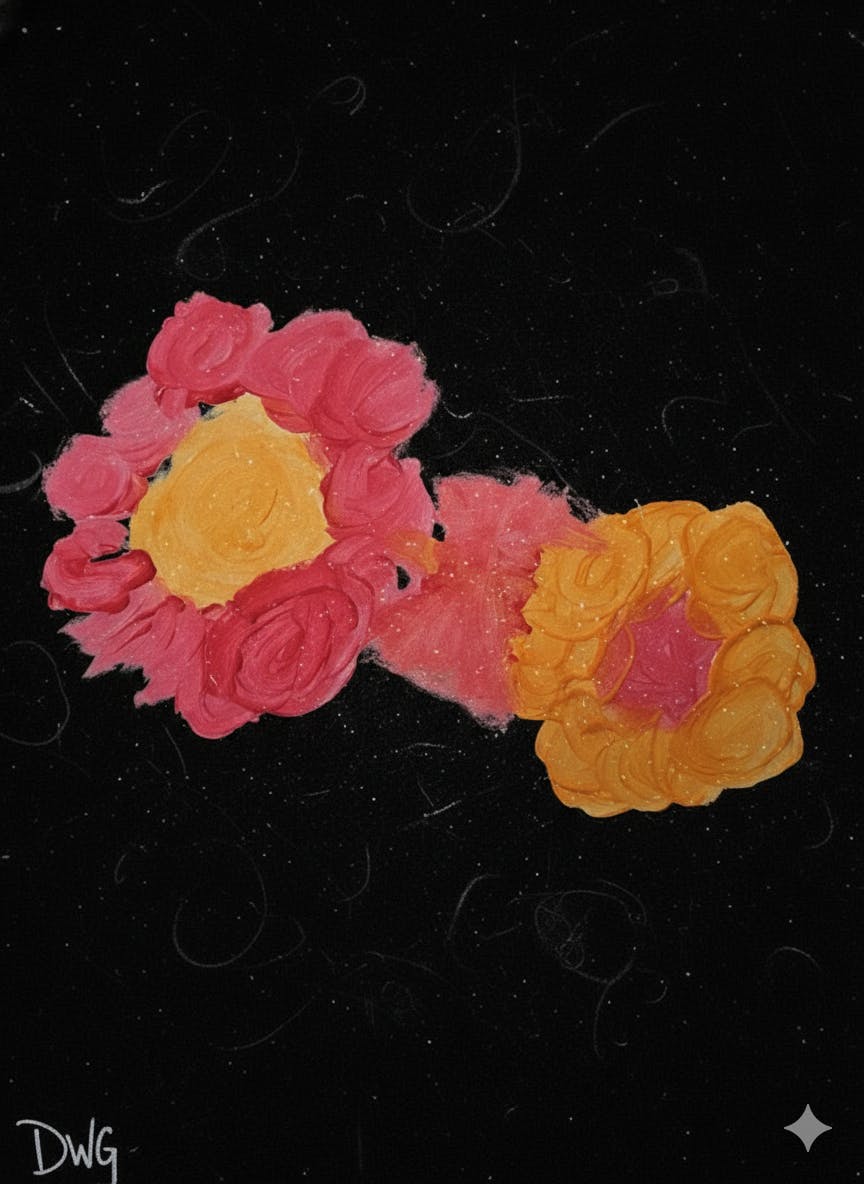
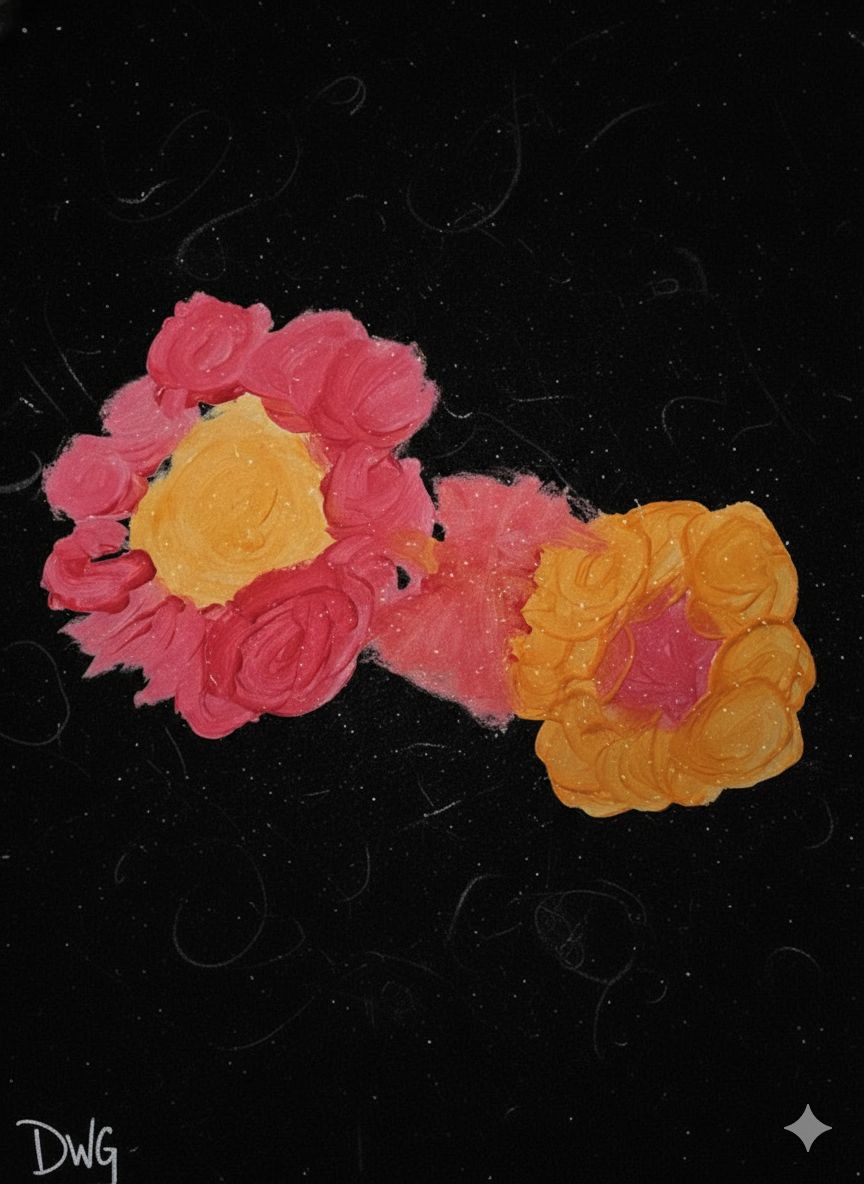
Art reflects life. Not every painting is born of trauma; some are born of connection. The piece below, featuring two connected flowers, was painted while I was listening to jazz and thinking about my girlfriend. It is a simpler representation of connection and harmony.
The Digital Remaster: Collaborating with Gemini
This is where the new technology comes in.
Because colors are hard for me and my peripheral vision is nonexistent, composing a final, polished image on a canvas is incredibly difficult. I can get the emotion and the texture down, but the framing often eludes me.
This is where I use AI.
Once a physical painting is done, I take a picture of it. I upload that image to Gemini and give it specific instructions as my digital assistant. I might ask it to "center the composition" or "place this painting on a contrasting, starry night background to highlight the textures."
The AI doesn't paint the flowers for me. It doesn't generate the emotion of the breakdown or the love for my partner. I do that. The AI acts as a remastering tool, providing the context and polish that my physical vision cannot always achieve.
It takes my raw, textural reality and gives it a stage.
My point is sharing this is to remind people to never give up on their dreams and what they find to be beautiful. Often times those that discourage others from seeing and pursuing beauty, have never seen true beauty themselves.
[story continues]
tags