
TL;DR —
Introducing the members of deep classes and proving that they are strongly deep.
Table of Links
4 Members of Deep Π0 1 classes
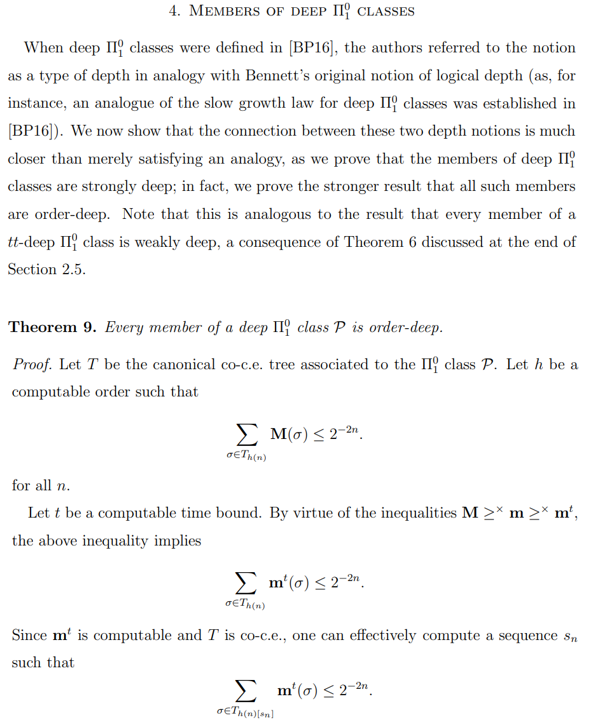
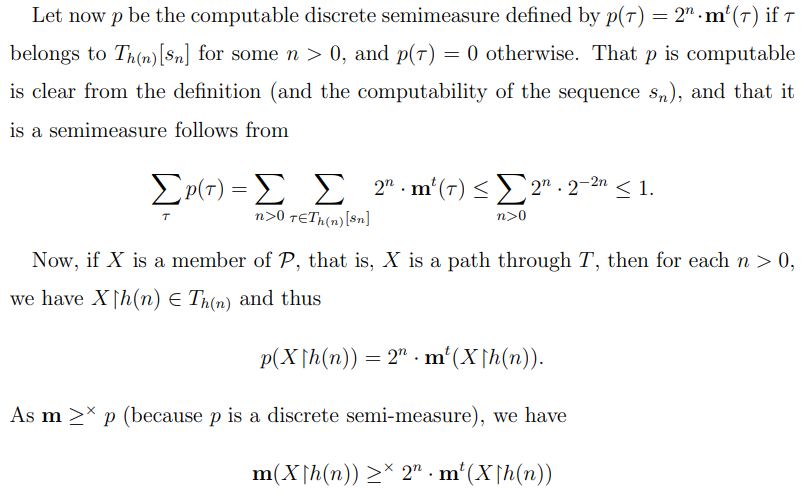
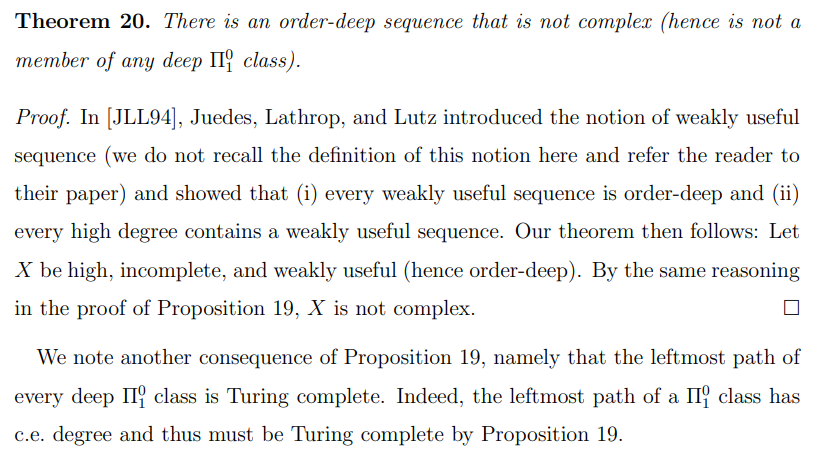
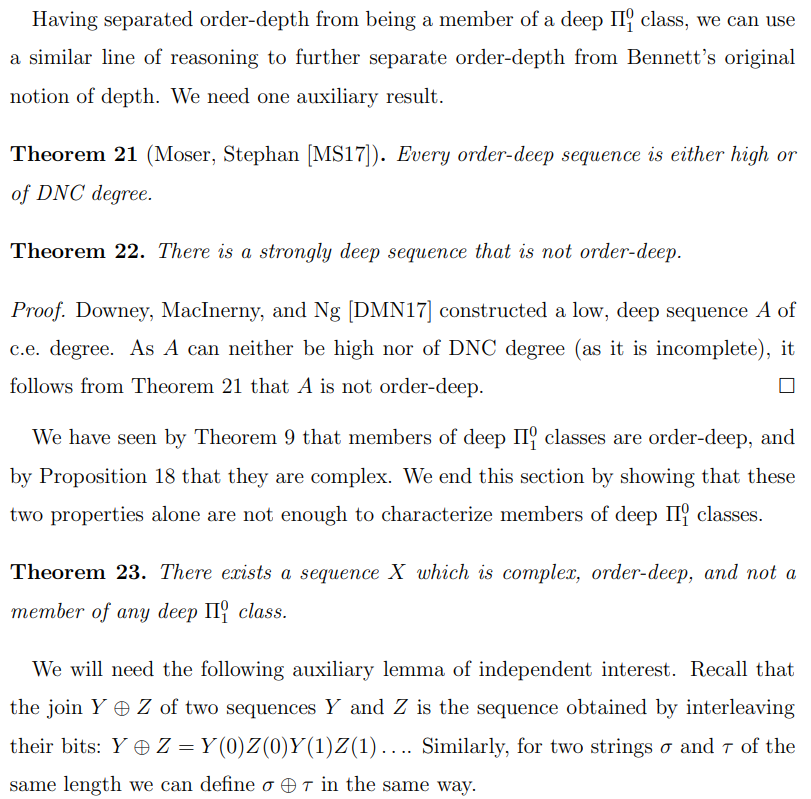
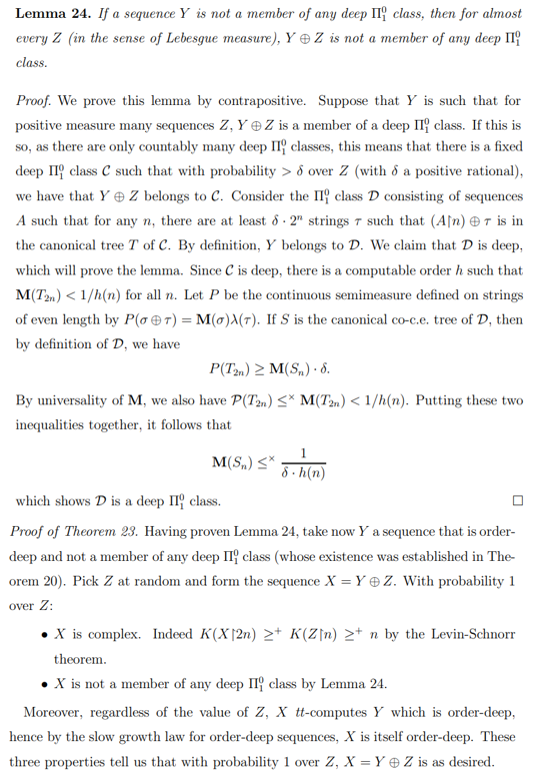
By Lemma 3, we can conclude that X is order-deep.
One immediate consequence of Theorem 9 is the following.
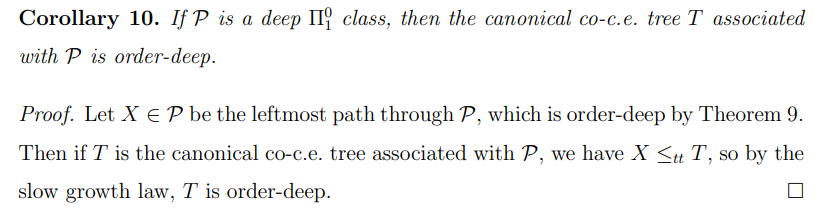
The converse of this result does not hold.
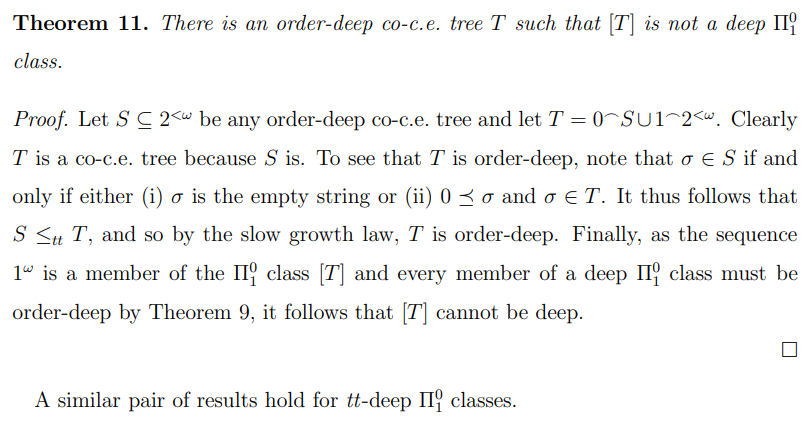
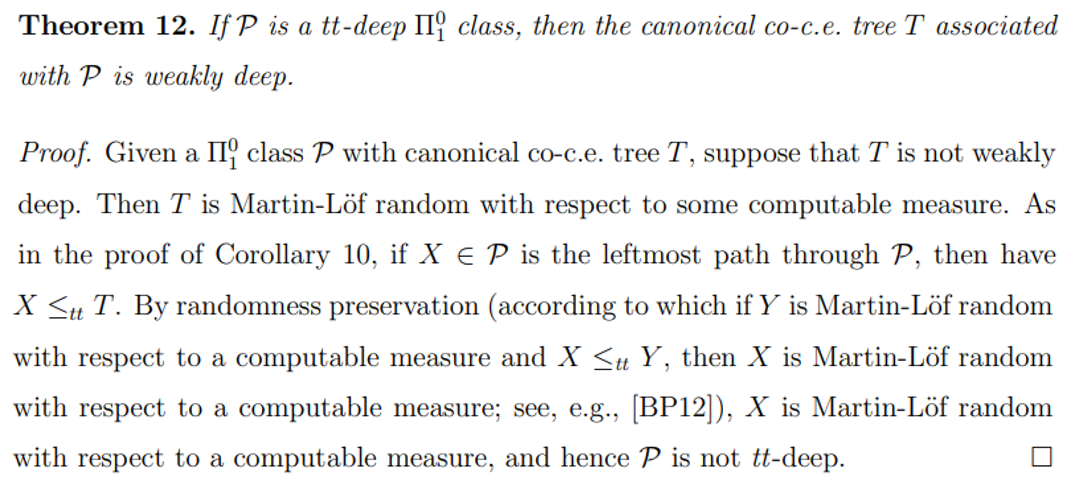
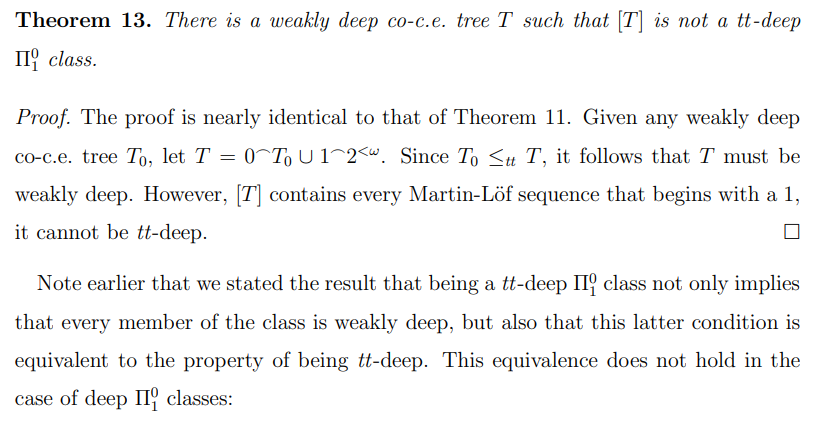
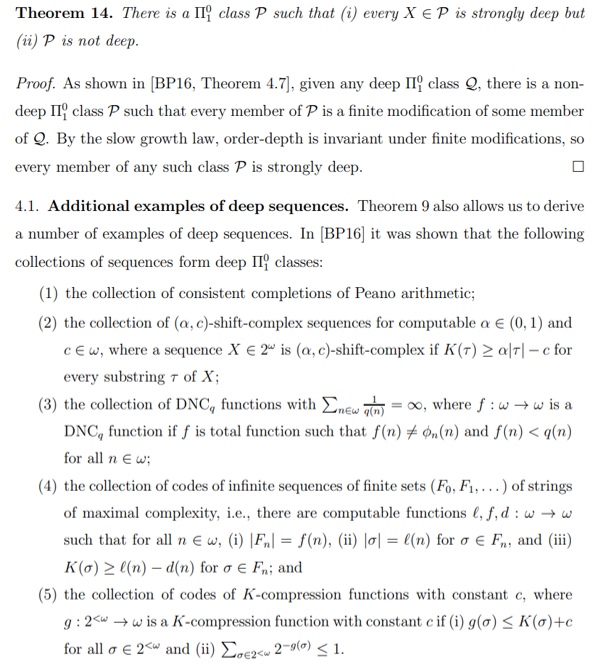
As an immediate consequence of Theorem 9 and the above results from [BP16], we have:
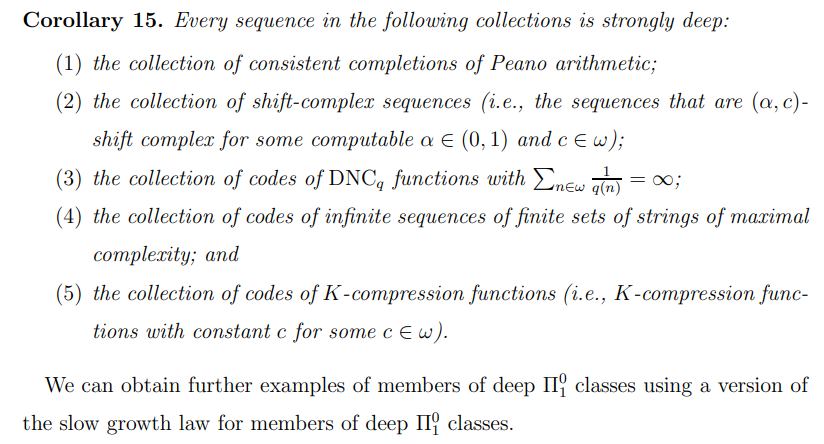
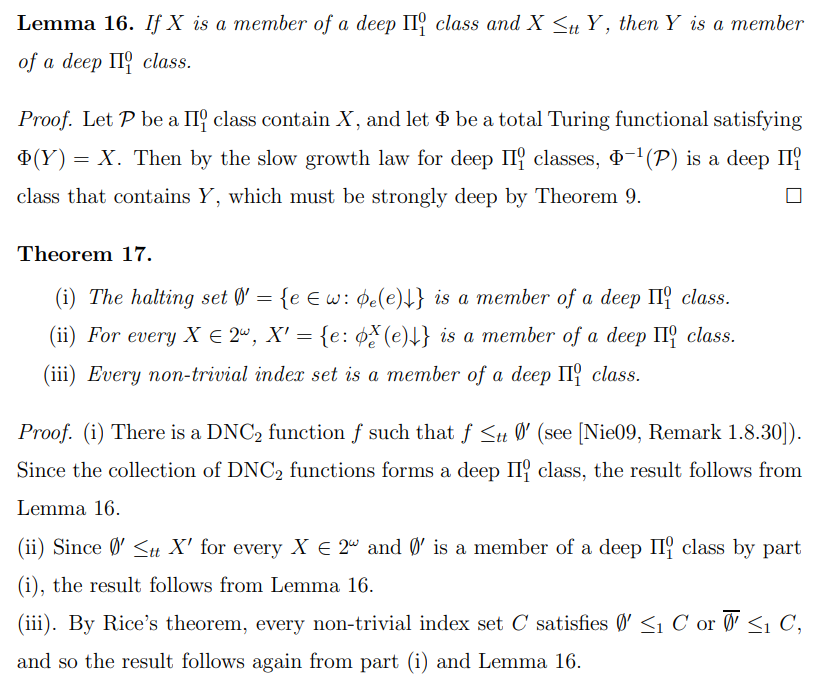
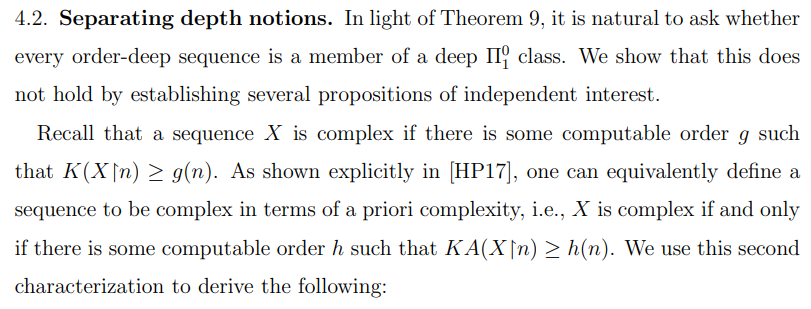
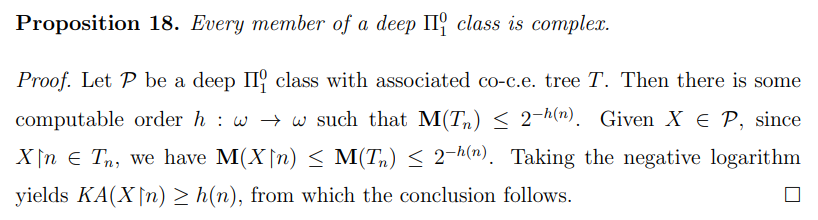
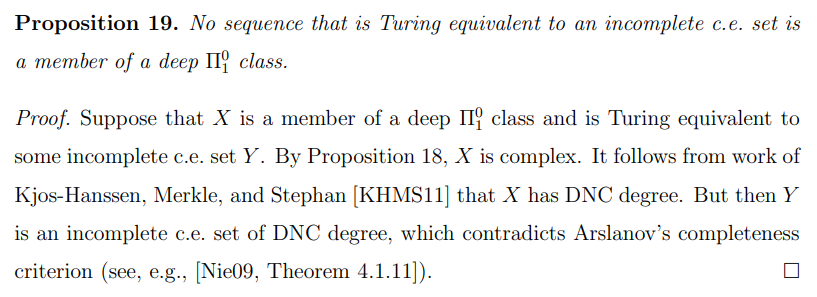
Next, we have:
This paper is available on arxiv under CC BY 4.0 DEED license.
Authors:
(1) Laurent Bienvenu;
(2) Christopher P. Porter.
[story continues]
Written by
@computational
Computational: We take random inputs, follow complex steps, and hope the output makes sense. And then blog about it.
Topics and
tags
tags
turing|computation|computational-notions|bennet's-notion|depth-notions|notions-of-depth|martin-lof-random-sequences|randomness
This story on HackerNoon has a decentralized backup on Sia.
Transaction ID: RgbS4hiRwwWOsC_ae9pG2CiDdt8vftxMkXbpPDE78xw