I have spent some time now conceptualizing a full stack for the Philippine rural finance market. This has been partly inspired by my work with the Philippine Clearing House Corporation in building a direct-to-bank platform, as well as my other work in building networks, for both financial services and non-financial enterprises.
There isn't a clear red line dividing rural and urban regions. Of course, the products generated by each differ widely, to an extent. But people travel daily between the zones, there is interdependence of trade and supply chain, and villages act as hinterlands for the cities. So, while a rural finance stack for the Philippines has a clearly distinctive flavour, it does cross paths with the advanced digital services available in Metro Manila and other cities.
Why is this important to you, a HackerNoon Reader? You see, the Philippines is the only major country across the Indo-Pacific with a fast-growing youth population. It is the biggest English-speaking market in Asia, other than India. It is a major supplier of services to the rest of the world through its BPO sector and its workers. Many of those who work overseas and in the BPO sectors are internal migrants from agrarian or peri-urban communities. If you are in the tech business and see Asia as the new frontier, you need to understand the Philippines well. The challenge is to make rural finance more efficient, more responsive to the unique needs of its users, and more resilient to the extreme weather patterns the country faces. Doing so lays the foundation for genuine financial inclusion.

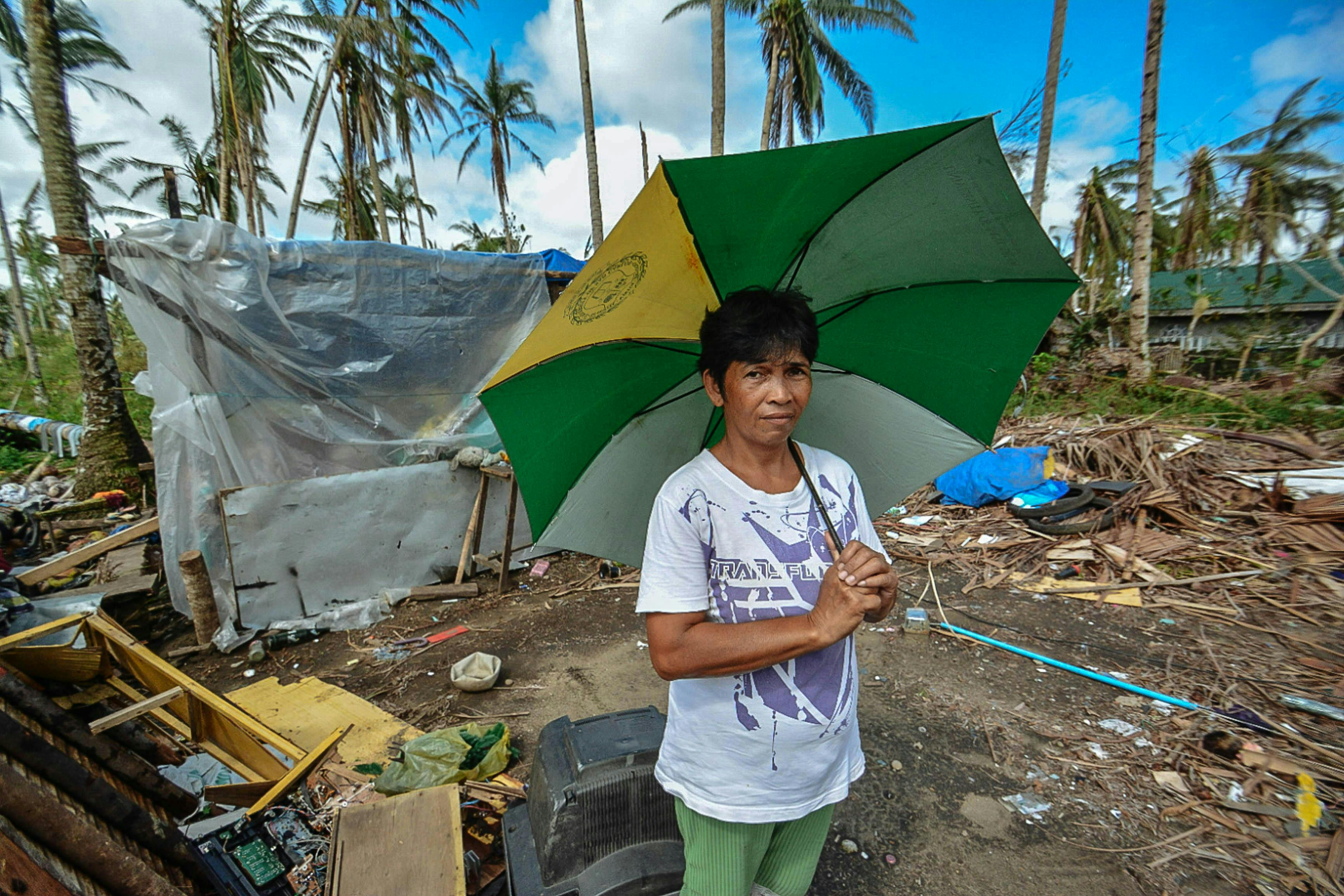
In this particular piece, I will focus on the problem of collateral, a key requirement for lending. As a matter of interest for technologists, this is a whole area of development and holds great potential. Collateral is represented by records of actual land, crops, buildings, and other assets, as well as the verifiability of the same through various means. The biggest impact on assets is extreme events, especially typhoons. The high frequency of these storms and accompanying floods creates fundamental issues for assets such as crops. Now, harvested crops such as rice are stored and then milled. Once they are stored, there is a way to assign a record of the asset and also track the value for future realisation.
Please take note of this data-https://www.da.gov.ph/bad-weather-damage-on-agriculture-tops-p1-1b-rice-hardest-hit/.
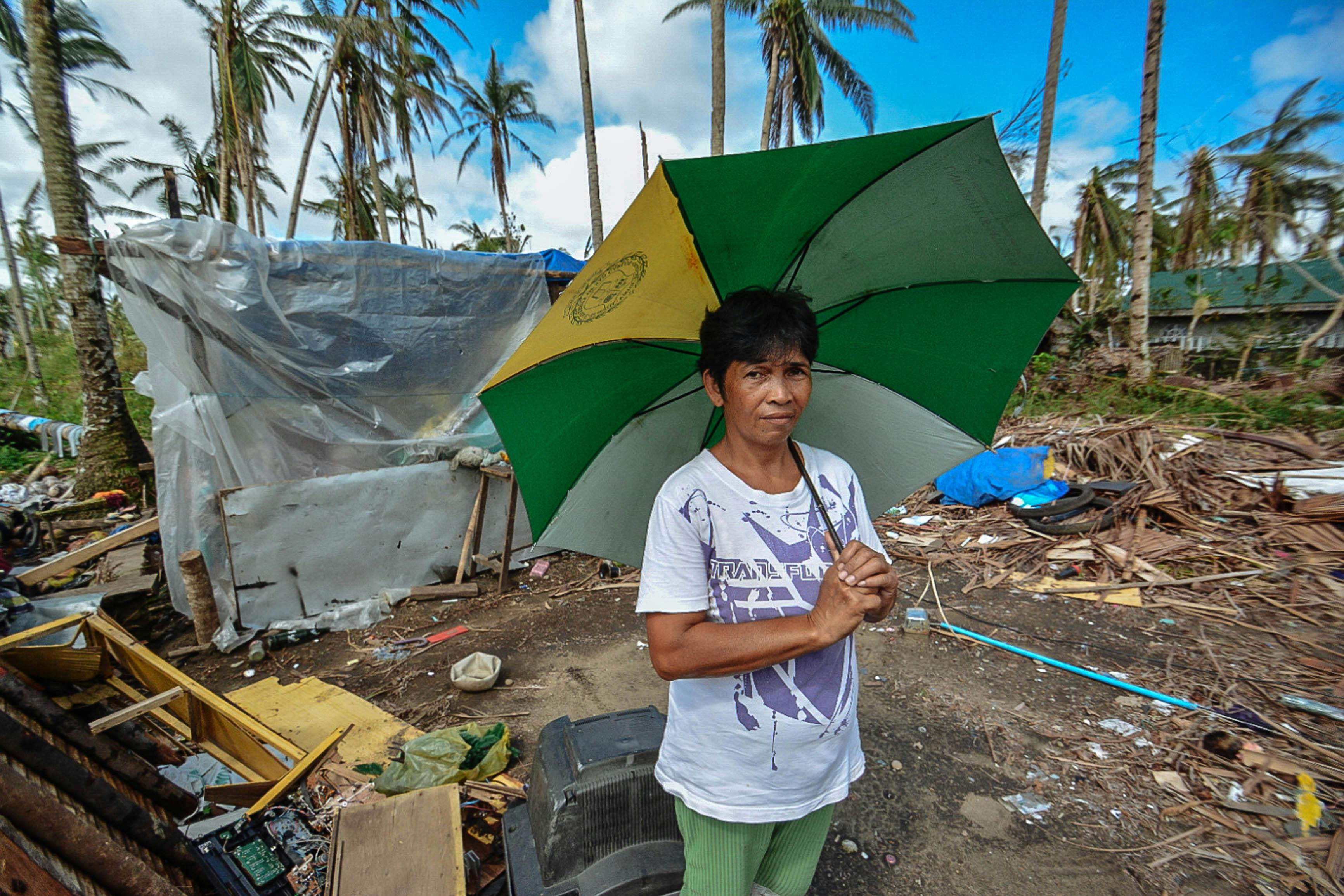
I quote from this same article- "....Of the 41,189 hectares of rice lands impacted, 32,445 hectares were partially damaged with recovery potential, while 8,744 hectares were totally lost. Estimated rice production losses stand at 19,819 metric tons—roughly a third of the country’s daily consumption—valued at P664.4 million...." This was in July 2025, long before at least two more large typhoons tore into the country. Around 20% of the acreage for rice was lost. Y
You can see the issue here, then, with assets. And yet, farmers and the larger community cannot just abandon agriculture. It remains a large GDP contributor and employer. It feeds people. The Philippines exports a large amount of produce.
So let's see what we can do. Certainly, the rice that is regularly stored can be seen as an asset. The solution needed is to determine how to maximise the value of this asset, within a framework that the rural banks, larger commercial banks and regulator can accept as meeting important tests for underwriting.
I would propose the following:
- Create an indexed value of stored rice. The algorithm can be relatively simple or complex based on the variables involved. Quality of rice, the quantity of rice, and storage condition factors may be included along with a baseline price. There could be other variables as well. For example, if the storage facility itself is located in a risk-free zone(such as a well-drained, secure, high place) then the indexed value carries a premium compared to rice stored in other places. At the same time, if the facility conditions are relatively advanced(such as internal climate control) again that adds weightage.
- The dynamism of the data against each contributing variable will provide for a change in indexed value with time and against specific scenarios. I won't go into futuristic scenario building here, though that is indeed quite relevant. Instead, the algorithm should provide for a forecast at any point in time within a specific future time range. The statistical tool required to forecast this has to be chosen.
- Integrate the variables that contribute to the index. This means there is a need for a real-time data pipeline, which in turn needs monitoring devices. There will need to be quality control and monitoring of the devices themselves.
- Ensure that the data against these variables can be collected on a continuous basis. Microservices integration may suffice.
- Digitise the record of storage, tokenize the record, and get a local authority(such as a notary) to attest to this. So there are three signatures owner of the storage facility, the owner of the rice, and the notary. Now, the farmer has an app through which he/she is able to monitor the value of the owned token at present, see what it might be in the future, and the values of the contributing variables.
- This token becomes the asset he provides to a rural bank for a loan.
- This token is also saleable on the market, with a future price agreed by a buyer(such as a mill owner).
So this is arguably a stack by itself. But this is just an asset stack. It is necessary to make this part of the full stack of rural finance.
I have explained this in a simple way. However, I do envisage the evolution of a token marketplace as a result of this. I am not, at this time, drawing a schematic for this. It is in my head and is fairly understandable by anyone from this field.
We will dive deeper into the implications for insurance, the tech of token creation, and the possible token marketplace in a subsequent post. Another post will go into some detail about the indexing process.
Lead image by Denniz on Pexels
[story continues]
tags