Modern marketing faces a subtle but significant challenge.
Not a lack of tools. Not a lack of ideas. But a lack of memory.
Campaigns are launched, data is collected, and insights are discussed, but are often forgotten. Teams move on, repeat mistakes, and relearn lessons that have already been addressed.
This is where the concept of a second brain becomes valuable.
It serves not as a productivity gimmick, but as a fundamental improvement to marketing decision-making.
With AI agents, this concept is now practical.
It is operational.
The Cognitive Bottleneck in Marketing
Most marketing teams depend on human memory more than they recognize.
- Why did that campaign work?
- Which audience responded best last quarter?
- What messaging failed before, and why?
The answers usually live:
- In Slack threads
- In forgotten dashboards
- In one person’s head
As teams grow or experience turnover, this context is often lost.
The result is predictable:
- Repeated experiments
- Inconsistent decisions
- Fragmented strategy
Marketing does not fail due to poor execution.
It fails because of aloss of institutional memory.
What a “Second Brain” Actually Means in Marketing
A second brain is more than a note-taking application.
In marketing, a second brain is a living system that:
- Observes activity
- Stores insights
- Connects patterns
- Feeds decisions
It does not replace marketers.
It enhances professional judgment.
Think of it as:
- A strategist who never forgets
- An analyst who never sleeps
- A historian who sees patterns across time
AI agents make this possible because they can operate continuously, rather than only when prompted.
Why AI Agents (Not Just AI Tools)
Most teams already use AI tools.
They generate:
- Copy
- Images
- Ad variations
While helpful, this approach remains superficial.
AI agents offer a distinct advantage.
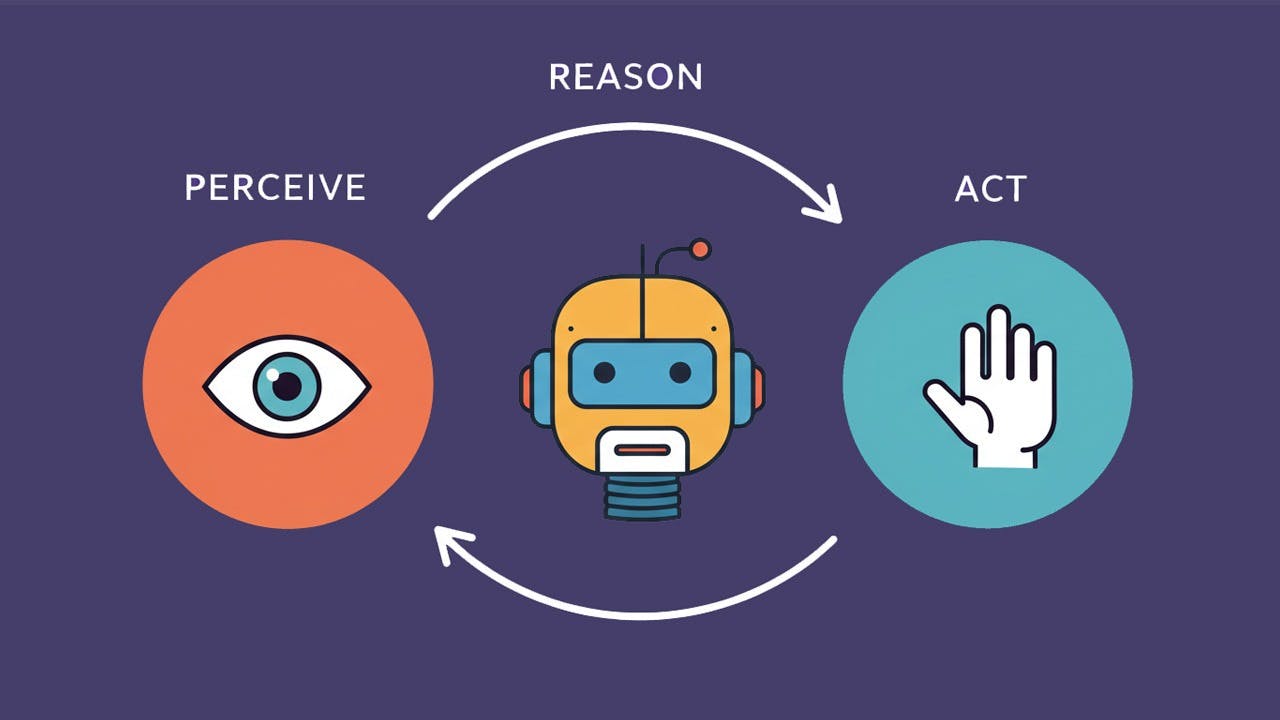
An agent:
- Has a role
- Has context
- Has memory
- Acts repeatedly toward an objective
Instead of requesting, “Write me ad copy,”
You design an agent whose job is,“Observe what messaging works and update our positioning over time.”
This shift is essential.
The Core Components of a Marketing Second Brain
A functional second brain does not need to be complex; it must be well-structured.
At a minimum, it has four layers.
1. Input Layer: What the System Observes
This includes:
- Campaign performance data
- Customer feedback
- Sales conversations
- Content engagement
- Market signals
An AI agent continuously monitors these inputs.
The goal is not simply to report metrics, but to capture meaningful insights.
For example:
- Which objections keep recurring?
- Which messages consistently underperform?
- Which channels are decaying over time?
2. Memory Layer: What the System Retains
Most marketing data is stored but not retained in a meaningful way.
A second brain stores insights as patterns, not raw numbers.
Examples:
- “Short-form video works better for first-touch awareness, not conversions.”
- “Discount-led messaging spikes traffic but lowers retention.”
- “This audience responds to clarity, not cleverness.”
These insights are tagged, timestamped, and retrievable.
Memory is only valuable if it can be recalled at the appropriate time.
3. Reasoning Layer: What the System Connects
This is where AI agents shine.
They don’t just log outcomes.
They look forrelationships.
- When did performance change—and what else changed at the same time?
- Which messages work for which segments?
- What patterns repeat across channels?
Over time, the agent forms heuristics:
“When X happens, Y usually follows.”
This is a strategy, not mere automation.
4. Action Layer: What the System Feeds Back
A second brain does more than observe.
It intervenes.
Examples:
- Suggests messaging adjustments before a campaign launch
- Flags repeated mistakes
- Recommends reallocating effort based on historical patterns
Restraint is essential.
The system does not make decisions.
Itinforms.Humans still choose.
They make decisions with improved context.
What This Looks Like in Practice
Imagine preparing a new campaign.
Instead of starting from scratch, you query your second brain:
- “What positioning worked best for this audience before?”
- “What objections caused drop-offs last time?”
- “Which channels underperformed for similar launches?”
The agent responds with:
- Summarized insights
- Historical examples
- Risks to watch for
You are no longer relying on guesswork.
You arebuilding on accumulated insight. This is the power of compounding insight.
Why This Beats Dashboards
Dashboards show what happened.
Second brains explain why it happened, and what to do next.
Dashboards are passive.
Agents are active.
Dashboards require interpretation.
Agents reduce cognitive load.
Most importantly, dashboards reset with each new campaign.
Second brainsremember across time.
Common Mistakes When Building This
Teams often fail by overcomplicating the process.
Some pitfalls:
- Trying to automate decisions instead of learning
- Feeding agents raw data without context
- Treating AI as a replacement for strategy
The goal is not complete autonomy.
It iscontinuity.
A second brain exists to preserve learning, not to pursue perfection.
Why This Matters More in the AI Era
As AI accelerates execution, mistakes can also scale more rapidly.
If your system does not learn, failures will occur more quickly.
A second brain introduces necessary friction at critical points:
- Before repeating mistakes
- Before scaling noise
- Before copying trends blindly
In an environment where execution is accessible to all, the speed of learning becomes a key advantage.
The Real Payoff: Compounding Insight
The greatest benefit is not productivity.
It is the accumulation of insight.
Every campaign:
- Improves the system
- Sharpens judgment
- Reduces waste
Over time, decisions get easier. Confidence increases. Strategy stabilizes.
This is not automation.
This is intelligence.
Final Thought
Most marketing teams do not need additional ideas.
They need improved organizational memory.
AI agents make it possible to build a second brain that:
- Learns continuously
- Remembers context
- Improves decisions over time
This is achieved not by replacing marketers, but by ensuring their best thinking is always retained.
[story continues]
tags