
Authors:
(1) Johannes Rude Jensen, University of Copenhagen, eToroX Labs (johannesrudejensen@gmail.com);
(2) Victor von Wachter, University of Copenhagen (victor.vonwachter@di.ku.dk);
(3) Omri Ross, University of Copenhagen, eToroX Labs (omri@di.ku.dk).
Table of Links
2 Methodology and Artefact Requirements
3 The Implementation and Integration of the Artefact
6 Conclusion and Future Work, and References
2 Methodology and Artefact Requirements
The iteration of the artefact presented in this paper is the result of a 6-month development process involving key stakeholders from a hosting organization. The hosting organization is a major international online brokerage with a long-term strategic interest in blockchain technology. Working with the participating stakeholders, we selected the design science research (DSR) methodology (Gregor and Hevner 2013) guiding a “build-demonstrate-evaluate” workflow in which multiple cyclical iterations of the artefact were built, tested and evaluated (Fridgen, Urbach and Schweizer, 2017). We defined a six step process, denoting a feedback loop between development and evaluation of core components of the artefact.
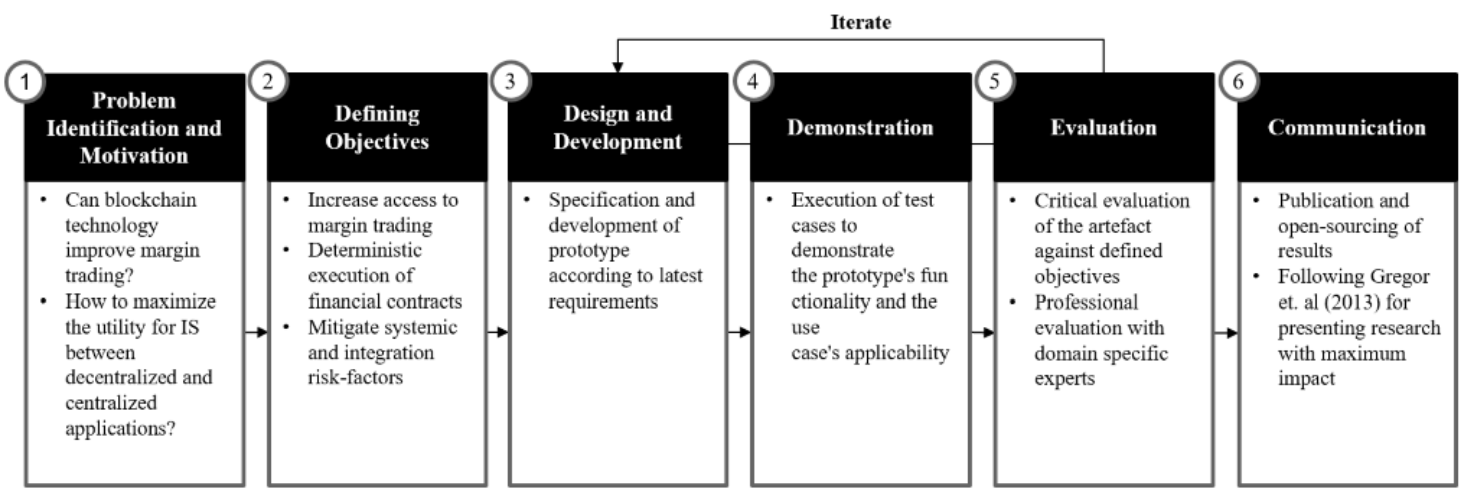
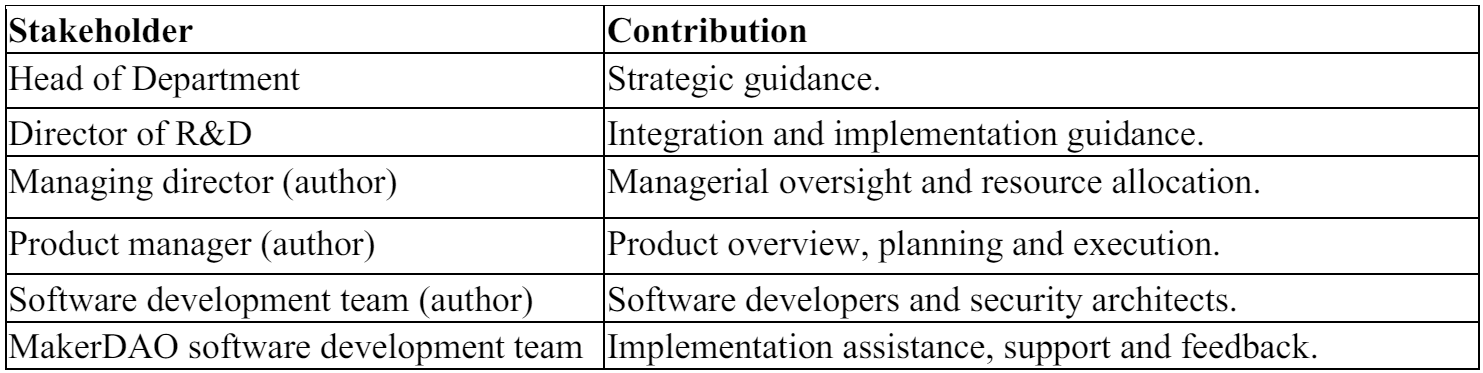
The requirements for the present iteration of the artefact were gathered through multiple unstructured qualitative interviews with the stakeholders throughout the cyclical development process (Myers and Newman 2007). The authors of this paper played an integral role in the design and development of the artefact, working with the team of stakeholders in various roles (Table 1.).
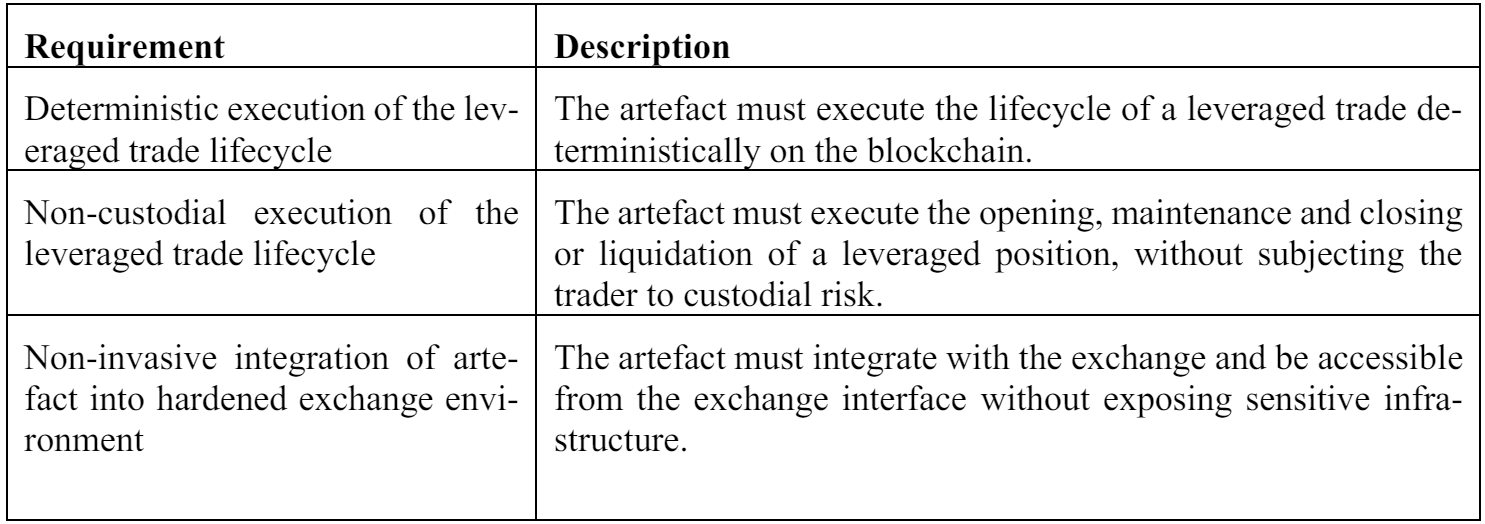
Through multiple iterations of the cyclical workflow, we defined a set of three tentative requirements, applied to the iteration of artefact presented in this paper (Table 2).
This paper is available on arxiv under CC BY 4.0 DEED license.
[story continues]
tags