


Large language models have unlocked something bigger than conversational AI.
They’ve enabled systems that can:
- Plan
- Call tools
- Retrieve knowledge
- Maintain memory
- Iterate toward goals
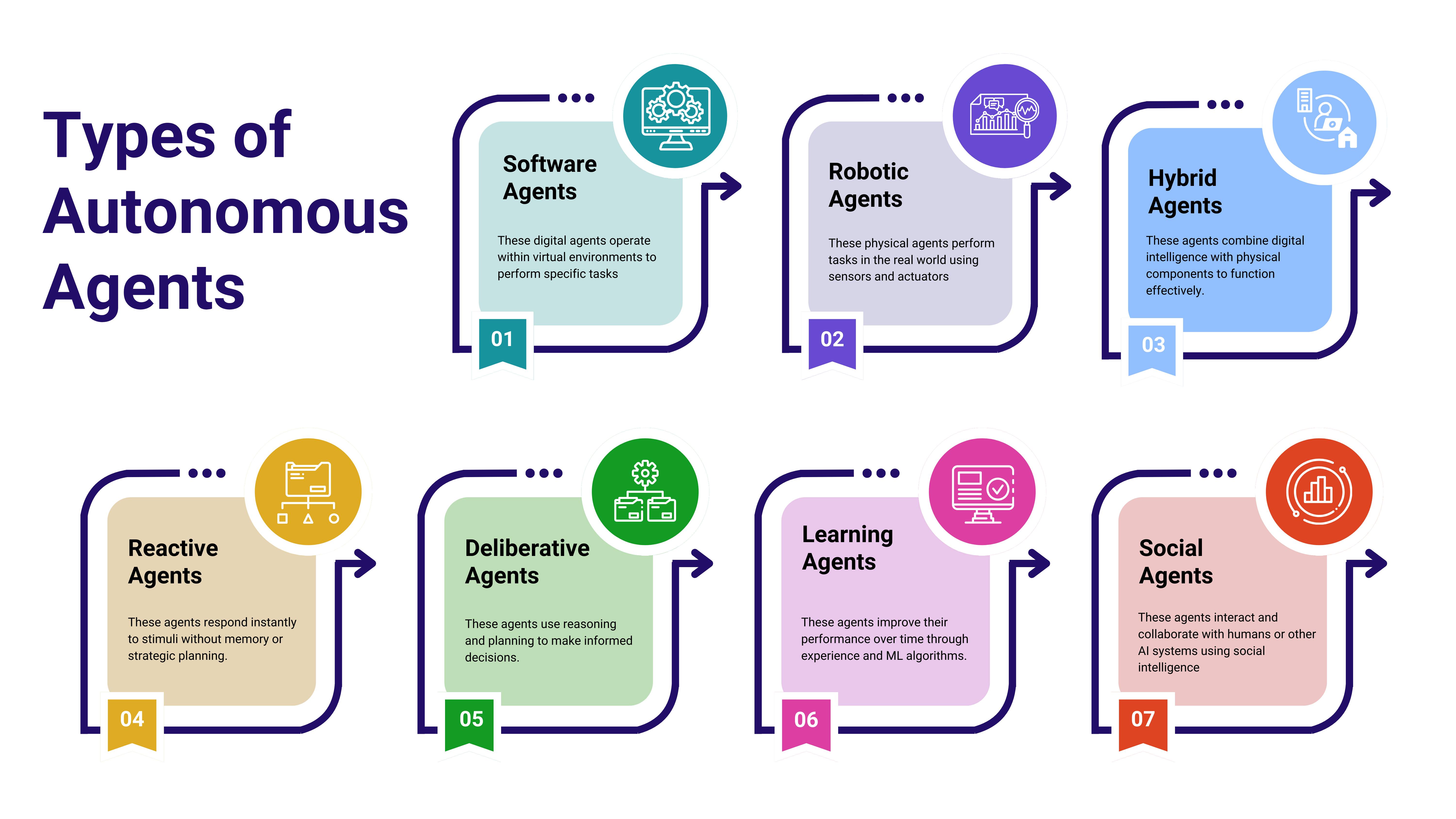
Frameworks inspired by research like Chain-of-Thought reasoning, ReAct, and tool-augmented LLMs have made it possible to build what we now call agentic systems — AI systems that reason and act.
But here’s the reality:
What works in research demos does not automatically work in production.
Building agentic AI in real-world systems — especially enterprise or regulated environments — quickly exposes architectural weaknesses that aren’t obvious at first.
After developing and operating LLM-driven workflows in production contexts, I’ve learned:
Agentic AI is not primarily a model problem. It is a systems engineering problem.
Let’s walk through what actually breaks — and how to design around it.
Non-Determinism in Control Loops
LLMs are probabilistic by design. That flexibility is what makes them powerful.
But when an agent is responsible for:
- Selecting tools
- Generating parameters
- Branching execution paths
- Deciding when to stop
Non-determinism becomes risk.
In early production testing, we observed:
- Same goal → different execution path.
- Slight retrieval changes → completely different reasoning.
- Parameter drift in tool calls.
- Inconsistent termination behavior.
Research like ReAct (reasoning + acting) demonstrates powerful iterative reasoning. But it also implies variability in reasoning chains.
In research environments, variability improves reasoning diversity.
In production systems, variability creates instability.
Engineering Pattern: Separate Reasoning from Execution
The most important architectural decision we made:
The LLM does not control infrastructure directly.
Instead:
- The LLM proposes structured intent.
- A deterministic orchestration layer validates it.
- Tools execute only after schema validation.
- Execution boundaries are enforced externally.
This mirrors principles from:
- Control theory (separation of controller and actuator)
- Distributed systems state machines
The LLM reasons. The system governs. That separation dramatically increases reliability.
Memory Drift and Context Contamination
Agentic systems rely on multiple forms of memory:
- Conversation history
- Retrieved documents (RAG-style systems)
- Intermediate reasoning steps
- Tool outputs
- System instructions
Research in Retrieval-Augmented Generation shows improved factual grounding. However, large-context models also exhibit degradation across long sequences (see recent work on context attention limits).
In practice, we observed:
- Context windows filling with low-signal content.
- Old speculative reasoning treated as ground truth.
- Retrieval noise influencing decisions.
- Hallucinated intermediate results persisting as state.
The system still sounded coherent.
But it was drifting.
Engineering Pattern: Typed, Layered Memory
We redesigned memory into structured layers:
1. Working Memory
Short-lived reasoning context.
2. Verified Structured State
Only validated tool outputs stored as typed fields.
Example:
risk_score: floatregulatory_flag: booleaneligibility_status: enum
Not paragraphs.
Structured data.
3. Retrieval Memory
External knowledge stored separately and cited, not merged blindly into state.
4. Immutable Execution Log
Every step recorded for replay and audit.
Generated text does not automatically become trusted system state.
That boundary prevents memory drift from corrupting decisions.
Tool Governance and Autonomous Risk
Tool use is what makes agentic systems powerful.
It is also where they become dangerous.
Without constraints, we saw:
- Recursive tool loops.
- API rate exhaustion.
- Repeated retries on failing services.
- Cost spikes from runaway execution.
- Agents over-relying on search tools.
Early autonomous agent experiments (e.g., AutoGPT-style systems) have publicly demonstrated these behaviors.
Autonomy without boundaries becomes instability.
Engineering Pattern: Bounded Autonomy
We enforce:
- Maximum step counts per task.
- Tool invocation ceilings.
- Token budgets.
- API rate limits.
- Recursion depth limits.
- Hard termination rules.
This aligns with principles from:
- Bounded rationality theory.
- Safety constraints in AI alignment research.
- Production reliability engineering.
Autonomy operates inside guardrails.
Not outside them.
Observability and Reproducibility
Traditional ML systems log inputs and outputs.
Agentic systems require logging:
- Goal definitions.
- Active constraints.
- Tool selection decisions.
- Validated parameters.
- Intermediate state transitions.
- Confidence scores.
- Termination causes.
Without structured observability:
Debugging becomes guesswork.
Explainability research often focuses on interpreting static model predictions. Agentic systems introduce temporal reasoning chains — decisions evolving over time.
To address this, we built:
- Step-level execution tracing.
- Structured reasoning summaries (not raw chain-of-thought).
- Replayable execution runs.
- Deterministic re-simulation.
If you cannot replay a failed run, you cannot improve the system.
Reproducibility is not optional.
Explainability in Regulated Domains
In regulated industries, You cannot say:
“The AI decided.”
You must show:
- Which data was used.
- Which rule applied.
- Which threshold triggered action.
- Which constraints were active.
- Why escalation occurred.
Agentic AI complicates this because:
- Plans evolve dynamically.
- Tools inject external state.
- Reasoning paths vary.
We implemented structured reasoning artifacts:
- Goal → Plan → Action mapping.
- Tool justification metadata.
- Input-output linkage.
- Validation checkpoints.
- Final decision explanation aligned with structured state.
We do not expose raw chain-of-thought.
We expose traceable decision records.
That satisfies both safety and governance.
Human-in-the-Loop as a Stability Layer
Full autonomy is not always the objective.
Research on human-AI collaboration consistently shows hybrid systems outperform fully autonomous ones in high-risk domains.
We design graduated autonomy:
- High confidence + low risk → auto-execute.
- Medium confidence → draft + recommend.
- High risk or ambiguity → escalate.
- Policy violation → hard stop.
Autonomy is a dial.
Not a switch.
The Architectural Shift Most Teams Miss
Many teams treat agentic AI as:
Prompt engineering + tool calling.
In reality, production-grade agentic AI requires:
- Deterministic orchestration.
- Typed state management.
- Tool governance layers.
- Structured observability.
- Risk containment strategy.
- Replayable execution traces.
The LLM is one component.
The architecture determines whether the system survives.
Final Reflection
Agentic AI is powerful.
But power without structure becomes fragility.
The next generation of digital systems will not be defined by the most autonomous agents.
They will be defined by the most reliable ones.
If you’re building agentic AI today:
Focus less on making the agent smarter.
Focus more on making it constrained, observable, and reproducible.
That’s where engineering maturity lives.
References
- Brown et al., “Language Models are Few-Shot Learners,” 2020.
- Wei et al., “Chain-of-Thought Prompting Elicits Reasoning,” 2022.
- Yao et al., “ReAct: Synergizing Reasoning and Acting,” 2023.
- Lewis et al., “Retrieval-Augmented Generation for Knowledge-Intensive NLP Tasks,” 2020.
- Wang et al., “Self-Consistency Improves Chain of Thought Reasoning,” 2022.
- Doshi-Velez & Kim, “Towards a Rigorous Science of Interpretable ML,” 2017.