


Every company I speak with seems to be asking the same question in a different form.
How do we use AI to move faster?
How do we automate more decisions, reduce friction, save time, and create leverage across the organization?
It is a reasonable question. AI can already write, sort, summarize, recommend, and execute at a pace that would have felt unrealistic a short time ago. The temptation is obvious. If a team already feels overloaded, the promise of more speed feels like relief.
But I think many companies are solving for the wrong bottleneck.
The deeper problem is not always a lack of intelligence. Often, it is a lack of memory.
A surprising number of organizations do not suffer because they cannot generate enough ideas, outputs, or action. They suffer because they keep forgetting what they have already learned. They forget why a decision was made. They forget which signals mattered. They forget what failed, what almost worked, who showed judgment under pressure, and where trust was actually earned. Then they repeat the same discussions with slightly different language and call it progress.
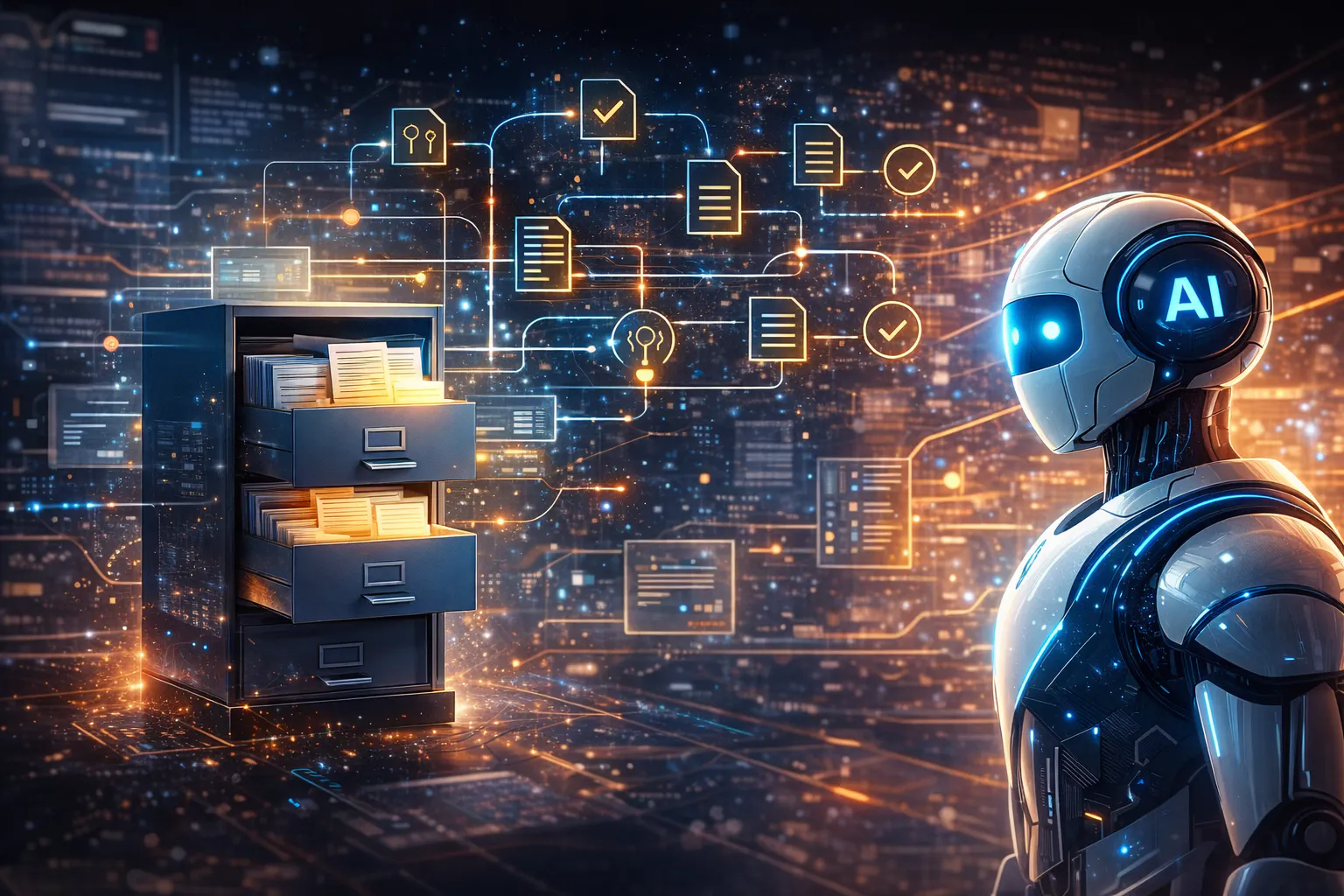
This is why I keep coming back to one uncomfortable thought. Before companies add more AI agents, many of them need a memory layer.
I do not mean memory in the technical sense alone. I mean institutional memory that is structured well enough to guide future action. The kind of memory that helps a team understand not only what happened, but why it mattered.
Most organizations are full of broken memory.
Important decisions live inside chat threads nobody can find.
Context disappears when one manager leaves.
Performance reviews flatten a year of work into a few polite paragraphs.
Hiring teams remember credentials more clearly than behavior.
Projects get documented at the level of milestones, while the real lessons remain trapped inside a few people’s heads.
Then leaders wonder why new initiatives feel disconnected from reality. The answer is simple. A company that cannot remember clearly cannot adapt intelligently.
This is where I think the current AI conversation becomes too shallow.
Many businesses want AI agents to act on their behalf before they have built the conditions for meaningful action. They want systems that can recommend, respond, and decide at scale, but the underlying organization is still operating on a fragmented history and weak internal understanding. In that environment, AI may increase activity, but it does not necessarily increase wisdom.
In some cases, it makes the problem worse.
A company with poor memory and more automation can become very efficient at repeating its own confusion.
It can scale processes without preserving lessons.
It can accelerate communication without improving clarity.
It can generate more outputs without deepening judgment.
That may look productive for a while. Then the cracks begin to show. Teams stop trusting recommendations they cannot trace. Managers rely on summaries instead of lived understanding. New employees inherit systems without inheriting the reasoning behind them. Over time, the company becomes faster on the surface and shallower underneath.
What is missing is continuity.
A healthy organization needs a durable way to retain how it learns. It needs more than files and dashboards. It needs a usable record of decisions, tradeoffs, behavior, patterns, and consequences. It needs to know which actions built trust and which ones weakened it. It needs to remember who adapts well, who handles ambiguity, who supports others, who learns quickly, and who keeps making the same mistake in a more polished form.
Most companies claim to value learning. Few build systems that actually preserve it.
That matters because learning is rarely lost in one dramatic moment. It leaks away through ordinary routines. A meeting ends without capturing the real concern. A project closes with a generic wrap-up. A candidate is rejected with vague notes. A manager leaves with years of tacit knowledge. A team ships a product and records the launch date, but not the judgment that made the launch possible. Piece by piece, the organization loses the raw material of future intelligence.
Then an AI layer gets added on top.
It can summarize the meeting, but it cannot recover the courage that never made it into the notes.
It can rank candidates, but it cannot reconstruct the missing evidence that nobody bothered to observe.
It can map next steps, but it cannot tell you what the company keeps refusing to learn.
This is why memory is becoming a strategic issue.
When people talk about AI readiness, they often focus on models, tooling, workflows, and adoption. Those matter. But the quieter question is whether the organization has built enough continuity to make machine assistance meaningful. If your company cannot preserve context, then every new layer of automation rests on unstable ground.
The strongest companies of the next decade may not be the ones with the most agents. They may be the ones that build the clearest memory.
That kind of memory is not nostalgia. It is not bureaucracy. It is not endless documentation for its own sake. It is selective, structured continuity. It captures what is useful for future judgment. It makes growth visible. It helps organizations distinguish movement from learning.
It also changes how people relate to work.
When a company remembers only outcomes, people learn to manage appearances.
When it remembers contribution, growth, and decision quality, people start to understand that development has a trace. Their work is not reduced to a final number or a clean narrative after the fact. It becomes part of an evolving record of trust.
That is the kind of foundation AI can actually strengthen.
An agent can help navigate a system that already preserves meaningful context.
It can surface relevant patterns, retrieve decisions, connect lessons, and reduce noise.
It can help people act with more coherence because the organization has something coherent to work with.
This is a more demanding path than chasing automation headlines. It requires companies to ask harder questions about what they notice, what they record, and what they choose to forget. It also requires admitting that speed is not always the missing ingredient. In many teams, memory is.
We are entering a period where organizations will be judged not only by how intelligently they automate, but by how intelligently they remember.
That may sound less exciting than the race to build autonomous systems. I think it is more important.
Because in the end, a company that cannot remember itself will struggle to trust itself. And a company that cannot trust itself will hand more and more decisions to machines without ever building the human continuity that makes those decisions worth scaling.