


When public systems fail, the consequences are far from mere inconvenience: A glitch in a government portal can hold up medical benefits, shut down business operations, or disrupt vital services depended on by millions. For years, such breakdowns were taken for granted as inevitable in the massive machinery of digital governance. But one technologist saw not a limitation, but rather an opportunity for transformation.
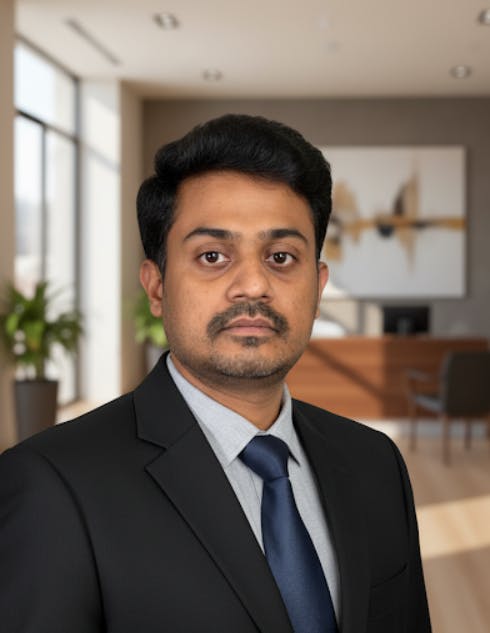
Dr. Rakesh Dasari is a renowned expert in DevSecOps, Cloud Security, and AI-driven infrastructure automation. He has more than a decade of experience in reengineering critical system operations and the protection of public data. Having an extensive career that spans across advanced cloud ecosystems, machine learning pipelines, and security automation frameworks, his innovations have fortified some of the most complex digital environments used by governments and enterprises across the world.
Dr. Dasari recognized a core problem very early on: public digital infrastructures were reactive, not proactive. Systems regularly failed because they required, and often relied on, human intervention—a missed SSL renewal, a misconfigured policy, or delayed security patching. His approach replaced this fragility with automation, intelligence, and resilience. "Technology should not wait for humans to notice an error," he often says. "It should recognize, respond, and recover — before the user ever feels the impact."
The heart of his work really lies in using Policy-as-Code for embedding governance, compliance, and security protocols directly into infrastructure. Integrating PaC with Terraform, Ansible, and Kubernetes orchestration, He designed frameworks where cloud environments basically govern and heal themselves. These systems enforce compliance baselines, manage configurations, and mitigate security drift automatically. The result was a 60% reduction in deployment failures, a 30% improvement in compliance scores, and a dramatic decline in security incidents across key projects he led.
Beyond policy automation, Dr. Dasari implemented AI-driven anomaly detection and predictive monitoring systems. Using tools such as MLflow, Azure AI Studio, and Vertex AI, he has built monitoring architectures that can identify irregularities in system behaviors well before the triggering of traditional alerts. This allowed mission-critical applications to achieve close to zero downtime, something very valuable in public-facing digital services where continuity equates to citizen trust.
Colleagues and peers describe Dr. Dasari as a "systems thinker with an engineer's precision." To him, technology is not about isolated parts but an ecosystem, where DevOps, MLOps, and SecOps must work symbiotically. His cross-domain mastery allows him to design architectures where data pipelines, model training environments, and cloud infrastructure coexist within a single, secure automation layer. This is now seen as a benchmark for modern government technology frameworks.
Besides technical excellence, the influence of Dr. Dasari can be traced in several aspects. He has published a number of research papers on cloud security and software reliability, including "Security Issues in Cloud Computing" and "SRGM with Imperfect-Debugging Using Capability Analysis of Log-Logistic Model", both highly cited in academic and professional circles. Further, his doctoral research in Computer Science and Engineering develops further the relationship between artificial intelligence, automation, and cybersecurity — a combination that epitomizes his philosophy in life.
This rare ability to balance innovation with governance has been recognized by industry experts. As one of his peers once mentioned, "Dr. Dasari doesn't just implement technology; he architects trust. His work bridges the gap between compliance frameworks and real-world operational resilience." This blend of strategic foresight and technical rigor has won him certifications from leading global institutions like Microsoft, Amazon, Oracle, and Google in Cloud Security, AI Engineering, and Kubernetes Administration.
While many technologists focus their energies on system optimization, the mission for Dr. Dasari has always been greater—to make digital reliability a public right. His projects have protected sensitive citizen data, improved operational transparency, and created digital continuity across multi-cloud ecosystems used by millions. By embedding intelligence into infrastructure, he has effectively shifted government technology from reactive recovery to predictive resilience.
Dr. Dasari looks toward a future in which automation, security, and machine learning come together in what he terms "autonomous governance systems"—infrastructures smart enough to interpret policy intent, assess risk, and adapt on the fly, independently of humans. "We're moving toward a world," he says, "where trust is no longer an afterthought in technology. It's engineered into every interaction." In a world characterized by cybersecurity threats and rapid digitalization, Dr. Rakesh Dasari is leading this movement, where technological reliability stands as the new synonym for societal stability. His contributions are about ensuring that when the citizens log in to public systems, apply for services, or access benefits, they get seamless trust and not technical uncertainty. Dr. Dasari is not just securing the systems but redefining the very foundation of digital trust for the modern world through his pioneering contributions in areas like DevSecOps, AI security frameworks, and intelligent automation.