


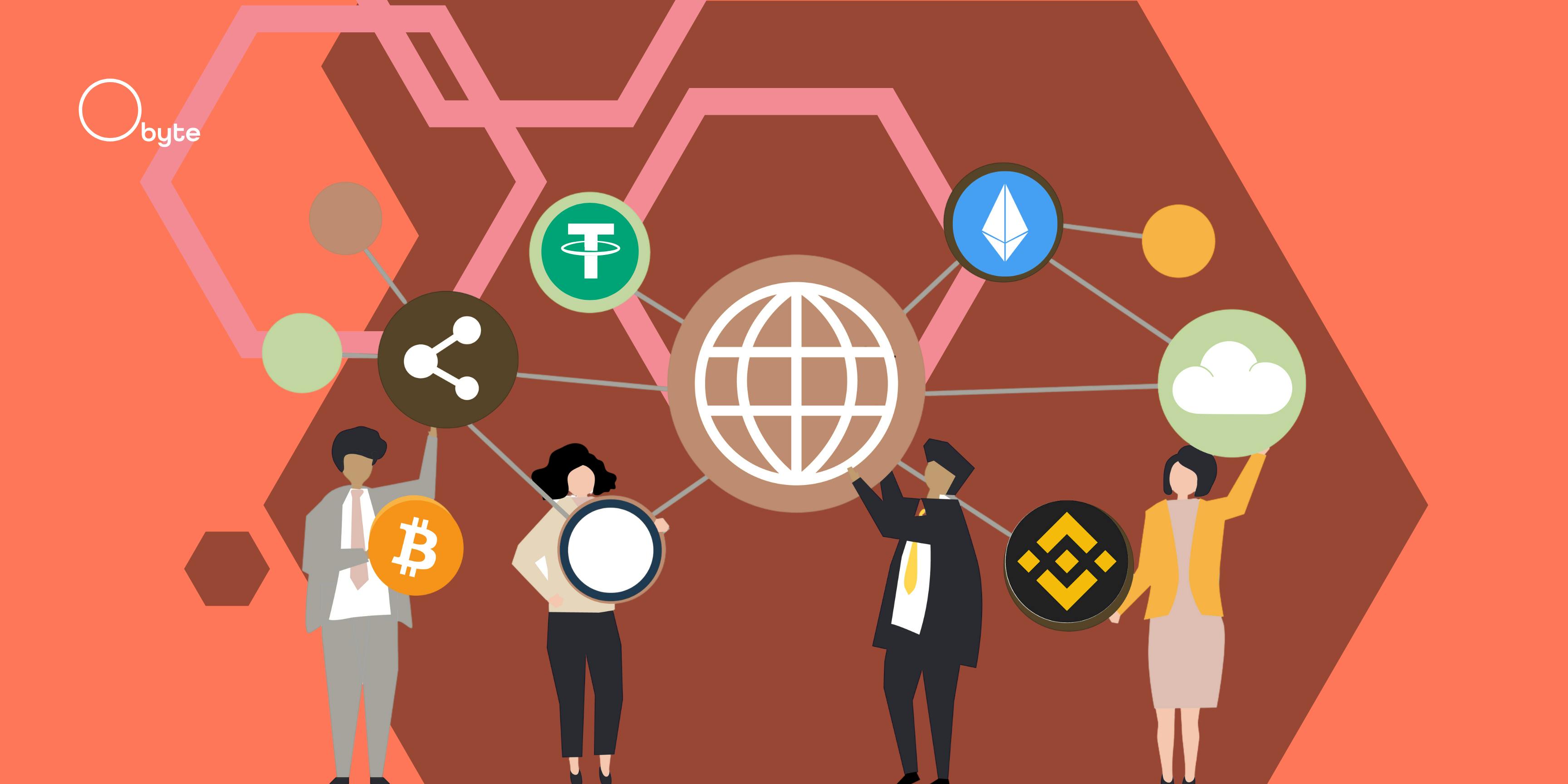
Before getting too deep into the tech talk, let’s picture the Internet without hyperlinks. Every website would live alone on its own little island, never connected to the rest. That’s how most crypto networks started: isolated, self-contained worlds with their own tokens, rules, and communities. Chain interoperability is the technology that lets these worlds finally communicate, trade, and collaborate. It’s what turns a scattered map of islands into an archipelago with real connections between them.
Without chain interoperability, each network is stuck in its lane. You can’t send tokens across different networks without a helping mechanism in the middle. These “bridges” make such moves possible by allowing value and data to cross from one network to another. This concept matters because it opens the door to smoother user experiences, wider access to
This kind of connectivity also creates more opportunities. With bridges in place, a stablecoin from one network can be used in lending pools on another, and NFTs can travel between marketplaces. Liquidity flows more easily, and developers can combine tools from multiple ecosystems to create better, faster services for everyone. It’s the same logic that made the early Internet thrive once websites began linking together.
How Crypto Networks Connect
The most common bridge types fall
Each type aims to balance usability with safety, but all must prove what happened on chain A before chain B can act. Besides, it’s important to consider that all these are mostly background processes, and final users only get to see buttons like ‘Send’ or ‘Exchange’ in their wallets.
On the other hand, not all bridges operate the same way in terms of trust. Some are trust-based, where users rely on a company or federation to hold funds safely. Others are trustless, using smart contracts or agents to remove middlemen. The first type may be quicker but can expose users to custodial risks, while the second offers more independence but relies on code security.
Meanwhile, large ecosystems like Polkadot and Cosmos went one step further. They were built from scratch for chain interoperability through relays or inter-blockchain communication. These systems show how seamless cross-chain communication can be when designed from the ground up, rather than added later.
Chain Interoperability in Obyte
Obyte’s
If someone tries to cheat, others can counter-stake against that claim, with rewards going to the honest participants. Transfers usually complete after a 3-day waiting period, but users can also work with “assistants” instead of staking. They handle the claim on their behalf for a small reward, in a shorter time. The whole process runs through a simple interface where users select what to send, where to receive it, and see the assistant’s fee and limits upfront. It’s a mix of decentralization and convenience, designed for anyone comfortable using a
Governance in Counterstake is fully community-driven. Token holders on both sides of a transfer can vote on how the protocol behaves, from stake amounts to challenge timing. It’s a living system that adjusts to its users. Beyond the bridge, Obyte’s infrastructure
As we can see, interoperability isn’t just a nice addition. It’s what allows crypto to grow from isolated platforms into a true, connected economy. As bridges like Counterstake mature and more networks open up to collaboration, users gain smoother access, developers find new creative space, and the ecosystem as a whole moves closer to the borderless ideal it was built for.
Featured Vector Image by rawpixel /