


High yields in emerging markets are rarely a gift; they are a premium paid for navigating legal opacity. For the UHNI investor, the allure of double-digit returns often masks profound structural vulnerabilities. One of the most glaring examples currently trending in the Mediterranean is Albania — a market where the gap between tourism hype and legal reality is wider than most realize.
The Case of Albania: A Sovereignty Reality Check
While mainstream brochures highlight Albania’s tourism boom, institutional-grade due diligence must focus on ‘Title Sovereignty”. In this jurisdiction, a certified deed is often insufficient. Due to a complex history of land restitution, ownership chains are frequently contested. Without an independent, exhaustive audit of these chains, a high-yield asset can transition from a trophy property to a permanent legal liability.
Beyond the asset itself, investors must analyze the banking “plumbing”. Navigating local AML (Anti-Money Laundering) frameworks is critical. Failure to establish transparent, institutional banking rails from day one often leads to ‘liquidity traps’ where capital enters easily but faces significant friction during repatriation.
For the strategic investor, this creates a ‘scissors effect’: as capital density increases, the margin for error in legal due diligence shrinks. You are not just buying an asset; you are buying into a legal framework that is still playing catch-up with international standards
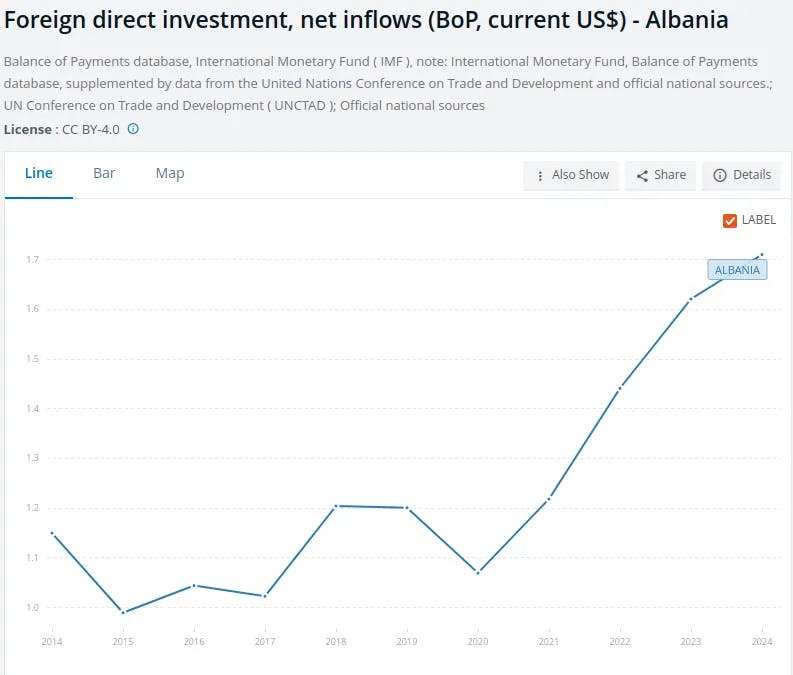
The Red Flag: Structural Stagnation While the World Bank data above shows capital flooding into the market, the underlying legal framework remains a concern. According to the U.S. Department of State’s Investment Climate Statement, “title overlap” and “judicial inconsistency” are still widespread.
The Takeaway: You are investing in a 2026 market with a 1996 land registry system. High yield is your compensation for this specific structural friction.
Practical Strategies to Mitigate Sovereign Risk:
To navigate these markets without compromising capital integrity, institutional investors should implement the following frameworks:
- Independent Title Audit: Never rely solely on local legal teams provided by the seller. Commission an independent forensic legal audit to verify the entire ownership chain and ensure no historical restitution claims exist.
- Escrow Accounts with International Banks: Use reputable international banks as escrow agents for transactions to ensure funds are only released upon verified, clean title transfer.
- Bilateral Investment Treaties (BITs): Structure investments through jurisdictions that have active BITs with the target country. This provides an additional layer of international legal protection and a path to international arbitration if local courts fail.
- Local Partnerships with Verified Track Records: Partner with local entities that have a history of successful exits and institutional-grade compliance standards
Emerging markets are a double-edged sword. Have you ever encountered a “liquidity trap” in a high-yield jurisdiction? Or perhaps you’ve faced challenges with title sovereignty in the Balkans?
For more please contact of follow my LinkedIn page