


Welcome to the Proof of Usefulness Hackathon spotlight, curated by HackerNoon’s editors to showcase noteworthy tech solutions to real-world problems. Whether you’re a solopreneur, part of an early-stage startup, or a developer building something that truly matters, the Proof of Usefulness Hackathon is your chance to test your product’s utility, get featured on HackerNoon, and compete for $150k+ in prizes. Submit your project to get started!
Today we are interviewing Sabarish Narain about ExpenseHut POS, a project focused on transforming restaurant ordering with intelligent self-service technology. ExpenseHut aims to increase order value and reduce wait times through AI-driven upselling and seamless POS integration.
What does ExpenseHut POS do? And why is now the time for it to exist?
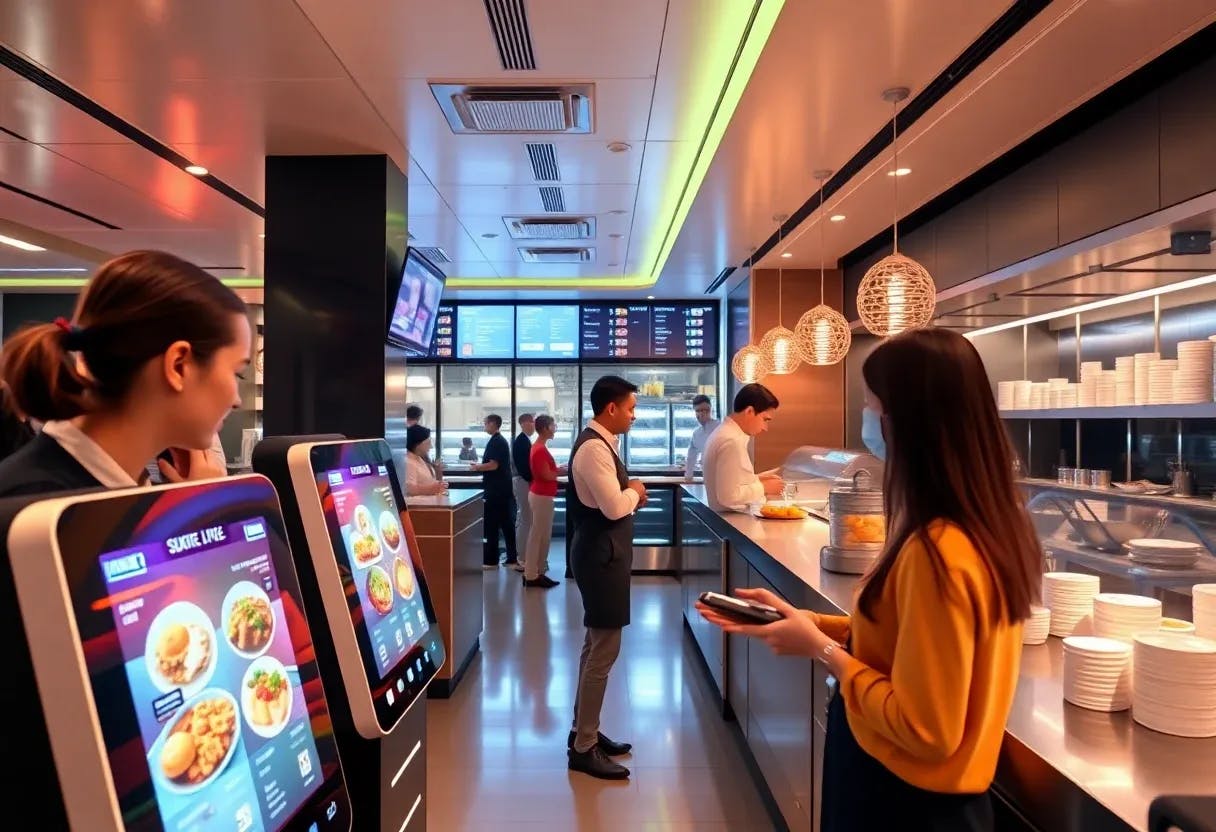
ExpenseHut AI Kiosks transform restaurant ordering with intelligent, self-service technology that recommends menu items based on customer preferences and ordering patterns. By combining AI-driven upselling with a seamless POS integration, restaurants can increase order value, reduce wait times, and deliver a faster, more personalized dining experience. The system is designed to help restaurants boost revenue while lowering operational overhead. Now’s a good time for ExpenseHut POS to exist because restaurants are increasingly seeking automation to mitigate labor shortages while trying to maximize revenue per customer through smarter, personalized upselling.
Who does your ExpenseHut POS serve? What’s exciting about your users and customers?
Designed for quick-service and fast-casual restaurants looking to speed up ordering, reduce staff workload, and increase average ticket size through intelligent menu recommendations. They are ideal for restaurant owners who want to modernize their ordering experience while improving operational efficiency.
What technologies were used in the making of ExpenseHut POS? And why did you choose ones most essential to your techstack?
The platform relies on the PERN stack (PostgreSQL, Express, React, Node.js) to handle backend operations and web interfaces efficiently. For the mobile experience, the team chose React Native to ensure cross-platform compatibility, utilizing Google Analytics to track system performance and user behavior.
What is traction to date for ExpenseHut POS? Around the web, who’s been noticing?
While currently in the early pilot phase, ExpenseHut POS has garnered interest from several restaurants for upcoming programs. The product is fully developed and is actively positioning itself to meet the market demand for increased order values and reduced wait times.
ExpenseHut POS scored a 41 proof of usefulness score (https://proofofusefulness.com/reports/expensehut-pos)
What excites you about this ExpenseHut POS's potential usefulness?
The potential to transform restaurant ordering by making it faster, smarter, and more personalized. By leveraging AI recommendations, the system can increase customer satisfaction and order value, while reducing operational friction by creating a tangible impact for both restaurants and diners.
Meet our sponsors
Bright Data: Bright Data is the leading web data infrastructure company, empowering over 20,000 organizations with ethical, scalable access to real-time public web information. From startups to industry leaders, we deliver the datasets that fuel AI innovation and real-world impact. Ready to unlock the web? Learn more at brightdata.com.
Neo4j: GraphRAG combines retrieval-augmented generation with graph-native context, allowing LLMs to reason over structured relationships instead of just documents. With Neo4j, you can build GraphRAG pipelines that connect your data and surface clearer insights. Learn more.
Storyblok: Storyblok is a headless CMS built for developers who want clean architecture and full control. Structure your content once, connect it anywhere, and keep your front end truly independent. API-first. AI-ready. Framework-agnostic. Future-proof. Start for free.
Algolia: Algolia provides a managed retrieval layer that lets developers quickly build web search and intelligent AI agents. Learn more.