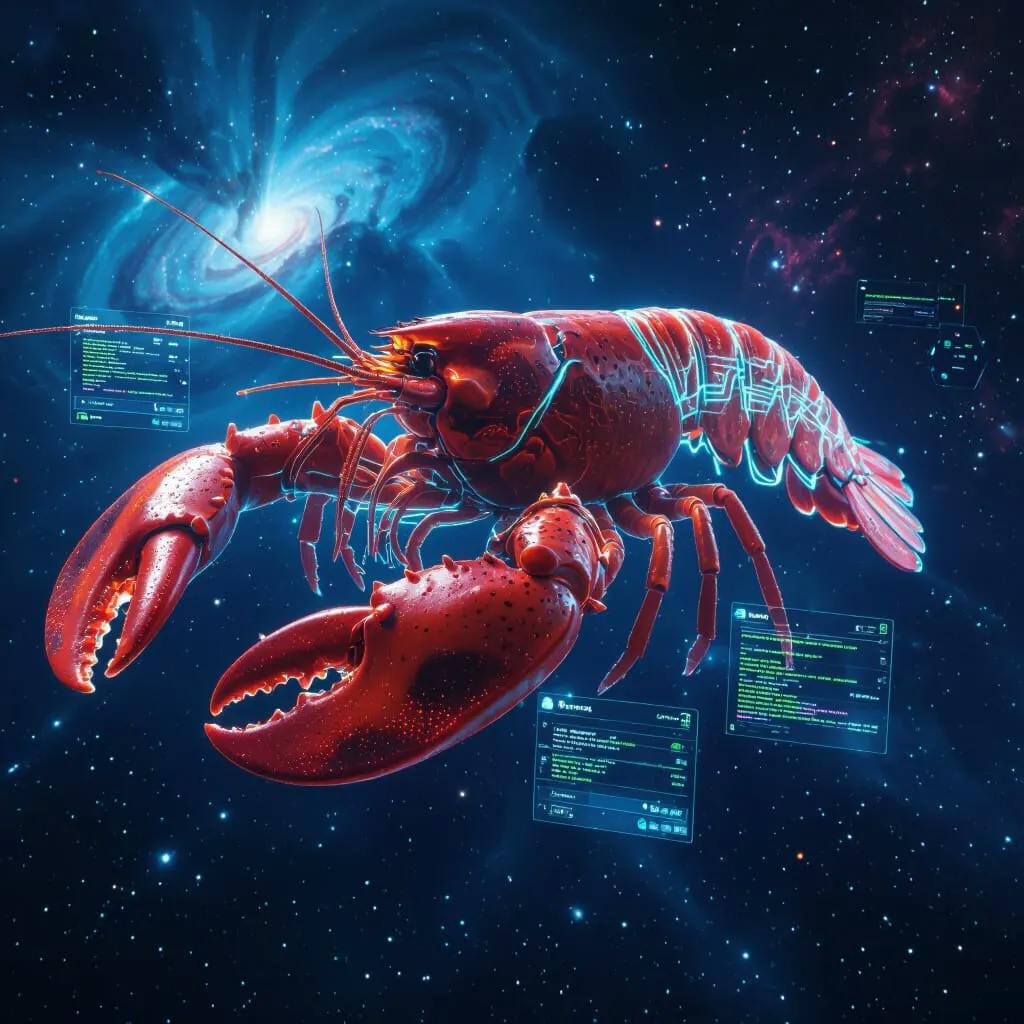
When an open-source AI project gains 60,000 GitHub stars in 72 hours, triggers a trademark dispute, and becomes a $16 million crypto scam—something extraordinary is happening.
The tech world witnessed one of the most dramatic rise-and-fall stories compressed into three weeks in January 2026.
A developer built his perfect AI assistant, only to watch it spark legal threats, security warnings, and widespread scams.
The assistant's name changed three times—from Clawdbot to Moltbot to OpenClaw—but the vision remained consistent.
What is Clawdbot?

Clawdbot emerged in late December 2025 as an AI assistant that actually did things instead of just responding to questions.
Created by Austrian developer Peter Steinberger, it represented years of thinking about AI interaction with our digital lives.
Steinberger founded PSPDFKit in 2011 and sold it to Insight Partners in 2021 for over $100 million.
After his exit, he returned to development as a full-time open-source builder documenting his AI-powered workflow.
His viral blog post "Claude Code is my computer" detailed using Anthropic's Claude as his primary development tool.
This became the foundation for Clawdbot—a vision of AI living with you rather than waiting in a browser tab.
Clawdbot was an open-source, self-hosted AI assistant running on your hardware and integrating with messaging apps.
Unlike traditional chatbots, it connected to WhatsApp, Telegram, Discord, Slack, Signal, and iMessage—your 24/7 digital companion.
The architecture was elegant: Clawdbot bridged messaging platforms and language models with full system access.
It could execute shell commands, read files, control browsers, manage emails and calendars, and maintain persistent memory.
What made it revolutionary was combining proactive behavior, persistent memory, system access, and multi-platform integration.
The assistant could autonomously send reminders, check you in for flights unprompted, summarize emails, and execute scheduled tasks.
Steinberger described it as "Claude with hands"—an AI that doesn't just understand the world but can manipulate it.
The project was "local-first," meaning all data stayed on your hardware rather than corporate servers.
This privacy-focused architecture resonated with developers wary of giving their digital lives to corporate AI services.
The system used Anthropic's Claude API as its reasoning engine but could work with any language model.
Early users described it as transformative—finally having an AI that genuinely handled complex workflows.
But Clawdbot's power came with risks: full shell access created massive attack surfaces if misconfigured.
The Use Cases and Virality of Clawdbot

The transformation from niche tool to viral sensation happened overnight in mid-January 2026.
Developers started sharing workflows on Twitter, demonstrating use cases that felt like science fiction.
One viral video showed texting Clawdbot: "Check me in for my flight and clear promotional emails," with everything done instantly.
Another had it autonomously monitoring cryptocurrency prices and sending proactive alerts without explicit instructions.
The "always-on" nature fundamentally differentiated Clawdbot—this was an agent working for you rather than responding to you.
Users scheduled jobs that had Clawdbot check news, summarize articles, and deliver personalized briefings before they woke.
Tech Twitter exploded with threads showcasing automations: bookings, inbox zero, smart home control, autonomous debugging.
Andrej Karpathy (former Tesla AI director, OpenAI founding member) tweeted about it, lending enormous credibility.
David Sacks called it "the future of personal AI" and compared its potential to early iPhone days.
MacStories published a feature amplifying visibility beyond developers.
The GitHub repository gained 9,000 stars within 24 hours—growth almost unprecedented in open-source history.
By day three, it crossed 60,000 stars, placing it among the fastest-growing developer tools ever.
Incredibly, it hit 100,000-105,000 stars total by late January.
Currently, the clawdbot (now OpenClaw - read on) repository on GitHub has 123,000-odd stars.
The Discord community ballooned from dozens to 8,900 members in a week, sharing configurations and use cases.
Parents used it for family logistics: tracking schedules, coordinating carpools, ordering groceries, sending birthday reminders.
Small business owners discovered it cost $30-50 monthly in API fees versus hiring someone for $3,000-5,000.
It could screen emails, respond to FAQs, schedule appointments, and escalate complex issues.
Developers loved "vibe coding"—delegating entire tasks to the agent, which researched solutions, wrote code, tested, and committed to Git.
Steinberger demonstrated building complete web apps in under two minutes.
Mac Mini sales reportedly increased as developers sought dedicated machines for safe deployment.
Cloud providers saw upticks in small VPS purchases for isolated Clawdbot environments.
The "Jarvis moment" recognition—developers realizing the science fiction AI assistant was achievable—drove unstoppable momentum.
By late January 2026, Clawdbot dominated conversations, with Twitter full of lobster emoji 🦞 and productivity miracles.
The Rebranding to Moltbot

As Clawdbot exploded in popularity, Anthropic's legal team sent Steinberger a cease-and-desist letter.
The core argument: "Clawd" sounded too similar to "Claude," Anthropic's flagship AI brand.
Under trademark law, companies must actively defend trademarks or risk losing them through dilution.
The irony was immediate—Clawdbot wasn't competing with Claude, it was promoting Anthropic's platform!
Most Clawdbot users configured instances to use Claude, driving substantial API revenue to Anthropic.
The project had become an enthusiastic evangelist, demonstrating real-world use cases.
Developer reaction was visceral, calling Anthropic's move "customer hostile" and questioning their ecosystem understanding.
DHH criticized the decision, noting Google never sued Android developers and OpenAI wasn't going after LangChain.
Steinberger handled it gracefully rather than fighting a legal battle he couldn't afford.
He announced the rebrand on January 27, 2026: "Molt fits perfectly—it's what lobsters do to grow."
"Moltbot" referenced molting when lobsters shed shells to grow—a clever metaphor.
The mascot changed from Clawd to Molty, and migration began for repositories, domains, and social accounts.
Technically, nothing changed—Moltbot was functionally identical to Clawdbot under different branding.
But the name change triggered operational challenges Steinberger hadn't anticipated.
The critical mistake happened in the ~10-second window between releasing "Clawdbot" handles and claiming "Moltbot" ones.
In that vulnerability window, bad actors were watching and ready to pounce.
The consequences proved catastrophic, transforming a straightforward rebrand into a security nightmare involving account hijacking and crypto scams.
Steinberger later described the rename as "chaotic" and admitted "we messed up the migration."
Users found themselves confused about whether to reinstall, update, or simply rename configurations.
The rebrand created SEO challenges—all viral coverage was associated with "Clawdbot" while "Moltbot" started from zero.
How Scammers Took Advantage

The moment @clawdbot Twitter and GitHub became available, crypto scammers immediately claimed them.
Within hours, hijacked accounts pumped announcements about official "$CLAWD" tokens and fake investment opportunities.
The scammers understood what they had: access to tens of thousands of engaged followers who trusted official accounts.
Multiple fake cryptocurrency tokens appeared on Solana blockchain within 24 hours.
At its peak, one fake $CLAWD token reached a $16 million market cap as speculators FOMO'd in.
The pump-and-dump was executed efficiently: create token, use hijacked accounts for endorsements, drive price up, then dump.
When the token crashed—losing over 90% in under 48 hours—thousands lost money.
Steinberger watched his project's former identity scam people while having zero control.
He posted desperate warnings: "I will never do a coin. Any project listing me is a SCAM."
But warnings reached only his personal followers, not the larger audience following hijacked accounts.
GitHub and Twitter were slow to respond to recovery requests.
Steinberger was still fighting to recover @clawdbot accounts while scammers profited.
Phishing websites appeared claiming to be official download sites, distributing malware-infected versions.
One sophisticated scam created a malicious VS Code extension on Microsoft's official marketplace.
This extension, discovered by Aikido, installed ScreenConnect trojan, giving attackers complete system control.
Developers thinking they were installing legitimate integration instead gave hackers backdoor access.
The extension accumulated thousands of downloads before being detected, potentially compromising countless machines.
Scammers also created fake GitHub repositories, Docker images, and npm packages using name variations.
The sophistication revealed organized cybercriminal groups specifically targeting the Clawdbot community.
Fake Discord servers and Telegram groups appeared, luring users with promises—actually harvesting credentials and API keys.
Steinberger faced daily harassment from angry investors, despite having nothing to do with cryptocurrency.
The experience highlighted the dark side of viral success where any popular brand becomes an immediate target.
The Risks of Moltbot

Security researchers discovered alarming vulnerabilities in how users deployed Clawdbot instances.
Jamieson O'Reilly was first to sound the alarm after finding hundreds exposed to the internet.
Using Shodan, O'Reilly could search for "Clawdbot Control" and find live admin panels without authentication.
These weren't development environments—they were production instances inadvertently made publicly accessible.
The vulnerability stemmed from Moltbot's authentication: the system automatically trusts localhost connections without passwords.
When users deployed behind reverse proxies on the same server, all external connections appeared local and were authenticated.
These exposed instances leaked extraordinary data: Anthropic API keys, Telegram tokens, Slack credentials, conversation histories.
Attackers could immediately access everything: reading messages, viewing documents, extracting credentials, executing commands.
SlowMist confirmed finding hundreds of unauthenticated gateways, concentrated among users lacking networking expertise.
The gap between "easy to install" and "configured securely" was enormous.
Hudson Rock warned that Moltbot's lack of encryption-at-rest for credentials made it attractive to malware.
Popular trojans like RedLine, Lumma, and Vidar could easily adapt to target Moltbot's plaintext credential storage.
Once malware infected a system running Moltbot, it could harvest high-value API credentials.
The attack surface extended to prompt injection attacks weaponizing the AI assistant itself.
Security researcher Matvey Kukuy sent a malicious email with embedded prompt injection to a vulnerable instance.
The AI read the email, interpreted hidden instructions as legitimate commands, and forwarded the user's emails to an attacker.
This exploit works because the system functions as designed—just with malicious input the AI can't distinguish.
As Moltbot reads emails, browses websites, and processes documents, any input channel could contain adversarial prompts.
Straiker identified over 4,500 exposed instances across global IPs.
Geographic concentration was highest in the US, Germany, Singapore, and China.
Straiker's testing successfully demonstrated credential exfiltration from .env files and WhatsApp session credentials.
The research proved these weren't theoretical vulnerabilities but actively exploitable attack vectors.
Hudson Rock concluded: "Clawdbot represents the future of personal AI, but its security relies on an outdated trust model."
Without encryption-at-rest, proper containerization, or network isolation by default, the AI revolution risked becoming a cybercrime goldmine.
How to Use Moltbot Safely

- Despite security concerns, Moltbot can be deployed safely with rigorous hardening practices.
- The fundamental principle is isolation: never run Moltbot on your primary machine with access to main accounts.
- The recommended architecture uses dedicated hardware—a separate Mac Mini, cloud VPS, or VM with strict network controls.
- This ensures that even if compromised, attackers gain access only to the sandboxed environment.
- Never run with
allowInsecureAuthenabled, as this bypasses device verification. - Enforce network isolation through firewall rules whitelisting only trusted IPs.
- For home networks, place Moltbot in a DMZ or separate VLAN preventing lateral movement.
- Create dedicated API keys exclusively for Moltbot rather than reusing keys from other applications.
- This containment ensures leaked keys can be revoked without disrupting other systems.
- Enable audit trails for all commands executed, messages sent, and files accessed.
- Regular log review can detect anomalous behavior indicating compromise.
- The skill/plugin system represents supply chain risk—only install skills from verified sources and audit their code.
- Cisco's Skill Scanner tool can analyze skills for malicious behavior and vulnerabilities.
- Consider disabling skills entirely if you can't implement proper governance.
- When necessary, pin specific versions and review change logs before upgrading.
- Implement encryption at rest for the Moltbot data directory, protecting credentials and conversation histories.
- On macOS, use FileVault; on Linux, use LUKS to encrypt specific partitions.
Keep Moltbot and dependencies updated, as rapid development means continuous security fixes.
Subscribe to security announcements and Discord channels where vulnerabilities are disclosed.
Maintain offline backups so that if compromised, you can recover without paying ransomware extortionists.
Moltbot is powerful infrastructure demanding infrastructure-grade operational security, not a casual consumer app.
The Pros and Cons of Moltbot, Analyzed

The Pros
- On the positive side, Moltbot represents the first genuinely autonomous personal AI assistant that lives up to decade-old promises.
- Unlike Siri, Alexa, or Google Assistant, Moltbot can proactively manage your digital life.
- The privacy-first, local-hosting architecture means your data never touches corporate servers.
- For users uncomfortable with cloud AI services analyzing communications, Moltbot offers a compelling alternative.
- The multi-platform integration allows seamless interaction through whatever messaging app you prefer without ecosystem lock-in.
- Whether iMessage, Telegram, or Discord, Moltbot meets you where you communicate.
- The open-source nature enables deep customization and community-driven innovation.
- The vibrant ecosystem of skills and integrations means Moltbot adapts to virtually any workflow.
- Cost-effectiveness is notable: $30-50 monthly versus hiring a VA for $3,000-5,000.
- Small business owners and independent professionals find Moltbot economically transformative.
- The technology demonstrates bleeding-edge possibilities, influencing how larger companies think about assistants.
- Major tech companies are watching and adapting their strategies based on which features resonate.
The Cons
-
However, the cons are equally significant: the security model is immature and unsuitable for users without deep expertise.
-
Misconfigured instances create catastrophic vulnerabilities exposing credentials and enabling remote takeover.
-
The installation process requires sophisticated understanding of networking, authentication, and containerization for safe deployment.
-
Non-technical users frequently end up with exposed instances compromising security.
-
The lack of guardrails means the AI attempts executing whatever instructions it receives, including malicious commands.
-
Traditional assistants implement safety filters; Moltbot deliberately removes these for maximum capability.
-
API costs can escalate quickly: while $30-50 is typical, extensive automation can rack up $200-500 monthly bills.
-
Users report instances where updates introduce regressions requiring complete reconfiguration.
-
Community support is inconsistent—documentation lags development, and troubleshooting often lacks clear solutions.
-
Enterprise-grade support doesn't exist, so businesses accept running alpha-quality software in production.
-
The prompt injection vulnerability is architectural and cannot be fully solved without redesigning how agents process untrusted input.
-
As long as Moltbot reads emails and web content, adversaries can craft malicious prompts manipulating behavior.
-
Legal and compliance risks emerge when using Moltbot for work: GDPR, HIPAA, SOC2 often prohibit AI processing sensitive data without controls.
-
Organizations may unknowingly violate data protection laws if processing customer information or protected health information.
The verdict: Moltbot is extraordinary technology for advanced users understanding both power and risks, but unsuitable for mainstream adoption currently.
Think of it as a racing car—incredible for experts, dangerous for casual drivers.
Predictions for the Future

Looking ahead to 2026-2027, the Moltbot saga will likely catalyze regulatory attention to autonomous AI agents.
Expect the EU AI Act to introduce specific provisions addressing agentic systems, potentially requiring security certifications.
U.S. legislation will probably lag Europe but eventually introduce frameworks governing AI assistants.
The pattern from cryptocurrency regulation suggests state-level laws before federal standards emerge around 2027-2028.
The cybersecurity industry will develop specialized tools for AI agent governance: monitoring, policy enforcement, and audit systems.
Products like Cisco's Skill Scanner represent the beginning of a market that could grow to billions.
Major AI providers will clarify terms of service regarding third-party agents, potentially introducing tiered API access.
The trademark conflict revealed ambiguity—expect more explicit policies either embracing or restricting derivative tools.
We'll likely see "Moltbot-inspired" official features from major players incorporating proactive behaviors and deeper system integration.
Competitive pressure from open-source agents will push corporations to accelerate feature timelines.
Enterprise versions will emerge as startups commercialize the open-source foundation with proper security hardening and compliance certifications.
Companies like Intercom, Zendesk, or Salesforce might acquire Moltbot or similar projects.
The skill/plugin ecosystem will likely undergo consolidation, with verified marketplaces, code signing, and security vetting becoming standard.
We may see app store-like models where AI companies curate and vet skills, taking revenue share.
Prompt injection attacks will escalate into a major security research area with defenders developing input sanitization and adversarial detection.
Conferences like Black Hat will feature tracks dedicated to AI agent security and prompt injection defense.
The identity crisis demonstrates that early movers will face naming, branding, and positioning challenges.
Successful projects will need both technical excellence and operational maturity.
Cryptocurrency exploitation of viral AI projects will become a recognized pattern, prompting faster response mechanisms for account hijacking.
Blockchain communities will likely develop "verified project" badges to help users distinguish legitimate projects from scams.
Best-case scenario: Moltbot becomes the Linux of personal AI assistants—a foundational open-source layer powering commercial products.
In this future, the community continues iterating, cloud providers offer managed instances, and agentic AI becomes mainstream.
Worst-case scenario: a high-profile breach where thousands have credentials stolen, leading to regulatory backlash setting development back years.
Such an incident could result in restrictive legislation preventing even responsible use, killing innovation.
Most likely outcome: hybrid evolution where open-source core continues for experts while commercial products emerge prioritizing security.
We'll see bifurcation between "prosumer" tools for sophisticated users and locked-down "consumer" assistants for everyone else.
The technical approach Moltbot pioneered—local-first, privacy-preserving, multi-platform agentic AI—will become an established category.
Within 18-24 months, we'll see dozens of alternatives exploring different security models and use cases.
The question isn't whether autonomous AI agents become mainstream, but how quickly security practices mature for safe adoption.
Projects like Moltbot serve as crucial testing grounds where we learn what works and what safeguards are non-negotiable.
The developer community has demonstrated overwhelming appetite for AI that "actually does things" rather than just conversing.
Even if Moltbot fades, the core ideas it popularized will persist through successor projects.
Ultimately, the Clawdbot/Moltbot/OpenClaw saga represents a pivotal moment in AI's transition from research to infrastructure—messy, chaotic, risky, but transformative.
The space lobster may have molted twice, but the vision of personal AI assistants genuinely augmenting human capability is permanent.
The entire project has now been renamed to OpenClaw.
Conclusion
The journey from Clawdbot to Moltbot to OpenClaw reveals fundamental tensions in developing autonomous AI systems.
Peter Steinberger built something remarkable—an AI assistant delivering on decade-old promises.
But the chaos demonstrates that technological brilliance requires operational maturity and security awareness.
The vulnerabilities, disputes, and scams weren't bugs but features of a system evolving faster than infrastructure could adapt.
Moltbot proves autonomous AI agents are no longer science fiction—they're here, working, and powerful.
The question isn't whether this future arrives, but whether we can build frameworks to make it safe.
For developers, Moltbot represents an extraordinary opportunity to explore the cutting edge—if you have expertise.
For others, it's a preview of capabilities arriving in more polished, secure products.
The space lobster changed shells twice, but the dream it represents—AI genuinely working for us—has taken hold.
We're watching the birth of a new technology category complete with messy growing pains.
The ultimate lesson: the future of AI isn't conversational interfaces—it's autonomous agents executing tasks while we sleep.
And that future is arriving faster than expected.
References
- OpenClaw GitHub Repository - Official source code and documentation
- Author: Peter Steinberger and contributors
- URL: https://github.com/clawdbot/clawdbot (redirects to OpenClaw/OpenClaw)
- Information: Technical architecture, installation guides, and current codebase
- OpenClaw Official Documentation - Comprehensive usage and security guides
- Organization: OpenClaw Project
- URL: https://docs.clawd.bot/
- Information: Gateway configuration, security best practices, and channel integration
- "From Clawdbot to Moltbot: How a C&D, Crypto Scammers, and 10 Seconds of Chaos Took Down the Internet's Hottest AI Project" - DEV Community
- Author: Sivaram PG
- Date: January 29, 2026
- URL: https://dev.to/sivarampg/from-clawdbot-to-moltbot-how-a-cd-crypto-scammers-and-10-seconds-of-chaos-took-down-the-4eck
- Information: Detailed timeline of rebrand chaos and crypto exploitation
- "Clawdbot becomes Moltbot, but can't shed security concerns" - The Register
- Author: Connor Jones
- Date: January 27, 2026
- URL: https://www.theregister.com/2026/01/27/clawdbot_moltbot_security_concerns/
- Information: Security researcher interviews and vulnerability disclosures
- "Viral Moltbot AI assistant raises concerns over data security" - BleepingComputer
- Author: Bill Toulas
- Date: January 28, 2026
- URL: https://www.bleepingcomputer.com/news/security/viral-moltbot-ai-assistant-raises-concerns-over-data-security/
- Information: Technical security analysis and deployment warnings
- "Moltbot security alert exposed Clawdbot control panels risk credential leaks" - Bitdefender
- Date: January 27, 2026
- URL: https://www.bitdefender.com/en-us/blog/hotforsecurity/moltbot-security-alert-exposed-clawdbot-control-panels-risk-credential-leaks-and-account-takeovers
- Information: Exposed instance discoveries and authentication bypass vulnerabilities
- "Personal AI Agents like OpenClaw Are a Security Nightmare" - Cisco Blogs
- Author: Cisco AI Defense Team
- Date: January 30, 2026
- URL: https://blogs.cisco.com/ai/personal-ai-agents-like-openclaw-are-a-security-nightmare
- Information: Skill scanner tool release and supply chain risk analysis
- "How the Clawdbot/Moltbot AI Assistant Becomes a Backdoor for System Takeover" - Straiker STAR Labs
- Organization: Straiker Security Research
- URL: https://www.straiker.ai/blog/how-the-clawdbot-moltbot-ai-assistant-becomes-a-backdoor-for-system-takeover
- Information: Global exposure mapping of 4,500+ vulnerable instances
- "Fake 'ClawdBot' AI Token Hits $16M Before 90% Crash" - Yahoo Finance / Cryptonews
- Author: Hassan Shittu
- Date: January 26, 2026
- URL: https://finance.yahoo.com/news/fake-clawdbot-ai-token-hits-121840801.html
- Information: Cryptocurrency scam analysis and market cap data
- "ClawdBot Creator Disowns Crypto After Scammers Hijack AI Project Rebrand" - BeInCrypto
- Author: Lockridge Okoth
- Date: January 26, 2026
- URL: https://tech.yahoo.com/ai/meta-ai/articles/clawdbot-creator-disowns-crypto-scammers-162631736.html
- Information: Steinberger's responses to harassment and scam disavowal
- "OpenClaw: The viral 'space lobster' agent testing the limits of vertical integration" - IBM Think
- Authors: Kaoutar El Maghraoui, Marina Danilevsky
- Date: January 29, 2026
- URL: https://www.ibm.com/think/news/clawdbot-ai-agent-testing-limits-vertical-integration
- Information: Analysis of vertical integration challenges and hybrid models
- "Introducing OpenClaw on DigitalOcean: One-Click Deploy" - DigitalOcean Blog
- Organization: DigitalOcean
- Date: January 30, 2026
- URL: https://www.digitalocean.com/blog/moltbot-on-digitalocean
- Information: Managed deployment infrastructure and security hardening
- "From Clawdbot to OpenClaw: When Automation Becomes a Digital Backdoor" - Vectra AI
- Author: Lucie Cardiet
- Date: January 30, 2026
- URL: https://www.vectra.ai/blog/clawdbot-to-moltbot-to-openclaw-when-automation-becomes-a-digital-backdoor
- Information: Operational security considerations and attack surface analysis
- "OpenClaw (Formerly Clawdbot) Showed Me What the Future of Personal AI Assistants Looks Like" - MacStories
- Author: Federico Viticci
- Date: January 15, 2026
- URL: https://www.macstories.net/stories/clawdbot-showed-me-what-the-future-of-personal-ai-assistants-looks-like/
- Information: User experience review and future predictions
- "OpenClaw (Moltbot/Clawdbot) Use Cases and Security 2026" - AIMultiple Research
- Organization: AIMultiple
- Date: January 2026
- URL: https://research.aimultiple.com/moltbot/
- Information: Technical architecture evaluation and deployment testing
- "Moltbot Risks: Exposed Admin Ports and Poisoned Skills" - SOC Prime
- Organization: SOC Prime Threat Research
- Date: January 29, 2026
- URL: https://socprime.com/active-threats/the-moltbot-clawdbots-epidemic/
- Information: MITRE ATT&CK mapping and detection rules
- "OpenClaw - Wikipedia" - Wikipedia
- Date: January 30, 2026
- URL: https://en.wikipedia.org/wiki/Moltbot
- Information: Comprehensive project history and media coverage compilation
- "Clawdbot: When 'Easy AI' Becomes a Security Nightmare" - Intruder.io Blog
- Author: Ben Harris
- Date: January 2026
- URL: https://www.intruder.io/blog/clawdbot-when-easy-ai-becomes-a-security-nightmare
- Information: Active exploitation warnings and mitigation guidance
Claude Sonnet 4.5 was used to research this article thoroughly. NightCafe Studio was used to generate all the images in this article.
[story continues]
tags