While most marketers were still focused on traditional SEO, a small team was building for a future where search results wouldn't matter at all.
The internet is undergoing a fundamental shift. Traditional search traffic is being replaced by AI-generated answers. Users ask ChatGPT, Perplexity, Gemini, or Claude for recommendations and receive synthesized responses without ever clicking through to a website. For brands built on search visibility, it's an existential challenge.
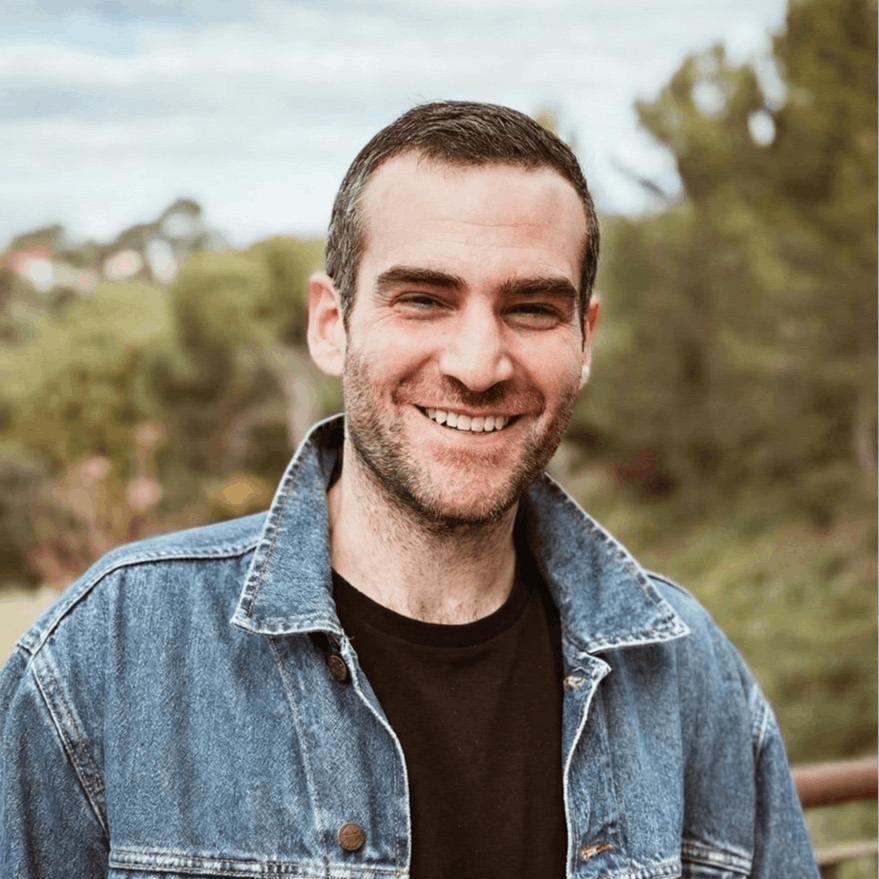
Neri Bluman and co-founder Beeri Amiel recognized this inflection point early and launched XFunnel to pioneer Answer Engine Optimization (AEO)—maintaining brand visibility in AI-driven discovery. Ten months later, HubSpot acquired the company, validating both the urgency of the problem and their solution.
For Bluman, who previously co-founded Avo and scaled it to 1,000 employees and a $350 million valuation, the timeline reflects conviction about inevitable shifts and the ability to execute before consensus forms.
The Zero-Click Reality
"We're watching the buying journey compress in real time," Bluman explains. "People still research, but they do it through synthesized answers that feel final—so brands have to show up earlier, and they have to show up correctly."
As AI-powered answer engines gain adoption, users increasingly receive what they perceive as complete answers without navigating to websites. The "zero-click" reality creates a crisis for brands that spent decades optimizing for search rankings.
"SEO was built to optimize for clicks; AEO is built to optimize for influence," Bluman notes. "LLMs form an opinion about your brand by synthesizing signals from thousands of sources, so the new priority is understanding which inputs actually shape that narrative—and learning how to strengthen the ones that matter most."
Building the Methodology
XFunnel partnered directly with top-tier marketing organizations as co-researchers—testing what actually changes outcomes in AI-driven discovery and translating learnings into actionable practices. The platform tracked performance across ChatGPT, Perplexity, Gemini, Claude, and other emerging answer engines.
WIX, Monday.com, LastPass, Docebo, Getty Images, Fiverr, Betterment, and Cato Networks deployed XFunnel's methodology to improve how they appeared in AI-generated recommendations.
"We helped brands measure and improve how they show up in AI-generated answers—tracking Brand Visibility, Ranking, Share of Voice and citation frequency—and we routinely saw 20–40%+ improvements as teams iterated," Bluman says.
A Different Game
What makes AEO distinct? AI systems don't rank—they synthesize. "Probabilistic discovery changes the strategy," Bluman explains. "Unlike Google's mostly deterministic ranking model, LLM answers are probabilistic—so even the same question can produce different answers across runs, users, and contexts. That turns AEO into a numbers game: you win by showing up across a large volume of relevant questions and driving consensus across sources. The goal becomes narrative consistency—making sure that across all models, your brand is reflected the same way."
Teams must optimize for influence rather than ranking. The core question: which sources shape how AI describes us? Brands need to identify the pages, content, communities, and narratives that models rely on—and deliberately strengthen those influence points.
"Experimentation becomes the playbook," Bluman adds. "There isn't a stable rulebook yet. The winning teams will run a tight loop of monitoring → hypotheses → content updates → measurement, iterating continuously."
The HubSpot Integration
The HubSpot acquisition will integrate XFunnel's research into HubSpot’s Marketing Suite, bringing AEO tools to it’s broad customer base.
"The internet didn't stand still, but for 20 years, the way most people navigated it basically did: you searched, you clicked, you visited pages," Bluman reflects. "AI changes the interface completely. When the primary experience becomes an answer rather than a list of links, it opens a much bigger design space for creativity, product thinking, and experimentation. It's genuinely an exciting time to be in marketing!"
What's Next
As the discipline matures, Bluman sees it standardizing around Brand Visibility and Influence Rate. Brand Visibility measures how often a brand appears across AI-generated answers for category-defining questions. Influence Rate measures how much a brand shapes the AI narrative: the sources and claims models rely on, and how much of that influence can be deliberately steered.
"As CEO, my role has been to help shape AEO from an emerging idea into an operating discipline," Bluman notes. "We partnered directly with top-tier marketing teams as co-researchers—learning in the field, stress-testing what actually changes outcomes, and translating those learnings into clear practices teams can run."
For marketing teams still focused primarily on traditional SEO, the transition represents both challenge and opportunity. The teams that adapt quickly will establish advantages that compound over time.
The future Bluman and Amiel built for arrived faster than most expected. HubSpot's acquisition suggests the market now agrees: Answer Engine Optimization isn't emerging—it's essential.
[story continues]
tags