


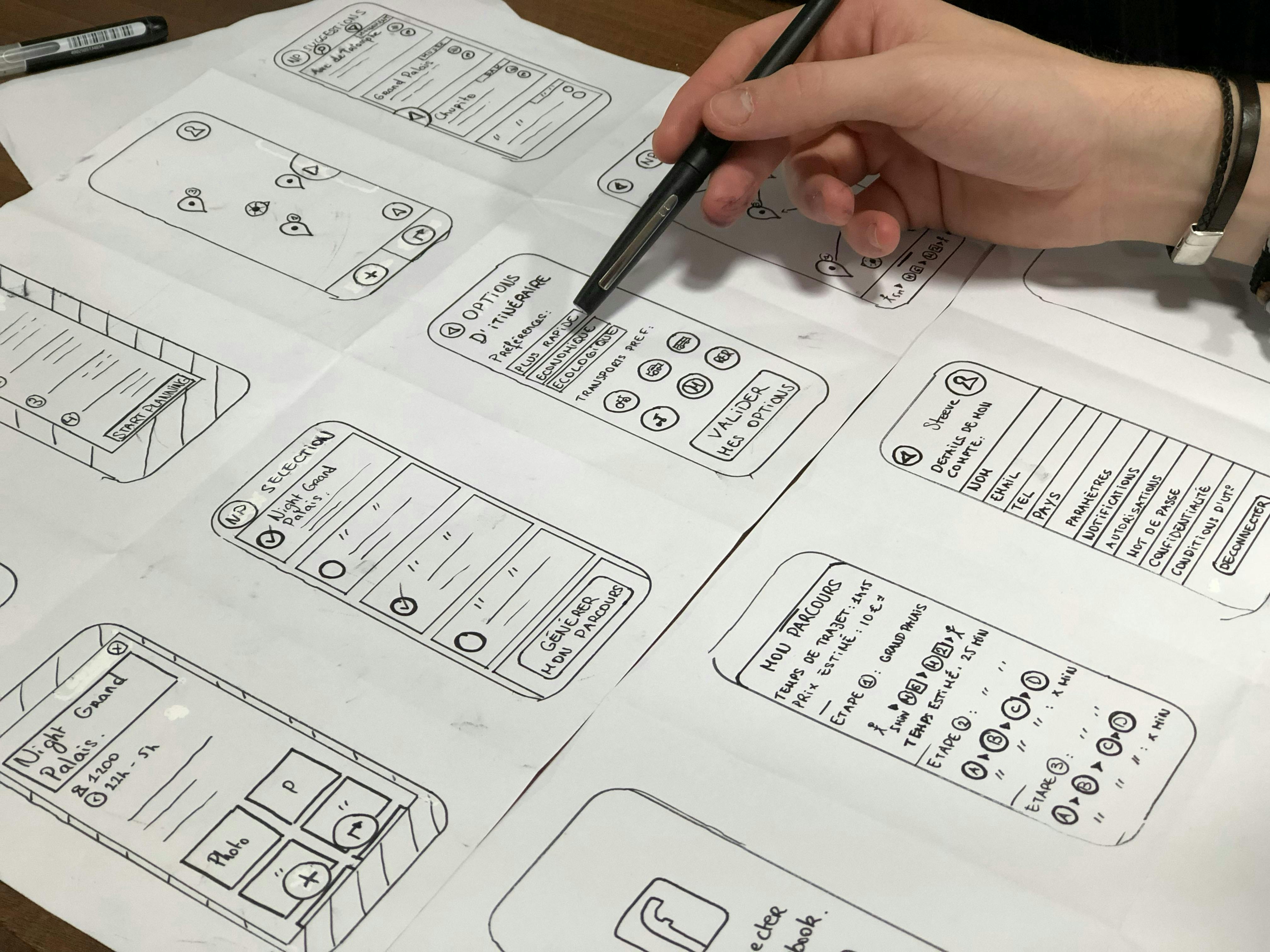
Metrics tell you what users do, but fieldwork shows you why they do it, and why they often do something completely different from what you designed. Launching products in emerging markets means designing for realities that rarely show up on dashboards: unstable logistics, informal retail, shared devices, and fragmented digital habits. The only reliable way to understand these dynamics is to leave the office and meet users where they actually work and live.
"Go global, go local" is a core company value for Yango, a global tech company that offers everyday ride-hailing, e-commerce, food delivery, and entertainment, where I have worked as a product design lead for the past 3 years. As a founding designer of the Buy&Sell service, I've spent significant time in local communities to deeply understand consumer lives and challenges faced by partners and drivers. Fieldwork became the foundation of my discovery process at a stage when my team had many hypotheses but very little clarity on whether we would survive contact with a different market reality. Seeing these workflows firsthand helped me design interactions that aligned with how sellers already think and behave. This article summarizes a practical framework for running fieldwork and UX discovery in emerging markets for product designers, UX researchers, and PMs.
Start Where Your Users Are
I started by coordinating with local managers several weeks in advance, asking them to help identify sellers who were already active online. Delivery service data gave me a solid signal: sellers with regular weekly orders were most likely to be running small but structured businesses. Local teams scheduled meetings, helped me navigate the city, and acted as cultural interpreters throughout the trip. Observing sellers in their real environment helped me design interfaces that match their workflow. For instance, in the POS terminal I built, the main actions use large, high-contrast buttons with semantic color coding (e.g., green for orders and stock features, red for cancelling, purple for customer loyalty), so cashiers can act quickly and confidently even in a noisy, high-pressure shop environment.
Every interview followed a structured flow. I introduced myself, explained the purpose of the study, asked for consent, and then moved from daily routines to more sensitive topics like margins, staffing, and operational bottlenecks. Having a local manager with me was invaluable, not just for translation, but for navigating nuance and helping respondents feel at ease. Through these conversations, I began to understand the actual constraints and habits of our users. Many sellers kept all documentation in Excel, and a surprising number relied solely on paper notebooks. Some owners never appeared in their shop at all, managing everything through Instagram and WhatsApp. Others ran family businesses and personally handled the cash register, online orders, and procurement. These patterns later shaped the personas and CJMs I made.
Walk the Exact Journey Your Users Walk
To better grasp the buyer experience, I used the same shopping channels locals use: Facebook Marketplace listings, Instagram direct messages, and WhatsApp. Walking the same path revealed friction that users never explicitly mention: response delays, broken handoffs, and unsafe payment, which helped explain why some orders never closed and why repeat usage stalled. Observing these moments helped me understand where people unconsciously tried to shorten the journey and where a product could meaningfully step in. Once I walked the same flow, I started designing for the real path, the one held together by screenshots, voice notes, and negotiation. For designers, following the real journey exposes invisible pain points that later inform stronger UX patterns.
Talk to the Businesses That Already Paid the Tuition
I also made a point of learning from people who had already tried to solve similar problems in the region, because their failures and wins are essentially free research, which teams often overlook at their own cost. Some founders had pitched marketplace ideas, run early experiments, or built integrations with local operators, and their stories surfaced dead ends, hidden constraints, and operational bottlenecks I never would have discovered from product metrics alone. I didn’t limit myself to marketplace founders either: logistics partners, payment providers, aggregators, and even call center operators helped me understand where money actually moves, which actors really control the experience, and which models are culturally or legally impossible to scale.
Even informal, NDA-free conversations with these players gave me crucial context, saved the team from repeating costly mistakes, and helped me focus our roadmap on ideas that were both technically feasible and locally viable. For other teams, the lesson is simple: study the local ecosystem of businesses around them, because that’s where you’ll find the real constraints, the real competition, and the clearest signals of what has a chance to work. When designers truly understand the business, they can work as strategic partners to managers.
Run UX Sessions on the Ground
While UX interviews can technically be done remotely, conducting them over Zoom in emerging markets often introduces more friction than insight: unstable internet, low-end devices, and unfamiliarity with screen-sharing make remote sessions unreliable. That’s why I prioritize in-person UX research during field trips; being physically present gives you cleaner sessions, more authentic reactions, and visibility into the real constraints people face with their devices and environment.
Preparing prototypes for these sessions requires adapting to the realities of the market. Because users often rely on older phones with small screen sizes, I design our Figma prototypes using the smallest iPhone frame to ensure flows remain usable on low-end devices. Remember: designing for emerging markets means assuming the lowest-end device as your baseline, not the exception. I also duplicate each prototype page into two languages: the team's internal working language and the local language I plan to test. AI-assisted translation speeds up the process, but local team members still review every string to avoid phrasing that might feel unnatural or confusing to real users.
Translate Observations into Roadmap
It’s essential to document everything you encounter during fieldwork: photos, quotes, unexpected behaviors, and offline edge cases, and turn these raw observations into a clear presentation for the team within the first days of returning, while memories are still sharp. This is also the moment to compile a focused list of hypotheses about what can be improved in the product and which metrics those changes could influence. Framing insights visually and narratively helps designers advocate for solutions with much stronger internal alignment.
Field insights directly shaped the roadmap. For example, I left one field trip with the hypothesis that we needed an out-of-the-box checkout that works across all social platforms; once shipped, this feature went on to drive up to one-third of all new orders.
In the end, without fieldwork, teams may fall into solving symptoms rather than the root problems of their product. In emerging markets, this leads to wrong feature prioritization, broken unit economics, and months of wasted development time. Fieldwork is how global products earn their right to feel local.