
TL;DR —
A distributed system is grassroots if it can have autonomous, independently-deployed instances that can interoperate once interconnected.
This paper is available on arxiv under CC BY-NC-ND 4.0 DEED license.
Authors:
(1) Ehud Shapiro, Department of Computer Science and Applied Math, Weizmann Institute of Science, Israel and ehud.shapiro@weizmann.ac.il.
Table of Links
- Abstract and Introduction
- Grassroots Protocols
- Grassroots Implementation of Grassroots Dissemination
- Applications of Grassroots Dissemination Supporting Digital Sovereignty
- Future Work & Discussion
- References
- A. Preliminaries: Asynchronous Distributed Multiagent Transition Systems
- B. All-to-All Dissemination is not Grassroots
- C. Proofs
Proofs
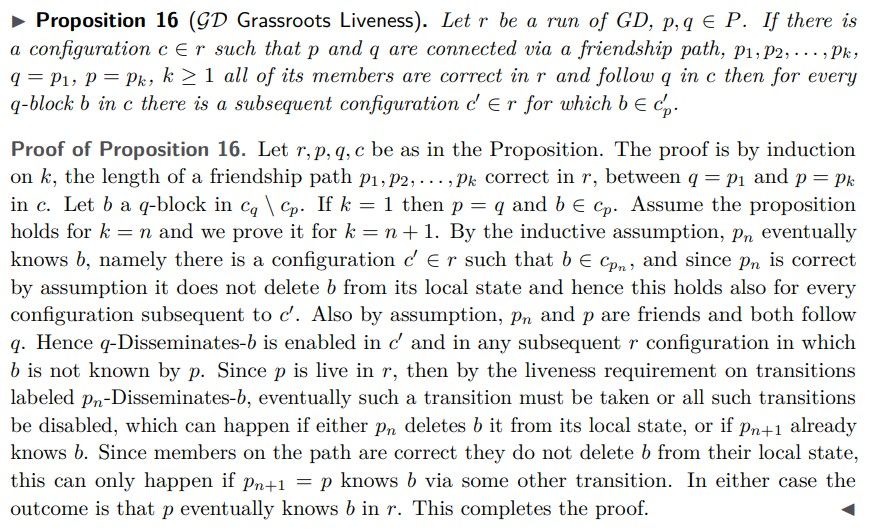
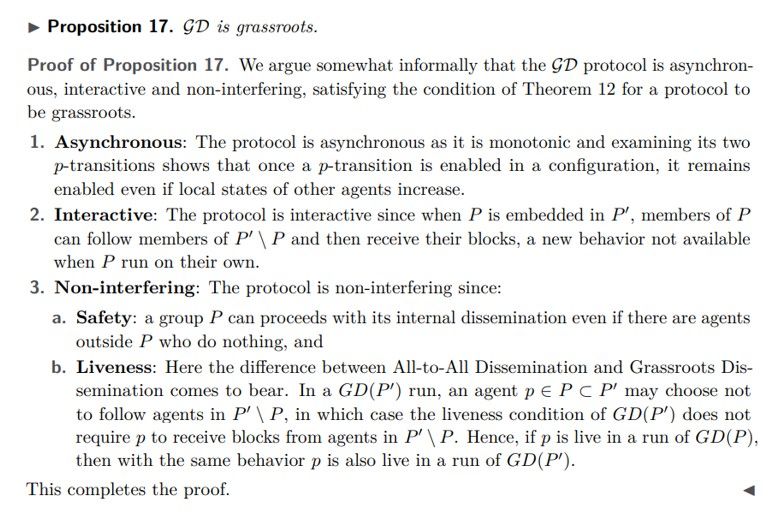
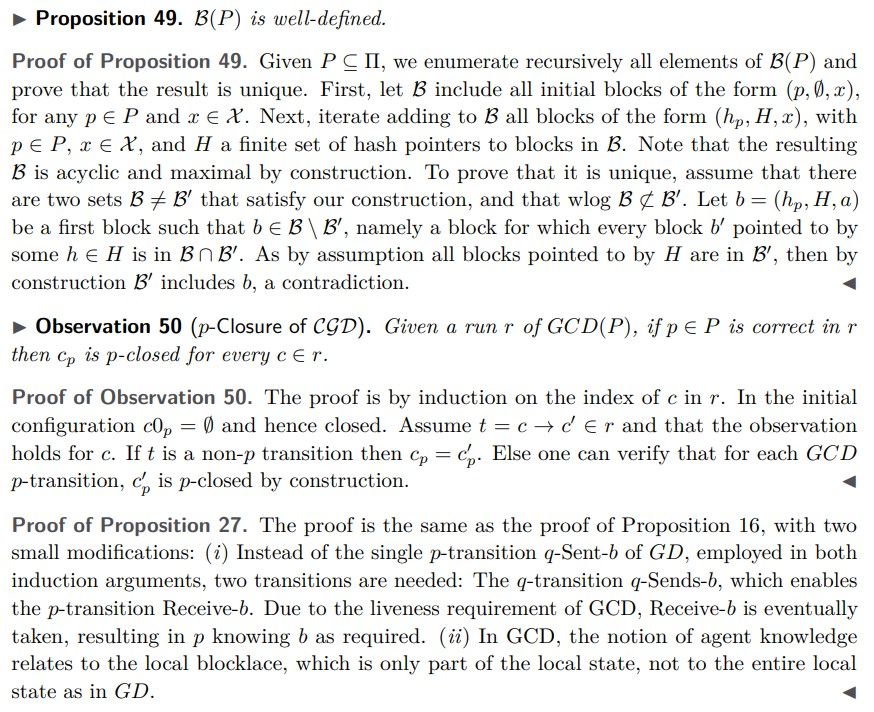
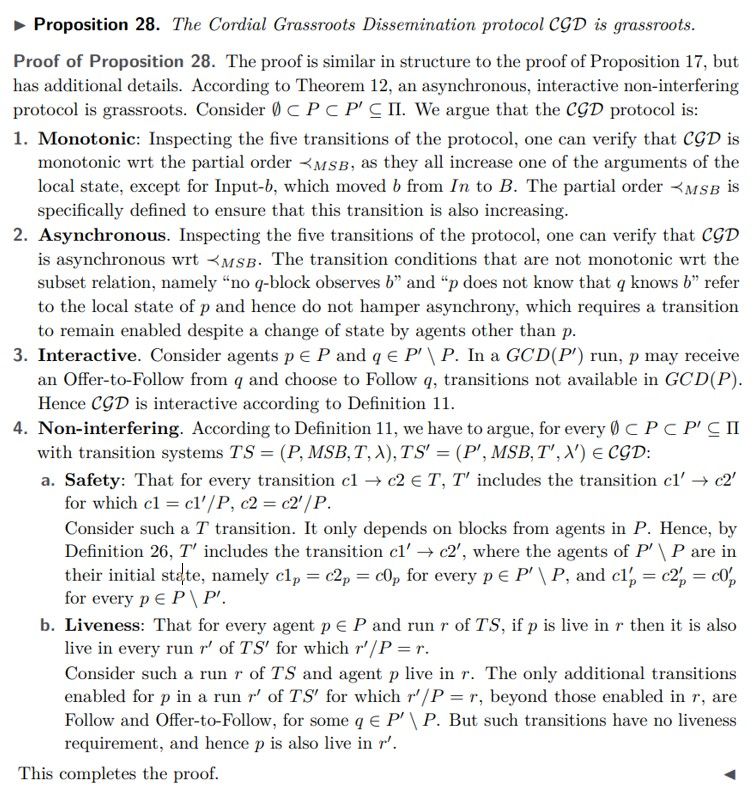
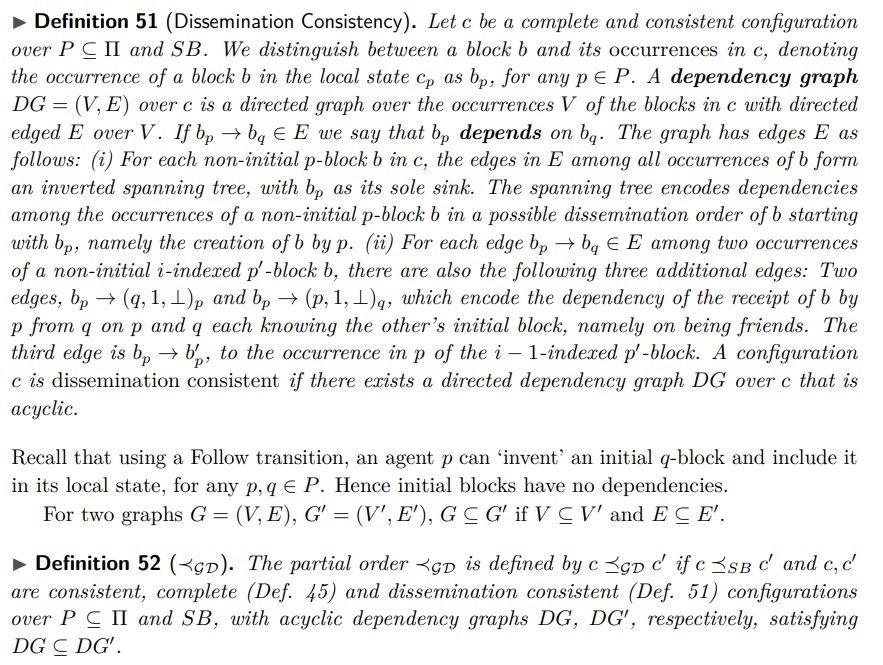
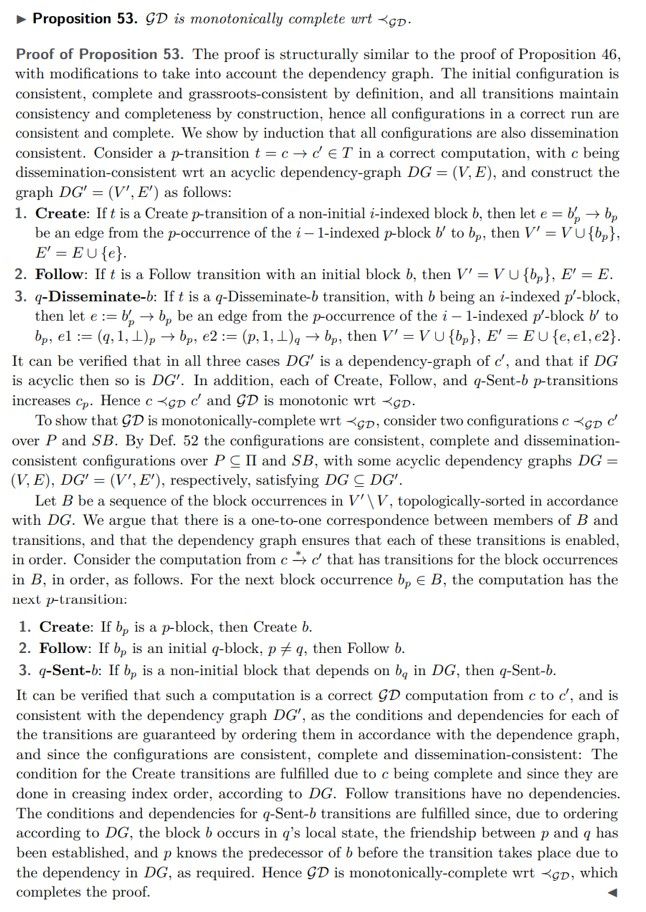
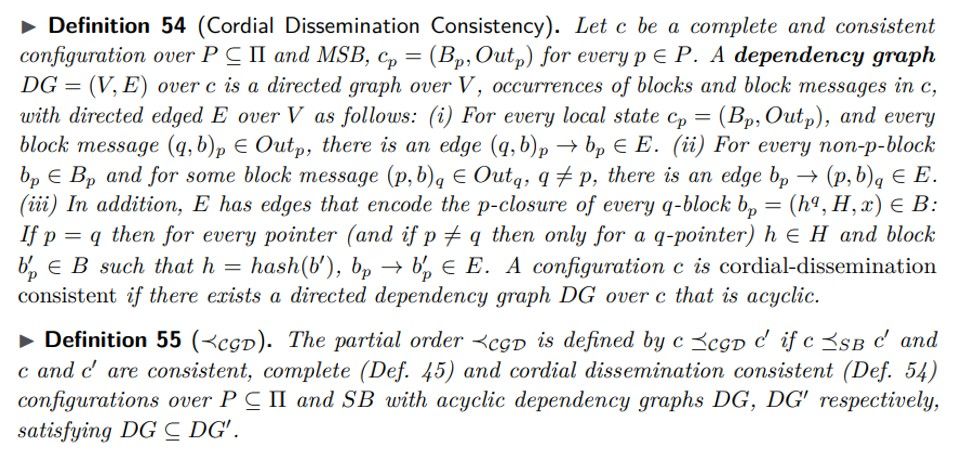
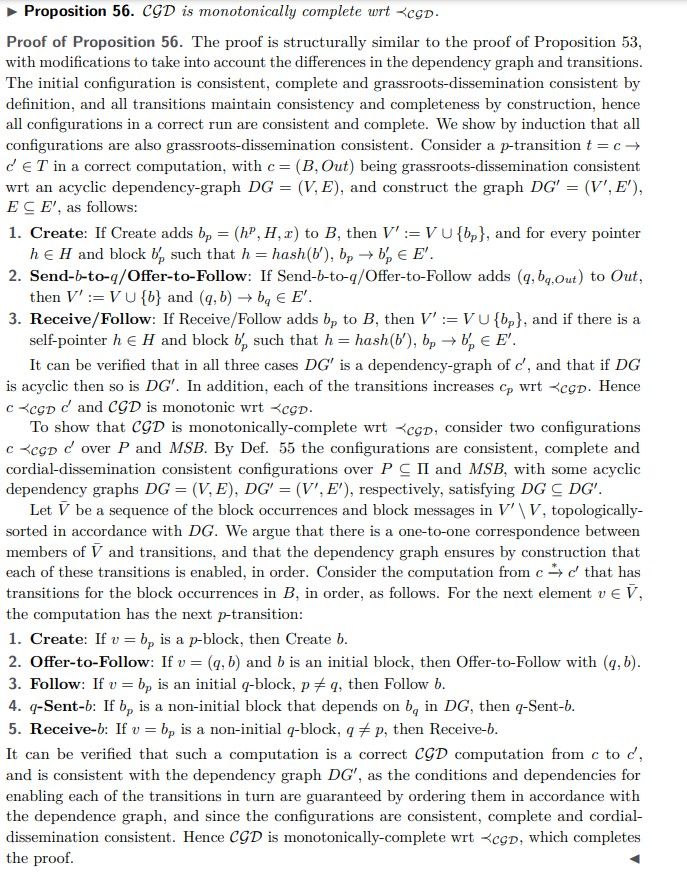
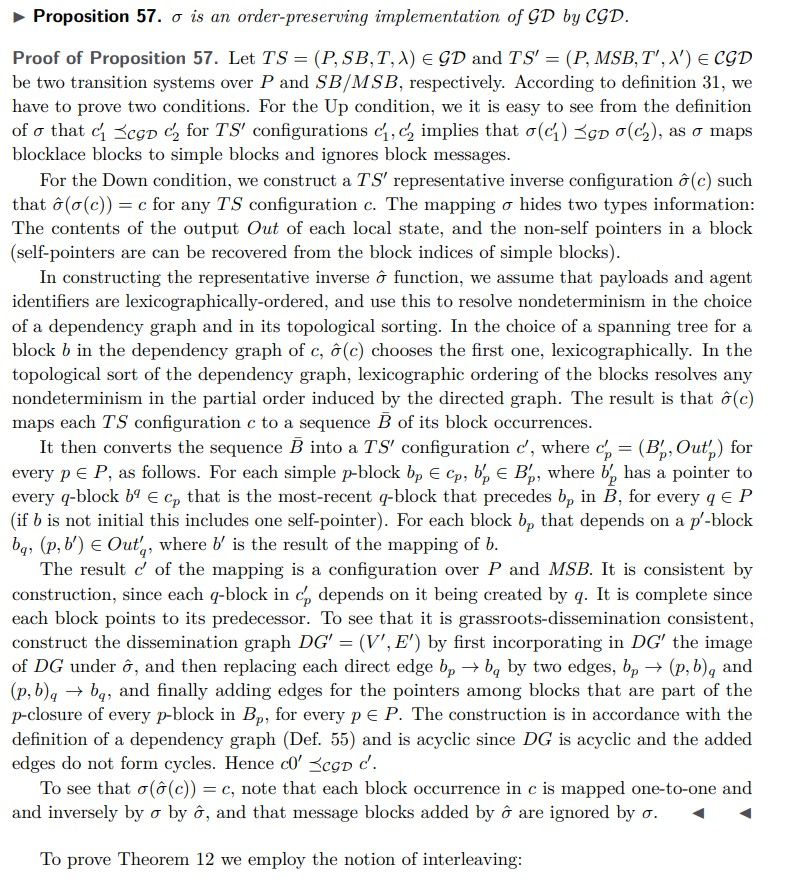
A GCD configuration records explicitly all the dependencies among the block occurrences in it, with one exception – if the same block message is sent to the same agent by several agents, the configuration does not record which of the messages was received. Hence the cordial dependency graph has some nondeterminism.
[story continues]
Written by
@cryptosovereignty
We believe everyone should have ultimate control and ownership over their cryptographic assets and digital transactions.
Topics and
tags
tags
digital-sovereignty|sovereign-digital-communities|distributed-system|grassroots-applications|grassroots-distributed-systems|dissemination-protocol|multiagent-transition-systems|blocklace
This story on HackerNoon has a decentralized backup on Sia.
Transaction ID: Fu6cCRsJNNb7Xrs1UOM6O5YoAApkykLeRBkn9YukMfs