


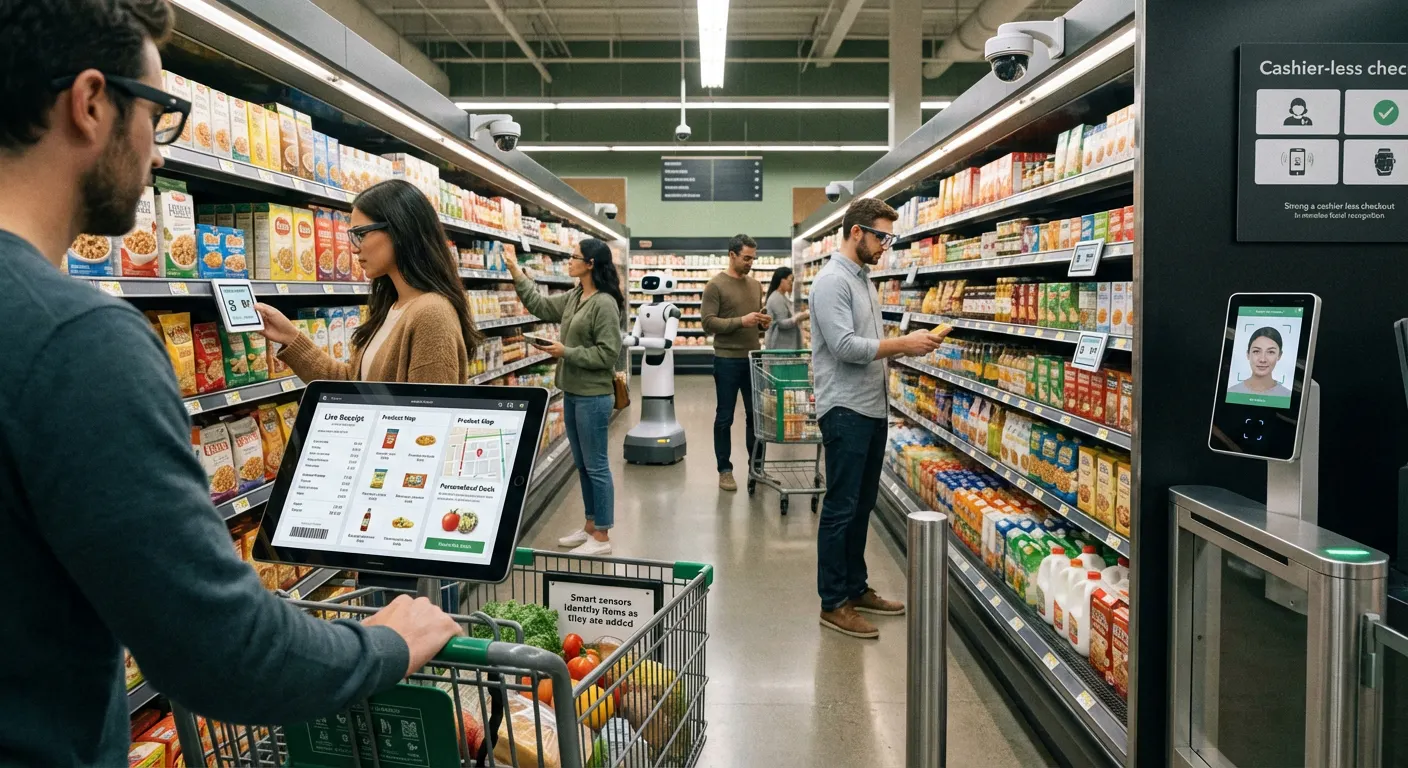
The grocery store might be the last place you’d expect to find a tech revolution.
But behind the scenes, artificial intelligence and modern software are transforming how stores stock shelves, price products, and keep customers coming back.
The problem independent grocers have always faced
Large chains like Walmart and Kroger have spent decades building proprietary data infrastructure — demand forecasting, automated reordering, dynamic pricing — that gives them a structural advantage that’s been nearly impossible to replicate at smaller scale.
Independent grocers, which make up a significant portion of U.S. food retail, have historically had no equivalent. The result: stockouts, waste, thin margins, and slow death by operational inefficiency.
The numbers tell the story. The independent grocery sector generates over $250 billion in sales annually, yet single-store operators saw EBITDA fall to just 1.52% in fiscal year 2024, compared to 3.28% for multi-store operators — a gap almost entirely explained by scale and operational efficiency.
That’s exactly the problem technology is starting to address.
Where the tech is actually going
A new generation of grocery management platforms is bringing inventory and operations tooling to small and mid-size operators that previously only made sense for chains.
Vori focuses on independent grocers specifically, offering real-time inventory visibility and margin tracking without requiring a dedicated ops team. Shelf Engine takes a different approach — using AI-driven ordering to reduce food waste by predicting demand at the SKU level.
Rosie, meanwhile, has carved out a niche in e-commerce infrastructure for independents, letting smaller stores offer online ordering and curbside pickup without building anything from scratch.
Each solves a different piece of the same problem: the independent operator is resource-constrained, and the tools they’ve historically had access to weren’t built for them.
On the customer side
Loyalty and personalization are getting smarter too. Where chain retailers have long used purchase history to drive targeted promotions, independents are now accessing similar capabilities through platforms like Paytronix and Upside — tools that use behavioral data to build repeat visit patterns and margin-positive promotions.
The sophistication gap between a neighborhood grocer and a regional chain is narrowing faster than most people realize. As of fiscal year 2023, 76% of independent grocers already offered online ordering with in-store pickup — a sign that adoption of modern retail infrastructure is accelerating even among smaller operators.
What’s notable about platforms like Vori is where they’re showing up. Independent grocers in underserved neighborhoods — stores filling gaps left by chain pullbacks — are among the operators leaning into these tools earliest. For them, operational efficiency isn’t a growth strategy. It’s what makes the difference between staying open and closing. A store that can keep shelves stocked, manage costs in real time, and build customer loyalty on a tight budget is a fundamentally more stable neighborhood anchor than one running on spreadsheets and intuition.
The broader implication
When a single-location grocer can operate with comparable data discipline to a much larger competitor, the dynamics of the market shift. That’s not just a business story — it has real implications for food access and neighborhood retail stability, particularly in areas where large chains have pulled back or never showed up.
The more interesting question isn’t whether this tech works. It’s whether adoption happens fast enough to matter.
What to watch
Predictive demand at the hyperlocal level is the next meaningful frontier — stores anticipating what a specific neighborhood needs before a gap appears on the shelf. Pair that with tighter supplier integrations and real-time cost management, and the structural disadvantage independent grocers have operated under for decades starts to look a lot more surmountable.