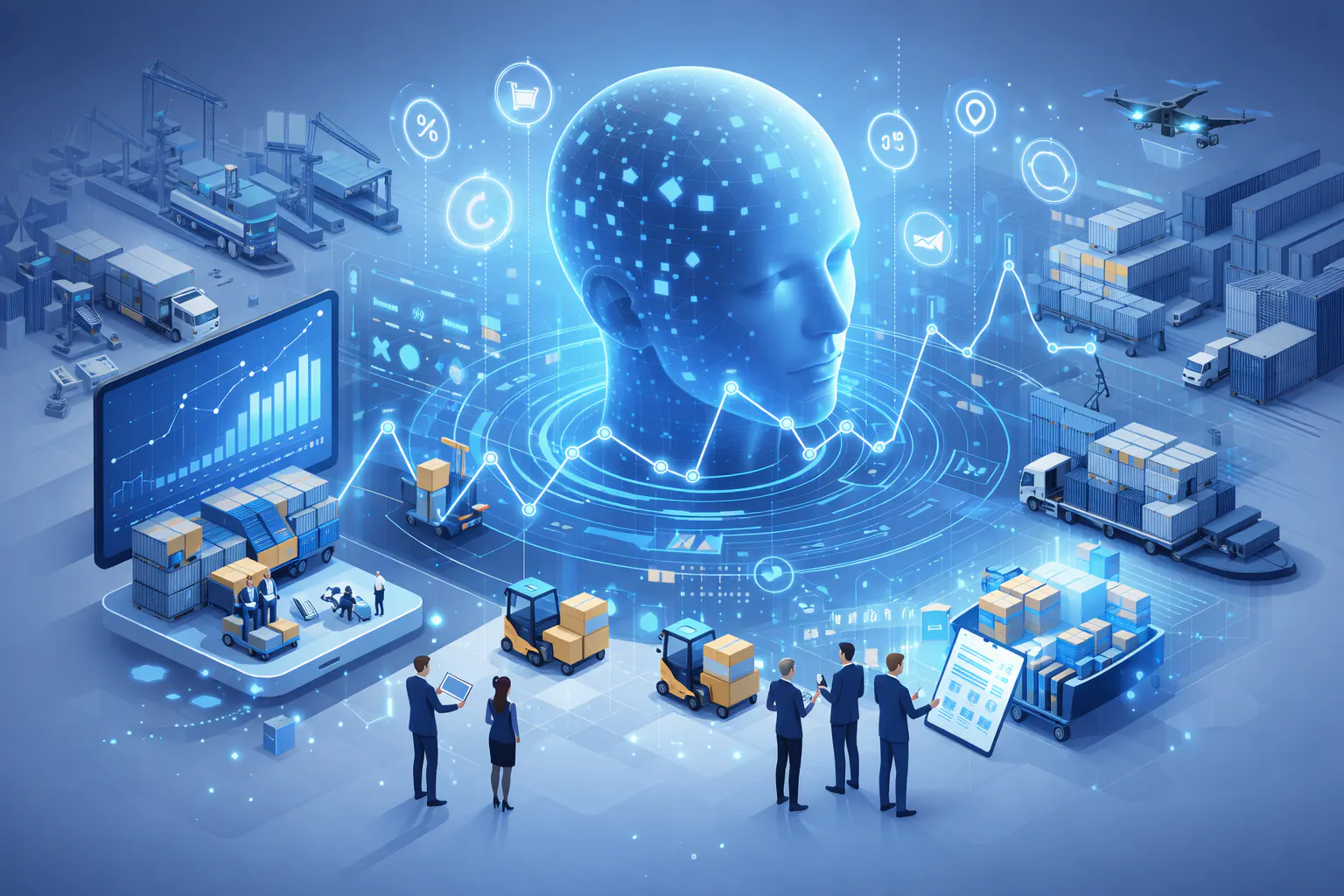
Traditionally, supply chains operated within reasonably stable and predictable demand environments. Businesses utilized the historical sales pattern to plan for production, inventory, and logistics. These were usually based on historical data and monthly forecasts. This has changed significantly. Due to the pace of change in consumer buying patterns; increased spikes in demand due to promotional activity; and the conditions occurring outside of the control of businesses (e.g., weather-related disruptions, economic indicators), the way in which consumers purchase goods can change rapidly.
Because of this, companies that use historical data as a planning model are finding it increasingly ineffective; therefore, many are turning to AI-based demand sensing (the ability to use advanced analytics to collect real-time market signals to create timely actionable plans). The changes made from the assistance of AI are revolutionizing how supply chains function, allowing for fast and accurate reactions to volatility.
Why Traditional Forecasting Struggles in Modern Markets
The conventional forecasting approach has been mostly confined to established and stable environments, and therefore, these types of forecasts largely depend on historical values and time series analysis with the assumption made that past demand will remain the same into the future. While time series type models are appropriate for calculating accurate forecast information in low variable situations, they cannot provide accurate forecasts for today's very dynamic environment.
Recent studies have indicated that during an event with very high amounts of volatility (i.e., promotional periods, external events), accuracy of traditional models can be decreased by as much as 20% to 40% relative to actual demand, which has forced planners to operate reactively using manual override methods combined with manual adjustments performed through spreadsheets.
For example, during the COVID-19 pandemic, numerous consumer packaged goods companies experienced Demand variances exceeding 200% in key categories, making their historical methods of forecasting nearly ineffective. When this occurred, consumers experienced extremely low levels of storage in some areas while extremely high levels of storage in other locations. This indicated that lagging indicators cannot provide a high enough level of accuracy to support timely decision-making.
The Emergence of Demand Sensing
Demand sensing is an important move away from traditional historical based forecasting and towards continuous, real-time signal-based planning. Demand sensing doesn't just look at old data; it also analyses current data such as POS transactions, retail distributor stock movement, online and offline searches, macroeconomic statistics, and weather patterns or local events.
Through the use of machine learning algorithms to examine these multiple data sources together, companies will be able to determine demand change sooner than they could ever do before - often within days vs weeks.
For example, several global consumer goods companies have deployed demand sensing platforms that combine retail sell-through data with one or more external signals (such as weather), allowing them to adjust production or restocking decisions almost instantaneously. These applications have been reported to create up to a 30% increase in accuracy of short-term forecast accuracy as well.
Turning Diverse Data into Smarter Forecasts
AI-based demand sensing merges different kinds of information and creates a comprehensive picture of what is happening. Demand forecasting as it has always been such as using only previous sales data to calculate demand. AI Demand Sensing considers other types of data to identify what drives demand change rather than solely looking at sales data.
Some types of data that can be used together include retail point of sale data to see how much of each item has been sold and is on the shelf at stores; demographic and consumer behavior data; weather data which has been shown to be correlated to demand for many different categories of goods (such as apparel, beverages, energy products); and digital signals (such as online reviews, trending search terms, and social media activity) can provide insight on potential changes in demand long before customers actually purchase the product.
Companies are examples of how to use many different sources of data to improve inventory management. One such organization has specifically used predictive analytics to help place inventory close to where it is expected to be needed, which reduces lead time and lowers fulfilment costs. The goal of using all of these multiple data types is to be able to create much more accurate forecasts with much finer levels of detail.
How Leading Companies Are Applying Demand Sensing
Many top companies across multiple industries are incorporating real-time demand sensing capabilities into their supply chain business models. For instance, in the consumer packaged goods sector, some organizations have found tremendous success by combining real-time retail data with promotions and other notifications to help them modify their production schedules and minimize excess inventory. In retail, certain fast-fashion players have received global attention for their extremely fast demand response systems; they utilize near real-time sales data and update production schedules within weeks instead of waiting for an entire season. There are also software vendors that offer AI-based demand sensing solutions that utilize hundreds of unique data points from various locations in the supply chain. Additionally, manufacturers of automobiles are beginning to use predictive analytics to accurately align their vehicle production with the shifting demand for vehicles, including electric vehicle sales, along with specific configurations and/or options for each model.
Examples of companies that have successfully implemented demand sensing solutions have experienced demonstrable results in the form of inventory reductions of 10% to 20% and improved customer service levels of 5% to 10%, or greater.
The Impact on Real-Time Supply Chain Planning
All over the supply chain, demand sensing technologies stand to influence every area of a company. With demand being visible sooner than it ever has before, businesses will now be able to react to changes in demand quicker than they ever have. The enhanced demand sensing capabilities will also provide businesses the opportunity to enhance their overall inventory optimization by ensuring that they will not experience both stockouts and excess by having better plans regarding how to plan for the necessary proficiencies in making future forecasts. In the same vein, transportation networks can organize themselves for changes in volume much earlier than they have in the past, which has made them more successful when it comes to helping companies provide product to their customers on time.
On the supply versus demand side, companies can conduct operational simulations in order to analyze potential future demand scenarios, which will aid them in establishing the projected future supply and demand balances; these simulations can be based off of true demand signals and can also demonstrate how external factors will impact supply and demand balances. With the ability to conduct these types of analyses, companies will transition from a reactionary to a proactive decision-making process; rather than reacting after the fact to an event, planners will plan for an event occurring before it occurs based on continuous updates that allow them to identify the time in which they will respond based on how to use current data that has been collected by consumers to plan.
A More Responsive Future for Supply Chains
In today’s complex and globalized supply chain environment, demand sensing is becoming more critical than ever for improving a business’s competitive position. Rather than being a periodic exercise, demand sensing has evolved into a continuous process of capturing and interpreting demand signals from the marketplace and making operational decisions based on those signals. By successfully implementing demand sensing, companies can improve visibility into the drivers of demand, respond faster to changes in market conditions, and better align their supply with demand. With the new data sources available and advances in artificial intelligence (AI) and machine learning technologies, demand sensing will become an essential capability of next-generation supply chains.
[story continues]
tags