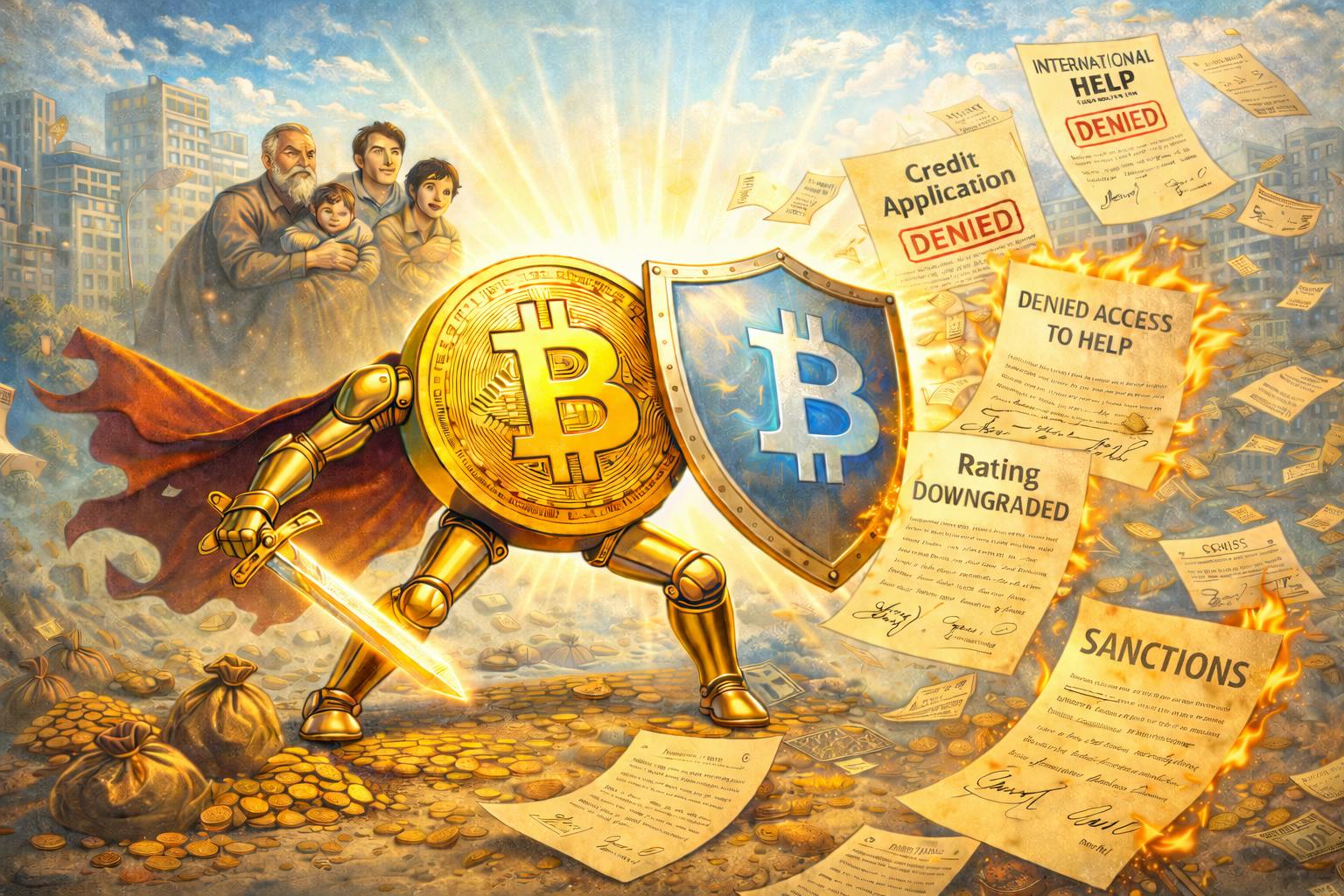
The Unseen War: Currency Conflicts and Their Human Cost
When we think of war, we imagine soldiers, weapons, and physical destruction. But there's another type of war that affects millions of people worldwide: currency and economic wars. These conflicts aren't covered by any international conventions, yet they cause as much human suffering as traditional warfare.
What Are Currency Wars?
Currency wars occur when governments use economic tools to pressure other nations:
- Currency manipulation (devaluing or restricting access to currency)
- Economic sanctions (trade restrictions, financial blockades)
- Market interventions (affecting exchange rates, interest rates)
The goal: Weaken an enemy's economy, reduce their trade capacity, or force policy changes.
The reality: While governments target other governments, the people always suffer first.
The Human Cost: People as Collateral Damage
When currency wars occur, ordinary people become collateral damage:
1. Loss of Purchasing Power:
- Currency devaluation means savings lose value
- Prices rise faster than wages
- People can't afford basic necessities
- Economic stability collapses
2. Mass Immigration:
- When economies collapse, people have no choice but to flee
- They leave behind homes, jobs, and communities
- They become refugees in search of economic stability
- Families are separated, lives are disrupted
3. Economic Destruction:
- Jobs disappear as trade collapses
- Businesses fail as currency devaluate and becomes unstable
- Investment stops as confidence erodes
- Entire economies can collapse
The Pattern:
Government A targets Government B's economy → Government B's currency weakens → People in Country B suffer → Mass immigration occurs → Humanitarian crisis emerges
Why This Was Unpreventable in the Past
The Central Bank Problem:
In traditional systems, all money flows through central banks:
- Governments control money issuance
- All currency is government-issued
- All transactions can be monitored and restricted
- Single point of control
The Consequence:
When Government A wants to pressure Government B:
1. Government A imposes sanctions or trade restrictions
2. Government B loses access to international and financial markets
3. Government B is forced to print more local money to maintain operations
4. Excessive printing causes strong and fast inflation
5. Currency devalues
6. People suffer—their money loses value, prices rise, economy collapses
Why People Couldn't Be Protected:
- All money was government-issued
- To support people, you had to go through their government, no direct access
- Governments could block or redirect aid
- No way to bypass government control
- People were trapped in the system
Historical Examples: The Human Cost of Currency Wars
Venezuela (2010s-present):
- Economic sanctions and currency collapse
- Hyperinflation destroyed purchasing power, currency loosing 99% of his value
- 7+ million people fled (25% of population)
- Largest refugee crisis in Latin American history
- People suffered while governments negotiated
Syria (2010s):
- Economic sanctions combined with conflict
- Currency collapsed
- 6+ million people became refugees
- Largest refugee crisis since WWII
- People caught in the middle of economic and military conflict
Zimbabwe (2000s):
- Currency manipulation and hyperinflation
- Currency became worthless
- Millions fled to neighboring countries
- Economic collapse forced mass migration
- People had no choice but to leave
The Common Thread:
In each case, people suffered the most—losing savings, jobs, homes, and countries. They became collateral damage in conflicts they didn't start or choose.
The Changing Perspective: From Success to Problem
Historical View:
In the past, governments often saw mass immigration as a sign of success:
- "We've weakened the enemy"
- "Their people are fleeing to us"
- "We've won the economic war"
- Mass immigration was seen as victory
Modern Reality:
Today, mass immigration is recognized as a problem:
- It creates humanitarian crises
- It strains receiving countries' resources
- It separates families and disrupts lives
- It's a symptom of economic devastation
- Mass immigration is now seen as a failure, not a success
The Shift:
We've moved from celebrating economic warfare's effects to recognizing its human cost. But we still lack tools to protect people while maintaining economic pressure.
The Blockchain Solution: Protecting People While Maintaining Pressure
How Blockchain Changes the Game
Traditional System:
Government → Central Bank → Currency → People
(All money flows through government control)
Blockchain System:
Blockchain → Direct to People
(Money not controlled by any single government)
Why Crypto Can Protect People
1. Money Not Emitted by Governments:
Traditional Currency:
- All money is government-issued
- Governments control issuance and distribution
- Easy to restrict or manipulate
- Single point of control\Cryptocurrency:
- Money created by algorithm, not government
- Distributed network controls distribution
- Can't be restricted by single government
- No single point of control
2. Direct Support to People:
Traditional Aid:
- Must go through government channels
- Government can block or redirect
- People may never receive it
- Intermediaries control access\Blockchain Aid:
- Money sent directly to people's wallets
- No government intermediary needed
- People receive it immediately
- Direct, transparent, immediate
3. Maintain Purchasing Power During Crisis:
Traditional System:
- When local currency collapses, people lose everything
- No alternative currency available
- Savings become worthless
- Total vulnerability\Blockchain System:
- People can receive stable cryptocurrency (like O Coin)
- Value based on universal measurement (water price)
- Not affected by local currency collapse
- Maintains purchasing power
4. Target Governments, Not People:
Traditional Approach:
- Economic pressure affects entire economy
- People suffer along with government
- No way to separate the two
- Collateral damage unavoidable\Blockchain Approach:
- Government currency can be targeted
- People receive alternative currency (crypto)
- People maintain purchasing power
- Government feels external economic pressure
- People protected, government pressured
The O Blockchain Model: A Humanitarian Solution
How O Blockchain Protects People:
1. Water Price-Based Currency:
- Value determined by universal measurement (water price)
- Stable across all countries
- Can't be manipulated by governments
- Universal, stable, fair and unlimited\2. Direct UBI Distribution:
- Universal Basic Income sent directly to people's wallets
- No government intermediary
- No central bank control
- Direct, transparent, immediate\3. Bypass Government Control:
- Support people without going through their government
- No need for government approval
- No risk of government blocking
- People receive aid regardless of government\4. Immune to Currency Warfare:
- Value based on water price (universal measurement)
- Not controlled by any government
- Can't be devalued or restricted
- Resilient to economic conflict
Example Scenario:
Traditional Approach:
- Country A imposes sanctions on Country B
- Country B's currency collapses
- People lose purchasing power
- Mass immigration occurs
- People suffer, migrate, government pressured
Blockchain Approach:
- Country A imposes sanctions on Country B
- Country B's government currency weakens
- People receive O Coin UBI (stable, water price-based)
- People maintain purchasing power
- Government feels economic pressure
- People protected, government pressured, mass immigration prevented
The Need for Rethinking: New Tools, New Strategies
Why Economists and Leaders Must Rethink Money
The Challenge:
Cryptocurrency represents a fundamental shift in how money works:
- Money no longer needs to be government-issued
- People can receive money directly, bypassing governments
- Economic pressure can be applied without affecting people
- This requires completely new thinking
What Needs to Change:
1. Economic Theory:
- Traditional economics assumes government control of money
- New models needed for decentralized currency
- Understanding of how crypto affects monetary policy
- Rethinking fundamental assumptions\2. Policy Strategy:
- How to use economic pressure without harming people
- How to support people without supporting governments
- How to maintain pressure while providing humanitarian aid
- New strategies for new tools\3. International Relations:
- How to apply pressure while protecting civilians
- How to use crypto for humanitarian purposes
- How to coordinate crypto-based aid
- New approaches to diplomacy
The Opportunity: Better Outcomes for Everyone
With Traditional Tools:
- Economic pressure → Currency collapse → People suffer → Mass immigration
- Everyone loses
With Blockchain Tools:
- Economic pressure → Government currency weakens → People receive stable crypto aid → Purchasing power maintained → Mass immigration prevented
- Government pressured, people protected
The Key Difference:
- Traditional: Can't separate government from people
- Blockchain: Can target government while protecting people
- New tools enable better strategies
Rethinking Money Flow and Control
Traditional Money Flow:
- Government → Central Bank → Banks → People
- Control at every step
- Easy to restrict or manipulate
- Centralized control
Blockchain Money Flow:
- Algorithm → Blockchain Network → People's Wallets
- No single point of control
- Can't be restricted
- Decentralized distribution
The Question:
Where should control be? Who should have power over money?
The Answer:
With blockchain, we can rethink this entirely:
- Control can be distributed
- People can receive money directly
- Governments can't block or redirect
- New possibilities for money flow
The Humanitarian Imperative: Protecting People in Economic Conflicts
Why This Matters
The Reality:
- Currency and economic wars affect millions of people
- They're not covered by international conventions
- People suffer as much as in traditional warfare
- But we have new tools to protect them
The Opportunity:
- Blockchain technology enables direct support to people
- We can maintain economic pressure while protecting civilians
- We can prevent mass immigration by maintaining purchasing power
- Technology enables humanitarian protection
The Moral Question
Should people suffer for government conflicts?
The answer is no, especially where people don't vote for their leaders or democracy is not respected. But in the past, we had no choice—all money was government-controlled, making it impossible to protect people without supporting their governments.
Now we have a choice:
- Use blockchain to support people directly
- Maintain economic pressure on governments
- Prevent mass immigration by maintaining purchasing power
- Technology enables moral action
The Path Forward
For Economists:
- Rethink monetary theory for decentralized currency
- Accept “Supplies & Demand” is not a fatality in a market of virtual currency
- Develop models for crypto-based humanitarian aid
- Understand how blockchain changes economic warfare
- New thinking for new tools\For Leaders:
- Develop strategies for using crypto to protect people
- Coordinate international crypto-based aid
- Use economic pressure without harming civilians
- New strategies for better outcomes\For Everyone:
- Understand that currency wars affect real people
- Support technologies that protect civilians
- Demand better solutions for economic conflicts
- Advocate for humanitarian protection
Conclusion: A New Approach to Economic Conflicts
Currency and economic wars have always affected people as much as traditional warfare, yet they've been largely ignored by all international conventions. In the past, this was unpreventable—all money was government-issued, making it impossible to support people without going through their governments.
But blockchain technology changes everything.
The Problem:
- Currency wars affect people as much as any war
- People become collateral damage
- Mass immigration results from economic collapse
- No way to protect people while maintaining pressure
The Solution:
- Cryptocurrency enables direct support to people
- People can maintain purchasing power during crises
- Governments can be pressured without harming civilians
- Mass immigration can be prevented
The Challenge:
- Requires deep rethinking by economists and leaders
- New strategies needed for new tools available
- Understanding of how crypto changes money flow
- Coordination of crypto-based humanitarian aid
The Opportunity:**
With blockchain, we can protect people while maintaining economic pressure. We can prevent mass immigration by maintaining purchasing power. We can use new tools to achieve better outcomes and effectively reach targets.
The Question:**
Will we use technology to protect people, or will we continue to accept collateral damage in economic conflicts?
The tools exist. The question is whether we'll use them.
Crypto and blockchain make us rethink our current money flow and where the controls are. With new tools come new strategies and better outcomes. The time to rethink is now!
References & Further Reading
- History of Currency Wars (various economic history sources)
- Central Bank Operations (Federal Reserve, ECB, academic research)
- Blockchain and Humanitarian Aid (various blockchain research)
- O Blockchain: Direct Support to People (o.international)
- Mass Migration and Economic Crises (UN, World Bank reports)
- International Conventions on Warfare (Geneva Conventions, etc.)
Note on Content: This article examines how currency and economic wars affect people and how blockchain technology can provide humanitarian protection while maintaining economic pressure where needed. It advocates for using new tools to achieve better outcomes for everyone involved.
This article is published under HackerNoon's Business Blogging program.
[story continues]
tags