Shem Albert
Photo courtesy of Seyond
Machines still struggle to see. Autonomous vehicles miscalculate distances. Delivery robots stumble on curbs. Industrial sensors fail when the weather turns harsh.
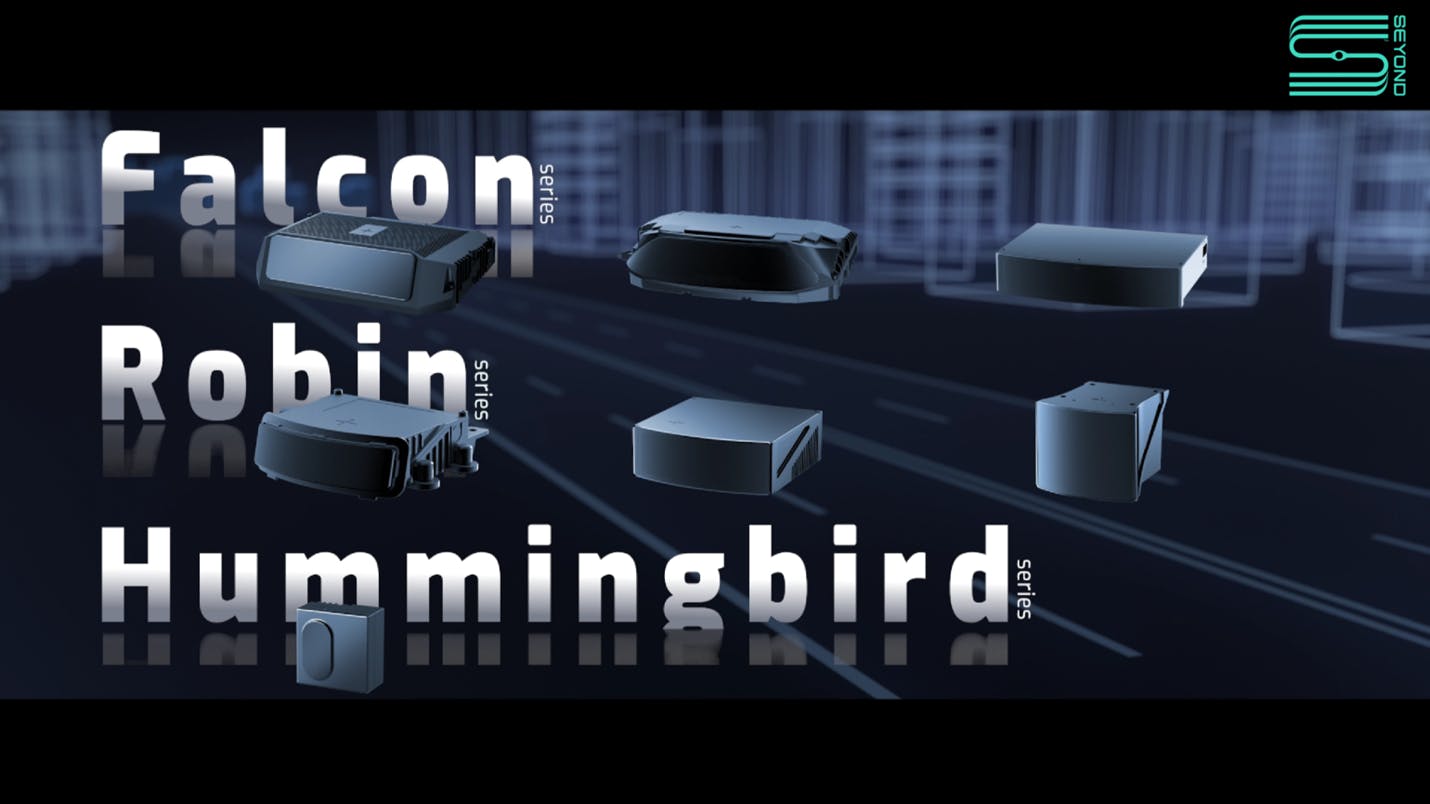
Billy Evers, VP of Sales and Marketing for the Americas and APAC regions, states that Seyond offers what few others can. "We are one of the only 3D LiDAR companies that offer a product in each individual product segment: ultra long range at 1.5m–500m, long range at 1m–250m, mid range at 0.1m–150m, and short range at 0.01m–50m." That breadth matters because different applications require different sensing capabilities. Robotaxis need to detect objects hundreds of meters ahead at highway speeds. Warehouse robots require precision within tens of meters. Construction equipment demands durability across all conditions.
Manufacturing Muscle
Seyond went public on the Hong Kong Stock Exchange in December 2025, valued at 11.7 billion Hong Kong dollars. The Silicon Valley company now operates as one of the few automotive-grade LiDAR manufacturing facilities in the US, a distinction that carries strategic weight for clients seeking supply chain security and regulatory compliance.
Revenue improved, driven by contracts with more than 500 clients across automotive, robotics, and intelligent traffic systems. The company's flagship Falcon and Robin series sensors power NIO vehicles and autonomous platforms worldwide, with over 600,000 Falcon units already deployed. Seyond's sensors deliver what the company calls "image-grade" perception, meaning resolution sharp enough to distinguish pedestrians from posts, bicycles from barriers.
Feeding the Robots
Seyond's sensors capture this information across varying distances and conditions, from dusty mining sites to rain-soaked highways. Traditional vision systems falter when lighting conditions change or particles obscure the camera. LiDAR functions by emitting laser pulses and measuring their return time, creating detailed spatial maps regardless of ambient light. Evers notes that Seyond's technology enables robotics "to see the 3D world in live motion and accurately interact with society."
The company also developed the first fully customizable LiDAR sensor with a scan pattern, allowing clients to tailor how the device sweeps an environment for specific use cases. A highway application might prioritize long-range forward vision, while a last-mile delivery robot needs 360-degree short-range coverage. Competitors like Ouster, Robosense, and Hesai offer sensors optimized for specific ranges, but Seyond's portfolio covers all segments, reducing integration complexity for manufacturers building diverse fleets.
Seeing Smarter
Seyond pairs its hardware with OmniVidi, a perception software platform that interprets raw LiDAR data to enable semantic understanding. Sensors alone produce point clouds; perception software translates that data into actionable intelligence about lane lines, obstacles, and traffic flow. The combination allows autonomous systems to make split-second decisions, whether navigating crowded intersections or coordinating robotic arms in warehouses.
Deployment spans industries where failure carries consequences. Mining operations use Seyond's long-range sensors to detect equipment and personnel across vast sites. Rail systems rely on the technology for collision avoidance. Agricultural machinery navigates fields using mid-range LiDAR to avoid obstacles while maintaining precision. Each application demands sensors that withstand temperature extremes, vibration, and particulate exposure while maintaining accuracy.
Manufacturing in the United States positions Seyond to serve clients requiring domestic sourcing, particularly in defense and critical infrastructure sectors. The company is expanding into European and APAC markets after establishing its foothold in the Americas, targeting growth leaders and engineering teams building the next generation of autonomous platforms. Robots need to see before they can act. Seyond built the eyes.
This story was distributed as a release by Jon Stojan under HackerNoon’s Business Blogging Program.
[story continues]
tags