
Every January, the tech world is flooded with “Top Trends” articles. Most of them are written by analysts or marketing teams, and while they’re useful, they don’t always reflect what actual developers feel on the ground. That’s why I wanted to take a different approach. This research inspired me to run a community survey among JavaScript developers on Reddit.
The results, along with a few extended questions, gave me fascinating insights into how developers see their own future.
AI in web development: assistant or replacement?
Let’s start with how people who work with JavaScript every day see the role of AI in their workflow:
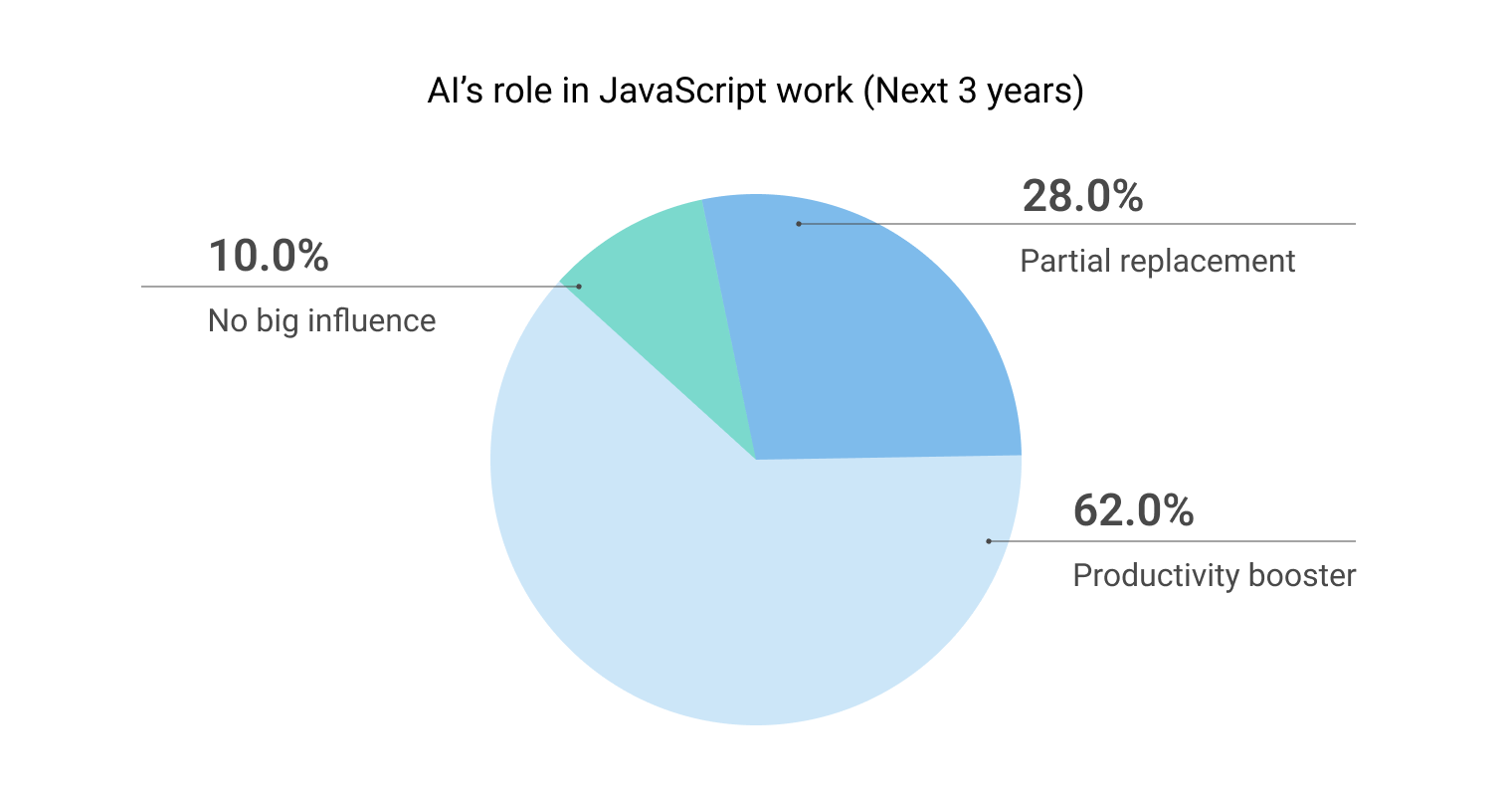
- 62% of respondents view AI as a productivity booster, not a replacement.
- 28% say AI agents could partially replace a JS developer.
- 10% don’t believe their workflow will change in any meaningful way.
I use AI in my work as an assistant as well. Let’s shortly explain why you still need a human to do the actual thinking. LLMs always pick any side of the argument depending on the context.
Here are two takeaways that ChatGPT generated based on the survey:
Optimistic: Most developers see AI as a powerful productivity boost rather than a threat.
Skeptical: A notable share still thinks AI could replace parts of a JS developer’s job — or change nothing at all.
No matter how many routine tasks you’ll delegate to your next AI assistant, the critical thinking will be up to you.
Scenarios when AI shines
Most of them are simple but time-consuming actions like:
- synchronization changes in all other locales,
- generation large data arrays,
- translation into other languages,
- code documentation & commenting.
Why JavaScript Fundamentals Aren’t Going Anywhere
So the next question was:
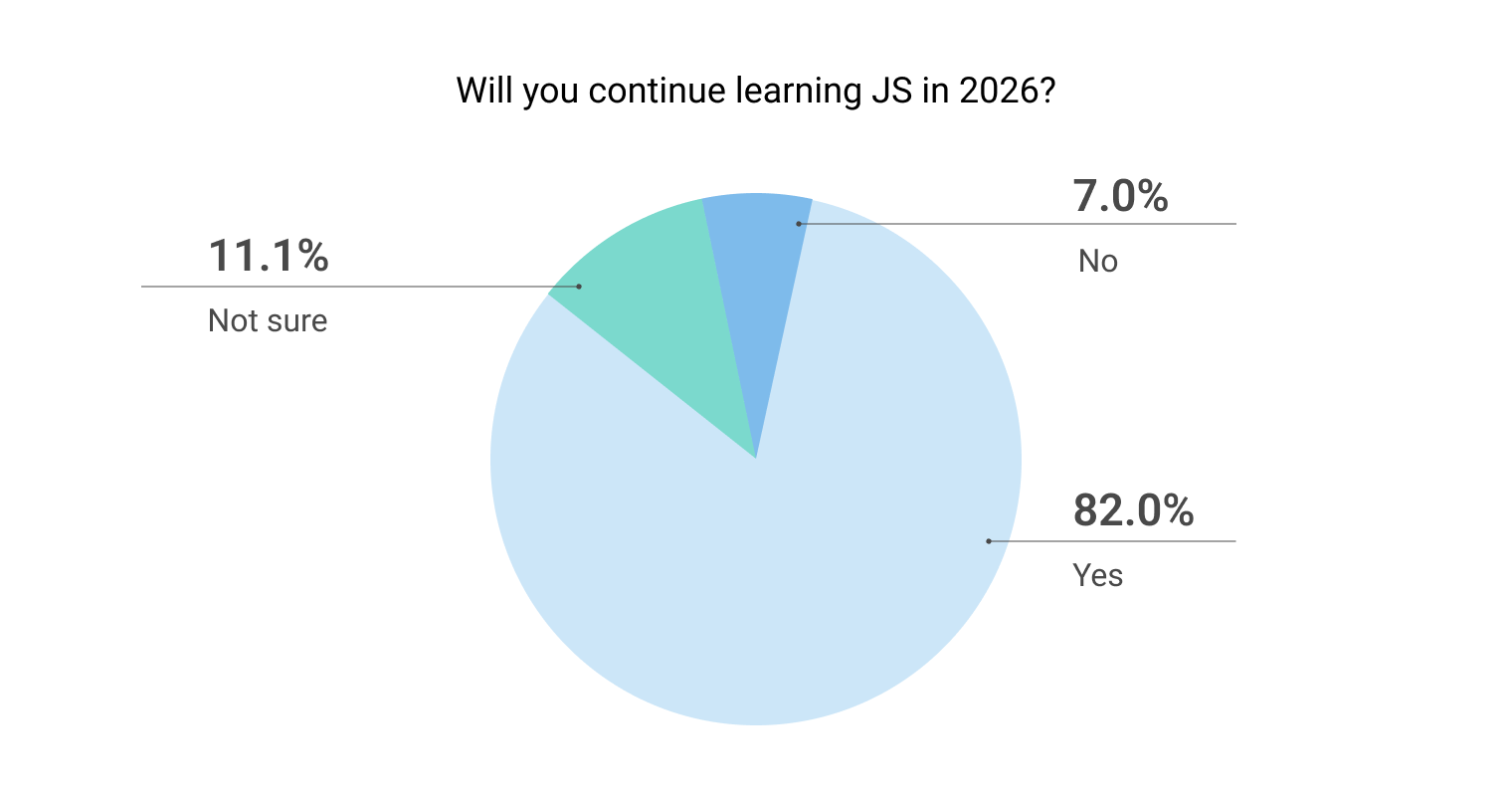
82% of respondents said:
“Yes, absolutely — fundamentals still matter.”
Reddit user delventhalz commenting:
“While LLMs will no doubt lead to some long term changes in society, they are clearly massively overhyped and overinvested… I have yet to see anything to convince me they will meaningfully reduce engineer headcount.”
Interestingly, most of those who plan to keep studying JavaScript are mid-level and senior developers. It seems like they know something. I like the phrase:
“Who cares how fast the water melts if you’re the one floating on top?”
While AI keeps getting better at routine tasks, knowing every JS method by heart, converting Figma screens into JSX, polishing simple components, or doing mechanical refactoring is no longer something that gives developers an edge.
Skills like these are quickly losing their value:
- writing boilerplate,
- generating layouts,
- fixing syntax,
- documenting code.
“I used Copilot to generate a C# class for me today. Something that just about every AI model out there can get roughly 100% right. The only thing is, I'm not sure I can give it a prompt that is less effort than just writing the class. I still have to spell out all of the property names I want. I have to tell it the type I want each to be. Intellisense will auto-complete the { get; set; } part on every line for me already, so I don't actually type that part anyway.”
“Reviewing AI-generated code often takes longer than writing it myself. I asked Claude to update some tests while refactoring a builder into a record. The tests used post-increment to generate IDs, and Claude subtly changed one ++ to +1and added another ++ elsewhere. Everything looked fine at a glance, but the logic broke. I spent more time finding those subtle errors than I would have writing the tests manually.”
“I've been taking longer to get my own open source projects together. But I'm also doing stuff like animations that I've never done before. My background and core skill set is in SQL and business rule enforcement; LLMs are allowing me to step further outside my lane.”
Less Typing, More Thinking: The Future Dev Role
What still matters is everything AI can’t fully own: architecture, state management, async behavior, performance, UX decisions, and the ability to explain your intent clearly. In other words, routine JS skills are becoming automated, while thinking skills are becoming the real currency.
I also asked de,vs “If AI could 100% code for you, what would you do?”
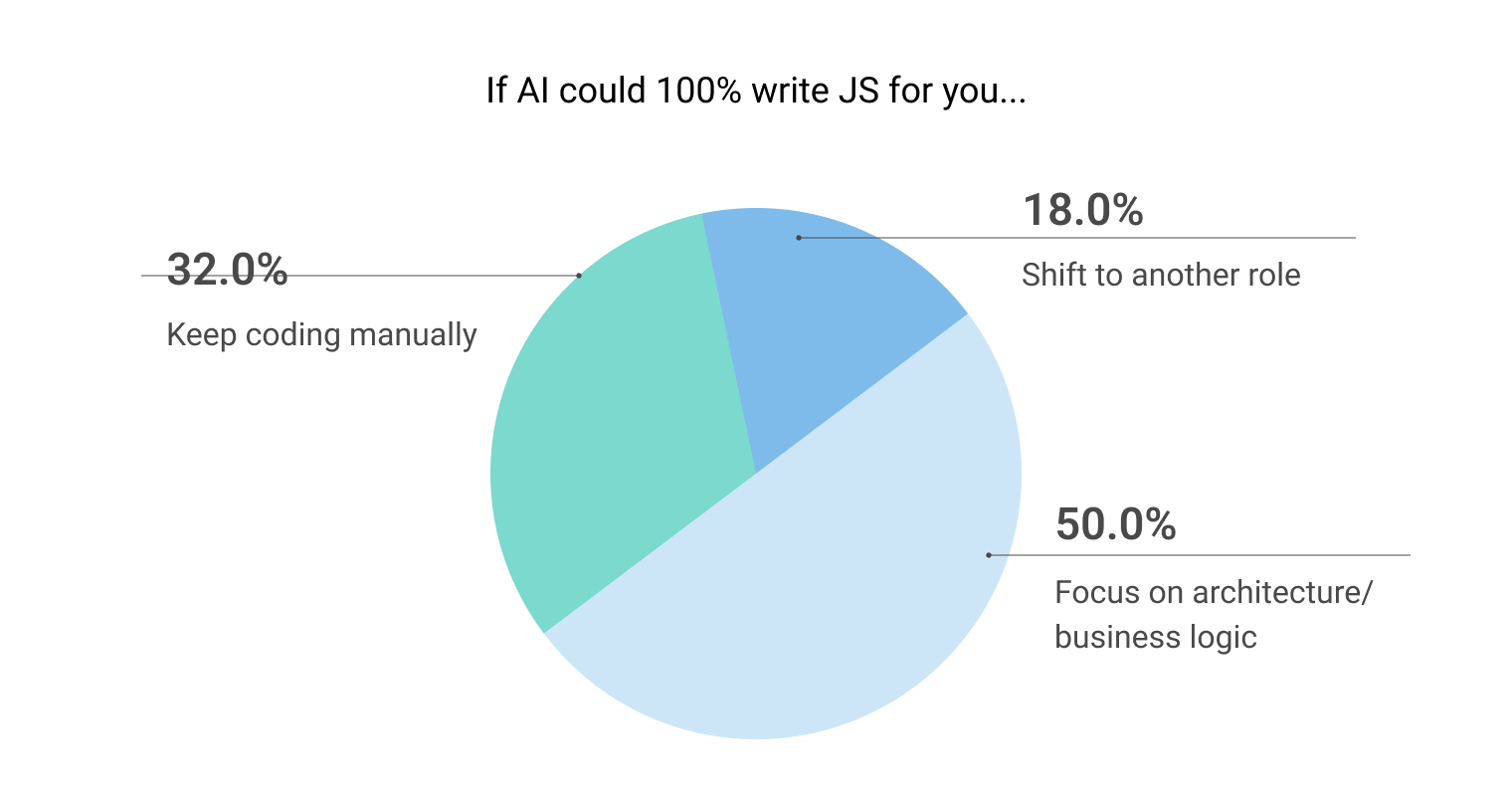
In the near future, developers will definitely:
- Write less boilerplate and repetitive code.
- Spend more time on architecture, user experience, and product logic.
- Still learn strong fundamentals in JS and web technologies.
- Code not only for work but also for joy.
TL;DR: Even when AI is able to generate fully working components, frameworks, and snippets, the fundamentals of devs aren’t going anywhere.
Conclusion: Symbiosis, Not Replacement
If there’s one clear message from both industry forecasts and developer voices, it’s this: AI won’t boot JavaScript developers out of their cozy chairs. It will reshape the developer’s role.
In the upcoming years, frontend engineers will definitely: write less boilerplate, focus more on architecture, UX, and solving real problems, and use AI as a partner, not a competitor.
And for sure, coding will remain something people do not only for work, but also because they enjoy it.
[story continues]
tags