


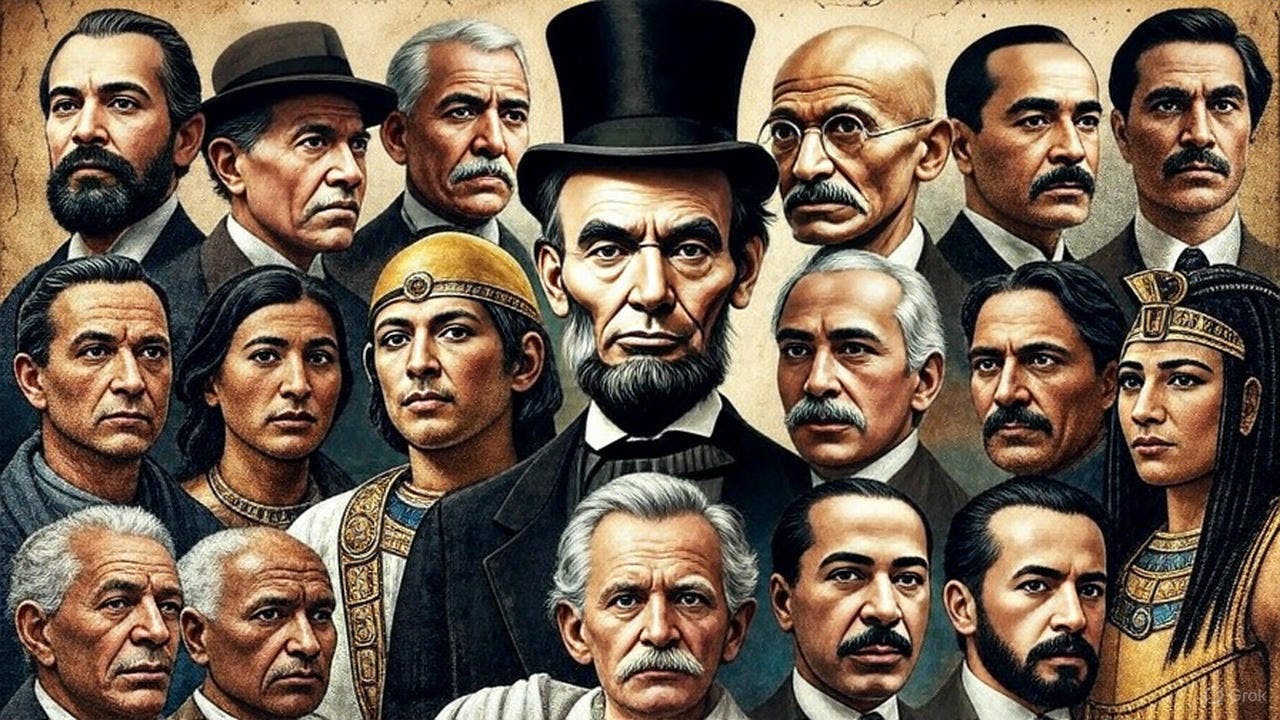
The Historical Necessity of Leadership
For most of human history, leaders were not optional—they were essential.
Why Leaders Emerged
Early Human Societies:
- Small groups needed coordination for hunting, gathering, defense
- Someone had to make decisions when groups disagreed
- Experience and wisdom were valued—elders became leaders
- Physical strength mattered—strong individuals led in conflicts
Agricultural Revolution:
- Larger communities required organization
- Resource allocation needed management
- Dispute resolution required authority
- Defense coordination needed command structure
Civilization:
- Cities needed administration
- Trade required regulation
- Laws needed enforcement
- Armies needed generals
The Pattern:
As groups grew larger and more complex, leadership became more necessary. Without leaders, coordination broke down. Decisions couldn't be made. Conflicts couldn't be resolved. Systems couldn't function.
What Leaders Bring
1. Decision-Making
- Someone has to decide when groups can't agree
- Leaders provide direction when paths are unclear
- Speed: One person can decide faster than committees
- Clarity: One voice reduces confusion
2. Coordination
- Leaders organize group efforts
- They allocate resources and assign tasks
- They coordinate complex activities
- They ensure everyone works toward common goals
3. Accountability
- Clear responsibility: "The leader is in charge"
- Easy to identify who to blame or praise
- Simplifies evaluation of success or failure
- Provides sense of security ("someone is handling it")
4. Vision and Direction
- Leaders provide long-term vision
- They set goals and priorities
- They inspire and motivate
- They create narratives that unite groups
5. Crisis Management
- In emergencies, quick decisions are needed
- Leaders can act when committees would debate
- They provide stability during uncertainty
- They take responsibility for difficult choices
The Problem with Leaders: Human Nature
But here's the problem: Leaders are human. And humans have flaws.
The Corruption Problem
Power Corrupts:
- Absolute power corrupts absolutely (Lord Acton)
- Leaders with unchecked authority often abuse it
- History is full of tyrants, dictators, and corrupt rulers
- Even well-intentioned leaders can be corrupted over time
Examples:
- Roman emperors who started as reformers, ended as tyrants
- Revolutionary leaders who became dictators
- Democratic leaders who became autocrats
- Corporate leaders who prioritized profit over ethics
Why It Happens:
- Power isolates leaders from reality
- Advisors tell leaders what they want to hear
- Leaders lose touch with those they serve
- Temptation to abuse power grows with authority
The Incompetence Problem
Leaders Make Mistakes:
- No one is perfect
- Leaders can be wrong, even with good intentions
- Bad decisions by leaders affect everyone
- One person's error can destroy entire systems
Examples:
- Military leaders who lost wars through poor strategy
- Economic leaders who caused depressions
- Political leaders whose policies harmed millions
- Business leaders whose decisions bankrupted companies
Why It Happens:
- Leaders can't know everything
- They rely on incomplete information
- They have biases and blind spots
- They can't predict all consequences
The Succession Problem
What Happens When Leaders Leave?
- Death, retirement, or removal creates uncertainty
- Succession battles can tear organizations apart
- New leaders may reverse previous decisions
- Continuity is lost when leadership changes
Examples:
- Empires that collapsed after leader's death
- Companies that failed after founder left
- Movements that splintered after leader's departure
- Systems that broke down during transitions
Why It's a Problem:
- Systems become dependent on individuals, title or position
- No clear process for replacement
- Power vacuums create instability
- Succession often involves conflict
The Manipulation Problem
Leaders Can Be Manipulated:
- Advisors, lobbyists, and influencers shape decisions
- Leaders may serve special interests over public good
- Information can be controlled to influence leaders
- Leaders can be blackmailed or coerced
Examples:
- Political leaders influenced by campaign donors
- Corporate leaders swayed by board members
- Military leaders manipulated by intelligence
- Religious leaders corrupted by power structures
Why It Happens:
- Leaders are isolated from direct feedback
- They depend on intermediaries for information
- They have relationships that create obligations
- They can be targeted by those seeking influence
The Single Point of Failure
When Leaders Fail, Systems Fail:
- One person's mistake affects everyone
- Leader's health, judgment, or availability becomes critical
- Systems can't function without the leader
- No redundancy or backup
Examples:
- Companies that collapsed when CEO left
- Governments that fell when leader was removed
- Movements that died when leader was killed
- Systems that broke when leader made one bad decision
The Technology Revolution: Leaderless Systems
But technology is changing everything. We're discovering that we don't need leaders for systems to work.
What Technology Enables
1. Decentralized Coordination
- Algorithms can coordinate without human leaders
- Consensus mechanisms replace decision-makers
- Smart contracts execute automatically
- Networks self-organize
2. Transparent Rules
- Code is transparent—everyone can see the rules
- No hidden agendas or secret decisions
- Rules are enforced automatically
- No human interpretation needed
3. Distributed Authority
- No single point of control
- Power is spread across network
- No one person can break the system
- Resilience through distribution
4. Automated Execution
- Systems execute rules automatically
- No need for human intermediaries
- Decisions are made by consensus
- Actions happen without leaders
Bitcoin: The Proof That Leaderless Works
Bitcoin is the most impressive example of a leaderless system working at global scale.
What Bitcoin Achieved:
- $1+ trillion market cap
- Millions of users worldwide
- 24/7 operation for over 15 years
- No central authority
- No single point of failure
- No leader
How It Works:
- Consensus mechanism (proof-of-work) replaces leaders
- Network participants validate transactions
- Rules are encoded in software
- No one controls the system
- Everyone can participate
Why It's Impressive:
- Survived attacks, forks, and crises
- Operated without any central control
- Grew organically through adoption
- Maintained security and functionality
- Proved leaderless systems can scale
What This Proves:
- Systems don't need leaders to function
- Technology can replace human coordination
- Decentralization can work at scale
- Leaderless systems can be more resilient
Other Leaderless Systems
Blockchain Networks:
- Ethereum: Decentralized computing platform
- Thousands of cryptocurrencies: All leaderless
- DAOs (Decentralized Autonomous Organizations): Leaderless governance
- DeFi protocols: Leaderless financial systems
Open Source Software:
- Linux: No single leader, community-driven
- Wikipedia: No central editor, crowd-sourced
- Git: Distributed version control
- Many successful projects without traditional leadership
Peer-to-Peer Networks:
- BitTorrent: Leaderless file sharing
- Tor: Leaderless anonymity network
- Mesh networks: Leaderless connectivity
- Distributed systems that work without central control
Why Leaderless Systems Are Better
1. No Corruption
Human intermediaries create corruption risk:
- Leaders can be bribed
- Authorities can be influenced
- Power can be abused
- Decisions can be manipulated
Leaderless systems eliminate intermediaries:
- No one to bribe
- No authority to influence
- No power to abuse
- Rules execute automatically
Result: Systems that can't be corrupted because there's no human to corrupt.
2. No Single Point of Failure
Leaders are single points of failure:
- If leader dies, system breaks
- If leader makes mistake, everyone suffers
- If leader is removed, chaos ensues
- System depends on one person or a small group
Leaderless systems are distributed:
- No single point of failure
- Network continues if nodes fail
- Mistakes are isolated
- System is resilient
Result: Systems that can't fail because failure is distributed.
3. Transparent and Auditable
Leaders can hide decisions:
- Closed-door meetings
- Secret negotiations
- Hidden agendas
- Unclear reasoning
Leaderless systems are transparent:
- All rules are visible (code)
- All decisions are recorded (blockchain)
- All actions are auditable
- No secrets possible
Result: Systems where everything is transparent and verifiable.
4. Global and Inclusive
Leaders create boundaries:
- Geographic limits
- Membership restrictions
- Access controls
- Exclusion of outsiders
Leaderless systems are open:
- Anyone can participate
- No geographic limits
- No membership requirements
- Truly global
Result: Systems that are accessible to everyone, everywhere.
5. Continuous Operation
Leaders need rest, replacement, succession:
- Leaders sleep, get sick, retire
- Succession creates gaps
- Transitions cause disruption
- Systems pause during changes
Leaderless systems run continuously:
- 24/7 operation
- No downtime
- No transitions needed
- Always available
Result: Systems that never stop, never pause, never need breaks.
The Future: Leaderless Governance
What's Possible Now
Technology enables leaderless systems for:
- Currency and finance (Bitcoin, DeFi)
- Governance (DAOs, on-chain voting)
- Organizations (decentralized companies)
- Social coordination (blockchain-based systems)
What's Emerging:
- Decentralized autonomous organizations
- On-chain governance
- Algorithmic decision-making
- Smart contract-based systems
The O Blockchain Model: Leaderless Currency
O Blockchain demonstrates how leaderless systems can work for public good:
- No Central Authority:
- No leader controls the currency
- No single decision-maker
- Rules are encoded in software
- Network validates everything
Water Price Calibration:
- Value is determined by measurement, not leaders
- Users measure water prices
- Blockchain calculates averages
- Humanity sets the value, not humans
Stabilization Through Incentives:
- Economic incentives maintain stability
- No leader decides on monetary policy
- System self-corrects
- Rules execute automatically
Public Good Funding:
- Earth cleaning projects funded automatically
- No leader decides what to fund
- Performance-based allocation
- Transparent and auditable
Why This Works:
- No corruption possible (no one to corrupt)
- No manipulation possible (rules are code)
- No single point of failure (distributed)
- No human intermediaries (automated)
The Question: Do We Still Need Leaders?
When Leaders Are Still Needed
Some situations still require leaders:
- Crisis response (need quick decisions)
- Creative vision (art, innovation)
- Personal guidance (mentorship, coaching)
- Human connection (inspiration, motivation)
But for systems? Maybe not…
When Leaderless Systems Work Better
Systems benefit from being leaderless when:
- Rules can be encoded
- Decisions can be automated
- Coordination can be algorithmic
- Transparency is important
- Corruption risk is high
- Scale is global
- Continuity is critical
Examples:
- Currency systems (Bitcoin)
- Financial infrastructure (DeFi)
- Governance mechanisms (DAOs)
- Public good funding (O Blockchain)
Would Leaderless Systems Be Anarchist?
A Common Misconception: Some people assume that leaderless systems mean no rules, no order, no governance—essentially anarchy. But this misunderstands what leaderless systems actually are.
The Reality: It's the Opposite
Leaderless systems aren't about eliminating rules. They're about encoding rules in a way that applies to everyone equally, without exception.
Blockchain Systems Are Sets of Rules:
- Rules are encoded in software (smart contracts, protocols)
- Rules allow decision-making through consensus
- Rules execute automatically
- Rules apply to all participants equally
The Key Difference:
Traditional systems: Rules can have exceptions. Leaders can grant exemptions. Authorities can make special cases. Some people are above the rules or are playing with them.
Leaderless systems: Rules have no exceptions. They apply to all without discrimination. No one can grant exemptions. No one is above the rules. The code is the law, and it applies equally to everyone.
Are Crypto enthusiasts Anarchists?
No. Crypto enthusiasts don't dislike laws, or maybe the laws that don’t make sense… But they're actually coding them in a way that ensures they apply to all.
What They're Doing:
- Writing rules into code
- Ensuring rules execute automatically
- Making rules transparent and auditable
- Guaranteeing rules apply equally to everyone
- Eliminating exceptions and special cases
This Isn't Anarchy—It's Rule of Law:
- Anarchy: No rules, no order, chaos
- Leaderless systems: Rules encoded in code, applied equally, executed automatically
Leaderless systems aren't about eliminating rules—they're about perfect rule enforcement. Rules that apply to all. Rules that can't be broken. Rules that can't be manipulated. Rules that can't have exceptions.
This is the opposite of anarchy. This is the rule of law, perfected!
Conclusion: The Leaderless Future
For most of human history, leaders were necessary. We needed them to coordinate, decide, and organize. But technology is changing this.
Bitcoin proved that leaderless systems can work at global scale. No central authority. No single point of failure. No human intermediaries. And it works.
This changes everything:
- We don't need leaders for systems to function
- Technology can replace human coordination
- Leaderless systems can be more resilient
- Corruption and manipulation become impossible
The question isn't whether leaderless systems can work. Bitcoin proved they can!
The question is: How many more systems should be leaderless?
As technology advances, more systems can become leaderless. Currency. Governance. Organizations. Public good funding. All can operate without human leaders, without corruption risk, without single points of failure.
Leader or no leader? For systems, the answer is becoming clear: No leader. Just code. Just consensus. Just transparency.
And that might be the most important innovation of our time.
O International is a French non-profit association focused on the design, creation and promotion of a water price-based digital stable currency. All code is open source (MIT license). Learn more at https://o.international
References & Further Reading
- Bitcoin: The First Leaderless Currency (bitcoin.org)
- Decentralized Autonomous Organizations (DAO research)
- O Blockchain: Leaderless Currency for Public Good (o.international)
- History of Leadership (various historical sources)
- Blockchain Technology and Governance (academic research)
Note on Content: This article explores the concept of leaderless systems through the lens of technology, particularly blockchain. It's not advocating for the elimination of all leadership, but rather examining when leaderless systems might be superior to traditional leadership models.