


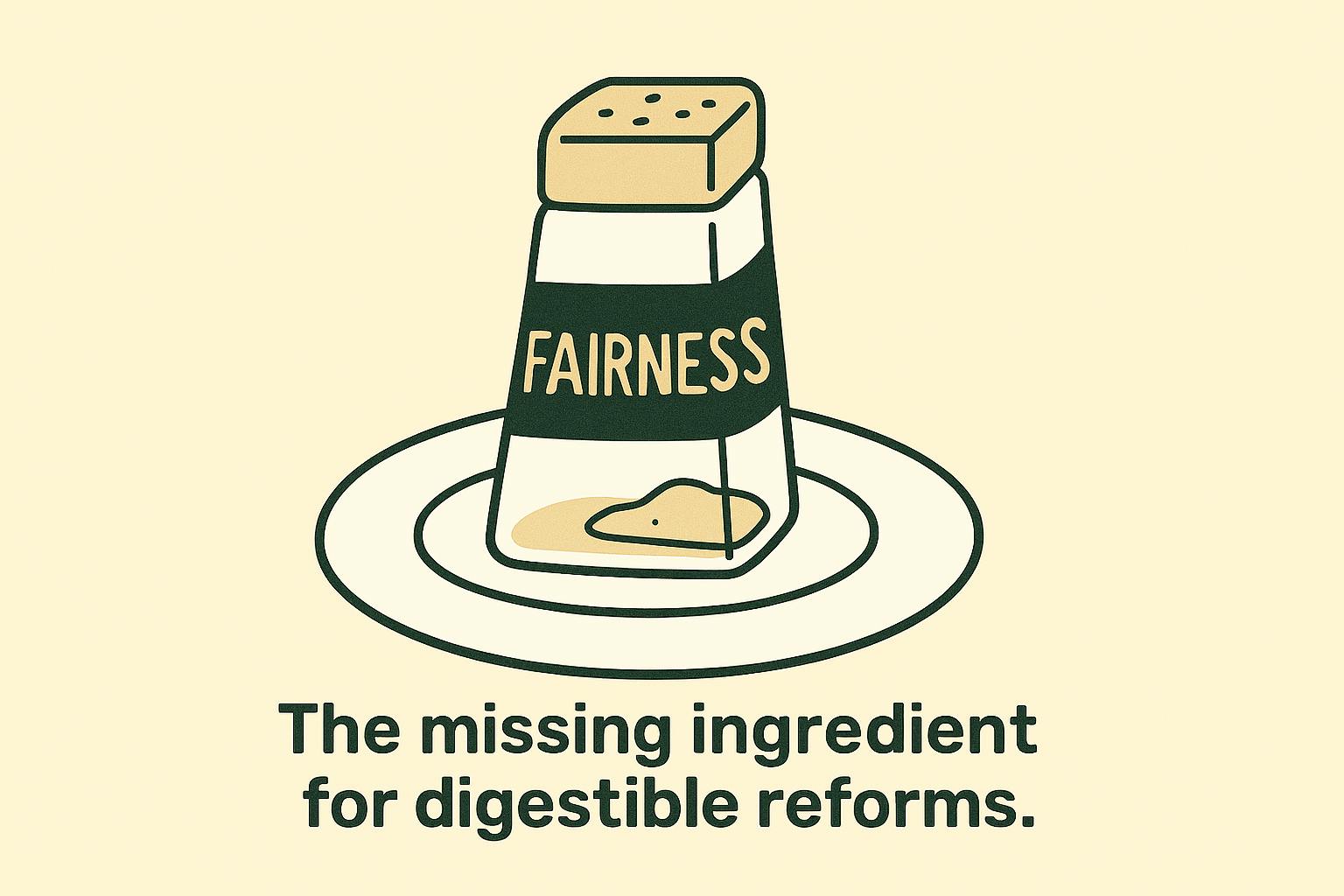
Tax cuts alone couldn’t loosen France’s inflexible labor market — Germany should take note.
The Dish That Didn’t Land
Macron tried to serve France a new economic recipe: lighter taxes, leaner rules, more competitiveness. Investors tasted efficiency and applauded. But workers pushed the plate away. The flavors were wrong. The dish was cooked for global markets, not for the local palate.
The Audience’s Taste
French society has always valued the ingredients of dignity, fairness, and solidarity. Reforms that promised “competitiveness” tasted like austerity, not nourishment. The audience wasn’t rejecting food — they were rejecting a menu that didn’t match their appetite.
The Wrong Language
The reforms were spoken in a technocratic tongue — charts, rankings, efficiency metrics. Investors understood the melody, but citizens heard only cold abstraction. What was missing was reassurance: your rights are safe, your dignity intact, your future fair. Without that translation, even a well‑designed recipe sounded hollow.
The Sharp Lesson
Economic reform is not just about cooking the right meal or speaking the right words — it’s about aligning both with the audience’s values. Serve only efficiency, and you feed markets but starve trust. Speak only in competitiveness, and you win investors but lose citizens.
Conclusion
France’s failed note and failed recipe are Germany’s warning: reforms must be both linguistically fluent and culturally seasoned. Without trust and fairness, even the boldest policies collapse.