
Table of Links
-
Proposed Approach
C. Formulation of MLR from the Perspective of Distances to Hyperplanes
H. Computation of Canonical Representation
I PROOF OF PROPOSITION 3.2
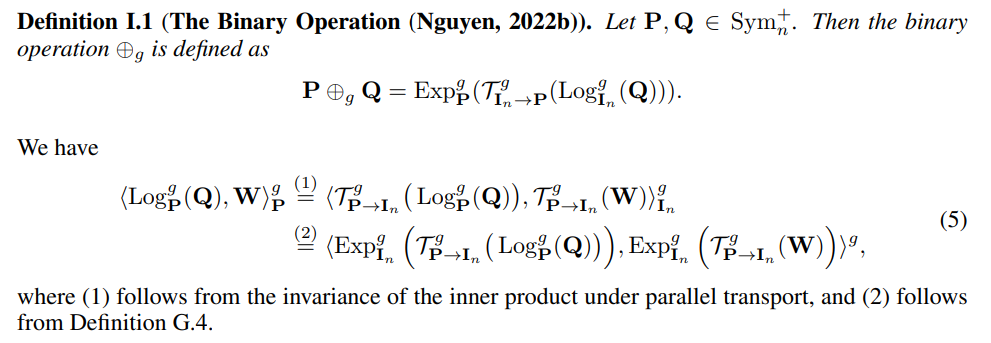
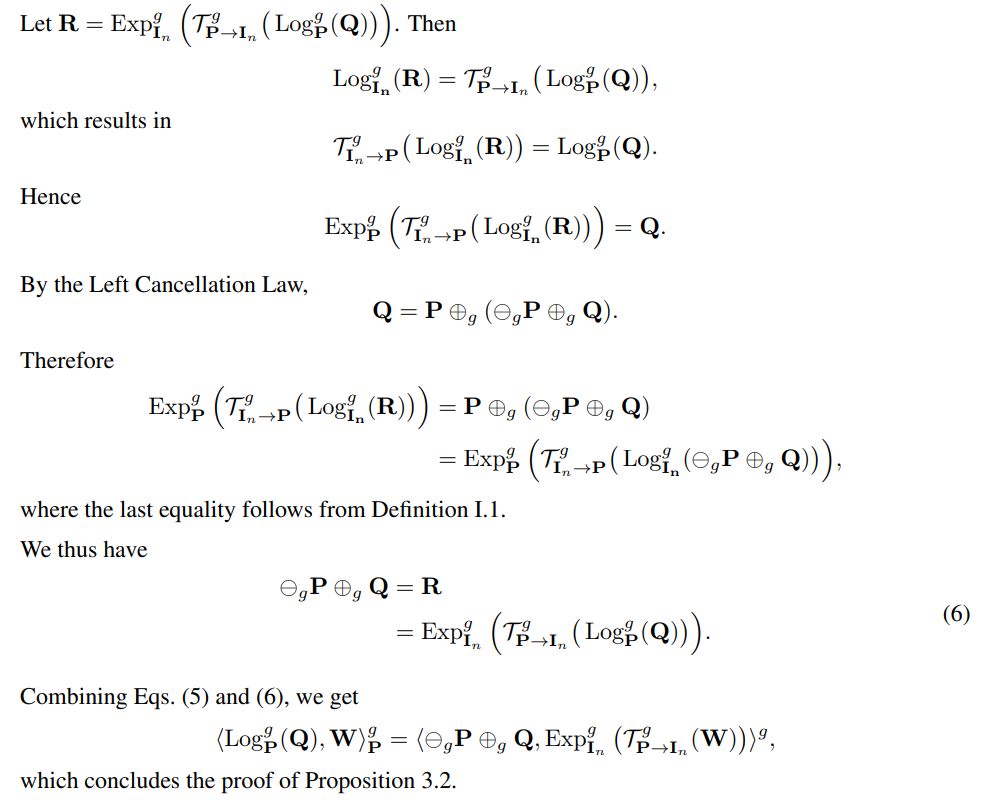
Proof. We first recall the definition of the binary operation ⊕g in Nguyen (2022b).
J PROOF OF PROPOSITION 3.4
Proof. The first part of Proposition 3.4 can be easily verified using the definition of the SPD inner product (see Definition G.4) and that of Affine-Invariant metrics (Pennec et al., 2020) (see Chapter 3).
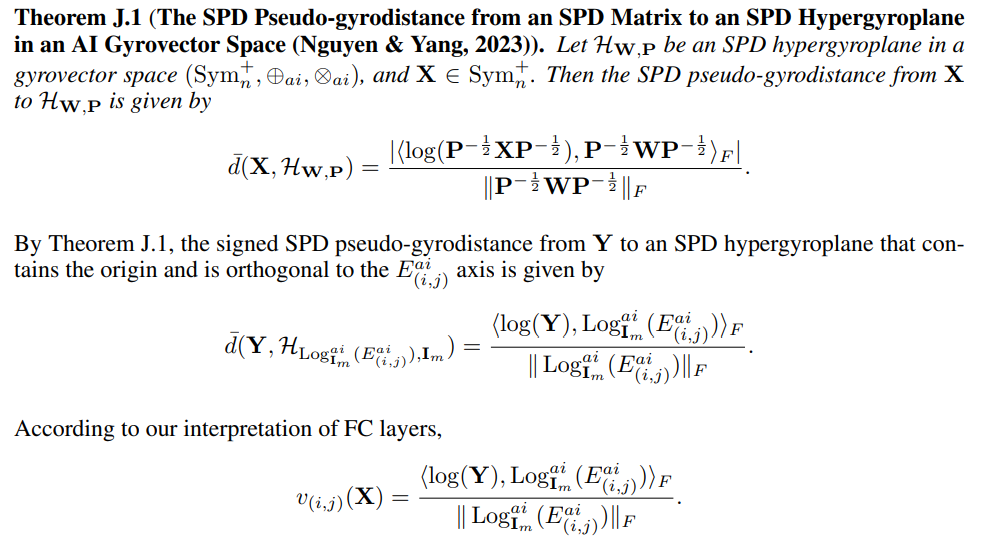
To prove the second part of Proposition 3.4, we will use the notion of SPD pseudogyrodistance (Nguyen & Yang, 2023) in our interpretation of FC layers on SPD manifolds, i.e., the signed distance is replaced with the signed SPD pseudo-gyrodistance in the interpretation given in Section 3.2.1. First, we need the following result from Nguyen & Yang (2023).
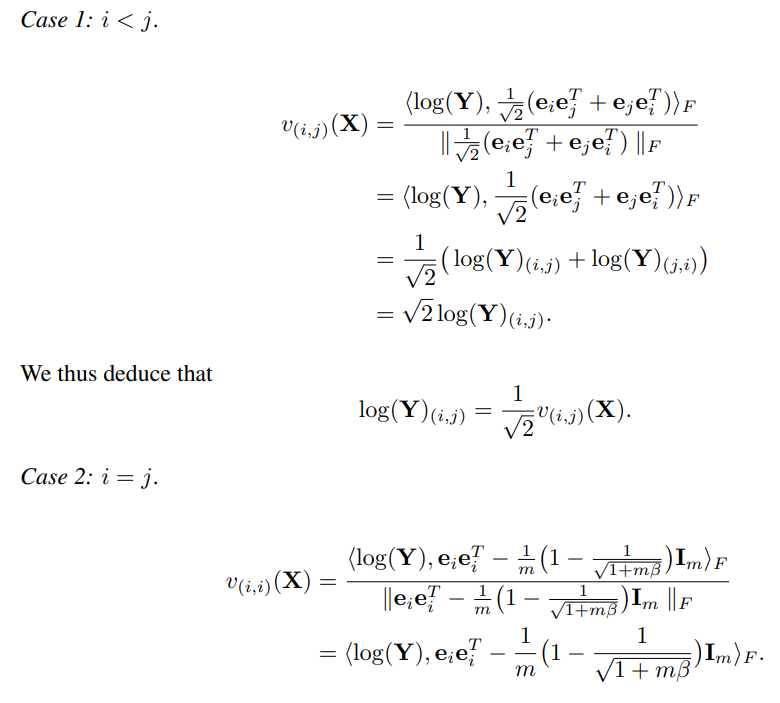
We consider two cases:
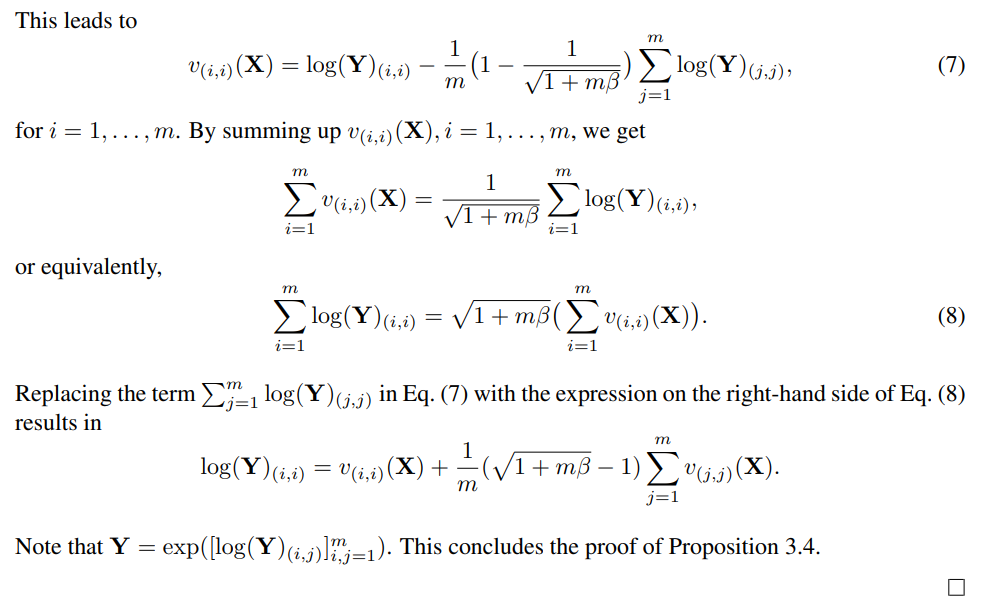
K PROOF OF PROPOSITION 3.5
Proof. This proposition is a direct consequence of Proposition 3.4 for β = 0.
L PROOF OF PROPOSITION 3.
Proof. The first part of Proposition 3.6 can be easily verified using the definition of the SPD inner product (see Definition G.4) and that of Log-Cholesky metrics (Lin, 2019).
To prove the second part of Proposition 3.6, we first recall the following result from Nguyen & Yang (2023
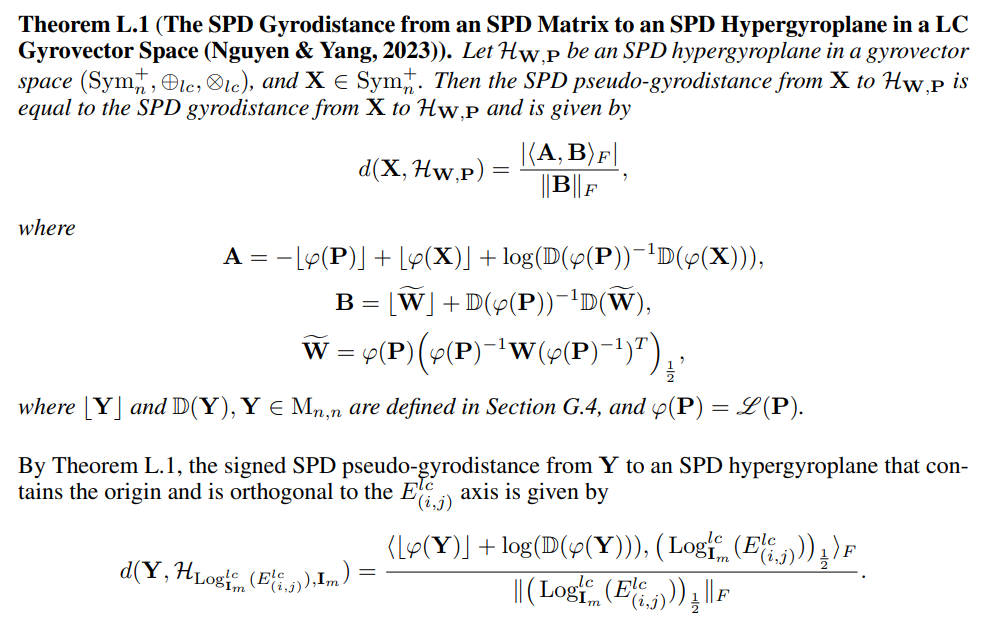
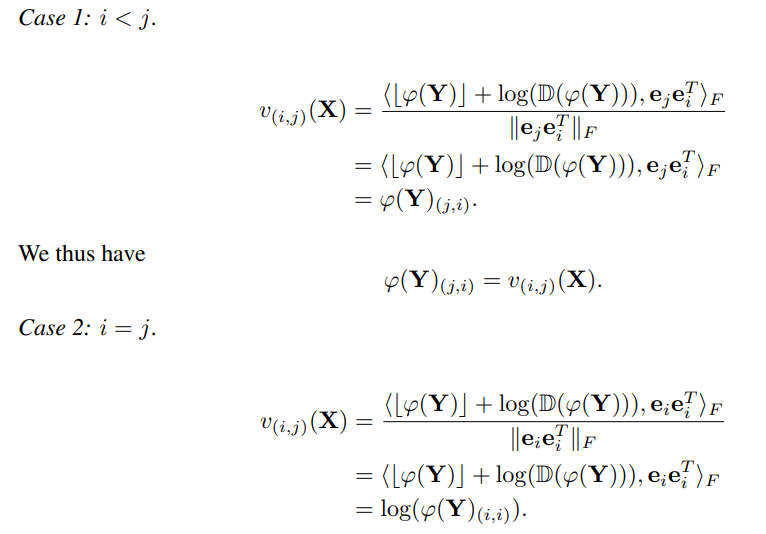
According to our interpretation of FC layers,

We consider two cases

M PROOF OF THEOREM 3.1
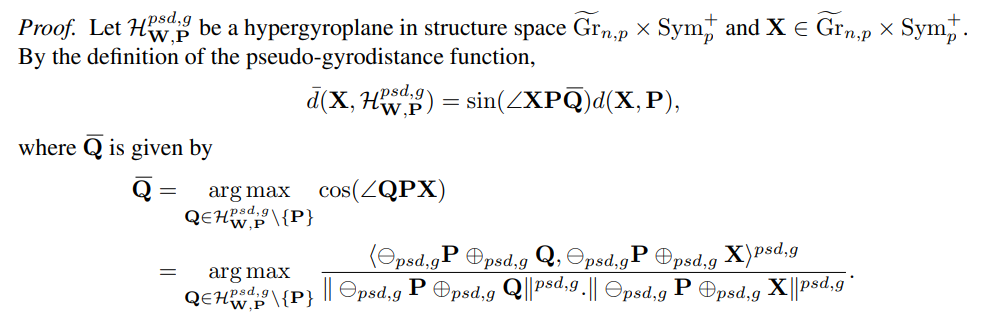
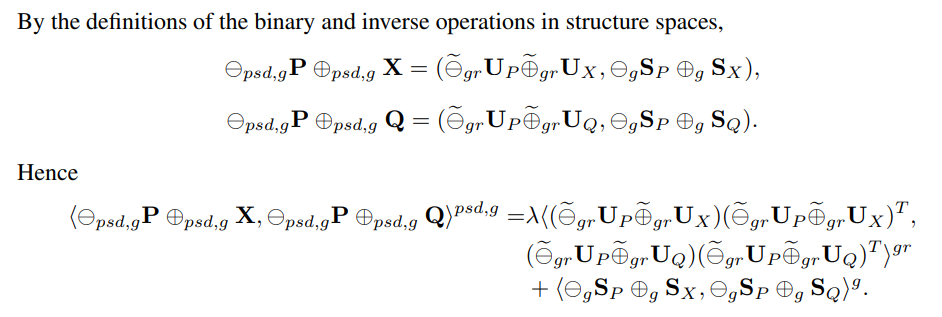
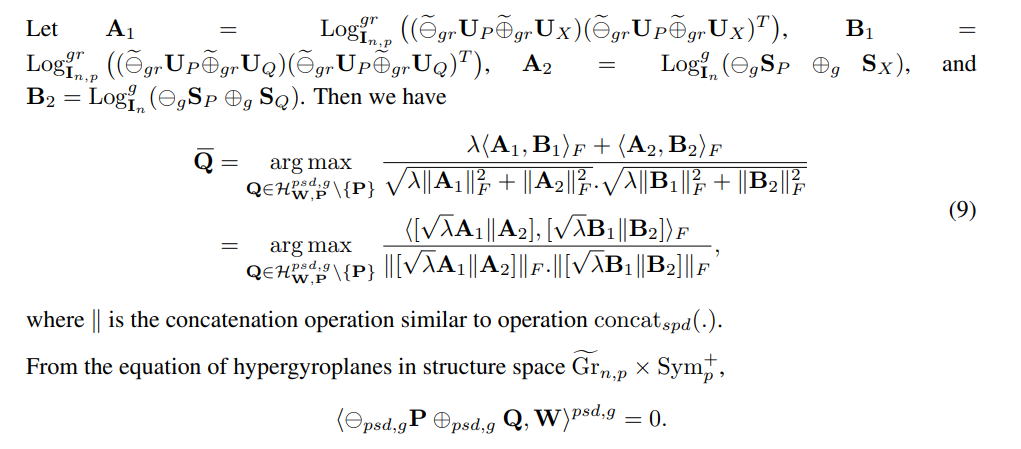
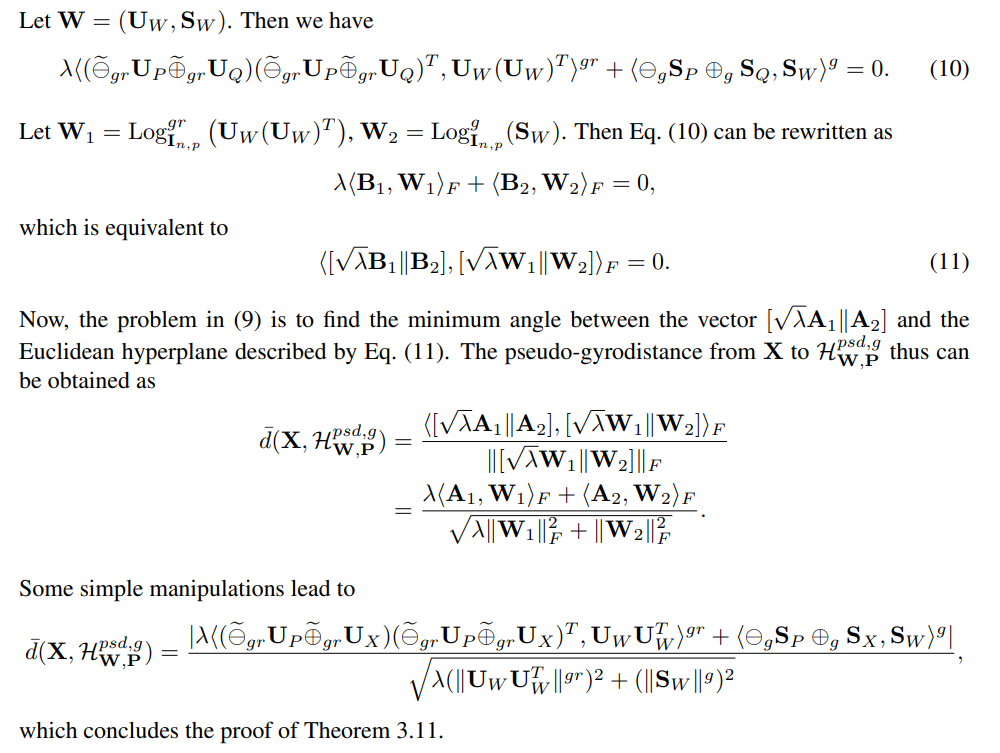
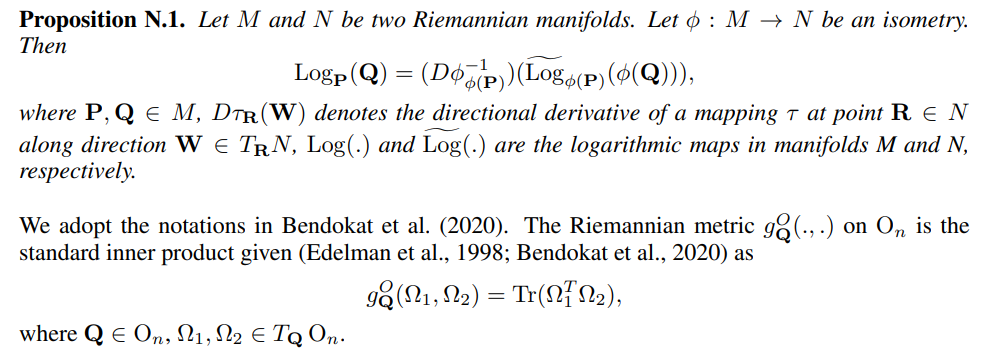
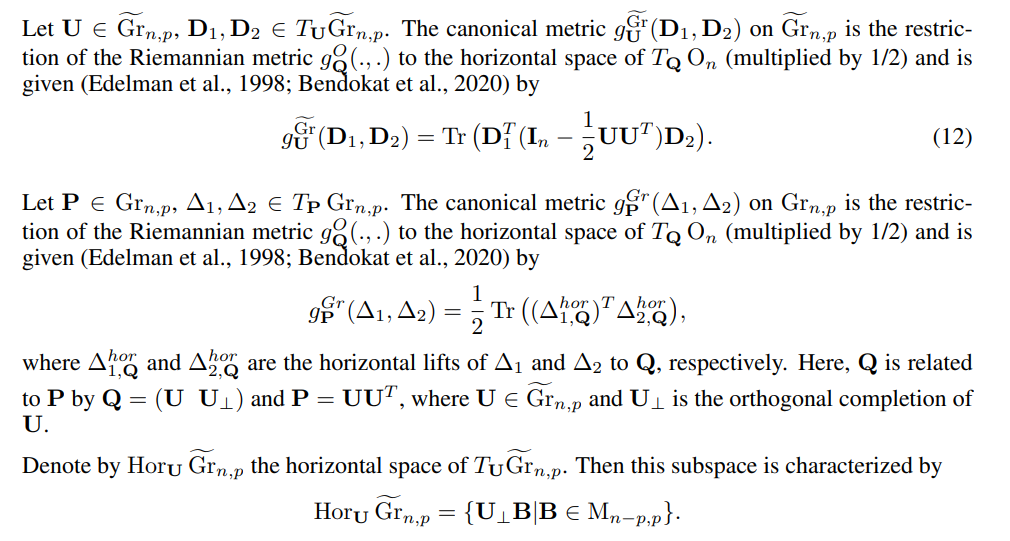
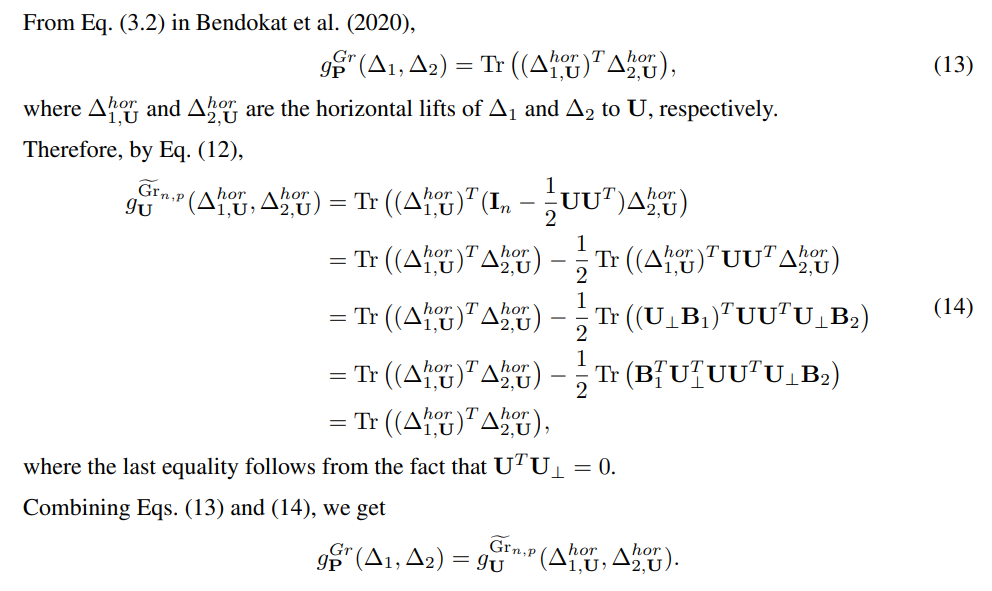
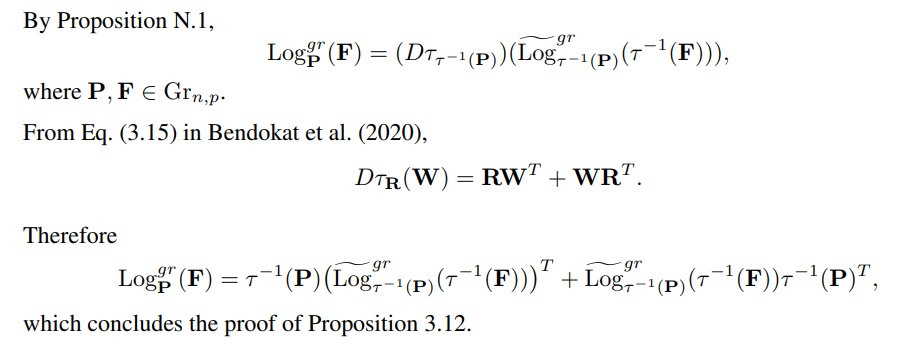
N PROOF OF PROPOSITION 3.12
Proof. We need the following result from Nguyen & Yang (2023).
Authors:
(1) Xuan Son Nguyen, ETIS, UMR 8051, CY Cergy Paris University, ENSEA, CNRS, France (xuan-son.nguyen@ensea.fr);
(2) Shuo Yang, ETIS, UMR 8051, CY Cergy Paris University, ENSEA, CNRS, France (son.nguyen@ensea.fr);
(3) Aymeric Histace, ETIS, UMR 8051, CY Cergy Paris University, ENSEA, CNRS, France (aymeric.histace@ensea.fr).
This paper is
[story continues]
tags