Welcome to HackerNoon’s Meet the Writer Interview series, where we learn a bit more about the contributors that have written some of our favorite stories.
Let’s start! Tell us a bit about yourself. For example, name, profession, and personal interests.
I serve as Lead Business Intelligence Engineer, developing scalable analytics systems that deliver cost-effective solutions. I’m drawn to the space where real change happens because I want to understand how data shapes design and informs decision-making.
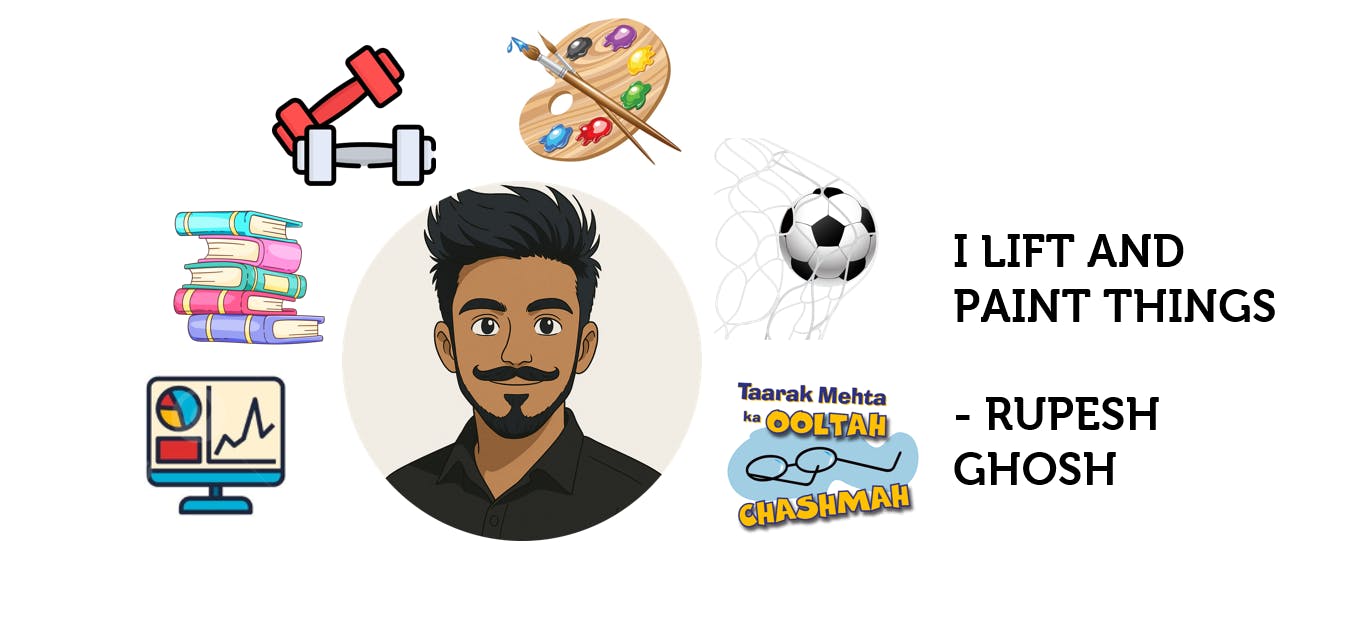
Outside work, my free time revolves around fitness and soccer, which help me stay focused, while I express my calm through painting.
The core elements of art and analytics share surprising common ground: both require the ability to identify patterns and understand underlying structures to make sense of complexity.
Interesting! What was your latest Hackernoon Top Story about?
My latest Hackernoon Top Story, “When 300 Stores Printed at Once: Debugging a 350% Compute Spike in Power BI Fabric,” was based on a real incident from my BI engineering work.
It started like any normal Monday until hundreds of store reports suddenly caused our Power BI Fabric capacity to hit 350% utilization, effectively bringing the system to its knees. The story walks through how we investigated the issue, discovered that XMLA read operations from paginated reports were bypassing cache and consuming massive compute, and how we solved it by building a lean semantic model.
The article focuses on governance, visibility, and calm engineering practices which the data team uses to transform a crisis into a learning framework.
Do you usually write on similar topics? If not, what do you usually write about?
This was actually my first story on HackerNoon, and I honestly didn’t expect it to become a Top Story so quickly. I shared an actual BI engineering problem, which demonstrated practical value instead of theoretical concept,s and the editor strongly connected with it.
I definitely plan to write more. Business Intelligence contains numerous hidden stories about cost optimization, governance lessons, system failures, and human aspects of analytics. I will maintain my goal to show actual business intelligence applications through examples that unite operational knowledge with useful business applications.
Great! What is your usual writing routine like (if you have one?)
I don’t really follow a strict writing routine. I focus more on impact than frequency. I derive most of my ideas from actual problems I have resolved and knowledge gained through my experience with big BI system development.
I will publish at least one meaningful Business Intelligence story during each month of the year. I begin writing when actual events spark my interest and I think my community can learn from it.
Being a writer in tech can be a challenge. It’s not often our main role, but an addition to another one. What is the biggest challenge you have when it comes to writing?
The main challenge I encounter stems from finding enough time and language abilities to produce substantial content in my writing. My schedule is fully booked because I work full-time in Business Intelligence, and I am pursuing my PhD, so I need to make time for writing through deliberate planning.
The main challenge in narration stems from the need to convert technical events into meaningful stories that provide emotional value and educational lessons. The goal reaches past system failure explanations and recovery procedures because I want readers to follow the complete process, starting with problem detection and ending with investigation and solution implementation. That balance between technical accuracy and storytelling is what makes a case study truly impactful.
What is the next thing you hope to achieve in your career?
My future goal requires me to connect engineering tasks with research projects and narrative storytelling approaches. I aim to advance my career as a BI and analytics leader by designing systems that achieve fast performance, large capacity, affordable costs, and dependable operations.
At the same time, through my PhD research, I’m exploring how governance and decision intelligence shape business outcomes. I will combine my learned knowledge with hands-on experience to create operational frameworks that data teams at various organizations can use.
I will maintain my storytelling about BI engineering because I want to make this field easier to understand through my writing. The creative skills needed for data engineering will help me produce business value according to my writing approach.
Wow, that’s admirable. Now, something more casual: What is your guilty pleasure of choice?
Definitely binge-watching “Taarak Mehta Ka Ooltah Chashmah” all day. The Hindi comedy show that I watched since childhood remains my favorite show to this day. The show provides me with my needed laughter and stress relief during my busy times working on BI projects and pursuing my PhD.
Do you have a non-tech-related hobby? If yes, what is it?
Outside of tech, I’m really into fitness, soccer, and painting. I begin my day through physical activity and try to end with a paintbrush. My home office wall is actually covered with my artwork.
My life stays balanced through my commitment to stay active and creative. I like to joke that “I lift and paint things” - one keeps my body strong, the other keeps my mind calm.
What can the Hacker Noon community expect to read from you next?
I’m working on my next exciting piece that continues exploring the real-world side of Business Intelligence, where engineering, decision-making, and storytelling meet. The article provides readers with useful information that challenges their thinking and presents unexpected insights, which make data work meaningful to share with others.
What’s your opinion on HackerNoon as a platform for writers?
HackerNoon enables engineers and practitioners to develop content that extends past conventional tech blog structures. The platform focuses on authentic stories that come from real-world experiences instead of promotional content or misleading articles.
As a writer, I appreciate how open and supportive the editorial team is and how the platform encourages storytelling that blends both technical depth and human perspective. The platform allows users to show their work progress together with their learned knowledge throughout the development process.
Thanks for taking time to join our “Meet the writer” series. It was a pleasure. Do you have any closing words?
Thank you so much for having me - It’s truly an honor to be part of the HackerNoon community. I’m grateful to the editors who help shape raw stories into something meaningful, to the readers who take the time to engage, comment and share their own experiences. I am eager to continue my education while writing and participating in this outstanding group of thinkers and builders.
[story continues]
tags