


For most organizations, data should be an accelerator, not a barrier; yet, across industries such as payroll, finance, and manufacturing, one legacy format continues to slow automation and stall digital transformation: the PDF.
Despite decades of progress in AI and data management, business-critical information is still being exchanged and archived in static documents that resist automation. The result is what many CIOs now refer to as data paralysis, or an invisible operational tax that drains productivity, drives up labor costs, and creates unnecessary compliance risks.
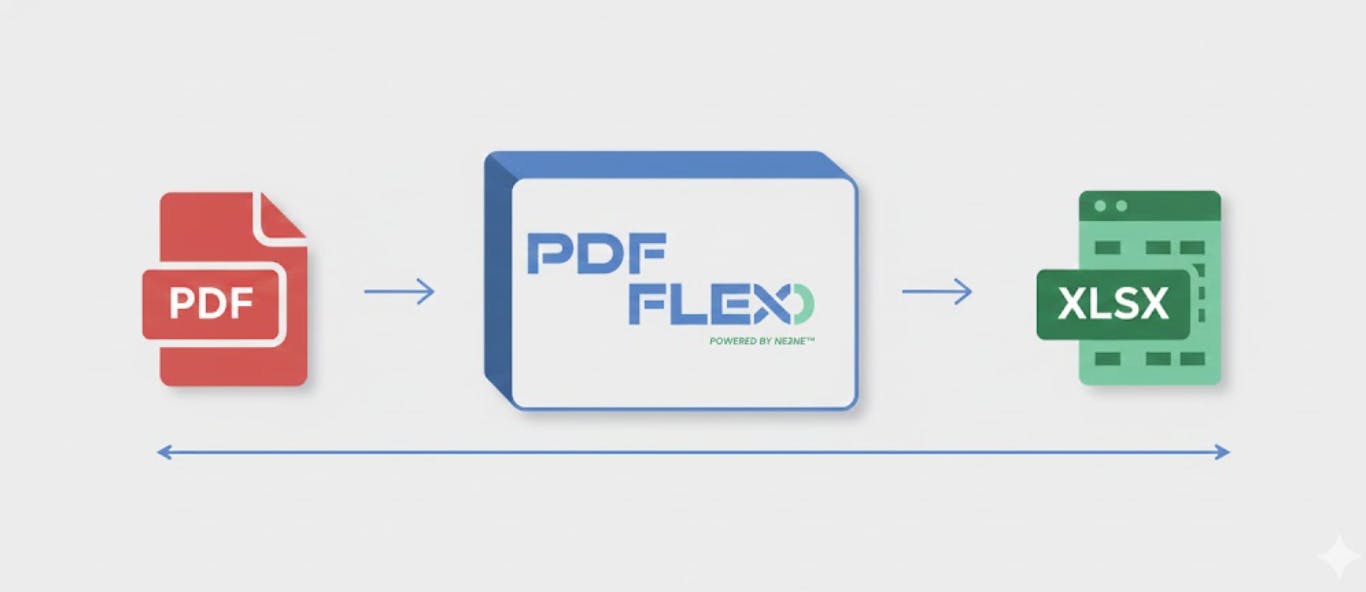
PDFFlex, developed by Cleveland-based technology company NE2NE, was built to eliminate that problem. It transforms unstructured PDF content into clean, validated, structured data that’s ready for integration, replacing hours of manual data entry with just a few clicks.
The Hidden Cost of Data Paralysis
Every enterprise leader understands that time spent on manual processes is time lost to innovation. But for teams working in HR, payroll, accounting, or supply chain operations, static PDFs aren’t just an inconvenience but are a structural bottleneck.
In many organizations, payroll data, invoices, and remittance forms arrive as PDFs that must be re-keyed line by line. Teams can spend countless time transcribing, creating cascading inefficiencies.
The impact is measurable:
- Payroll delays that affect employee satisfaction and compliance
- Inaccurate reporting that slows financial decision-making
- Higher operational costs due to wasted human capital
Over time, those inefficiencies accumulate into a hidden cost center. For mid-market companies, especially those with already stretched staff resources, this friction can directly inhibit scalability.
PDFFlex was engineered to eliminate that friction.
Automation Built for Precision, Not Guesswork
While countless “AI-powered” tools claim to extract data from PDFs, most rely on generalized models built for consumer use — tools that make educated guesses about table layouts or data hierarchies. That might be sufficient for simple invoices, but it breaks down in the real world of multi-page payroll registers, nested tables, and variable structures.
PDFFlex takes a different approach. Its proprietary extraction engine utilizes AI models trained specifically for structured business data, enabling the accurate identification, mapping, and validation of complex table logic. The system doesn’t approximate patterns — it understands them.
This allows PDFFlex to handle real-world variability with precision:
- Extracting data from thousands of pages
- Automatically and accurately validating totals and fields
- Returning structured data ready for direct integration, such as Excel, JSON, or CSV
The result: clean, verified data that flows automatically into downstream systems without requiring manual intervention.
Real Business Results: Efficiency, Accuracy, and ROI
PDFFlex users report improvements in time, accuracy, and cost efficiency.
- Up to 90% reduction in manual data entry time
- 80% fewer data validation errors
- Immediate ROI as administrative labor is reallocated to higher-value work
For example, a U.S. airline faced a months-long delay onboarding a newly acquired business division because employee payroll data was trapped in PDFs generated by a legacy provider. Using PDFFlex, NE2NE’s team extracted and validated the data in hours, saving weeks of effort and countless expenditures, and ensuring compliance deadlines were met.
These outcomes demonstrate PDFFlex’s core value: it doesn’t just make document processing faster, but elevates the integrity and reliability of business data itself.
Security, Compliance, and Control
In a digital environment increasingly shaped by privacy regulations and compliance obligations, how data is handled matters as much as what’s done with it.
Unlike consumer-grade AI tools or public online converters, PDFFlex operates in a secure, closed environment where data never leaves the organization’s control. The platform adheres to strict enterprise security standards, ensuring that sensitive information, such as personally identifiable information (PII) in payroll documents, remains protected at every stage.
Equally important, NE2NE has built PDFFlex around transparency and data ownership. Users can export or migrate their data at any time, in universally compatible formats. There’s no vendor lock-in, no hidden dependencies — only complete control over how and where data is used.
This commitment to portability is more than a feature; it’s a direct response to a growing frustration among enterprise customers who have been burned by closed systems that make exiting costly or impossible.
From Inefficiency to Intelligence
PDFFlex’s immediate advantage lies in reducing operational latency, but its longer-term potential lies in enabling accurate data intelligence.
When every document becomes structured, searchable, and validated, new opportunities emerge. Finance teams can generate reports instantly. HR leaders can audit compliance data in real time. Manufacturers can automatically synchronize supply chain documentation with their ERP systems.
In short, automation doesn’t just remove the grunt work — it amplifies strategic capacity across the business.
The Enterprise Edge: Why PDFFlex Is Different
The distinction between PDFFlex and its competitors isn’t marketing, it’s architectural.
- AI models optimized for business-grade data
- Numerical and logical accuracy before data is exported
- Closed and compliant processing to keep sensitive data protected
- Thousands of pages per job processed with minimal configuration
- Universal export formats so businesses maintain ownership and flexibility
Together, these capabilities form an intelligent bridge between legacy document workflows and modern data ecosystems — a critical step for organizations pursuing digital transformation at scale.
The Bigger Picture: From PDFFlex to Platform Intelligence
PDFFlex is the front door to something larger. Its parent company, NE2NE, is pioneering a new model for data integration through its Any-to-Any Platform — a system that moves data between APIs, EDI networks, and ETL pipelines with the same simplicity and transparency PDFFlex brings to document processing.
For many clients, PDFFlex is the first step toward full integration maturity — the proof point that once data starts flowing, automation naturally follows.
A Smarter Way Forward
In a business environment defined by automation, precision, and compliance, the idea of manually re-keying data from a PDF feels increasingly outdated. PDFFlex represents a pragmatic evolution — a bridge from static, manual workflows to intelligent, automated operations.
The message to enterprises is clear: Stop fighting your documents. Start flexing them.