TL;DR —
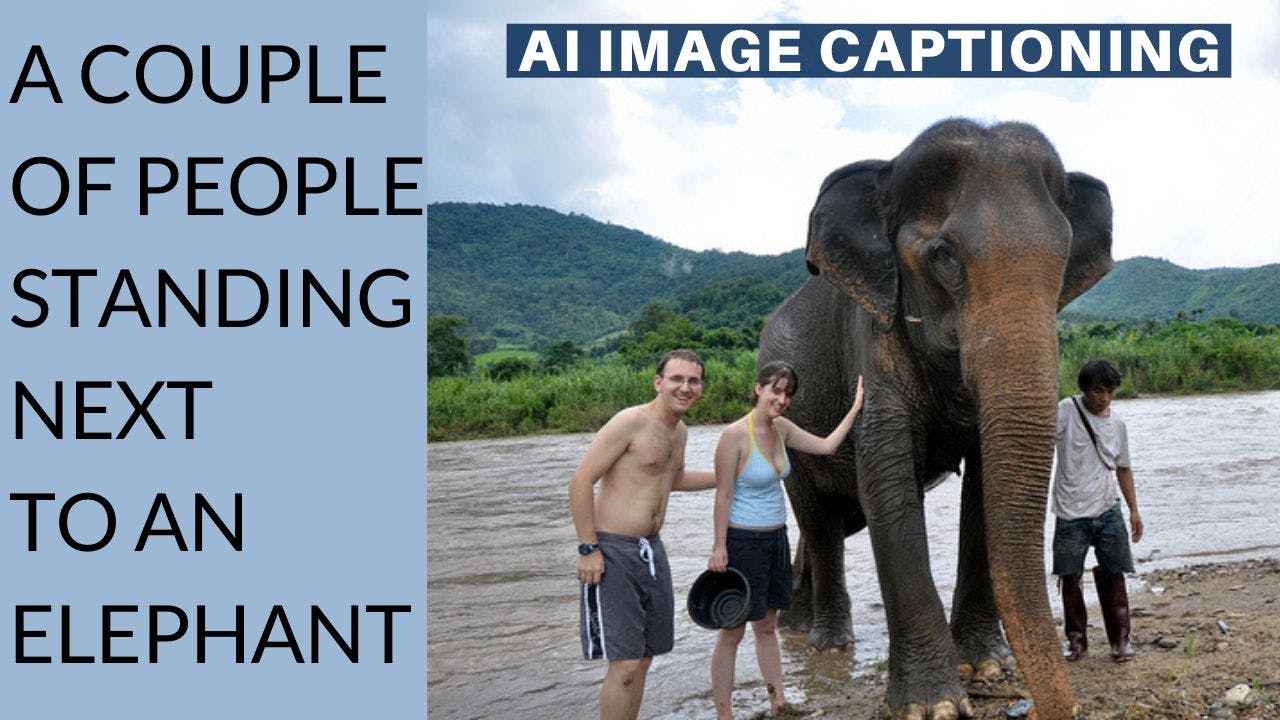
DALL-E beat all previous attempts to generate images from text input using CLIP, a model that links images with text as a guide. A very similar task called image captioning may sound really simple but is, in fact, just as complex. It is the ability of a machine to generate a natural description of an image. It’s easy to simply tag the objects you see in the image but it is quite another challenge to understand what's happening in a single 2-dimensional picture, and this new model does it extremely well!
We’ve seen AI generate images from other images using GANs. Then, there were models able to generate questionable images using text. In early 2021, DALL-E was published, beating all previous attempts to generate images from text input using CLIP, a model that links images with text as a guide. A very similar task called image captioning may sound really simple but is, in fact, just as complex. It is the ability of a machine to generate a natural description of an image.
It’s easy to simply tag the objects you see in the image but it is quite another challenge to understand what’s happening in a single 2-dimensional picture, and this new model does it extremely well!
Watch the video
References
►Read the full article: https://www.louisbouchard.ai/clipcap/
►Paper: Mokady, R., Hertz, A. and Bermano, A.H., 2021. ClipCap: CLIP Prefix for Image Captioning. https://arxiv.org/abs/2111.09734
►Code: https://github.com/rmokady/CLIP_prefix_caption
►Colab Demo: https://colab.research.google.com/drive/1tuoAC5F4sC7qid56Z0ap-stR3rwdk0ZV?usp=sharing
►My Newsletter (A new AI application explained weekly to your emails!): https://www.louisbouchard.ai/newsletter/
►Paper: Mokady, R., Hertz, A. and Bermano, A.H., 2021. ClipCap: CLIP Prefix for Image Captioning. https://arxiv.org/abs/2111.09734
►Code: https://github.com/rmokady/CLIP_prefix_caption
►Colab Demo: https://colab.research.google.com/drive/1tuoAC5F4sC7qid56Z0ap-stR3rwdk0ZV?usp=sharing
►My Newsletter (A new AI application explained weekly to your emails!): https://www.louisbouchard.ai/newsletter/
Video Transcript
00:00
we've seen ai generate images from other
00:02
images using guns then there were models
00:05
able to generate questionable images
00:07
using text in early 2021 dolly was
00:10
published beating all previous attempts
00:12
to generate images from text input using
00:14
clip a model that links images with text
00:16
as a guide a very similar task called
00:19
image captioning may sound really simple
00:21
but is in fact just as complex it's the
00:23
ability of a machine to generate a
00:25
natural description of an image indeed
00:28
it's almost as difficult as the machine
00:30
needs to understand the image and the
00:32
text it generates just like in text to
00:34
image synthesis it's easy to simply tag
00:36
the objects you see in the image this
00:38
can be done using a regular
00:39
classification model but it's quite
00:41
another challenge to understand what's
00:43
happening in a single two-dimensional
00:45
picture humans can do it quite easily
00:47
since we can interpolate from our past
00:49
experience and we can even put ourselves
00:51
in the place of the person in the
00:52
picture and quickly get what's going on
00:55
this is a whole other challenge for a
00:56
machine that only sees pixels yet these
00:59
researchers published an amazing new
01:01
model that does this extremely well in
01:03
order to publish such a great paper
01:05
about image captioning the researchers
01:07
needed to run many many experiments plus
01:10
their code is fully available on github
01:12
which means it is reproducible these are
01:14
two of the strong points of this episode
01:16
sponsor weights and biases if you want
01:18
to publish papers in big conferences or
01:20
journals and do not want to be part of
01:22
the 75 of the researchers that do not
01:25
share their code i'd strongly suggest
01:27
using weights and biases it changed my
01:29
life as a researcher and my work in my
01:31
company weights and biases will
01:32
automatically track each run the hyper
01:34
parameters the github version hardware
01:37
and osu's the python version packages
01:39
install and training script everything
01:41
you need for your code to be
01:42
reproducible without you even trying it
01:45
just needs a line of code to tell what
01:47
to track once and that's it please don't
01:50
be like most researchers that keep their
01:52
code a secret i assume mostly because it
01:54
is hardly reproducible and try out
01:56
weights and biases with the first link
01:58
below as the researchers explicitly said
02:00
image captioning is a fundamental task
02:02
in vision language understanding and i
02:05
entirely agree the results are fantastic
02:07
but what's even cooler is how it works
02:09
so let's dive into the model and it's in
02:12
our working a little before doing so
02:14
let's quickly review what image
02:16
captioning is image captioning is where
02:18
an algorithm will predict a textual
02:20
description of a scene inside an image
02:22
here it will be done by a machine and in
02:25
this case it will be a machine learning
02:27
algorithm this algorithm will only have
02:29
access to the image as input and will
02:31
need to output such a textual
02:33
description of what is happening in the
02:36
image in this case the researchers used
02:38
clip to achieve this task if you are not
02:40
familiar with how clip works or why it's
02:42
so amazing i'd strongly invite you to
02:45
watch one of the many videos i made
02:47
covering it in short clip links images
02:49
to text by encoding both types of data
02:52
into one similar representation where
02:54
they can be compared this is just like
02:56
comparing movies with books using a
02:58
short summary of the piece given only
03:00
such a summary you can tell what's it
03:02
about and compare both but you have no
03:04
idea whether it's a movie or a book in
03:07
this case the movies are images and the
03:09
books are text descriptions then clip
03:11
creates its own summary to allow simple
03:14
comparisons between both pieces using
03:16
distance calculation on bit differences
03:19
you can already see how clips seems
03:21
perfect for this task but it requires a
03:23
bit more work to fit our needs here clip
03:26
will simply be used as a tool to compare
03:28
text inputs with images inputs so we
03:30
still need to generate such a text that
03:32
could potentially describe the image
03:34
instead of comparing the text to images
03:36
using clips encoding they will simply
03:39
encode the image using clips network and
03:41
use the generated encoded information as
03:44
a way to guide a future text generation
03:46
process using another model such a task
03:49
can be performed by any language model
03:51
like gpt3 which could improve their
03:53
results but the researchers opted for
03:54
its predecessor gpd2 a smaller and more
03:57
intuitive version of the powerful openai
04:00
model they are basically conditioning
04:02
the text generation from gpt2 using
04:04
clips encoding so clips model is already
04:07
trained and they also used a pre-trained
04:10
version of gpd2 that they will further
04:12
train using the clips encoding as a
04:14
guide to orient the text generation it's
04:17
not that simple since they still need to
04:19
adapt the clips encoding to a
04:21
representation that gpt2 can understand
04:23
but it isn't that complicated either it
04:25
will simply learn to transfer the clips
04:27
encoding into multiple vectors with the
04:30
same dimensions as a typical word
04:32
embedding this step of learning how to
04:34
match clips outputs to gpd2's inputs is
04:37
the step that will be thought during
04:39
training as both gpt2 and clip are
04:41
already trained and they are powerful
04:43
models to do their respective tasks so
04:45
you can see this as a third model called
04:47
a mapping network with the sole
04:49
responsibility of translating one's
04:51
language into the other which is still a
04:53
challenging task if you are curious
04:55
about the actual architecture of such a
04:57
mapping network they tried with both a
04:59
simple multi-layer perceptron or mlp and
05:02
a transformer architecture confirming
05:04
that the latter is more powerful to
05:06
learn a meticulous set of embeddings
05:08
that will be more appropriate for the
05:09
task when using powerful pre-trained
05:11
language models if you are not familiar
05:14
with transformers you should take five
05:15
minutes to watch the video i made
05:17
covering them as you will only more
05:19
often stumble upon this type of network
05:21
in the near future the model is very
05:23
simple and extremely powerful just
05:26
imagine having clip merge with gpt3 in
05:28
such a way we could use such a model to
05:30
describe movies automatically or create
05:32
better applications for blind and
05:34
visually impaired people that's
05:36
extremely exciting for real world
05:38
applications of course this was just an
05:40
overview of this new model and you can
05:42
find more detail about the
05:44
implementation in the paper linked in
05:46
the description below i hope you enjoyed
05:48
the video and if so please take a second
05:51
to share it with a friend that could
05:52
find this interesting it will mean a lot
05:55
and help this channel grow thank you for
05:57
watching and stay tuned for my next
05:59
video the last one of the year and quite
06:01
an exciting one
06:06
[Music]
[story continues]
Written by
@whatsai
I explain Artificial Intelligence terms and news to non-experts.
Topics and
tags
tags
artificial-intelligence|ai|sota|machine-learning|computer-vision|data-science|youtubers|youtube-transcripts|web-monetization
This story on HackerNoon has a decentralized backup on Sia.
Transaction ID: lcbyD-6DbB4ucb-F-VBM3lXUeD8xxCKusGub4-ik5vM