


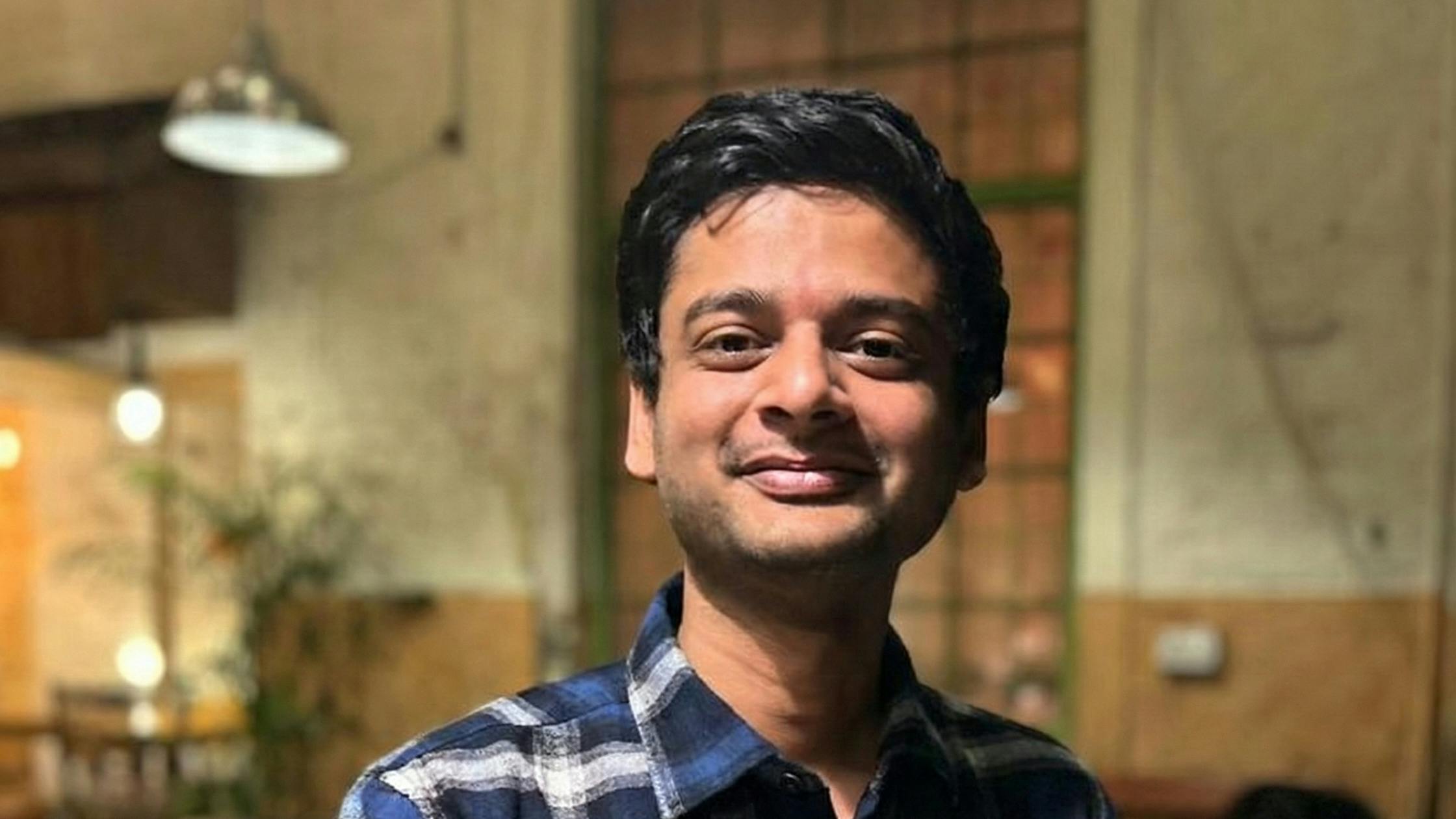
Every machine learning engineer remembers the first time their model goes live. The metrics look good, the predictions hold steady… and then, almost imperceptibly, latency spikes, accuracy drifts, or dependencies break.
For Saurabh Kumar, Senior Software Engineer at a large multinational retailer, that fragile moment between “it works” and “it scales” defines the difference between research and production.
“Production ML isn’t about the model itself,” Saurabh explains. “It’s about how the model behaves in the wild, under load, under change, and at scale. That’s where real engineering begins.”
Saurabh worked extensively on the re-architecturing of the scoring engine and building the MLOps platform from the ground up for the retailer to serve advertisements at scale. His work sits at the core of the company’s core digital initiatives, integrating AI directly into consumer experiences.
Yet what distinguishes his approach is not just technical sophistication, but a methodical discipline, a playbook, as he calls it, for keeping production systems fast, stable, and with reduced error.
From Experimentation to Execution
In Saurabh’s view, the journey from a trained model to a production-ready system resembles an industrial transformation process. “A model is like a prototype engine,” he says. “It may run beautifully on a test bench, but the moment it’s dropped into a car, everything changes.”
That reality inspired what he refers to as the Production ML Playbook, a set of operational principles distilled from years of trial, failure, and refinement. The playbook focuses on three core domains: latency testing, regression validation, and automated deployment.
The first, latency testing, deals with the invisible friction of scale. “You can’t optimize what you don’t measure,” Saurabh notes. “Every additional millisecond compounds when you’re serving millions of requests.” His team employs distributed load simulations that mirror real-world demand, stress-testing infrastructure before release. The goal, he explains, isn’t to eliminate latency entirely, it’s to understand it deeply enough to predict and control it.
Regression Validation: Guarding Against the Subtle Breaks
Once latency is under control, Saurabh turns to the quiet saboteur of production systems: regression. “Regression bugs are sneaky,” he says. “They don’t crash your system; they erode its intelligence over time.”
To counter that decay, Saurabh helped build an automated regression validation pipeline that tracks both performance and behavior. Each model iteration is tested not only for accuracy metrics but also for output consistency across datasets and time windows. “The goal is to detect issues in the model build process itself at an early stage,” he explains.
His approach borrows heavily from software engineering’s test-driven development ethos, merging ML experimentation with production-grade rigor. “You can’t rely on intuition alone,” Saurabh emphasizes. “You need reproducibility, the kind that makes your experiments defensible and your systems predictable.”
This balance of rigor and agility allows his team to ship faster while reducing operational surprises: a hallmark of what he calls maturity in ML operations.
The Automation Imperative
In Saurabh’s playbook, automation isn’t just a convenience, it’s a safeguard. “Human intervention should be the exception, not the norm,” he insists. “Every manual step is a potential failure point.”
At Saurabh’s role in the large multinational retailer, his team employs automated deployment pipelines that integrate continuous validation, rollback safeguards, and dynamic scaling triggers. This ensures that even large-scale updates can be executed with minimal downtime and maximum confidence.
“Automation gives you freedom,” Saurabh says. “It lets you focus on strategy, on the bigger architectural questions, not firefighting the same deployment issues over and over again.”
Beyond efficiency, automation also reinforces reliability. Each new model undergoes a battery of pre-deployment checks, including synthetic data testing and shadow mode validation, before being promoted to live traffic. “We treat every deployment as an experiment,” he adds. “That mindset makes the system self-improving by design.”
Scaling Philosophy: Trust the Process, Not the Hunch
For Saurabh, production success doesn’t come from intuition, it comes from trust in process. “You can’t scale a person’s instinct,” he says. “You can only scale what’s been systematized.”
His broader philosophy merges the scientific rigor of research with the operational pragmatism of engineering. Under his leadership, AI teams have cultivated a continuous feedback loop, models learning from live data, infrastructure learning from model behavior, and engineers learning from both.
“Production isn’t the end of experimentation,” he says. “It’s where experimentation becomes accountable.”.
Toward Autonomous Reliability
Looking ahead, Saurabh envisions production ML pipelines that are self-observing and self-correcting, capable of detecting latency spikes or regressions autonomously and rebalancing resources in real time. But he insists that even the most automated systems still need an underlying philosophy.
“Automation without understanding is just faster chaos,” he says. “The goal isn’t to eliminate human judgment, it’s to elevate it.”
That mindset has become his north star, the belief that production systems, like the people who build them, must evolve through feedback, transparency, and continuous improvement. “The best systems,” he concludes, “don’t just run efficiently. They learn to get better on their own.”
This story was published by Steve Beyatte under HackerNoon's Business Blogging Program.