TL;DR —
The analysis shows a 1.8% annual growth in Barrier-to-Exit, indicating a significant trend in preference manipulation within Amazon's recommender system. Visualizations illustrate a 43% growth in Barrier-to-Exit over the study period, highlighting shifting user behaviors and preferences.
Authors:
(1) Jonathan H. Rystrøm.
Table of Links
4 Results
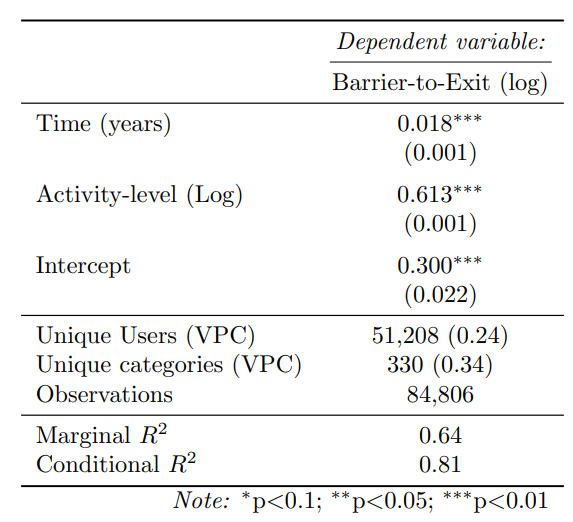
The results from the model can be seen in table 1. The coefficient for time is 0.018 (SE=0.001). This implies growth in Barrier-to-Exit of 1.8% per year. This is highly significant (T=29.95, p ≪ 0.0001). The coefficient for activity level is 0.614 (SE=0.001), which is also highly significant (T=450.11, p ≪ 0.0001).

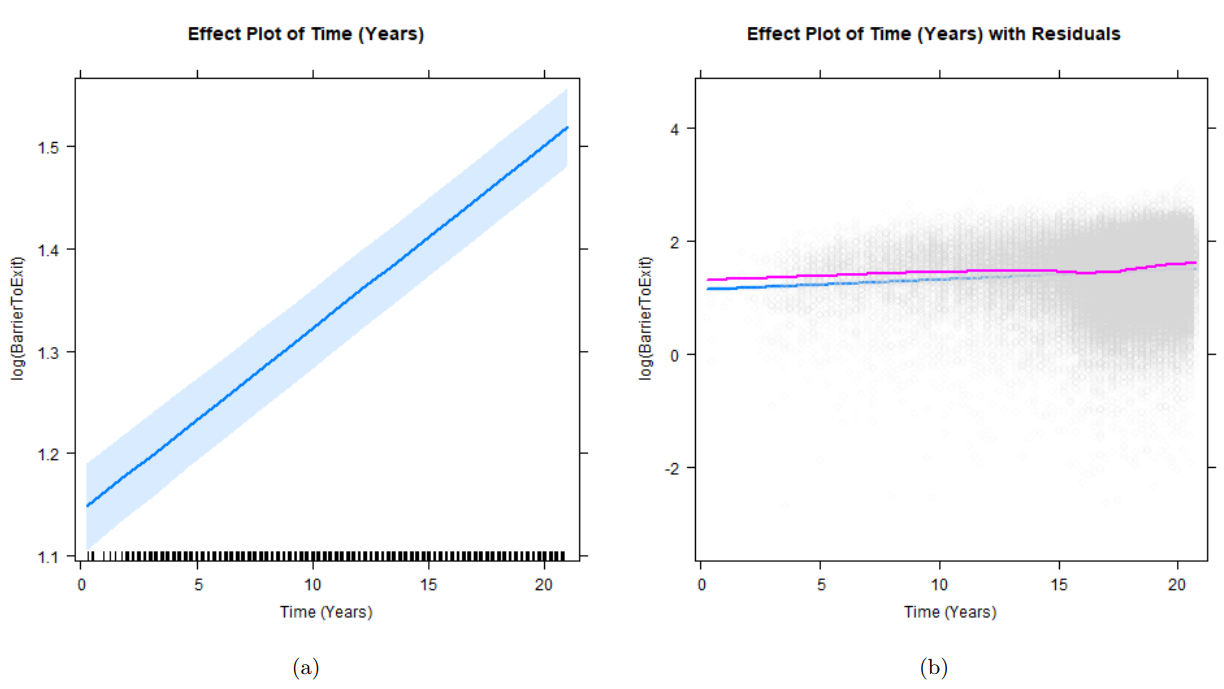
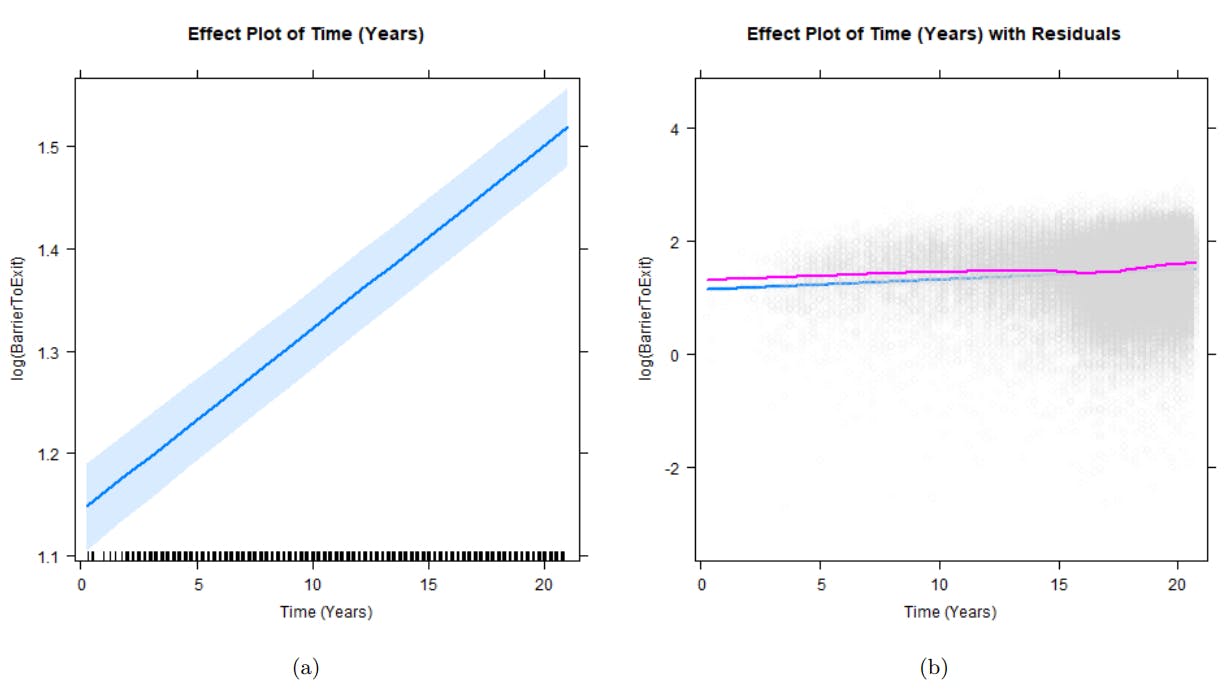
A visual representation of these models can be seen in figure 4. The partial effects plot (Fox, 2003) in fig 4a shows an increase in Barrier-to-Exit from approximately 1.15 to 1.5. This translates into a growth of approximately 43% over the duration of the study. Fig. 4b shows the effect plot with residuals.
This paper is available on arxiv under CC 4.0 license.
[story continues]
Written by
@escholar
We publish the best academic work (that's too often lost to peer reviews & the TA's desk) to the global tech community
Topics and
tags
tags
recommendation-systems|user-preference-manipulation|ml-algorithms|user-behavior-analytics|amazon-book-recommendations|barrier-to-exit-analysis|surveillance-capitalism|ethical-ai
This story on HackerNoon has a decentralized backup on Sia.
Transaction ID: H4zwkrVCL3VS_sYJp1y-pSLl2R01OdqPseXwXbNQkAY