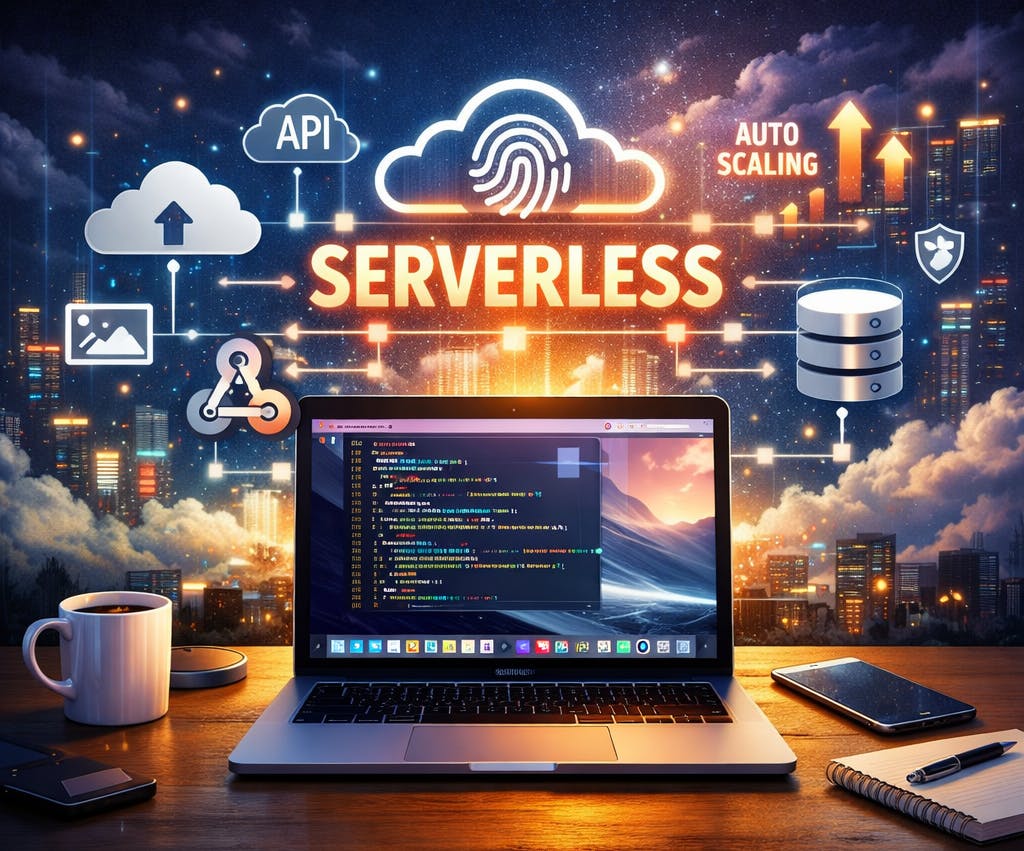
The transition to serverless architecture is not a buzzword to developers and software developers involved in developer work in macOS. It is a true revolution in the way apps are built, implemented, and scaled. Gone are the days of staring at terminal windows full of endless server logs and sleepless nights in order to keep the infrastructure from hiccuping. Serverless sets that mess with the work of someone. If you have been developing on macOS, then it is likely you enjoy well-designed tools and simplified workflows. Serverless is the perfect fit there.
macOS has traditionally been popular with developers, especially those who appreciate UNIX-based robust tools and a smooth integration into cloud services. Combine that with serverless architecture, though, and you have a platform that allows you to code without having to babysit a server, spin a new function every time you need it, and you can even sleep at night knowing that you are only paying as your application actually needs the server.
The Power of Scaling Without Lifting a Finger
Consider that you write a local functionality on your MacBook, test it out locally, and deploy it to a serverless platform. That is a feature that will only run when required, be it as a result of an image upload, a webhook, or an API call. You do not have to allocate memory, set up instances, or even consider the amount of traffic that can hit it. All the heavy lifting is done by the serverless engine.
The most interesting fact is how serverless manages traffic. Suddenly have users on your macOS application? The architecture is real-time and will spin resources up on demand and spin them down during off-peak periods. No need to adjust something manually. The platform recognizes what should be done and simply does it. It is as though to employ an unseen operations team that never takes a break and never gets it wrong.
Less Maintenance, More Creativity
To any person who has had the time to work on containers or provision cloud infrastructure, serverless will come as a fresh breath of mountain air. It frees up mental space. MacOS developers already have smooth tooling, but putting that together with serverless can allow you to focus twice on what is important, namely, on creating great features.
You can repeat quickly when you are not caught in infrastructure problems. You perform updates without interruption. You experiment without creating complete environments. Serverless is experimental and encourages innovation. And it does all that without making your operations fat and your costs transparent.
It’s Not Just for Web and Mobile
Although serverless is commonly considered the domain of mobile and web apps, the advantages can be directly applied to the macOS platform, as well. Serverless is no less serious, even when you have desktop applications or backend services, which are engaged with macOS native tools. Requirement of a light backend desktop application? Serverless can handle it. Automatic file processing or report scheduling on a Mac? Serverless is also ideal for that.
It lets your functions silently accept uploads, watch changes, or crunch data without you even having to provide a single VM, and without even considering the number of users that may invoke such functions. It is well integrated into workflows, whereby, to the extent that the development home base is in MacOS, cloud infrastructure must be at enterprise scale.
Speed, Security and Cost Efficiency on macOS
Time is money. And so is compute. Serverless is such that your compute time is only pay-as-you-go. Idle resources? You won’t be charged for them. It is great news for both indie developers and start-ups, and enterprise teams. Operating on macOS implies that you have already entered a community that appreciates intelligent efficiency. Serverless only raises the level of that in the cloud.
In a serverless setting, security is also enhanced. Patching and hardening at the infrastructure level is done by the managed services. Developers do not have to lose time in application-level logic and user security because they are not distracted by the security updates in the OS or firewall settings.
A Future That’s Already Here
Serverless is not a distant dream for developers who are based on macOS. It is already here, influencing the manner in which contemporary applications are implemented and scaled. This architecture allows you to work on the code that you are best at: developing incredible software, whether you are developing lightweight utilities or complete cloud-native systems. And in case the app you have created catches the eye of the crowd and unexpectedly gains demand, the system copes with it without breaking a sweat.
Serverless architecture is being provided in a world where agility, cost control, and speed are more essential than ever. On Mac OS, that translates to fewer headaches, quicker deployments, and an easier way between idea and implementation. Serverless will not become the future of macOS development. It’s the now.
[story continues]
tags