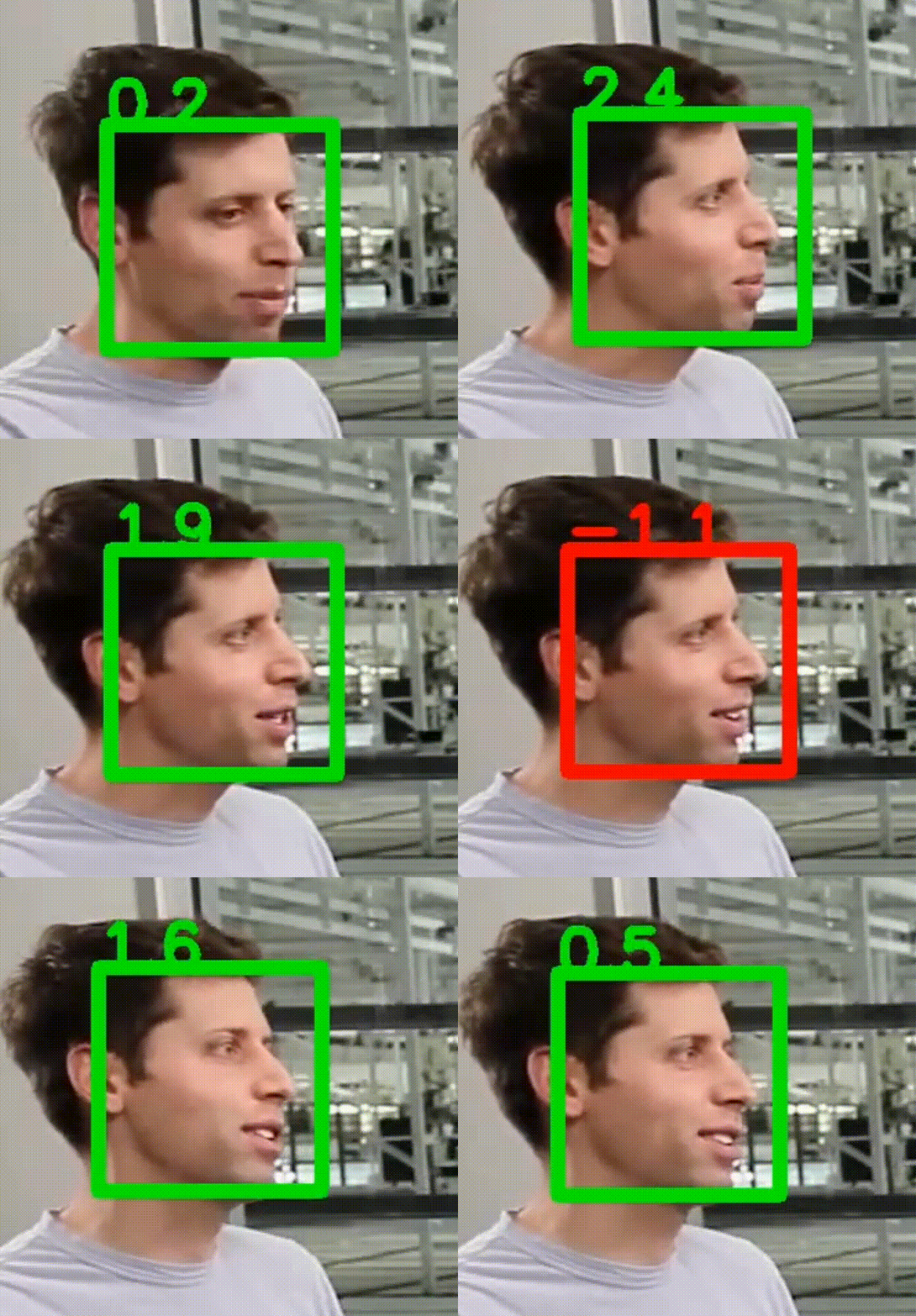
This is a simplified guide to an AI model called talknet-asd maintained by zsxkib. If you like these kinds of analysis, join AIModels.fyi or follow us on Twitter.
Model overview
talknet-asd is an audio-visual active speaker detection model that identifies whether a face in a video is speaking. Built on research presented at ACM MM 2021, this model combines visual and audio information to determine speaker activity with high accuracy. Unlike models such as video-retalking that focus on lip synchronization or multitalk that generate multi-person conversations, this model solves the fundamental problem of detecting who is actively speaking in existing footage.
Model inputs and outputs
The model accepts video files and processes them using configurable parameters to detect active speakers. It returns both visual output with marked speakers and structured data about detection results. The flexibility of the input parameters allows users to adjust detection sensitivity and processing scale based on their specific video characteristics.
Inputs
- Video - Path to the video file (MP4 or AVI format)
- Face Det Scale - Scale factor for face detection; lower values process faster but may miss smaller faces (default: 0.25)
- Min Track - Minimum number of frames required to establish a continuous speaker track (default: 10)
- Num Failed Det - Number of missed detections allowed before tracking stops (default: 10)
- Min Face Size - Minimum face size in pixels to consider for detection (default: 1)
- Crop Scale - Bounding box scale for extracted face regions (default: 0.4)
- Start - Start time in seconds for processing (default: 0)
- Duration - Video duration to process; -1 processes the entire video (default: -1)
- Return Boundingbox Percentages - Option to return coordinates as percentages of video dimensions (default: false)
- Return Json - Whether to return results in JSON format (default: true)
Outputs
- Media Path - Array of output video file paths with speaker annotations
- Json Str - Structured detection results in JSON format containing speaker timing and spatial information
Capabilities
The model detects active speakers across video sequences with 96.3% average F1 score on standard benchmarks. It marks speaking faces with green bounding boxes and non-speaking faces with red boxes. The model handles challenges like varying lighting conditions, multiple faces in frame, and continuous speaker tracking across scenes. It works on videos in the wild without requiring controlled studio conditions.
What can I use it for?
Extract active speaker information from video content for downstream applications like automated video editing, speaker identification in multi-participant videos, or dialogue system training. Content creators can use detection results to automatically highlight who is speaking in podcasts, interviews, or meetings. Researchers developing conversational AI systems similar to those explored in real-time audio-driven face generation can leverage speaker detection as a preprocessing step. Security and surveillance applications can identify speaking activity in footage analysis.
Things to try
Experiment with the face detection scale parameter to balance accuracy and speed on different video resolutions. Test on multi-speaker scenarios where multiple people appear in frame simultaneously to see how the model prioritizes detection. Try processing videos with varying lighting conditions and camera angles to understand robustness. Adjust the minimum track parameter to control sensitivity to brief speaking moments versus sustained speech. Use the bounding box percentage output option when working with videos of different resolutions to ensure consistency across your pipeline.
[story continues]
tags