


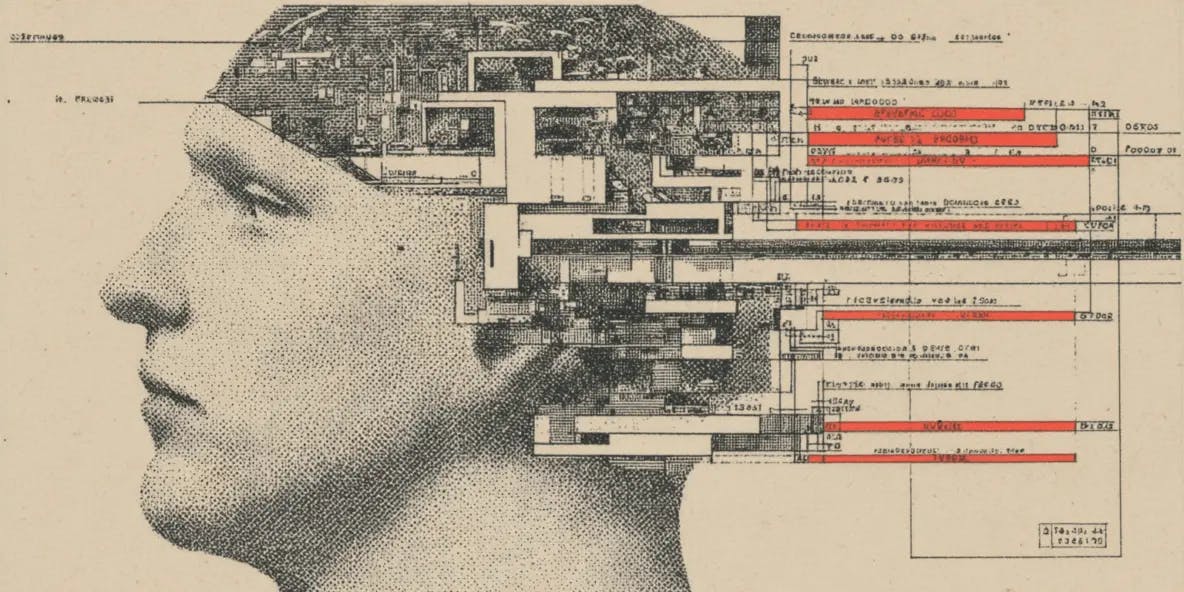
You don’t need a better system. you need less system. if your brain feels “busy” 24/7, it’s probably not burnout — it’s context obesity: too many open loops, too many tools, too many identities pretending to be productivity. Notion, ai, courses, frameworks — they don’t save you. they quietly turn into a museum you maintain at night to feel like you’re trying. this piece is a demolition plan.
you’ll see:
- where your attention leaks (the four layers of your personal operating system)
- why you need a minimal stack, not a zoo of tools
- how to write an honest self.md file — a set of rules for how you treat yourself (and AI) that you can return to anytime
in the previous article, we said something simple but annoying:
often, you’re not burned out — you’re living with context obesity.
your head is clogged with unfinished tasks, AI keeps pouring more on top, and Notion + Obsidian turn into a second job.
after publishing, we dropped the text into Space — our closed community inside AI Mindset — and things got spicy. here are a few quotes (with permission).
“the recommendation ‘don’t keep more than three active projects in your head’ — that’s the hardest task. it’s scary to choose wrong. and those three projects might be imposed by external authorities and lead you somewhere you don’t even want to go.”
— Dmitry Kompanets
another participant shared:
“i dumped all tasks until the end of the year into Obsidian. asked Cursor to build a day plan. it came out to 29.5 hours of tasks including sleep and rest. i closed Obsidian and realized: first i need to rewrite my system prompt — i don’t have three projects. and yes, that’s… another task i now have to finish 😭”
— Ekaterina Gracheva
a third added:
“start of the day: a mini standup with 3 key goals. end of the day: recap + gratitude. it helps you finish the day with ‘i did good’ instead of ‘another day flew by and i did nothing.’”
— Ksenya Tkacheva
and then an imaginary Mark Manson in our internal “board of directors” dropped the summary:
“honestly? you’re not only suffering from context obesity — you’re suffering from context narcissism. you’re chasing the image of a productive person, not what you actually need. AI and prompts are a curtain hiding the real question: maybe you’re doing the wrong thing entirely?”
— Alexander Stashenko
this text is about that. not “10 more frameworks.” but the museum of systems, context narcissism, and how to write a living self.md that doesn’t instantly get archived into shame.
an evening in the museum of systems
imagine: 22:30, you decide to “get your life together.”
you open Notion.
in there:
- a task database “by the GTD rules” (GTD / Getting Things Done — David Allen’s system: dump everything out of your head into a “trusted external system”)
- a separate “ideas” database
- a “goals of the year” dashboard by life areas
then you switch to Obsidian.
different folder logic.
- a “second brain” based on Building a Second Brain (one digital head instead of ten scattered vaults)
- journals, notes, a link graph that used to feel inspiring — now it just presses on your chest
in downloads there’s a YearCompass PDF — the annual review booklet. you open it, scroll past questions like “how was your year?” and “who do i want to become?”, catch a wave of shame — and close it.
in Telegram, a habit tracker bot quietly blinks.
little circles: “sleep / sport / meditation” half-empty.
your inner voice goes: “yep. another day where i didn’t become the upgraded version of me.”
and on top of that:
- a course called “build your perfect system” you never finished
- a “20 Notion templates” pack
- a video titled “how i organized my entire life in one dashboard”
and now you’ve spent 40 minutes “organizing” — but realistically you’ve just been wandering around your own museum of systems.
leaving the museum feels scarier than redesigning it one more time.
context narcissism: not a diagnosis, a defense mechanism
quick clarification: this is not a “you’re all narcissists, go get treated” post.
i’m not writing from the outside. i’m writing as a former curator of my own museum — someone who loved the feeling of being “too complex for simple solutions.”
context narcissism isn’t “you’re vain and bad.”
it’s a protective mechanism that:
- is afraid to admit your current setup is physically impossible to carry
- is ashamed to say “i don’t want to live like this, even if it looks impressive”
- replaces an honest “no” with a beautiful glass display case:
“look how complicated my life is. look how many systems. look how many projects.”
and in a world where:
- Notion setups look like interior design magazines
- it’s “normal” to have GTD + a second brain + annual reviews + quarterly planning
- admitting “one system and three projects is enough” feels almost embarrassing…
the museum gives you the soothing feeling of: “at least i’m trying.”
but it has a side effect:
every new system = a new layer of unfinished expectations.
you didn’t just fail a project — you also “failed” your templates, your courses, your inner coaches.
context obesity grows.
it’s not that you “broke your productivity system.” it’s architecture
when we looked at people’s tool stacks in the AI Mindset lab, the pattern was almost always the same:
- 2–3 task systems
- 2–3 note systems
- several formats of annual/quarterly reviews
- lots of guilt, very little sense of trajectory
so we stopped thinking in framework names and started thinking in layers.
we got four layers:
- core — habits + execution: how you process inputs and actually take steps
- file system — where your knowledge, notes, and decisions live
- compass — who you are right now, and where you’re even going
- interface — how you look at your life “from above” and reframe it
this architecture isn’t here to “explain everything.” it’s a knife. it lets you cut the museum down instead of expanding it.
below is a quick walk through each layer — with questions and practices.
layer 1. core: are you living, or endlessly preparing to live?
the core answers one question: “i said it — did i do it?”
realistically, the core should be:
- one task list (any app, board, notebook — doesn’t matter)
- 2–3 anchor habits from the Atomic Habits universe: sleep, movement, a screen-free window
any sane task system, at the base, is painfully simple:
- everything in your head drops into an inbox
- once a day/week you process it
- each item becomes a concrete next step or an honest “no, not now”
ask yourself:
- how many different places do my tasks live right now?
- which habits am i tracking, but haven’t actually done for months?
practice: “minus two trackers”
for one month:
- pick one task system you’ll actually live in. disable the rest: hide icons, remove widgets, turn off notifications
- pick two habits that genuinely change your state (sleep, movement, time without screens) — and delete everything else from the tracker
layer 2. file system: a second head, or a warehouse of shame?
your file system is your digital memory:
- Obsidian, Notion, Evernote, Google Docs — doesn’t matter what
- what matters is whether it helps you think and decide, or just reminds you how much you “should read and structure”
the “second brain” idea is simple: one extra head where you keep what you actually need for your projects and life areas — not the entire internet.
ask:
- when was the last time i opened a note that changed a decision — not just numbed my guilt because “at least i saved it”?
practice: “archive without repentance”
- everything you haven’t touched in 3+ months: tag it archive and remove it from the first screen
- don’t organize. don’t beautify. don’t swear you’ll return
- make a deal with yourself: in the active system, only what i actually touch is allowed to live
one month on a “lightweight second head” noticeably melts context fat.
layer 3. compass: who is making decisions — you, or your “internal authorities”?
this is where it gets uncomfortable.
your compass is:
- the answer to “who am i right now?” (founder, employee, researcher, parent, a cocktail)
- the theme of the year: one sentence instead of a goal salad — “year of health,” “year of honest no’s,” “year of leaving the systems museum”
- a brutal audit of projects: “mine” vs “imposed”
remember that Space quote:
“it’s scary to choose three projects. what if all three are imposed?”
context narcissism is strongest here: it’s easier to fill out another annual review or draw another mind map than admit half of what you carry isn’t your life — it’s other people’s expectations.
quick definition: what i mean by project.
not “reply to a client” and not “make a landing page,” but something that:
- lives for weeks or months
- requires recurring attention
- pulls a chain of tasks and decisions behind it
- if canceled, changes the plotline of “who i am right now”
projects are major storylines. tasks are bricks inside them.
practice: “3 projects that are actually mine”
- write down all current projects: work, side, study, personal
- label each with one tag:
- mine — it wouldn’t exist without me, and i genuinely want it to exist
- imposed — i do it to not disappoint / to fit in / to avoid looking like a loser
- phantom — i never move it, i just drag it around in lists
- choose exactly three “mine” projects for the next 3 months
- everything imposed/phantom becomes either:
- an honest “i’m not doing this,” or
- “someday, but not before [specific date]”
yes, this hurts more than building a new dashboard. but without this, any self.md becomes just another pretty museum exhibit.
layer 4. interface: are you recording life, or just falling asleep and waking up?
interface = any way you look at your life “from above”:
- annual review
- weekly review
- a tiny daily ritual
it doesn’t need to look like an Android 2011 launcher stuffed with custom icons.
Ksenya’s Space ritual looks like this:
- morning: mini standup — 3 realistic goals
- evening: recap — outcomes + gratitude
nothing fancy. but it stops days from dissolving into “i did nothing again.”
practice: “i did good” for 7 days
for 7 days:
-
morning: write 3 tasks that realistically fit into today
-
evening: answer 3 questions:
- what important thing did i do today?
- what good thing happened, even if the day was hard?
- what am i grateful for — to myself / to the world — today?
one week later, you’ll notice days start ending — not just collapsing into a gray feed.
the minimal stack: an experiment against the museum
if i compress everything above into one radical idea:
for one month, stop being the curator of the systems museum and see who you are without the identity of “person with the perfect OS.”
a minimal stack isn’t your final setup for life. it’s rehab after the museum — the first moment you can actually write an honest self.md ruleset
self.md: a protocol for how you treat yourself
self.md is basically my personal README. a living markdown file i can reopen anytime — especially when i’m about to “just add one more project” and pretend it’s self-care.
a typical manifesto sounds like:
- “i’ll wake up at 5am”
- “i’ll read a book a week”
- “i’ll run three big projects”
- “i’ll finally fix health, money, relationships, and career at the same time”
these texts go straight to the museum: a beautiful Notion page you’re ashamed to open in a month.
self.md is a different form.
it’s not “how i become ideal.” it’s:
what i consider acceptable vs unacceptable treatment of myself for the next few years.
it includes rules like:
- “i don’t agree to work setups where my calendar is 100% meetings.”
- “after 22:00 on weekdays, i don’t make strategic decisions — i only capture thoughts.”
- “i can’t have more than three active growth directions at once.”
- “i use AI for unloading and honest math, not for generating another ideal life.”
one Space participant wrote after the first article:
“the idea that a person should have a system prompt too is very close to me. i literally have that text and try to reread and update it — special notes in Obsidian.”
— Kirill Oleinichenko
so for some people, a system prompt already exists as a working document — not a pretty manifesto.
if you don’t have one yet, write it not as “ideal me,” but as your internal board of directors.
self.md as a board meeting
for many people, the roles look like this:
- cynical Manson who cuts deep: “this is ego”
- the tired one who just wants sleep and to not die
- rational product manager who looks at metrics
- anxious one who’s afraid of losing money and status
practice: self.md 2026, board protocol
- list 3–5 internal characters (you can borrow real authors/mentors as masks)
- give each one 1–2 rules for 2026, for example:
manson: “no projects for status only. if i can’t explain why it’s mine — i don’t take it.”
tired one: “no more than N evenings of work per week. if i break it — it’s a system bug, not a moral failure.”
product: “if my calendar has no focus blocks, only meetings — that’s firefighting mode, not normal.”
anxious: “i don’t promise anything until i’ve done the time math. first calculation, then ‘yes.’”
- assemble 7–10 points into your
self.md. not pretty — operational. - anything that smells like “on monday i’ll become a perfect human” goes in the trash (or straight into the museum).
anything that sounds like real constraints and real agreements goes into your prompt.
AI: museum painter or honest x-ray?
in this story, AI plays two roles.
the unhealthy role: museum painter.
that’s when you ask:
- “build me the perfect Notion system”
- “design a schedule for a hyper-productive person”
- “give me 50 habits to become a top manager”
if you ask AI to design an ideal life before you’ve chosen your projects and constraints, you’re not solving the problem — you’re automating your context narcissism.
the healthy role: x-ray + secretary.
that’s when you say:
- “here’s my task list and hours. calculate the real total.”
- “here are my projects. help me sort them into mine / imposed / phantom.”
- “here’s my
self.md. remind me when i’m trying to stuff in a fourth project.”
in that role, AI:
- reveals absurdity (hello, 29.5-hour day)
- helps unload context and shape it into something usable
- returns you to your own rules instead of designing a new ideal museum
if you want a simple “what to delegate vs keep human” rubric (so AI doesn’t become your museum interior designer), this is the cleanest cheat sheet i’ve seen: https://self.md/concepts/delegation-principles/
where {context} lab fits, and what’s next
this essay came out of the AI Mindset ecosystem — specifically, watching smart people accidentally build beautiful cages for themselves. at some point we even ran a time-boxed sprint called {context} lab to help people shut down their productivity museums and rebuild a minimal stack. that cohort is closed now, but the move still works:
if you combine both articles, the picture is pretty honest:
- you’re not burned out — you’re living with context obesity
- a big chunk of that obesity is your systems museum, fueled by context narcissism
- the exit isn’t “another productivity course,” it’s:
- a minimal stack you can actually carry
- an honest
self.mdas a protocol for treating yourself - AI as an assistant-x-ray, not a museum painter
in this picture, {context} lab was a space where participants temporarily close the museum entrance, make a few painful decisions in a safe environment, assemble their stack and their self.md — and only then attach AI assistants and automations.
and for you, the choice is weirdly binary:
you can close this tab and do a small Notion cleanup or today — honestly turn off at least one system for a month, write down your three projects, and draft the first five lines of your self.md
in the second scenario, a year from now you’ll have a much better chance of living your life — not someone else’s expectations.
Ray Svitla
stay evolving 🐌