In the high-stakes arena of decentralized application development, a quiet revolution is taking place, prioritizing sustainability over the high-throughput hype of traditional forerunners like Ethereum and Solana.
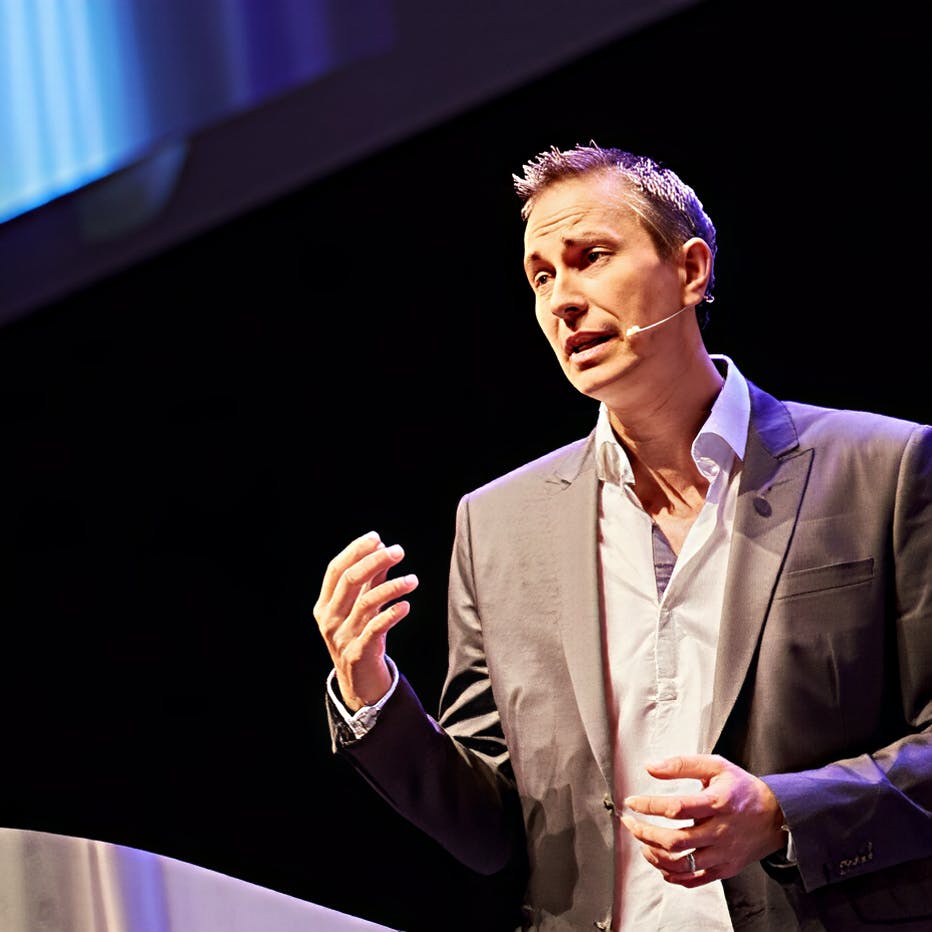
In this interview, Electroneum's CEO Richard Ells talks to Olayimika Oyebanji about the strategic shift towards green blockchains, calling for the replacement of traditional blockchains with ultra-green alternatives that prioritize sustainability and environmental ethos.
One of the key highlights from this interview is that the case for a net -zero blockchain standard, through Proof -of-Responsibility(PoR)consensus exists in a regulatory landscape where adherence to ESG principles are can become a differentiating signal.
Hello Richard, can you briefly tell us about yourself and your route to Web3?
I'm a coder of old, running a bulletin board from my childhood bedroom from a BBC Micro and accessing the packet switch stream network (the forerunner of the internet) via an acoustic coupler. My kids find it hilarious to visit the London Science museum and watch me getting excited looking at displays saying "I had one of those!".
I have run various digital enterprises since the 90's, some of which are still operating with me as a shareholder after decades and some I've exited from over the years. I somehow missed the dot com boom years (and the bust years, luckily) and then felt I missed the mobile phone mania, after I failed miserably to predict the iphone.
So when I was introduced to crypto in 2014 I absolutely knew it was for me, I had mining rigs dotted around the house and was very much an early adopter. All roads lead to Rome they say, but I think they might mean crypto.
How does a consensus model that relies on permissioned, verified entities balance network security and decentralization?
Some models of decentralization are huge such as the original bitcoin model. Once people started putting their hashing power through mining pools , bitcoin became slightly less secure than it was before the pools existed. At the moment there are only a handful (less than 20) entities that actual MINE bitcoin blocks. (i.e. complete the block template and submit a block to the network).
People are under the impression that all those mining rigs in warehouses are actually proposing blocks but all they do is the hard work of the mathematics and then they submit that to a mining pool. It is the mining pool that actually has control of the block templates.
Please don't get me wrong, I'm not trying to put people off bitcoin. Far from it, but the essence of the way Proof-of-Work was changed in a way that wasn't predicted when bitcoin launched in 2009. At the moment, if one entity starts getting "too much" hashing power, the miners have a tendency to move their hashing power around to balance out the network.
Why do do they do that? Because the idea is that you don't want too much hashing power in the hands of one entity or collusion between your decentralized network participants or they could more easily gain over 50% of the power. The problem is that some of these pools MIGHT be owned by the same ultimate entity because they are run anonymously.
It introduced a new variable at least. This got me thinking that while we trust a handful of mining pools with the greatest crypto ever made (sorry Vitalik, yours is cool too, why can't we have a small network of TRUSTED third parties that are doing the job - then write some software so if they collude deliberately (or by being hacked) the network automatically shuts them down.
You are not able to shut down network participants in the PoW or Staking models for obvious reasons - but if the particpants have a key which allows them to be a part of the validator network, we can very quickly invalidate that key if bad network behaviour takes place.
We were working with NGOs and foundations on the ground as part of our work in the developing world, so it was a natural progression to invite them into the fold as it were and get them running a validator. In real terms we set all the software up for them and help them out - so our decentralization is all about uptime and redundancy rather than anonymity. There are other chains for those things, so we are happy being different and gaining the huge advantages this difference brings us.
How can blockchains focused on near-zero environmental impact obtain and maintain verifiable, third-party ESG certifications that satisfy major corporate partners?
Great question! I'm sure I'm not qualified to say what verifiable ESG certifications would satisfy corporate partners because I'm under the impression they are very wary of any carbon credits, which is the route most entities go down. We didn't want to simply say "we've spent 10k on carbon credits" - here's a PDF, so we are all good now.
We've taken on a partnership with a very well respected foundation in the environmental space and they, of course, have carried out their own due diligence. As we work further together it will become more and more obvious that we are carbon negative (i.e. the blockchain is responsible for locking in more carbon than the energy of its validators releases).
By working directly together on ESG projects I am super confident that other corporates will start adopting ultra-green alternative as their blockchain of choice. It's very easy to just buy a piece of paper that says you are carbon offsetting.
How can the adoption of EVM compatibility by an alternative Layer-1 chain accelerate its core mission in the area of financial inclusion?
For instance, originally Electroneum was designed to solve micropayments and low transactions in emerging markets. Whilst the majority of our users were in the developing world, we also saw a demand for more functionality .
Vitalik's solution is super elegant, but we didn't want to be a classic "copy of paste" of Ethereum, there are way too many of those, so we redesigned our validator system to bring ludicrously low costs and high speed to the network. This shows the need for a low-cost efficient system in the developing world, where live contracts can be deployed and operating on the mainnet for very little difference to making them live on the testnet.
Why do you believe it is time for dApp builders to ditch Ethereum and Solana for Ultra-Green Alternatives?
Environmental pressure is rising. Traditional chains like Ethereum (even post-merge) and Solana are increasingly criticized for energy consumption or for running validator/infrastructure that may not prioritise sustainability. As ESG (environmental, social, governance) concerns penetrate institutional, corporate and consumer psychology, the demand for “green blockchains” will grow.
Builders who care about brand image, compliance or future-proofing products (especially in regulated or corporate environments) will prefer infrastructure that emphasises minimal environmental footprint. A chain built purposefully to be energy efficient can become a differentiating signal.
Ultra-green alternatives that still deliver EVM compatibility, low cost and fast finality reduce the trade-offs associated with “green → slow/expensive.” With solutions like Electroneum 2.0, developers can build dApps with the same convenience and tooling as Ethereum (smart contracts, wallets, etc.) without sacrificing performance or sustainability.
As regulation evolves — with possible carbon-reporting requirements or green audits — using a blockchain with an eco-first narrative may become a practical advantage for compliance or corporate adoption.
Finally, the moment is especially ripe because ultra green chains are launching bridges and interoperability — meaning developers could retain exposure to broader liquidity and assets while hosting their logic on a green, efficient Layer-1.
Besides low cost and speed, what is Electroneum's competitive advantage for securing large enterprise adoption?
Through partnerships such as with One Ocean Foundation, Electroneum couples its low-energy blockchain with real-world ecological and social impact (e.g. transparent on-chain donations, tokenized sustainable practices). That kind of narrative — a blockchain that is not just “fast & cheap,” but purpose-driven — may resonate stronger for enterprises that want to show ESG credentials.
Electroneum uses validators from NGOs, universities and other vetted partners, rather than a fully open public validator set. This can offer enterprises more predictable, auditable security and governance — which tends to be a concern for larger organisations who might be wary of wholly permissionless, potentially unpredictable networks.
Because Electroneum 2.0 supports EVM smart contracts, enterprises already familiar with Ethereum tooling (DevOps pipelines, smart-contract auditing frameworks, Solidity, MetaMask integration etc.) can migrate with minimal friction. This reduces switching costs compared to non-EVM chains.
Interoperability via cross-chain bridging (s— meaning enterprises can tap into liquidity and assets from other blockchains, while running operations on a green, efficient chain. That flexibility may appeal to companies wanting to hedge risk or maintain broader ecosystem access.
Lastly, Electroneum is positioned not just as a speculative chain, but as a payments, remittance and mobile-first solution aimed at financial inclusion — which may make enterprises targeting emerging markets more confident in its utility beyond DeFi or speculative use.
How are you leveraging the Hyperlane bridge and One Ocean Foundation partnership to increase liquidity and elevate the network's market cap?
Through the Hyperlane bridge, we gain cross-chain interoperability: assets like USDT and USDC can be bridged into (or out of) Electroneum, enabling liquidity flows from major blockchains to the ETN ecosystem.
That means dApps on Electroneum can tap into external liquidity pools, stablecoins and tokens — making building DeFi protocols, NFT marketplaces or payment systems on Electroneum more attractive. This increased utility can drive demand for ETN, organically raising network activity and potentially market cap.
The One Ocean Foundation partnership brings a social-impact narrative by enabling tokenised, transparent donations and on-chain reporting for environmental projects, Electroneum positions itself as more than a utility blockchain — as a “blockchain for good.” That may attract ESG-minded investors, institutions and users, broadening the potential investor base.
Combining real-world impact with technical utility creates a dual value proposition: both socially responsible funding flows (via tokenised donations, sustainability reporting) and scalable financial/developer infrastructure — which can contribute to both adoption and market valuation over time.
What is the current strategic role of the mobile app in the new PoR ecosystem, given that competitive mining is now eliminated?
The mobile app remains central for financial inclusion and mass-market adoption: Electroneum historically targeted unbanked populations and emerging markets, making crypto accessible via smartphone — and that remains a core use case under 2.0. According to recent coverage, ETN is still “mobile-first,” offering payments, remittances, and mobile top-ups.
Without competitive mining, the blockchain shifts focus from mining-based issuance/incentives toward utility-based adoption. The mobile app becomes the main user-onboarding, utility and everyday-use interface — facilitating token transfers, payments, merchant interactions, and real-world transactions.
For many users in emerging markets or underbanked regions, having a lightweight mobile wallet + app interface (rather than heavy staking/mining requirements) lowers the barrier to entry — supporting the mission of financial inclusion.
The app can also serve as a “gateway” to the broader 2.0 ecosystem (smart contracts, DeFi apps, NFT marketplaces) — allowing users to access more complex on-chain services from their phones. That supports network growth, user base expansion, and consistent utility demand for ETN.
What is the single biggest regulatory hurdle or opportunity for green, purpose-driven blockchains over the next two years?
As global and regional regulators increasingly integrate environmental, social and governance (ESG) criteria into financial regulation (especially for institutions, funds and corporate issuers), a blockchain that is demonstrably low-energy and socially purposeful could attract institutional interest.
We strongly believe that our humanitarian and environmental narrative (e.g. with One Ocean Foundation) could position us as compliant with evolving ESG standards — giving us a head start over “traditional” blockchains.
[story continues]
tags