


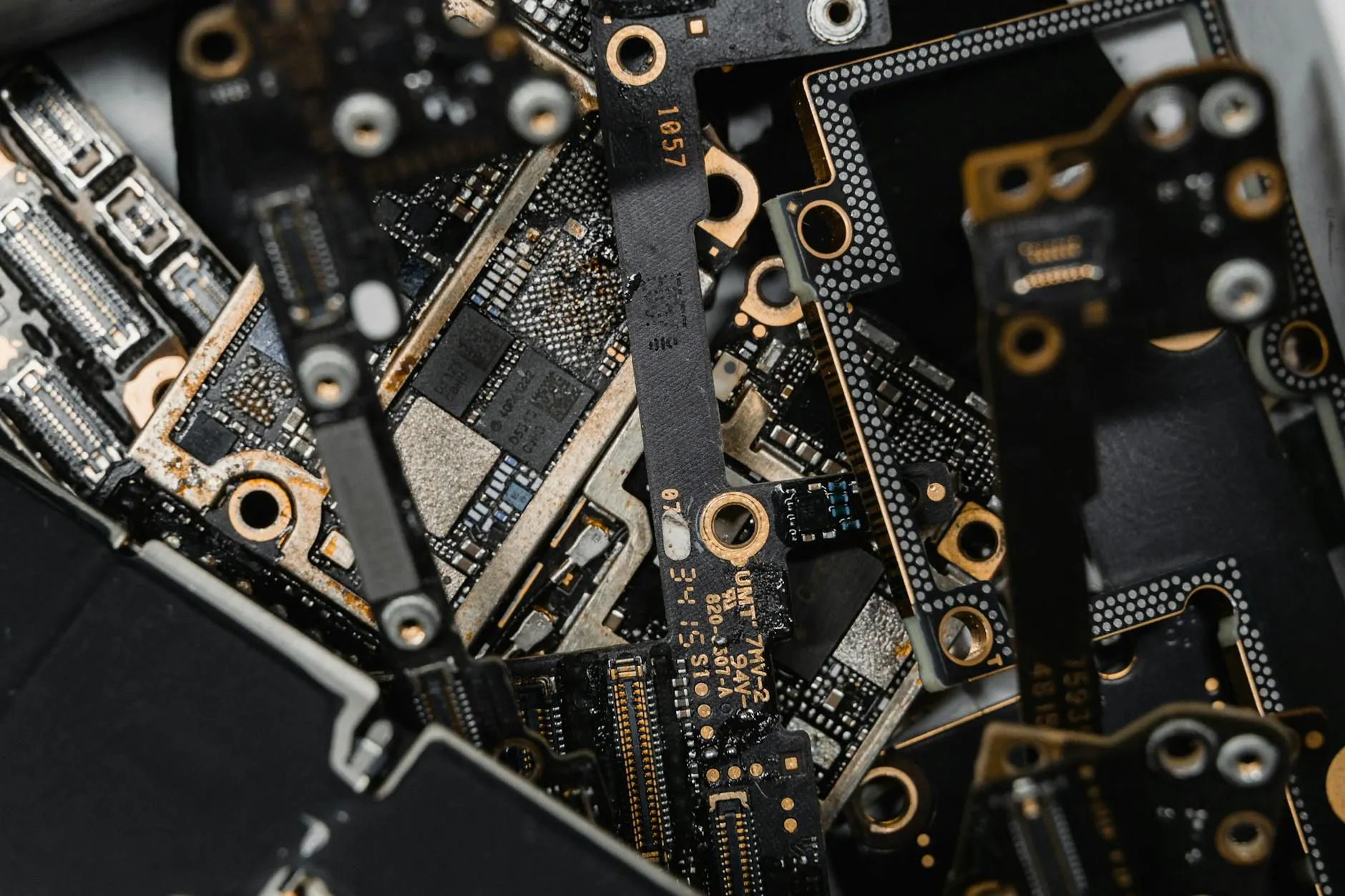
For the past two decades, the tech industry’s spotlight has been firmly fixed on software. We witnessed the "app for that" revolution, the rise of SaaS, and the dominance of the cloud. Hardware, by contrast, was often seen as a commodified stage—a necessary but secondary background for the software stars to perform on.
But as we move deeper into the AI era, the script has flipped. We have entered the Silicon Renaissance. Today, hardware is no longer just a container for code; it is the primary bottleneck and the greatest differentiator in the artificial intelligence race. For the first time in a generation, the hardware engineer is the most pivotal player in the room.
1. The Death of the "General-Purpose Tax"
For years, the industry operated under a comfortable "General-Purpose Tax." Whether you were building a social network or a climate model, you ran it on off-the-shelf CPUs and GPUs. They were versatile, available, and "good enough."
That era ended when AI workloads scaled into the stratosphere. The cost of running massive LLMs on general-purpose hardware has become unsustainable. General-purpose chips carry "logic taxes"—wasted energy and silicon real estate dedicated to tasks that AI simply doesn't need.
This has triggered a mass exodus from standard silicon. Big Tech—Google, Amazon, Meta, Microsoft, and Apple (the "Big Five")—has stopped being just software companies. They are now some of the world’s most ambitious chip designers. From Google’s TPUs to Amazon’s Trainium, the goal is clear: strip away the generic and build for the specific.
2. The Shift: From Consumers to Creators
The most profound shift in the job market is who is doing the hiring. Traditionally, a hardware engineer's career path was a straight line to Intel, AMD, or NVIDIA. While these giants are seeing record demand, they are now competing for talent with their own former customers.
- Custom ASICs at Hyperscale: Companies like Meta and Microsoft are spending hundreds of billions on AI infrastructure. At that scale, even a 5% gain in energy efficiency from a custom ASIC saves billions in operational costs.
- Edge Sovereignty: Apple and Google are moving the "brain" of AI onto the device. Designing the Neural Engines that allow a phone to process agentic AI locally, without the cloud, requires a level of hardware-software co-design that was non-existent ten years ago.
3. The Big Five Toolkit: In-Demand VLSI Skills
If you are looking to break into the hardware teams at the Big Five, the requirements have shifted from general chip design to specialized AI-centric skill sets. Here are the specific VLSI skills currently commanding the highest premiums:
A. Hardware-Software Co-Design (Arch-to-RTL)
The era of "throwing the spec over the wall" is dead. The Big Five—Google, Meta, Amazon, Microsoft, and Apple—no longer want engineers who treat Verilog as a mere translation of a document. They are searching for architects who can visualize the journey of a single data packet from a PyTorch tensor down to a specific flip-flop. In the AI era, the most valuable hardware engineers are those who understand the "mathematical intent" of the software, ensuring that the silicon doesn't just execute code, but accelerates the specific linear algebra primitives that drive modern intelligence.
- Core Skill: Translating High-Level Architectural Specs into Efficient RTL : The foundation remains a mastery of RTL design, but the focus has shifted toward high-throughput pipeline architectures. You must be able to take a high-level performance model—often written in C++ or SystemC—and architect a hardware implementation that balances latency, area, and power. This involves making critical decisions on buffer sizing, pipeline depth, and arbitration logic. A key part of this skill is the ability to design for scalability; a block designed today for a single chip might need to be replicated across a 50,000-node cluster tomorrow.
- The "AI Era" Edge: Deep Integration with ML Frameworks and Numerical Formats : The true differentiator is a functional literacy in ML Frameworks like PyTorch, TensorFlow, or JAX. When you understand how a compiler like XLA (Accelerated Linear Algebra) partitions a graph, you can design hardware that minimizes "bubbles" in the pipeline.
Furthermore, the "AI Edge" requires expertise in specialized arithmetic units. It’s no longer just about 32-bit floating point; it’s about mastering the trade-offs of reduced-precision formats like Bfloat16, TensorFloat-32, and even FP4/INT8. Designing a Systolic Array or a specialized Matrix-Vector Multiplication (MVM) unit requires a deep understanding of data reuse patterns (weight-stationary vs. output-stationary). By building hardware that natively supports "Structured Sparsity"—the ability to skip multiplications of zero-value weights at the gate level—you can provide the 10x performance leaps that software alone can no longer achieve.
B. Performance Verification (PV) and Formal Verification
Modern SoCs (System-on-Chips) for AI are so complex that the verification cycle now takes up 60–70% of the design time.
- Core Skill: Proficiency in SystemVerilog and UVM (Universal Verification Methodology).
- The "AI Era" Edge: Mastery of Formal Verification to mathematically prove the correctness of complex arbiter logic and memory controllers.
C. High-Bandwidth Memory (HBM) Integration
AI is a "memory-bound" problem. A chip is only as fast as its ability to move data from memory to the compute units.
- Core Skill: Expertise in HBM3/HBM4 PHY design and advanced packaging (like CoWoS—Chip on Wafer on Substrate).
- HBM4 Mastery: HBM4 is now the baseline for top-tier accelerators. Study its 2048-bit wide interface and the thermal challenges of 16-high (16-Hi) stack integration.
- Advanced Cache Controllers: Learn to design non-blocking caches with advanced prefetchers specifically optimized for tensor data patterns.
- NoC deadlocks: Master Network-on-Chip (NoC) congestion control. AI workloads often create "hotspots" in the fabric; learn how to design adaptive routing algorithms to mitigate this.
D. Low-Power Design & Thermal Management
AI chips run hot and hungry. Power density is the new "speed limit."
- Core Skill: Mastery of UPF (Unified Power Format) and multi-voltage domain design.
- The "AI Era" Edge: Experience with Physical Design (P&R) at 3nm and below, focusing specifically on IR drop analysis and thermal-aware floorplanning.
4. The Physicality of the Future
If the last twenty years were about the "Bit," the next twenty are about the "Atom." We have realized that software can only go as far as the physics of the silicon allows.
Whether it is developing liquid-cooling systems for gigawatt-scale data centers or designing the next generation of 2nm processors, hardware engineers are the ones currently defining the limits of human achievement.
If you are a hardware engineer today, you aren't just building components. You are building the bedrock of the AI era. Welcome to your Golden Age.