
We’re living in the golden age of AI agent development. The backend infrastructure is finally catching up to the hype. If you’ve followed my previous work on deploying agents using ADK and Google Cloud, you know that the heavy lifting — the orchestration, the tool integration, the deployment pipelines — is becoming standardized.
The major players are all in. Whether you’re using Google Cloud’s Vertex AI Agent Engine powered by the ADK, AWS AgentCore with Strands, or Databricks’ AgentBricks, building the brain of the agent is easier than ever. But here’s the dirty secret the hype cycle isn’t talking about: The User Interface (UI) is the real bottleneck for industrializing AI agents.
You can have the most sophisticated, multi-step reasoning agent on the planet, but if your users can’t interact with it intuitively, securely, and effectively, it’s a challenge for deploying AI agents at scale. The last mile — exposing the agent to maximize impact — is where projects go to die. In this article, we are going to explore this problem and find the best trade-off to remove the bottlenecks and adopt AI agents full-throttle in your company!

The Bottleneck: Why UI is the Hardest Part
Building an agent requires a specific skill set: LLM understanding, backend engineering, and prompt whispering. Building a good UI requires a completely different one: frontend development, UX design, and product sense. The engineers hacking together these agents are rarely UI experts. And frankly, they shouldn’t have to be.
The Tiresome Process of Building UIs
Having to spin up a new React app every time you deploy an agent is soul-crushing. It’s tedious, time-consuming, and completely unscalable. We need generalized interfaces that adapt to specific workflows, not custom code for every use case. This includes generalizing how we evaluate agent performance and collect user feedback — critical components that are often considered as an afterthought.
The Identity Crisis
User and Agent Identity is paramount. If an agent needs to access a database or pull a file from Google Drive, it must do so on the user’s behalf, from the UI. We can’t have agents authenticating with god-mode service accounts, nor can we force users to re-authenticate with every single tool during an interaction. The UI must seamlessly handle delegated authority.
Security and Governance: The Enterprise Non-Negotiables
This isn’t a weekend hackathon project. In an enterprise setting, security is everything. You cannot allow loose access controls. The nightmare scenario? An agent with access to your entire data lake and the ability to send emails externally. The risk of data leakage is massive.
Governance requires auditing every operation, ensuring data usage is controlled, and verifying that tool access is restricted. The UI is the gateway for all of this. This technical juggle requires both admins and users to be familiar with the environment, but their interfaces must be optimized for their roles.
Symptoms of a Broken System
When the UI layer fails, the organization feels the pain.
- The Rise of Shadow IT: When official tools are too hard to use or deploy, users find workarounds. We see a proliferation of quick-and-dirty solutions, like rogue n8n instances deployed under someone’s desk, creating massive security vulnerabilities.
- Agent Silos: Agents should be collaborative. They need to interact with each other, leveraging protocols like the emerging A2A (Agent-to-Agent) standard. But when agents live in isolation, collaboration is impossible. They become siloed tools rather than a cohesive intelligence layer.
- The “90% Done” Fallacy: This is the classic trap. You hack together a Streamlit web app, deploy it, and declare the project 90% complete. Wrong. The real project — adoption, integration, security hardening, and UI refinement — is just beginning.
Exploring the Approaches: The Good, The Bad, and The Ugly
How are we currently trying to solve this UI challenge? Let’s break down the dominant paradigms.
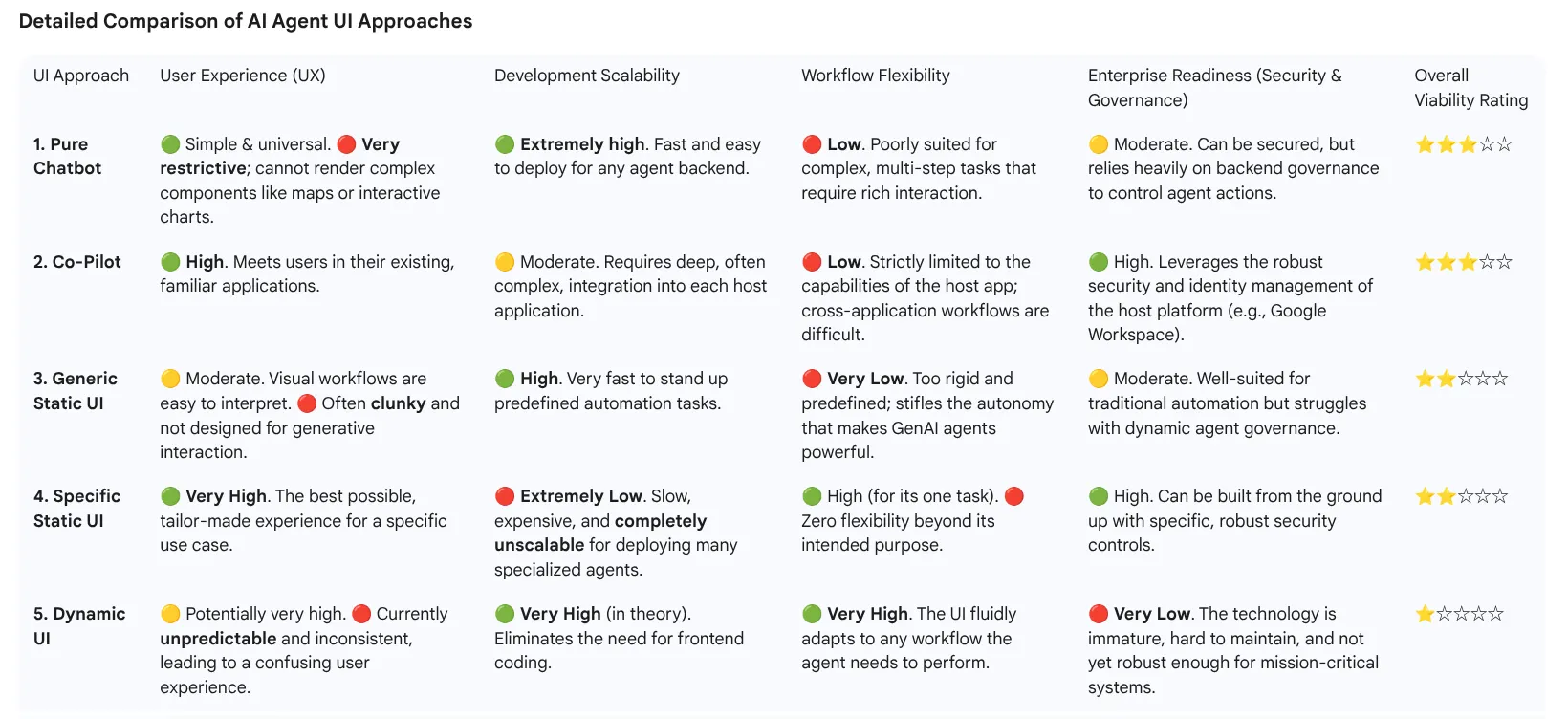
1. The Pure Chatbot (The Terminal Approach)
The idea here is that the chatbot is the only interface. We see this clearly with the recent OpenAI Apps or Gemini Extensions.
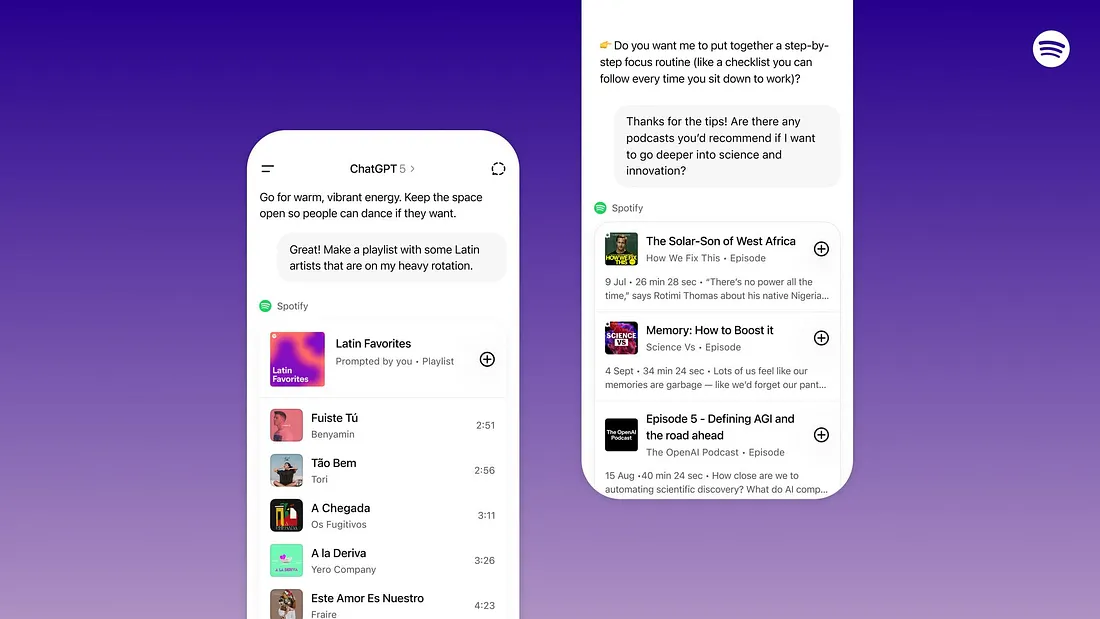
- Pros: Simple, universal interface for everything. Low development overhead.
- Cons: Incredibly restrictive. Markdown syntax is not a UI framework. You can’t easily implement sliders, interactive maps, complex data visualizations, or rich editing tools.
- The Verdict: This is like a developer terminal, but using natural language instead of Linux commands. It’s powerful for certain tasks but hits a wall quickly when complexity increases.
2. The Co-Pilot (The Sidecar Approach)
The chatbot controls another existing interface. The prime example is Gemini for Workspace, where the chatbot sits as a widget on the right side of Docs, Sheets, or Gmail.
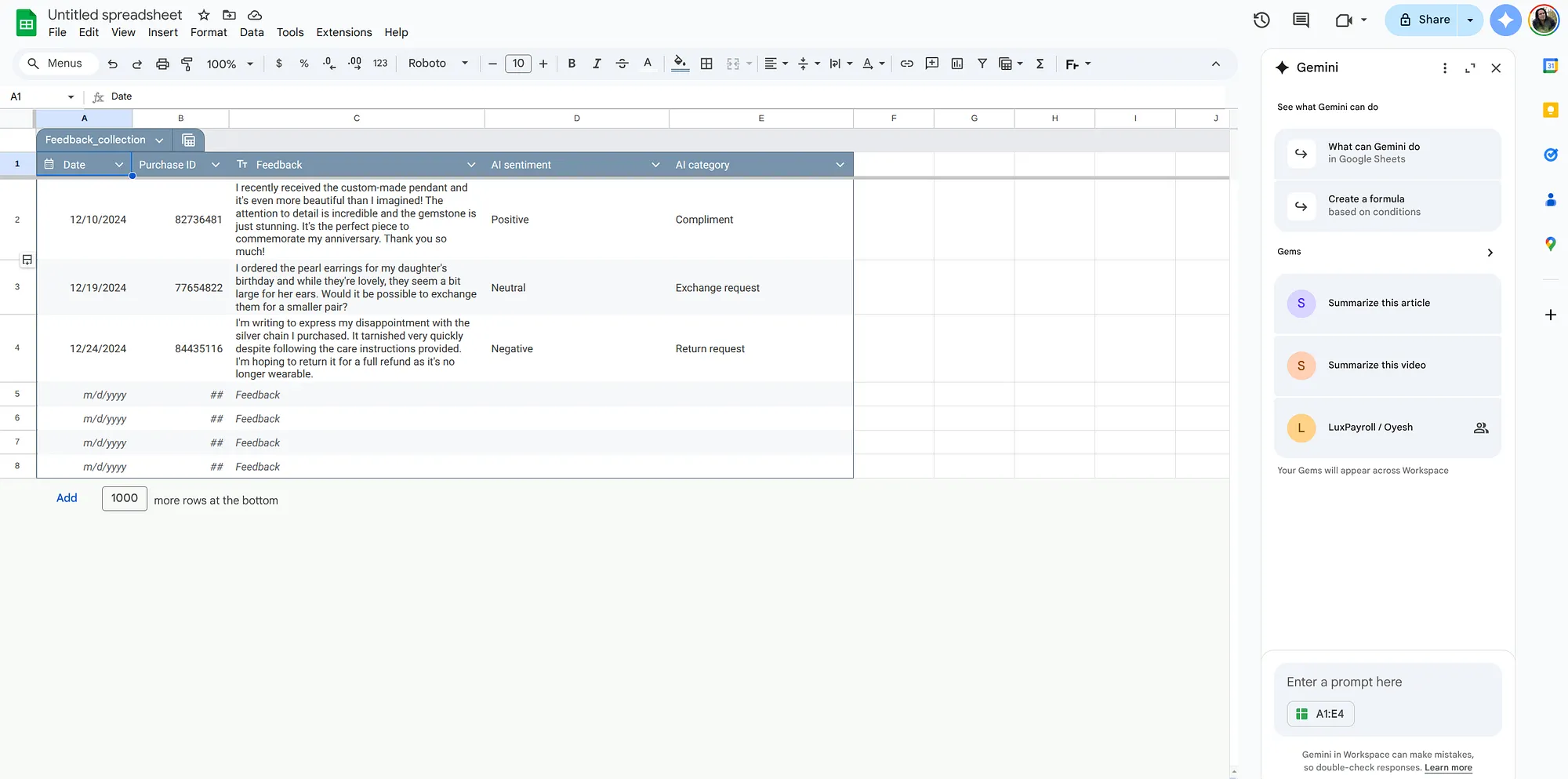
- Pros: Meets the user where they already are. Keeps the familiar interface of the host application.
- Cons: Limited to the capabilities of the host app. Cross-application workflows (e.g., “Analyze this spreadsheet and draft a presentation based on the findings”) are difficult or impossible.
- The Verdict: A great enhancement for existing tools, but not a solution for complex, multi-tool agentic workflows.
3. Generic Static UI (The Visual Workflow)
This involves using a predefined visual interface, like n8n or specialized agent builders.
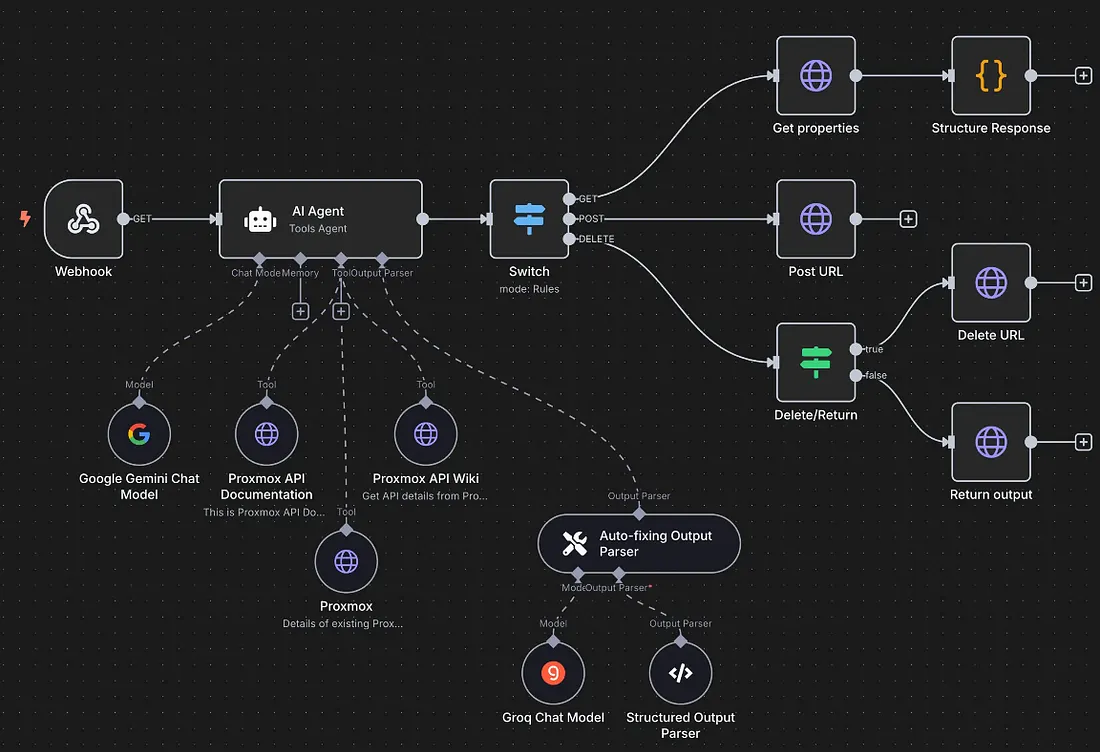
- Pros: Generic yet adaptable to specific workflows. Fast to develop and easy to interpret.
- Cons: Visual workflows are often legacy techniques poorly suited for Generative AI. They are too rigid. How do you easily put a human in the loop? How do you give the agent more autonomy when the path is predefined?
- The Verdict: Good for traditional automation, but stifles the potential of true AI agents.
4. Specific Static UI (The Artisanal Approach)
Building a custom, bespoke UI for every agent, often using frameworks like Genkit.
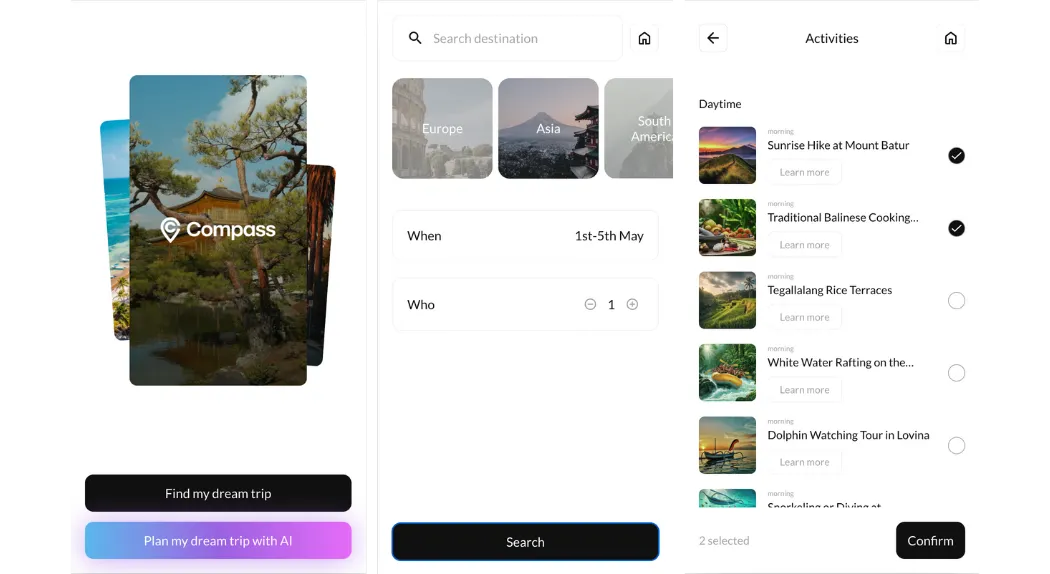
- Pros: The absolute best adaptation to the specific use case. Maximum control over the user experience.
- Cons: Slow to develop, expensive, and completely unscalable, especially for quick agents.
- The Verdict: Necessary for flagship products, but impossible for the rapid deployment of specialized agents.
5. Dynamic UI (The Shape-Shifter)
The UI is fluid and generated on the spot by the AI itself. We see this with Claude generating artifacts, or experimental concepts like Google’s Opal and the AG-UI protocol.
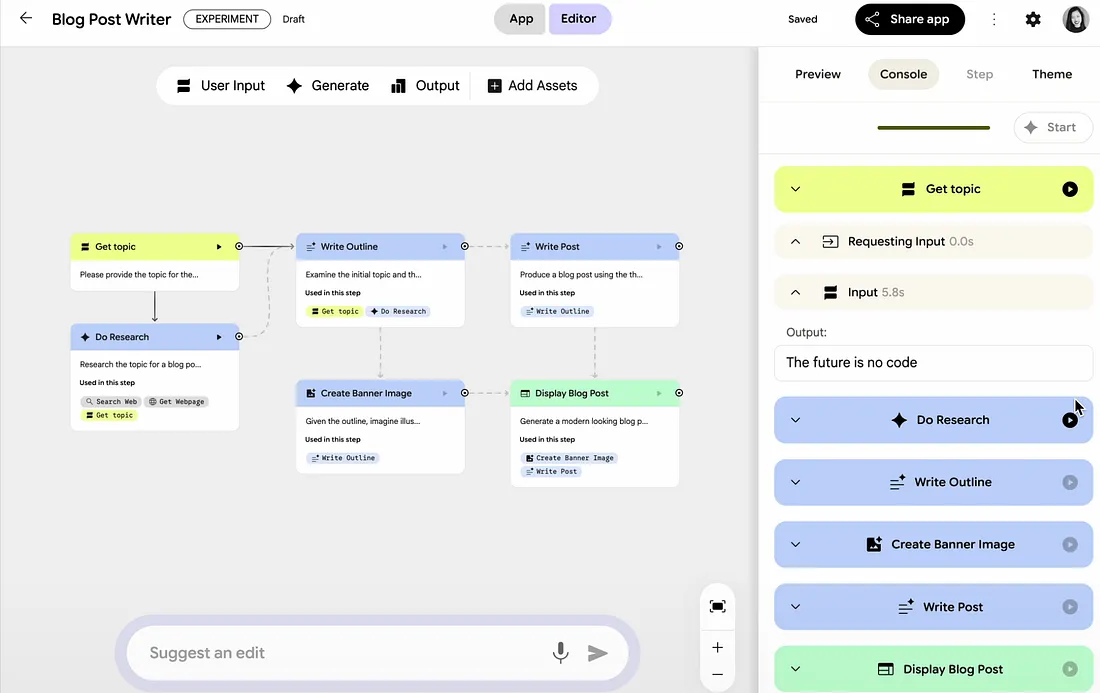
- Pros: No need to code UI anymore. Maximum adaptation to the desired workflow. Incredibly fast development cycle.
- Cons: Unpredictable and inconsistent. Not efficient — it feels like “vibe coding.” It’s feasible for small apps, but is it robust enough for large-scale enterprise applications?
- The Verdict: The holy grail, but the technology isn’t mature enough for mission-critical applications.
The Agent Hub Imperative
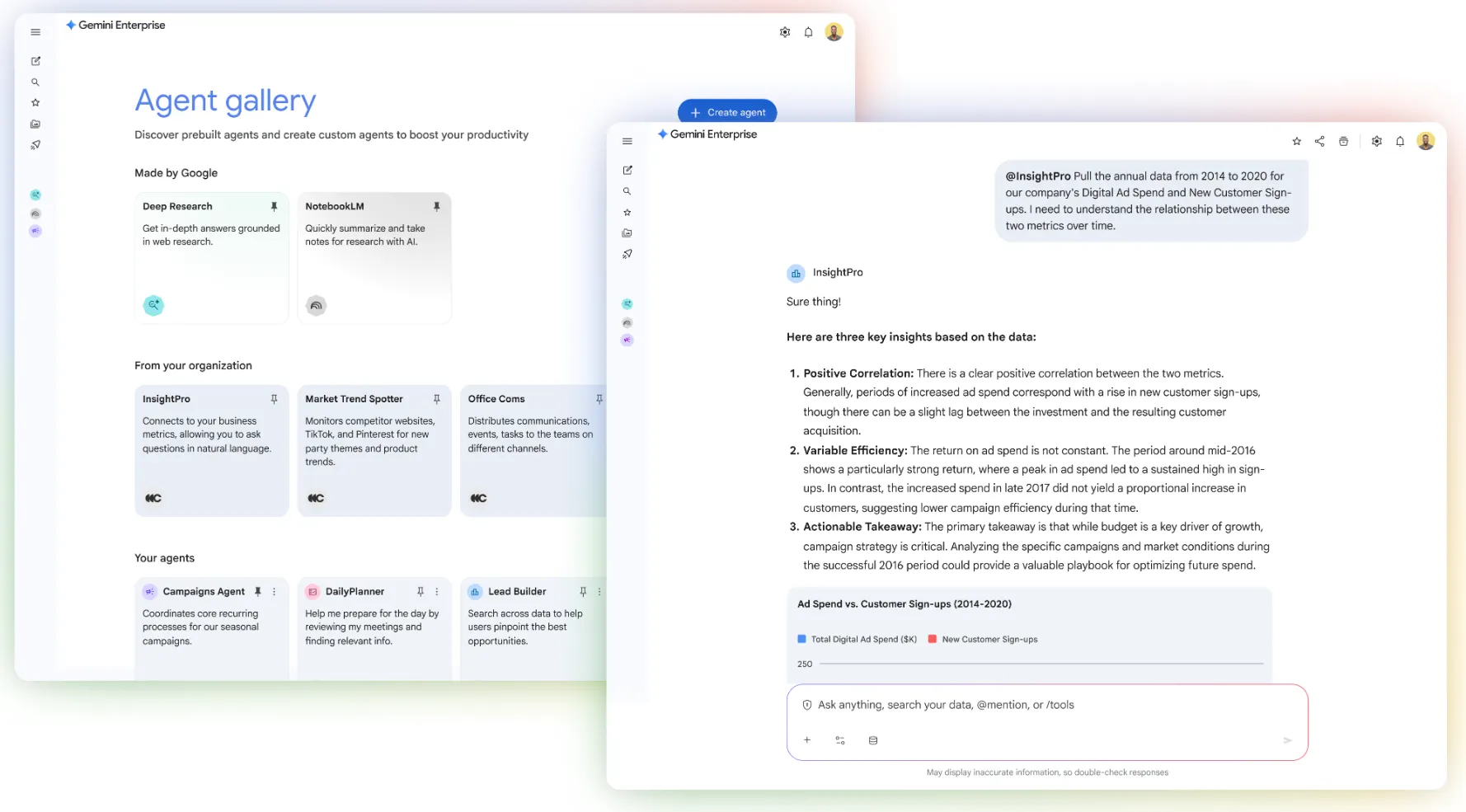
Regardless of the UI paradigm we choose, one thing is clear: we need an Agent Hub. Organizations need a centralized location to discover available agents, manage their access, orchestrate their interactions (both human-to-agent and agent-to-agent), and provide governance oversight.
The Current Landscape: Evaluating the Options
Where do today’s solutions fit in?
- n8n/OpenAI Agent Builder (Visual Workflow): Familiar with organizations, which aids adoption. However, they are fundamentally restrictive and don’t allow for the autonomy and human-in-the-loop interaction that GenAI agents can leverage.
- OpenAI Apps/Gemini Extensions (Chat-First): The easy fix, but they lack expressiveness. If we limit agents to simple chat interfaces, we risk repeating the failures of Alexa — useful for timers, but not for complex work.
- Opal / AG-UI (Dynamic UI): Great for small, isolated apps and user autonomy, but not scalable for large, complex systems. They are hard to edit, maintain, and ensure consistency.
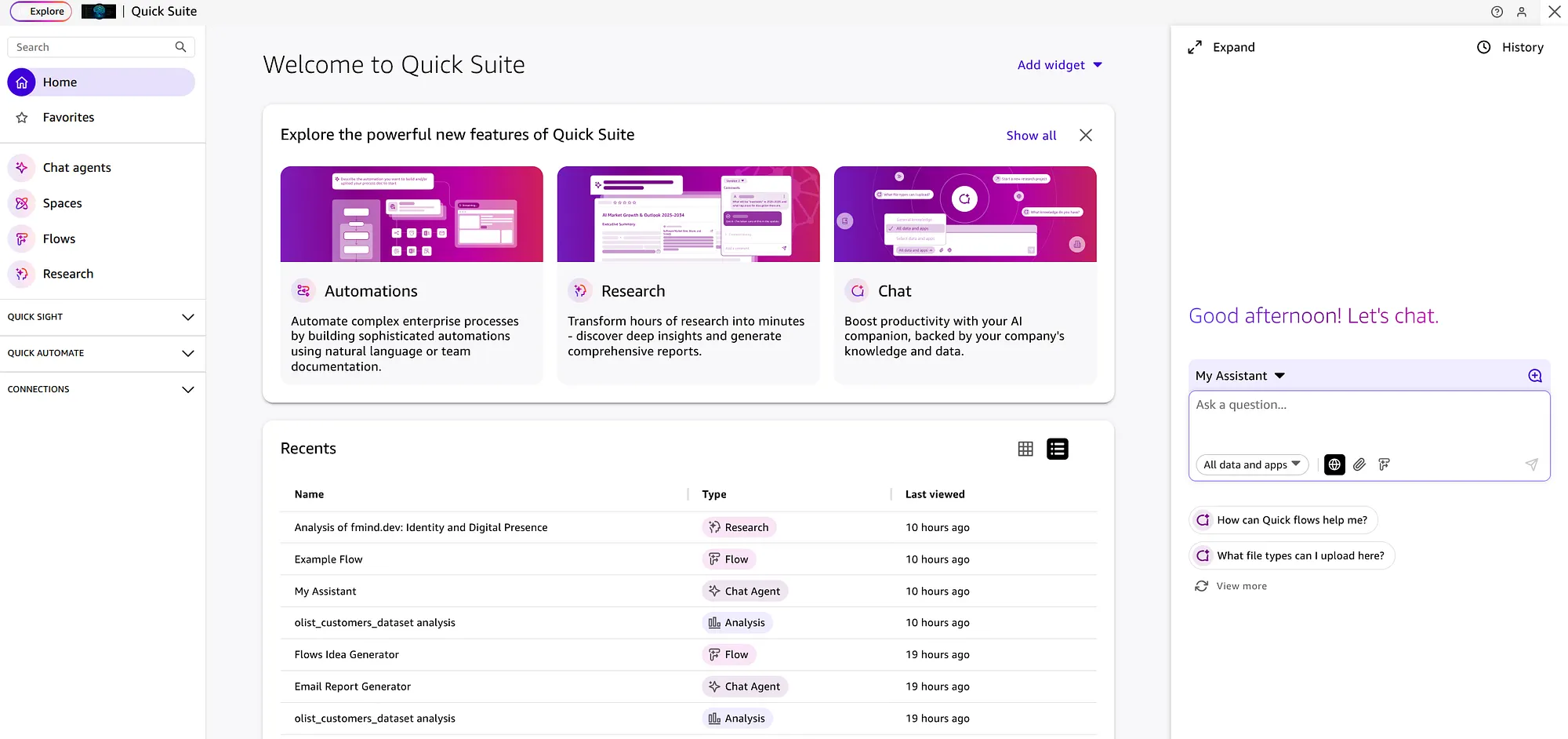
- AWS QuickSuite (Hybrid): A pragmatic, conservative middle ground. QuickSuite offers a toolset of GenAI variants with UIs tailored for specific tasks like data analysis, deep research, or conversation. A solid choice, especially if you are using AWS services.
- Gemini Enterprise (Agent Hub Focus): Gemini Enterprise shows potential as a central hub, but it needs to deliver richer expressiveness beyond the standard chat interface to truly unlock agent potential. One solution is to control other UI (e.g., Google Sheets) from the chat app.
My Bet on the Future
The UI bottleneck won’t be solved overnight. Here’s where I see things heading.
Short/Medium Term: The “Hacker Terminal” Wins
For the immediate future, the Chatbot UI will dominate. It’s the easiest to develop and gets you 80% of the way there. It’s the “hacker terminal” approach — using natural language to orchestrate complex systems — but easier to use. In addition, visual workflows will be used for deterministic applications (i.e., agentic workflows) as a complementary solution.
The key to making this work won’t be richer UIs, but better backend collaboration. Agents need to be able to seamlessly call other agents (A2A) behind the scenes, using the chat interface purely as the command and control layer.
Long Term: Ambient Computing and Voice
In the long term, the best UI is no UI. We will move towards voice and ambient computing. We will keep our existing human applications (our spreadsheets, our design tools, our CRMs), and agents will pilot them intelligently on our behalf.
This is both easier to develop (no new UIs needed) and easier to adopt (users keep their existing workflows). However, this requires incredibly robust models and rigorous testing. We only adopt transformative interfaces when they are near-perfect. Think about voice translation — it only became truly useful when it crossed the 95% accuracy threshold. Ambient computing will require the same level of reliability.
Until then, we need to stop treating the UI as an afterthought. It’s a critical component for unlocking the value of AI agents in the enterprise. It’s time we started engineering it with the same rigor we apply to the agents themselves.
Photo by Anton Filatov on Unsplash
[story continues]
tags