Running an independent restaurant today feels like performing a symphony while the instruments keep changing mid-song. New guests walk in every hour. Old regulars come back with new expectations. Online reviews land without warning. And somewhere in between, you’re supposed to “create magic.”
But here’s the hard truth nobody wants to hear: you can’t create memorable hospitality on memory alone anymore.
The New Reality of Hospitality
A decade ago, restaurants won by serving good food and providing good service. Today, every guest walks in with a digital footprint and an invisible scoreboard.
People remember:
- Who forgot their dietary preference?
- Who didn’t keep track of their last order?
- Who didn’t acknowledge that they’re a returning guest?
- Who didn’t respond to feedback?
- And yes, who treated them like a stranger again?
Independent restaurants don’t have the marketing budget of national chains or celebrity-chef franchises. But they do have something chains can’t replicate: personal connection. The problem is, personal connection doesn’t scale if you rely on notebooks, memory, and scattered apps. Enter the rise of Unified Restaurant CRM.
Why CRM Became a Hospitality Essential, Not a “Bonus Tool”
Hospitality has quietly become one of the most data-dependent industries. Here’s what changed:
- 70% of diners check digital platforms before choosing a restaurant.
- Personalization drives repeat visits 2–3× more effectively than discounts.
- Guests now expect restaurants to know them, not guess.
- Feedback loops happen publicly—not privately.
But most independent restaurants still operate with:
- A POS that stores order history.
- A reservation app that stores guest details.
- A feedback form that lives in a different app.
- A marketing tool that stores campaign data.
- A manager who “remembers faces,” but only on good days.
- And half a dozen spreadsheets that nobody updates.
This leads to the classic hospitality problem: Information exists, but not where your team needs it.
- A server knows the guest has a nut allergy… but only after the order is placed.
- A manager learns a guest is a returning VIP… but only after they’ve left.
- A marketing team sends a generic offer… to someone who only orders vegan dishes.
This isn’t a tech problem. It’s a hospitality problem caused by tech living in silos.
The Core Problem Unified CRM Solves
A unified restaurant CRM tackles the biggest modern hospitality challenge:
How do you deliver personalized service at scale without overwhelming your team?
Independent restaurants can’t hire someone whose sole job is to remember guest preferences.
They can’t afford a dedicated digital team. They can’t spend hours pulling reports.
But they need:
- A single view of every guest.
- A way to track visits, preferences, and spending patterns.
- A place to tie feedback back to actual customers.
- A way to know a guest the moment their name shows up on a reservation or online order.
- A way to re-engage guests thoughtfully, not commercially.
And they need all of this without becoming a data scientist.
Unified CRM simply centralizes what restaurants have always cared about:
- Experiences
- Memories
- Relationships
It transforms scattered data into usable hospitality intelligence.
What a Unified Restaurant CRM Actually Does
Let’s strip away the buzzwords. Here’s how a unified CRM quietly upgrades an independent restaurant’s entire operation:
1. One Guest Profile, Many Touchpoints: Whether a guest books a table, orders delivery, fills out feedback, or redeems an offer, it all lands in one profile.
2. Tracks Real Guest Behavior: Instead of anonymous transactions, you get:
- Number of visits
- Top dishes
- Average spend
- Special dates
- Dietary notes
- Review patterns
- Loyalty indicators
3. Helps Staff Deliver Better Service Instantly: Imagine greeting a returning guest with “Welcome back, Max! Should I get you the same Pinot you enjoyed last month?”
- That’s service.
- That’s retention.
- That’s CRM.
4. Makes Feedback Actually Useful: If a guest complains today, the system connects it to their history, showing whether they’re a regular or a one-time visitor, helping you prioritize responses
5. Enables Human-Centric Marketing, Not “Blast Campaigns”: Instead of sending the same SMS to 3,000 people, you send:
- “We miss you” to guests who haven’t visited in 45 days.
- Specials for guests who love a specific dish.
- Personalized offers on birthdays/anniversaries.
Personalized hospitality → personalized retention.
The Shift: From Tools to Unified Platforms
This is where the industry is trending. Instead of using:
- One app for reservations
- Another for ordering
- Another for feedback
- Another for loyalty
- Another for marketing
Restaurants are moving toward unified platforms that connect all touchpoints. Not because it’s trendy, but because fragmented tools create fragmented experiences.
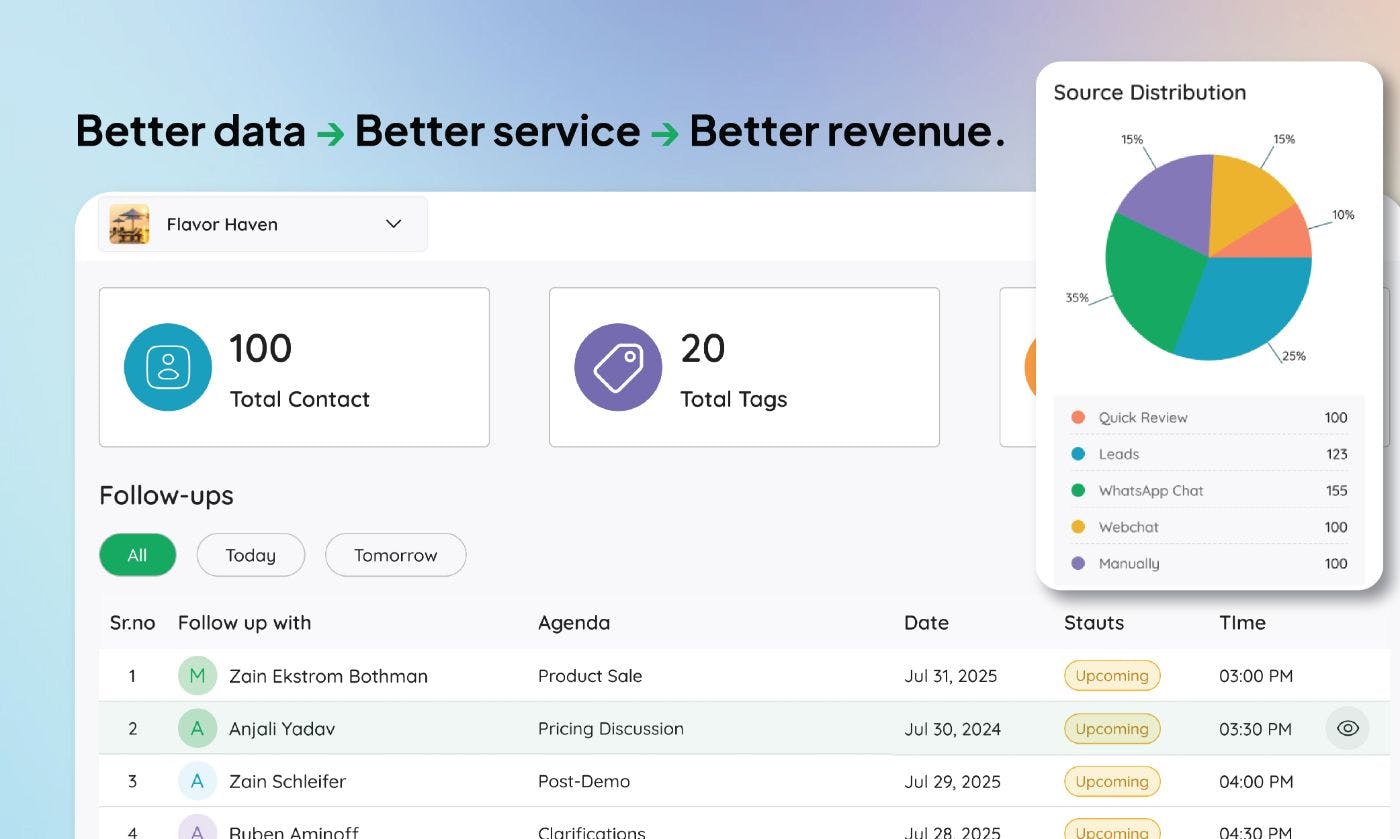
When the team has a single dashboard, service becomes:
- Faster
- More consistent
- More personal
- More scalable
And most importantly, guests feel seen—not segmented.
This article is published under HackerNoon's Business Blogging program
[story continues]
tags