AI teams love velocity.
Ship faster. Ship more. Ship everything. New features, newer models, bigger context windows. All in record time.
Inside the company, it feels like momentum.
Outside the company, users don’t feel momentum. They feel disorientation.
Somewhere between v1.9 and v2.3, trust quietly collapses. And most founders don’t understand why.
The truth is simple:
Products improve. Users don’t update their mental models at the same speed.
That mismatch is the real threat. And it has a name:
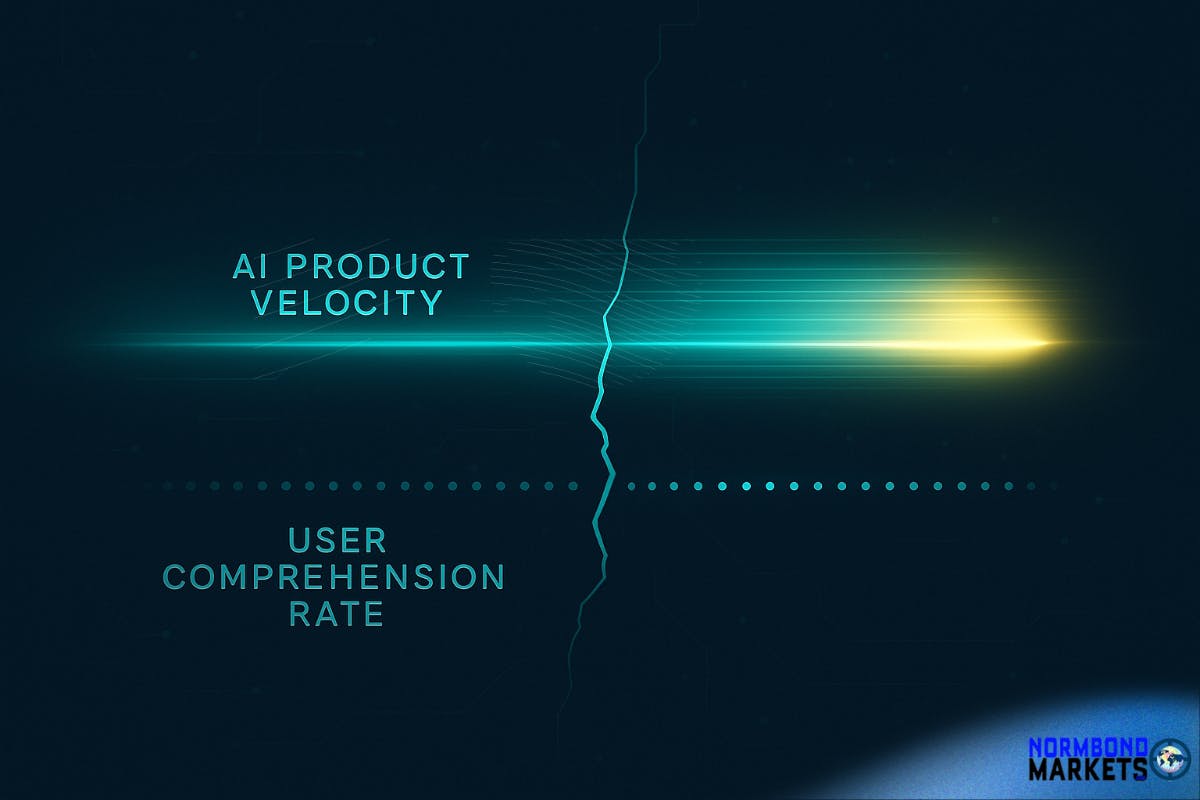
The Velocity–Comprehension Gap
The Paradox of AI Velocity
Velocity is the superpower of AI teams. It’s also their biggest liability.
Founders optimize for shipping speed. Users optimize for predictability.
The faster the product evolves, the harder it becomes for users to maintain a stable understanding of how it works. That gap grows wider with every release cycle.
The Velocity–Comprehension Gap is the distance between:
- how fast your AI product changes
- how fast users can update their mental model of the product
When the gap is small, adoption compounds.
When the gap is large, confusion compounds.
And confusion erodes trust faster than any bug ever could.
The Hidden Architecture Behind User Trust
Most founders assume users judge an AI product by familiar metrics:
- accuracy
- latency
- reliability
- number of features
But that’s not how trust works.
Users ask one deeper question:
“Do I understand how this thing behaves well enough to trust it?”
Trust is not built on performance.
Trust is built onpredictability.
Rapid iteration breaks predictability unless the narrative, UX, and communication evolve at the same pace as the model.
This is the failure mode most AI teams never track.
How AI Velocity Creates Cognitive Friction
Velocity doesn’t just ship code. It ships confusion.. if you’re not careful.
Here are the three patterns founders see but rarely diagnose:
A. Behavioral Drift
You improve the model.
You refine the prompts.
You tighten the reasoning loop.
To the user, the product suddenly “acts differently today.”
Even if it’s better, the unpredictability feels like instability.
And instability kills trust
B. UX Desync
The model evolves.
The UI doesn’t.
Users interact with workflows built for old model behavior, while the intelligence underneath behaves like a different system entirely.
The surface and the engine fall out of sync.
Every mismatch burns trust.
C. Meaning Debt
Every change alters meaning.
Every update shifts expectations.
But teams rarely update the story.
They update the product instead.
Meaning Debt accumulates until users can no longer explain:
- what the product does
- how it behaves
- what it’s good for
- what changed
When meaning collapses, comprehension collapses.
When comprehension collapses, users churn.
The Velocity–Comprehension Gap Framework™
Below is the visual representation of the gap, and the system that closes it
Velocity–Comprehension Gap Diagram
              ┌─────────────────────────────────────────┐
              │     THE VELOCITY–COMPREHENSION GAP      │
              └─────────────────────────────────────────┘

  Product Velocity ↑
                  |
                  |     (Rapid iteration, new features,
                  |      new models, new behaviors)
                  |
                  |
                  |                 ┌───────────────────────────┐
                  |                 │  USER COMPREHENSION RATE   │
                  |                 └───────────────────────────┘
                  |                     (Slow mental model updates)
                  |
 -----------------|------------------------------------------------------→ Time
                  |
                  ↓

        When product velocity > user comprehension rate:
        ------------------------------------------------
        • Behavioral Drift occurs
        • UX Desync increases
        • Meaning Debt accumulates
        • Trust declines
        • Adoption stalls
The Framework That Closes the Gap
        ┌────────────────────────────────────────────────────────────┐
        │      VELOCITY–COMPREHENSION GAP FRAMEWORK™ (3 STEPS)       │
        └────────────────────────────────────────────────────────────┘

┌─────────────────────────┐
│ 1. SLOW THE SURFACE     │  Expose changes intentionally.
│    (Not the system)     │  Reduce surprises.
└─────────────────────────┘

┌─────────────────────────┐
│ 2. NORMALIZE THE CHANGE │  Fit new behaviors into the
│                         │  story users already believe.
└─────────────────────────┘

┌─────────────────────────┐
│ 3. COMMUNICATE          │  Explain updates as mental
│    IN MENTAL MODELS     │  model changes, not patch notes.
└─────────────────────────┘

Outcome:
────────
• Predictability increases
• Cognitive load decreases
• Trust stabilizes
• Adoption compounds
Case Patterns — Where This Breaks in the Wild
Let’s look at real patterns from the field
Example 1: The Agent That Became “Too Smart”
The team upgraded reasoning.
Users didn’t celebrate it, they panicked.
Why?
The behavior changed faster than the explanation.
Better performance.
Worse trust.
Example 2: The AI Dashboard That Outgrew Its UI
The intelligence evolved.
The interface didn’t.
Users interacted with a story from six months ago.
The product responded with intelligence from today.
The product felt unreliable.
It wasn’t.
The story was.
Example 3: The Startup Shipping Weekly, Losing Users Monthly
Velocity became noise.
Noise became confusion.
Confusion became churn.
Not because the product got weaker,
but because the meaning got weaker.
Speed Isn’t the Threat. Unstructured Speed Is.
AI products don’t fail because of rapid innovation.
They fail because users can’t keep up.
Close the Velocity–Comprehension Gap and you unlock:
- higher adoption
- smoother onboarding
- fewer support tickets
- stronger retention
- deeper trust
The future belongs to founders who can ship fast \ without leaving their users behind.**
Velocity isn’t the enemy.
Confusion is.
Clarity is the real competitive advantage now.
If your product is evolving faster than your users can understand it, the problem isn’t your velocity, it’s your visibility.
I help AI and deep-tech founders build clarity and trust through Bonded Visibility™.
See how it works.
[story continues]
tags