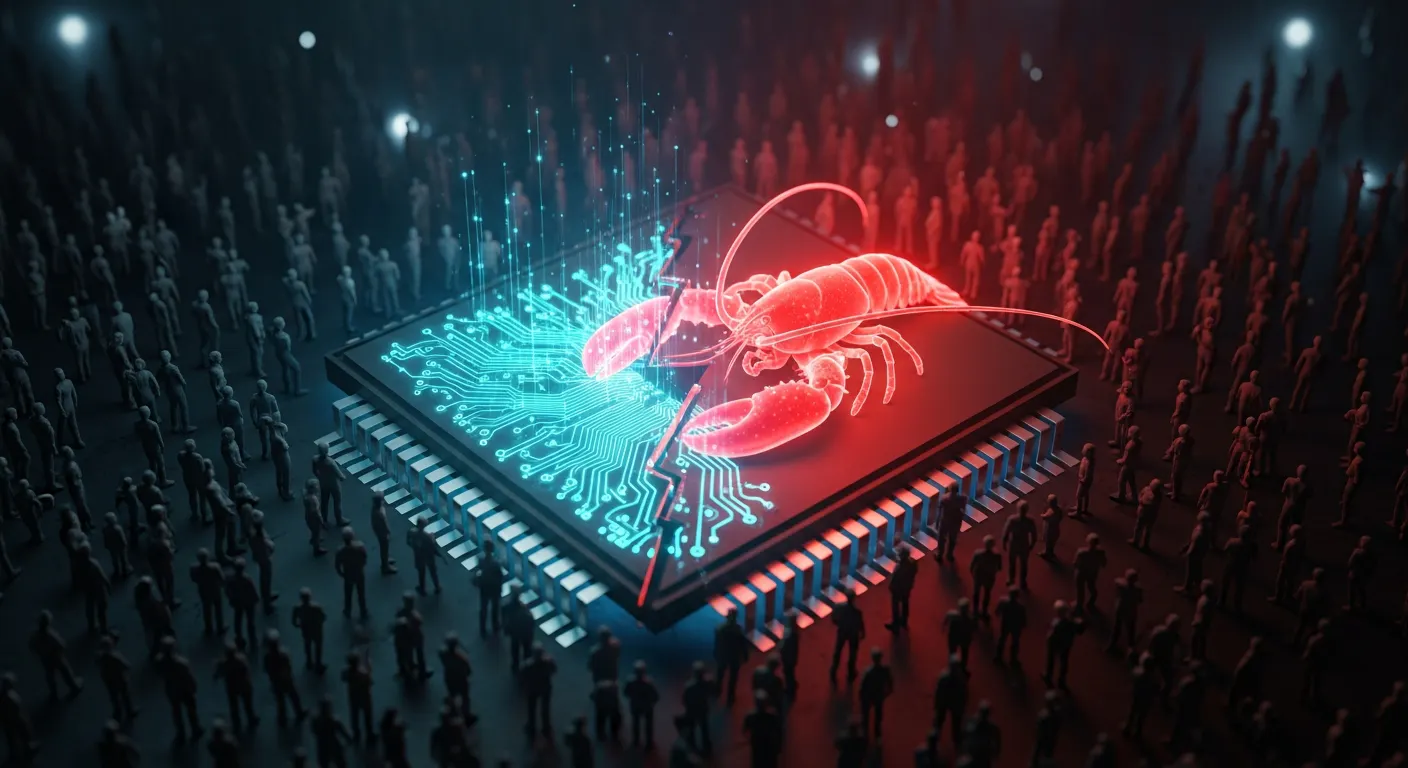
This week in AI was anything but normal.
This was the week AI stopped pretending to be polite.
A co-founder of Super Micro Computer got arrested for allegedly smuggling $2.5 billion worth of NVIDIA chips to China. Jensen Huang went on CNBC and called an open-source project built by one Austrian developer "the next ChatGPT." Anthropic asked 81,000 humans across 159 countries what they actually think about AI — and the answer was basically "I love it and it terrifies me." The New York Times started blocking the Internet Archive. And three of the most valuable private companies on Earth are racing to IPO at a combined valuation of $2.9 trillion.
Normal week in AI. Totally normal.
Let's break it down.
1. Super Micro's Co-Founder Arrested in $2.5B AI Chip Smuggling Scheme
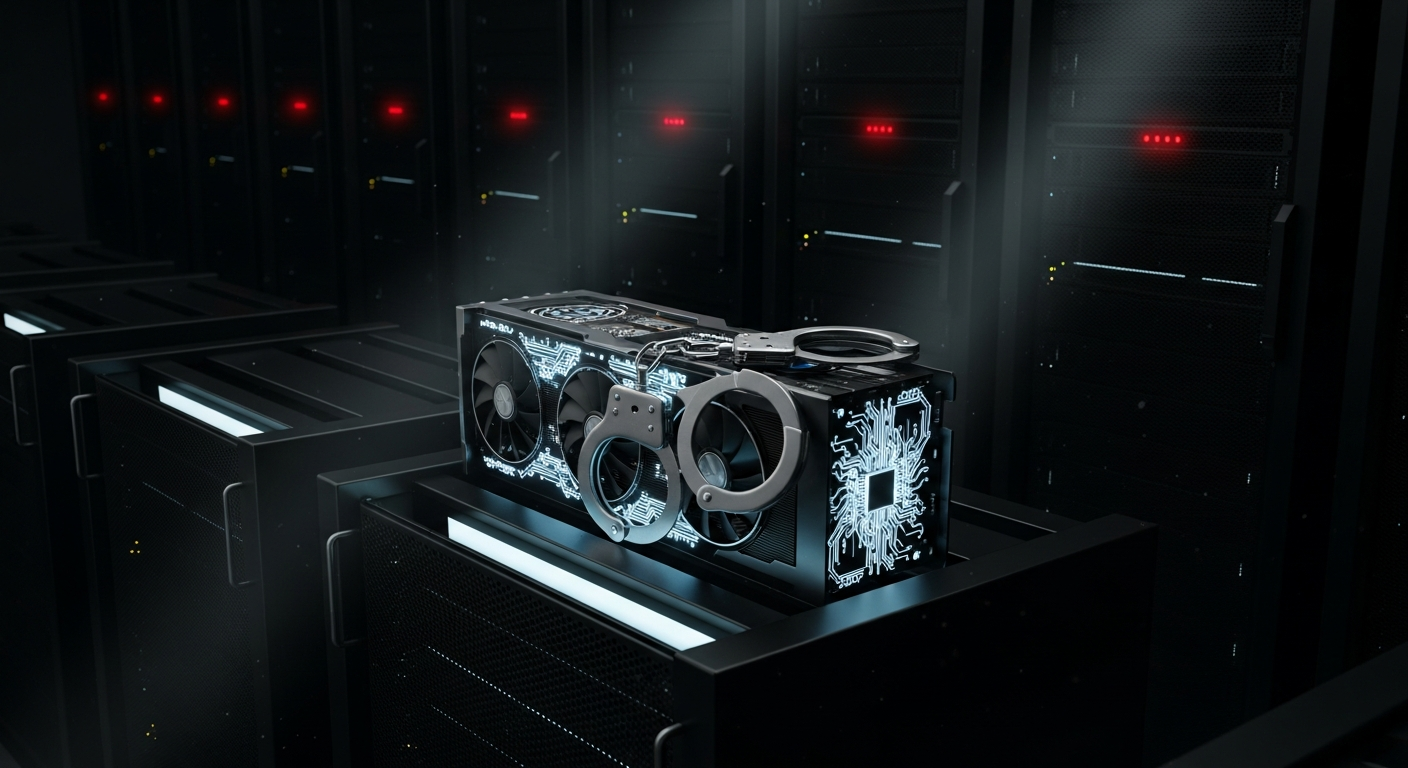
On Friday, the U.S. Department of Justice dropped a bomb: Yih-Shyan Liaw, co-founder of Super Micro Computer, was arrested along with two others for allegedly conspiring to smuggle NVIDIA AI chips worth $2.5 billion to China.
The stock cratered. SMCI dropped 27% in a single day, wiping out roughly a third of the company's market cap. Bloomberg reported the company is now scrambling to "shore up compliance operations" — corporate-speak for "we're panicking."
This isn't just a corporate scandal. It's a signal that the AI chip war between the U.S. and China has moved from trade policy to criminal prosecution. The U.S. government isn't issuing warnings anymore. It's issuing arrest warrants.
Super Micro was already on shaky ground — remember the accounting scandal that nearly got them delisted in 2024? Now they've got a co-founder in federal custody. The company that builds the servers powering half of Silicon Valley's AI ambitions just became a national security case study.
The takeaway: The AI chip cold war just got hot. If you're building server infrastructure and cutting corners on export compliance, the DOJ is watching. And they're not sending letters — they're sending agents.
2. Jensen Huang Says OpenClaw Is "The Next ChatGPT"

At GTC this week, Jensen Huang didn't just mention OpenClaw. He anointed it.
"This is definitely the next ChatGPT," Huang told Jim Cramer on CNBC. He called it "the most popular open-source project in the history of humanity" and said it "exceeded what Linux did in 30 years" — in weeks.
NVIDIA is so bullish on OpenClaw that they're building free security services called NemoClaw specifically to get enterprises comfortable using it. That's NVIDIA — a company worth $3+ trillion — building free tools to support a project started by a solo developer.
But the real story isn't about OpenClaw's popularity. It's about what OpenClaw exposed.
The CNBC article laid it bare: developers are gravitating toward cheaper Chinese AI models running on their personal Mac Minis, managing fleets of always-on AI agents without touching the cloud. If you can run a personal AI agent army from your living room, why pay OpenAI $200/month?
Forrester analyst Charlie Dai put it bluntly: "As foundation models rapidly commoditize, attention is moving toward agent frameworks."
OpenAI noticed. Sam Altman personally announced that OpenClaw's creator, Peter Steinberger, was joining OpenAI. Anthropic started building similar channel tools into Claude. The big labs aren't ignoring this — they're scared of it.
The takeaway: The AI industry's center of gravity is shifting from "who has the best model" to "who has the best agent framework." OpenClaw proved that a solo developer with the right architecture can outrun billion-dollar labs. The model wars are ending. The agent wars just started.
3. Anthropic Asked 81,000 People What They Think About AI. The Answers Are Uncomfortable.

Anthropic just published the largest qualitative AI research study ever conducted. They interviewed 80,508 people across 159 countries. The headline finding? Humans have a split personality about AI.
They call it the "light and shade" problem: the things people love most about AI are exactly what they fear.
The numbers tell the story:
- 67% of respondents view AI positively
- But 89% have at least one significant fear
- 27% worry about AI making incorrect decisions
- 22% fear job displacement and wage stagnation
- 22% worry about AI making decisions without human oversight
- 16% fear losing the ability to think critically
The most gut-punching quotes came from the margins. A mute Ukrainian built a text-to-speech bot with AI: "Something I dreamed about and thought was impossible." An Israeli lawyer worried: "Am I losing my ability to read by myself? Thinking was the last frontier."
Here's what's interesting: geography shapes your AI anxiety. Sub-Saharan Africa, Latin America, and South Asia are significantly more optimistic about AI. North America and Western Europe? They worry more about governance, surveillance, and regulatory failure.
Lawyers were the profession most exposed to the duality — nearly half had encountered AI unreliability firsthand, but they also reported the highest rates of AI-assisted decision-making benefits. They love it. They don't trust it. They can't stop using it.
The takeaway: We're past the "will people use AI?" phase. We're in the "people use AI every day and are quietly freaking out about it" phase. The 89% with fears aren't Luddites — they're power users who see both sides. That's more concerning than pure resistance would be.
4. The New York Times Blocked the Internet Archive. The EFF Says They're Erasing History.

The New York Times started blocking the Internet Archive's web crawlers this week. Their stated reason: concern about content being scraped for AI training data.
The Electronic Frontier Foundation responded with a scorching critique. They compared it to "a newspaper asking libraries to stop storing copies of their old editions." In an era where most people get news online, refusing to let the Internet Archive preserve your pages puts holes in the digital historical record.
This isn't really about the Internet Archive. It's about the collision between two legitimate concerns that have no clean resolution.
On one side: publishers are watching their content get vacuumed into training datasets without compensation or consent. The NYT's lawsuit against OpenAI is still active. They have every reason to be defensive.
On the other side: the Internet Archive isn't an AI company. It's a digital library. Blocking their crawlers doesn't stop AI scraping (plenty of other bots will grab your content). It just stops the preservation of the public record.
The perverse outcome? In trying to protect their content from AI, newspapers may be making themselves invisible to future historians. The AI scrapers they're actually worried about don't respect robots.txt anyway.
The takeaway: The NYT is fighting the wrong enemy. The Internet Archive preserves history. AI scrapers steal content. Blocking one doesn't stop the other — it just means your grandkids won't be able to read what you published.
5. The $2.9 Trillion IPO Wave Is Coming

Three of the most valuable private companies in history are preparing to go public. SpaceX is targeting $1.5 trillion. OpenAI aims for $1 trillion. Anthropic is valued at $380 billion. Combined: $2.9 trillion in potential market cap hitting public markets.
OpenAI reported $13.1 billion in revenue in 2025 and carries a $25 billion annualized run rate entering 2026. But Forbes noted that OpenAI's pivot to enterprise "is likely a race against Anthropic and the IPO clock." They need to prove they're not just a consumer chatbot company before going public.
Meanwhile, IBM is still sitting 20% below its 52-week high after Anthropic's Claude demonstrated it could handle COBOL coding tasks — IBM's bread-and-butter enterprise business. The stock crashed 13.2% in a single day, wiping out $31-40 billion in market cap. That's the biggest single-day drop IBM has seen since 2000.
The irony is thick: Anthropic, the company that just murdered IBM's stock price, is itself preparing for an IPO where it needs to convince investors that its own moat won't be commoditized by the next OpenClaw.
And then there's Xiaomi. Remember the mystery AI model "Hunter Alpha" that had developers buzzing last week, convinced it was DeepSeek V4? Reuters confirmed it's actually Xiaomi's model. A phone company. Making competitive AI models. The barriers to entry are not just lowering — they're gone.
The takeaway: 2026 is shaping up to be the most consequential IPO year in tech history. But the AI companies preparing to go public are simultaneously proving their biggest bear case: if a phone company can build a competitive model and a solo developer can build the most popular AI framework, where exactly is the moat?
What This All Means
Step back from the headlines and a pattern emerges. The power in AI is decentralizing — fast.
A year ago, the narrative was simple: OpenAI and Google build the models, NVIDIA builds the chips, everyone else pays up. That story is falling apart. Now a solo Austrian developer's project gets endorsed by the CEO of the world's most valuable company. A mute Ukrainian builds their own communication tool. Xiaomi — a phone company — builds models that fool experts into thinking they came from DeepSeek.
The irony is that the companies most threatened by this decentralization are the ones preparing to sell shares at record valuations. OpenAI wants a trillion-dollar valuation in a world where the kid next door runs AI agents from a Mac Mini. Anthropic wants $380 billion while proving that any company's moat can be automated away.
Meanwhile, the chip war just went criminal. The old guard is getting hammered (IBM down 20%, Super Micro down 33%). And the NYT is accidentally helping AI companies by blocking the one organization that was actually preserving the public record.
Nothing about this week was normal. And that's probably the new normal.
FAQ
**Q: What happened to Super Micro Computer stock?**A: SMCI dropped 27-33% after its co-founder was arrested for allegedly smuggling $2.5 billion worth of NVIDIA AI chips to China.
**Q: Why did Jensen Huang call OpenClaw "the next ChatGPT"?**A: OpenClaw has become the most popular open-source project in history, enabling developers to build and manage AI agent fleets from personal computers without relying on cloud AI services.
**Q: What did Anthropic's 81,000-person study find?**A: 67% of people view AI positively, but 89% have significant fears — primarily about AI making incorrect decisions (27%), job displacement (22%), and loss of human oversight (22%).
**Q: Why did the NYT block the Internet Archive?**A: Concerns about content being scraped for AI training data, though the EFF argues this hurts historical preservation without actually preventing AI scraping.
**Q: When are OpenAI, SpaceX, and Anthropic going public?**A: All three are preparing for IPOs in 2026, with a combined target valuation of approximately $2.9 trillion.
Chase Xu is a CV engineer and AI researcher who has submitted 20+ pull requests to major AI agent frameworks. He writes about AI from the trenches, not the press box. Follow for weekly analysis that doesn't pretend any of this is normal.
[story continues]
tags