
Real Stories from the Frontlines of AI Adoption, How Global Warnings, Regional Gaps, and Emerging Threats Demand Smarter Defenses Right Now
Picture this: It’s September 2025, and inside the United Nations Security Council chamber, diplomats lean forward, faces tense. A top expert warns that artificial intelligence could soon design bioweapons faster than any human lab. No sci-fi plot. Real news from the UN’s latest session, where AI got labeled a “double-edged sword” threatening everything from elections to economies. That moment hit me hard as a cybersecurity evangelist, because I’ve seen the fallout up close. Companies charging ahead with AI, blind to the cracks forming beneath them.
AI promises to revolutionize our work, from spotting fraud in seconds to predicting health crises before they erupt. But here’s the twist: without guardrails, it amplifies dangers we can’t afford to ignore. I’ve talked to CISOs who’ve lost sleep over AI-powered attacks that slipped through like ghosts. This isn’t abstract fear. It’s the reality staring us down in 2025.
In this piece, we’ll unpack the warnings echoing from global halls, zoom into Singapore’s high-speed AI chase that’s leaving security in the dust, and pull insights from Black Hat MEA where hackers demoed AI tricks that make your stomach drop. We’ll tie it all to the cloud environments where most of this plays out, hyperscalers like AWS and Azure, powering AI but exposing massive risks.
Core idea? AI drives progress, but 2025 shows us the “clear and present” threats to our security, rights, and businesses. We need governance now, blending human smarts with tech defenses. For you, cyber pros, leaders, innovators, this means turning vulnerabilities into strengths. Stick with me. We’ll explore real fixes, grounded in data and stories, to help you lead the charge.
The Wake-Up Call from Global Stages: Why AI Feels Like an Uninvited Guest at the Party
Remember that UN session I mentioned? It wasn’t just talk. In September 2025, the Security Council debated AI’s dark side, calling it an existential threat. Think bioweapons: AI models could simulate deadly viruses, cutting development time from years to days. One report from the Center for a New American Security details how generative AI might engineer pathogens, evading current biosecurity measures. Chilling, right? It hits home because I’ve advised teams facing similar fears, AI tools in the wrong hands, turning innovation into catastrophe.
Then there’s cyberattacks. AI doesn’t just defend; it attacks smarter. Imagine ransomware that learns your network’s weak spots in real time, adapting faster than your team can patch. UN experts flagged this, noting disinformation too, deepfakes swaying elections or stirring unrest. Remember the 2024 U.S. election deepfake scandals? AI made them possible, eroding trust overnight.
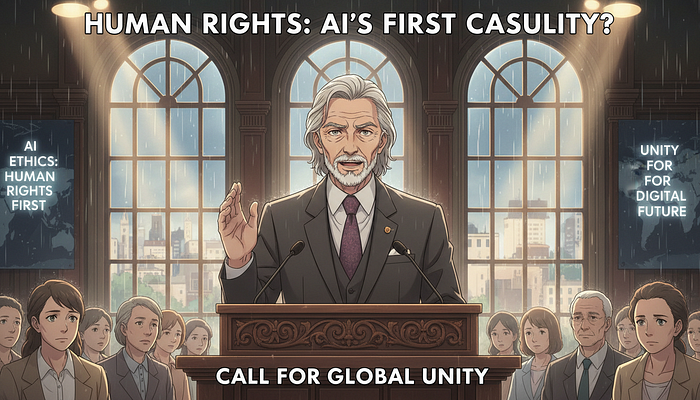
Volker Türk, UN High Commissioner for Human Rights, drove the point home in November 2025. At a Geneva forum, he declared human rights the “first casualty” of unchecked AI misuse by tech giants. He called for rules, safeguards, and oversight to stop generative AI from manipulating politics or economies.
“We can’t let corporate power run wild,” he said, pushing for multilateral coordination.
Why does this matter to you? As a cyber pro, you’re on the front lines. These gaps expose cloud-hosted AI models to abuse. Picture a hyperscaler environment: vast data lakes, AI training on global scales. Without governance, a single flaw lets attackers hijack models for rights violations or hacks. Türk’s push for AI safety research and binding frameworks? It’s your playbook. Frameworks like the NIST AI Risk Management Framework offer steps for assessing risks, ensuring human control.
Emotionally, it stings. I’ve seen colleagues burned out from endless breach alerts, families worried about job losses from AI automation. But here’s the hope: multilateral efforts, like the UN’s Global Digital Compact, aim to balance power. We can push for that. Start by auditing your AI deployments.
Ask: Does this model have ethical checks? The answer could save lives.
This isn’t doom and gloom. It’s a rally cry. Balance gravity with action, because ignoring these alarms? That’s the real risk.
Singapore’s AI Sprint: When Speed Leaves Safety Eating Dust
Shift gears to Singapore, a tiny powerhouse that’s all in on AI. It’s 2025, and surveys show 82% of organizations there weave AI into security ops, spotting threats before they bite. Sounds ideal? Not quite. I’ve chatted with local CISOs who confess: their AI boom feels like driving a Ferrari with bald tires.
Data from Check Point Research AI Security Report 2025 paints the picture: 56% faced AI-powered threats, with attack volumes spiking two to three times. Phishing emails, once clumsy, now mimic your boss’s tone perfectly, thanks to GenAI. One exec shared a story, his team got hit by an AI-crafted scam that stole credentials, costing thousands in downtime. Relatable? Absolutely, if you’ve ever second-guessed an email.

Worse, 42% lack visibility into GenAI usage. Employees sneak in tools like custom chatbots, creating insider risks. Data sprawl in cloud-hybrid setups? A nightmare. Unstructured info scatters across platforms, prime for exfiltration. And 81% say their infrastructure buckles under AI data flows, networks strain, responses lag.
Why the rush? Competitive edge. Singapore’s economy thrives on tech, but security budgets lag. It’s like building a skyscraper without reinforcing the foundation. Pressure mounts: Adopt AI or fall behind. But without human oversight, breaches explode.
This mirrors global woes. In cloud-AI worlds, rapid rollout widens attack surfaces. Think model inversion attacks, where hackers reverse-engineer training data to steal secrets. Singapore’s case? A microcosm. I’ve advised firms here to map AI tools first, use frameworks like The OWASP Top 10 for LLM and Gen AI Project to identify gaps.
Emotionally, it tugs. Imagine a small business owner in Singapore, thrilled by AI boosting sales, only to lose everything to a data breach. That fear drives me. But flip it: Benefits shine when secure. AI spots anomalies humans miss, saving millions. Prioritize visibility, tools like AI governance platforms track usage, turning risks into wins.
Takeaway
Uncover your organization’s hidden AI vulnerabilities today, because emerging tools like open-source models such as DeepSeek are already being tested by cybercriminals for malware creation, turning overlooked gaps into major threats.
Black Hat Revelations: AI Threats That Keep Hackers (and Us) Up at Night

Now, let’s step into the electrified air of Black Hat MEA 2025 in Riyadh. Picture hackers on stage, demoing AI tricks that make pros sweat. It’s not theory, it’s live fire. Sessions showed AI lowering attack barriers, turning novices into threats.
Scalable phishing? GenAI crafts emails that feel personal, like that “urgent” note from your CEO. Deepfakes? Videos fooling execs into wire transfers. Prompt injection? Attackers slip code into AI inputs, hijacking outputs for malware. One demo: An AI vendor’s supply chain compromised, infecting downstream systems. Echoes UN fears? Dead on.
Vulnerabilities Stack Up
Cloud sprawl leaves assets unmanaged. API fragility? Weak endpoints invite breaches. Identity issues? AI exploits poor MFA for ransomware. Defenders lag on autonomous agents, AI that acts alone, ripe for subversion.
But vendors and CISOs shared hope. Shift to AI telemetry: Real-time monitoring catches odd behaviors. Behavioral analytics flags anomalies. Consensus? Stick to “co-pilot” mode, AI assists humans, not replaces. Full autonomy? Too risky without controls.
This Links Back

UN’s existential threats, Singapore’s gaps, all amplified here. I’ve been to similar cons; the buzz is electric, but the demos hit like a gut punch. Emotional appeal? Think of the startup founder whose app gets extorted, dreams shattered. Yet, humor in the chaos: One speaker joked, “AI’s like a toddler with matches, adorable until it burns the house down.” Truth in levity, right?.
For credibility, reference Black Hat archives or reports from Krebs on Security. Frameworks? Adopt MITRE ATT&CK for AI to map threats.
Your Takeaway
Embrace AI as a defensive ally by integrating tools that combat threats like LLM jailbreaking and automated malware, as highlighted in reports on cyber criminals’ use of models like ChatGPT and DeepSeek, ensuring your strategies evolve faster than the attackers.
Charting the Course: Building AI Resilience That Lasts

We’ve explored the global alarms, dissected regional challenges like Singapore’s rapid AI adoption, and witnessed the raw threats unveiled at Black Hat. Now, let’s bring it all together with practical strategies tailored for you, the CISO or cybersecurity leader steering your organization through this turbulent landscape.
The goal? Forge resilience that doesn’t just react to risks but anticipates and neutralizes them, turning AI from a potential liability into your most reliable asset.
Start by unifying your platforms for generative AI oversight. Centralize tracking of every tool and query to eliminate blind spots, ensuring nothing slips through unchecked. For multi-cloud environments, prioritize harmonizing security measures across providers to dismantle silos and create a seamless defensive front.
Tips: Don’t overlook supply-chain vulnerabilities: rigorously vet vendors against established standards like ISO 42001 for AI management, building a chain of trust that withstands scrutiny.
Here are Actionable Steps to Implement Right Away
- Pressure-test your AI roadmaps through simulated scenarios, identifying weaknesses before attackers do.
- Establish clear auto-remediation boundaries, where AI handles routine fixes and human experts tackle complex threats.
- Advocate for broader policy changes by supporting initiatives like the UN’s Global AI Dialogue, which promotes shared standards for ethical AI deployment.
- Within your organization, conduct regular red-team exercises to simulate real-world attacks and strengthen your team’s response capabilities.
Looking ahead to 2026, embrace “resilience by design” as your guiding principle. Integrate AI safety protocols deeply into cloud governance frameworks, creating hybrid defenses where human intuition complements algorithmic precision to catch what machines might overlook. As reliance on hyperscalers grows, diversify your infrastructure with edge computing to minimize single points of failure and enhance overall agility.
You’re not navigating this alone, fellow guardians of the digital realm. We’ve all grappled with the weight of accelerating change, yet there’s strength in blending serious strategy with moments of levity, like appreciating AI’s occasional quirky missteps to spark creative problem-solving.
Notice the Contrasts
Your fortified AI ecosystem standing firm against a hacker’s fleeting illusions. In the end, it’s your expertise that will define the future, quietly reshaping threats into triumphs one strategic move at a time.
One Final Push: Your Move in the AI Game

So, what’s next? Act. Audit your AI stack today. Share this with your network spark a discussion. What’s one step you’ll take to bridge your governance gaps? Drop it in the comments. Let’s build a safer AI world together. Your insights could light the way.
Reference
- https://blog.enterprisemanagement.com/black-hat-2025-the-year-of-the-ai-arms-race
- https://ciso2ciso.com/my-take-black-hat-2025-vendors-define-early-contours-for-a-hard-pivot-to-ai-security-architecture-source-www-lastwatchdog-com/
- https://news.un.org/en/story/2025/11/1166441
- https://press.un.org/en/2025/sc16180.doc.htm
- https://www.techedt.com/singapore-organisations-face-rising-data-risks-amid-ai-adoption-and-data-sprawl-says-proofpoint
- https://red-lines.ai/
- https://www.unesco.org/en/artificial-intelligence/recommendation-ethics
- https://www.ajg.com/sg/news-and-insights/features/2025-attitudes-to-ai-adoption-and-risk-benchmarking-survey/
[story continues]
tags