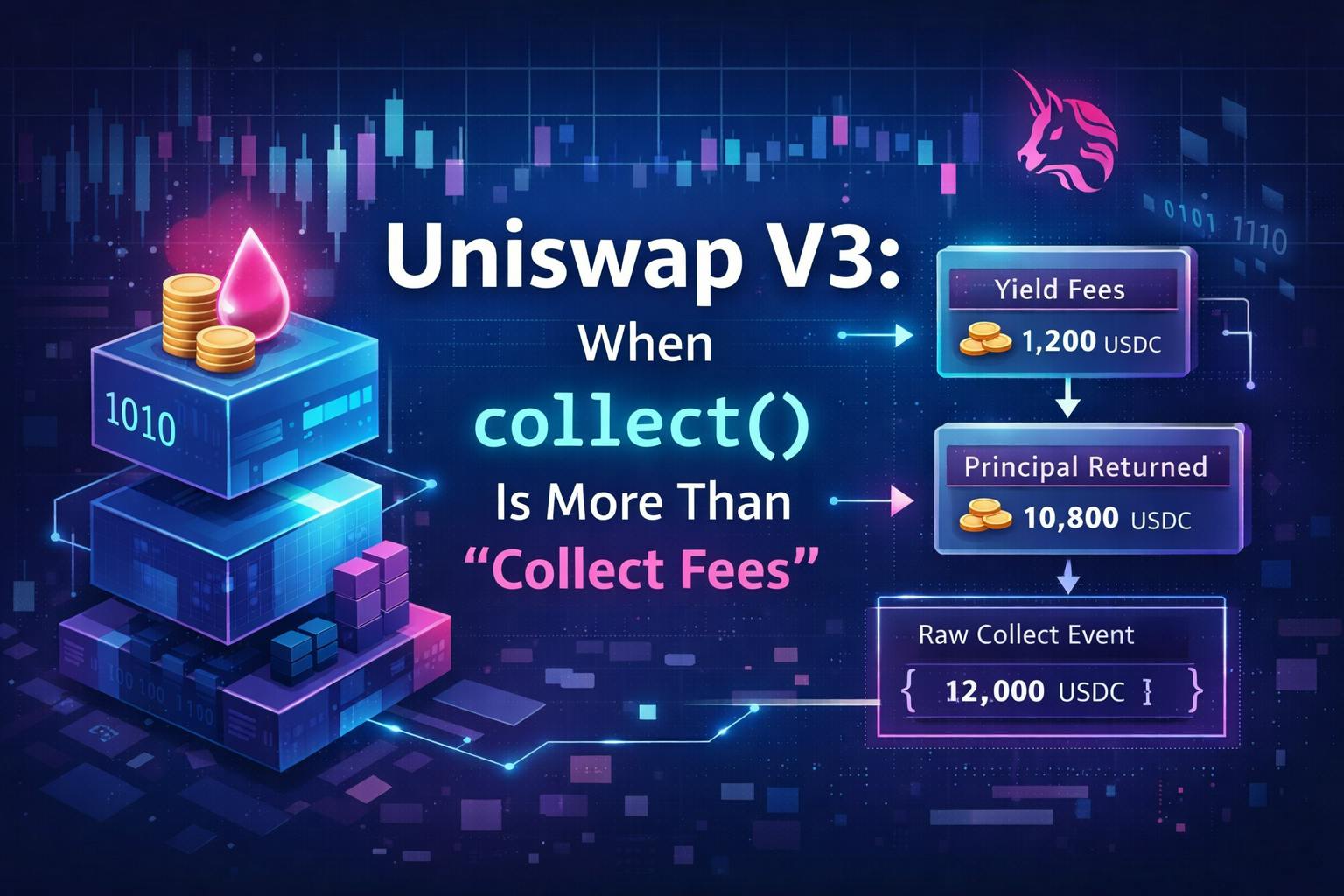
Uniswap V3 introduced concentrated liquidity, NFTs for positions, and a much more expressive — but also more subtle — event model.
One consequence of this design is that on-chain events can be perfectly correct, yet still semantically confusing for end-users.
A common example is the Collect action.
The Common Assumption
For many users (and even some dashboards):
`collect() = collect earned fees`
What Actually Happens in Uniswap V3 when user fully exits a position
A Uniswap V3 position is an NFT that tracks:
- liquidity
- fee growth inside the tick range
- last fee checkpoints
When a user wants to exit a position, the flow usually looks like:
- event: burn - emit with leftover liquidity amount
- event: collect fee - emit with leftover liquidity amount + fees earned (the magic thing is here )
From the protocol’s point of view, this is perfectly valid:
everything owed to the position is paid out
all values are emitted correctly in event logs
But semantically, fees and principal are very different concepts.
Why Explorers Look “Misleading” (But Aren’t Wrong)
Most explorers (Etherscan included) do the right thing at the log level:
- Decode Collect events faithfully
- Display the amounts emitted by the contract
- Label the action according to the function/event name
The problem is not decoding accuracy.
The problem is that:
- Log-level correctness ≠ user-level semantic clarity
For an end-user, seeing:
- Collect: 21.12 USDT
raises a very different interpretation than:
- Fees earned: 21.12 USDT
- Liquidity returned: 201,762.98 USDT
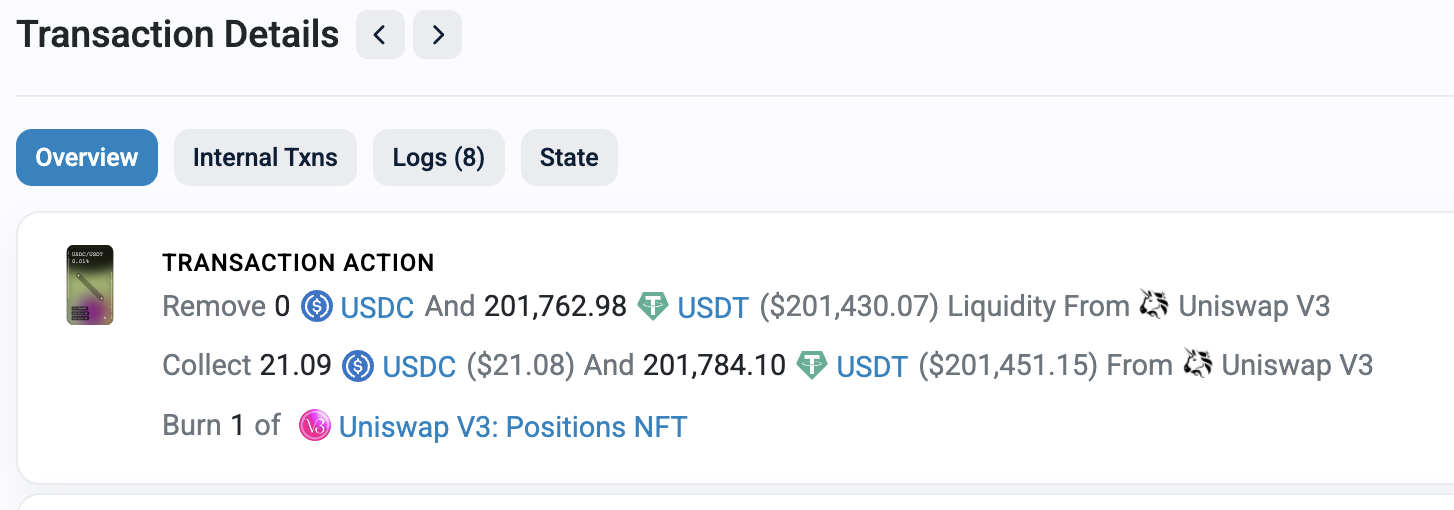
Sample transaction:
https://etherscan.io/tx/0x77613b2370de015fdf904effea3da3671ead1284279be7b5e0138d3409c51069
Why This Is Harder Than It Looks
You cannot reliably separate fees vs liquidity by:
- decode a single event
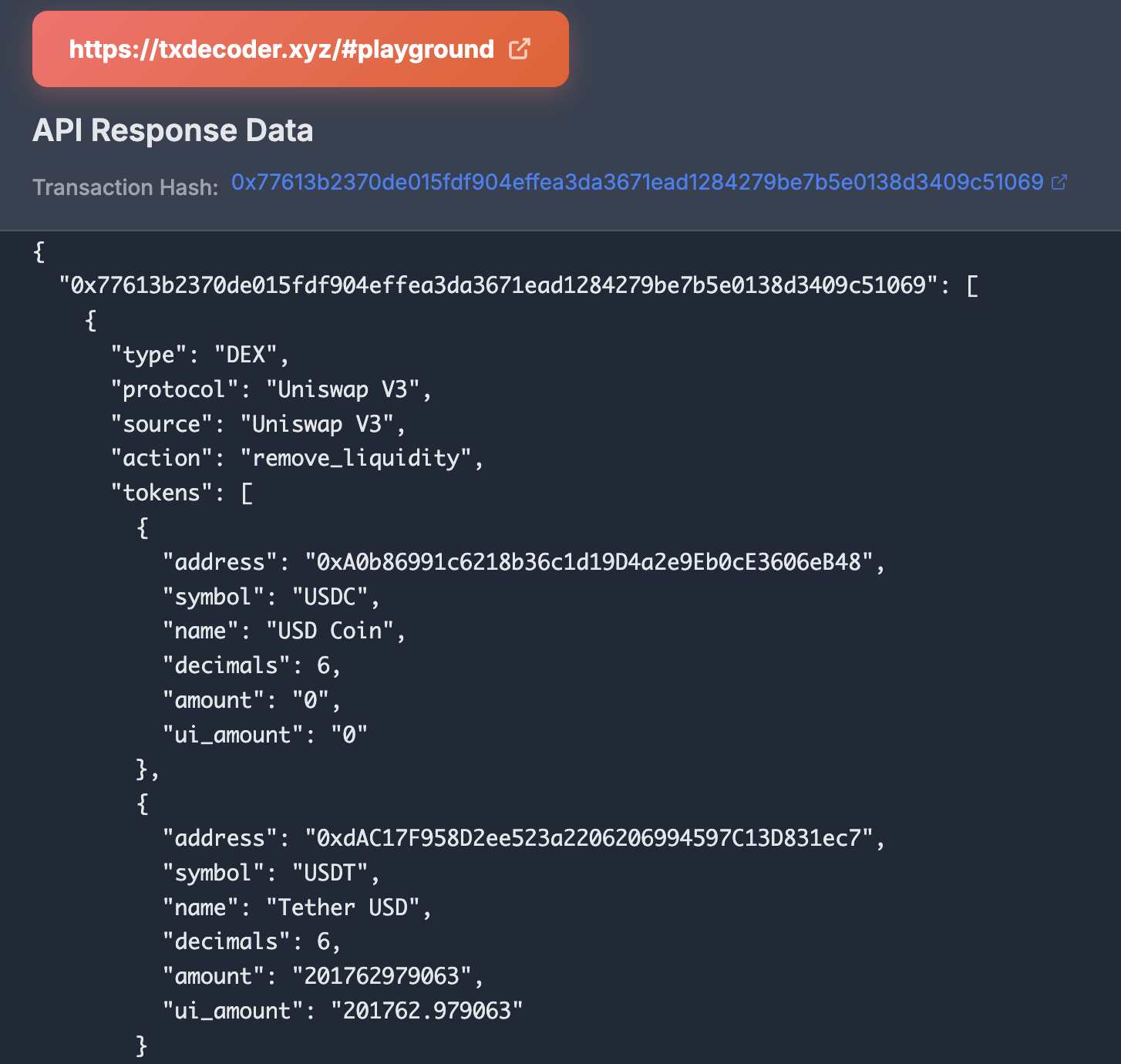
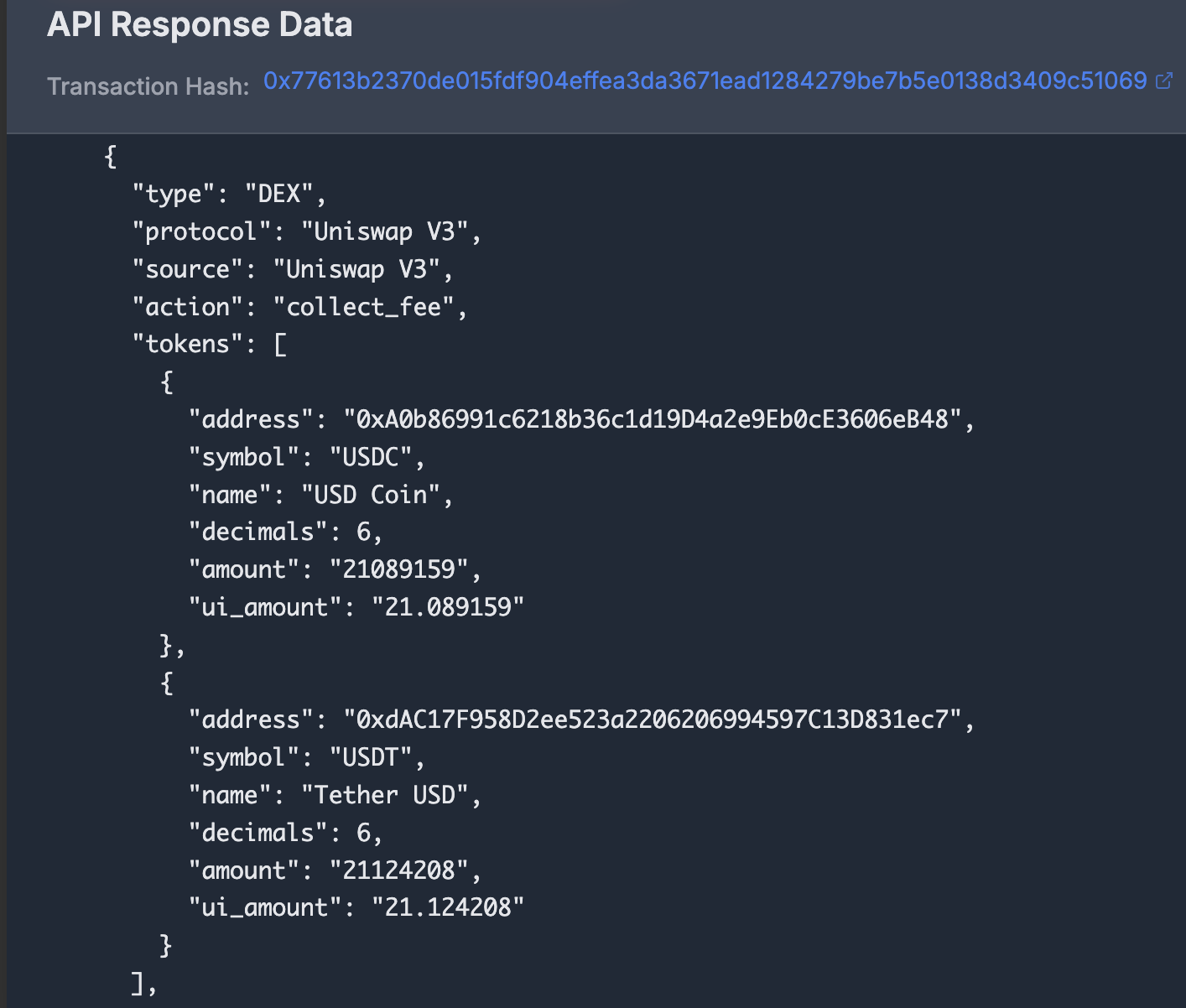
To do this correctly, you need to:
- decode all event logs in the transaction
- detect remove liquidity event, collect fee event
- extract "Liquidity returned" of collect fee earned amount
A Broader Takeaway for On-Chain Data
Events remain low-level and composable
Meaning emerges only when state is reconstructed
UX gaps grow between “what happened” and “what users think happened”
For data builders, this is a reminder:
Accurate decoding is the baseline.
Semantic decoding is where real understanding begins.
[story continues]
tags