


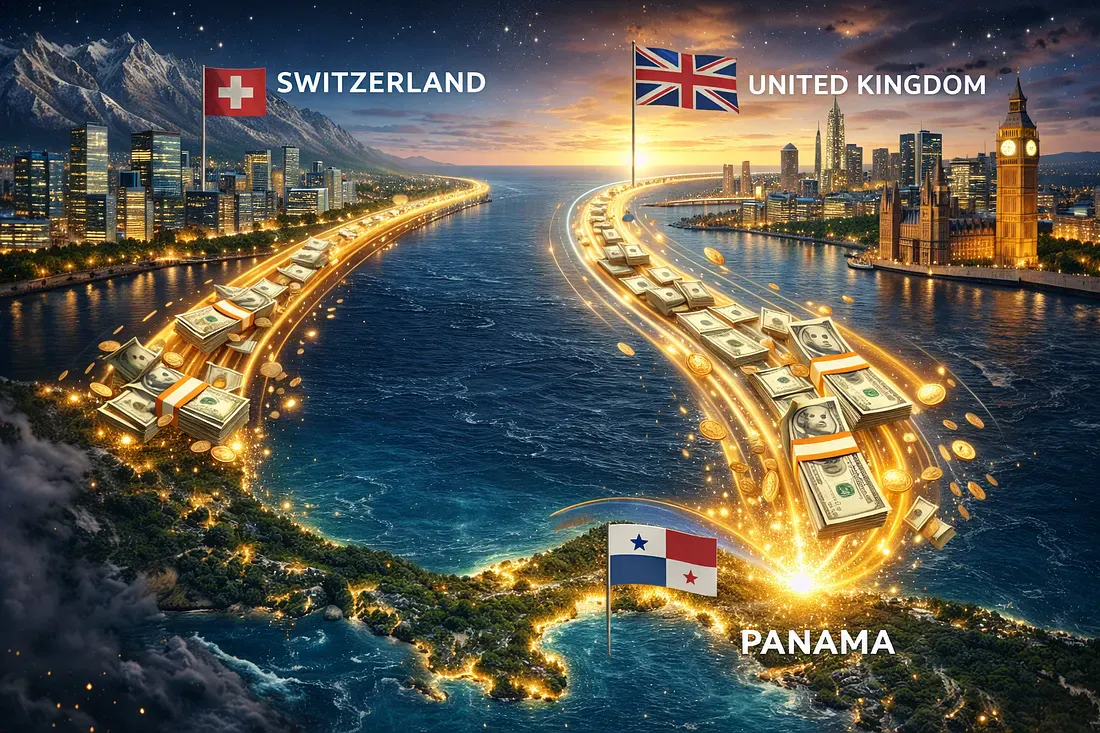
The consensus among the global elite has long been that safety resides in the shadows of the skyscrapers in London, New York, and Zurich.
However, a structural shift is underway, one where the perceived safety of these “megahubs” is being weighed against their increasing operational toxicity.
A new geography of wealth is emerging, defined by the rise of smaller, specialized financial centers in jurisdictions such as Belize and Panama.
The primary driver of this migration is not a search for higher returns, but a search for functional governance. Traditional financial centers have become victims of their own complexity.
The regulatory frameworks that were designed to ensure stability have, in many cases, evolved into bureaucratic barriers that hinder the agility of UHNWIs and internationally mobile entrepreneurs.
When a simple cross-border transfer or the opening of a family office entity requires months of due diligence and “compliance theater,” the opportunity cost of capital begins to outweigh the benefits of geographic prestige.
The Specialization Trap and Jurisdictional Depth
Smaller jurisdictions are positioning themselves as “service-oriented” alternatives, focusing on specific verticals like international private banking, asset protection, and fintech innovation.
By maintaining modern regulatory frameworks that align with international standards, such as anti-money laundering (AML) and tax transparency, these centers aim to offer the legitimacy of a major hub with the speed of a boutique firm.
However, a structural critic must ask: what happens when the “boutique” environment meets a macro-economic shock?
The appeal of specialization often masks a lack of jurisdictional depth.
While a bank in Belize may offer highly tailored multi-currency accounts and rapid digital onboarding, the underlying legal and institutional frameworks may lack the centuries of case law found in London.
For the UHNWI, this creates a “single point of failure” risk. If the local regulator or the political environment shifts, the “flexibility” that once seemed like an asset can quickly turn into a liability.
Technology as the Great Equalizer
The proliferation of digital banking platforms and secure online communication has decoupled financial services from physical proximity. In the previous era, proximity to a “Money Center Bank” was a prerequisite for global trade.
Today technology has leveled the playing field. Digital onboarding and global payment networks allow smaller jurisdictions to compete on a global scale without the overhead of physical infrastructure.
This technological bridge allows for jurisdictional arbitrage, where an investor can keep their operational capital in a high-efficiency hub while maintaining their long-term holdings in a traditional center.
This “multi-jurisdictional” approach is becoming the standard for sophisticated wealth management. It is no longer about replacing New York with Belize; it is about using Belize to bypass the frictions that New York refuses to fix.
The Governance Vacuum
The ultimate success of these emerging financial centers depends on their ability to maintain political stability and a strong rule of law.. Long-term wealth preservation is inextricably linked to the institutional framework of the host country.
For UHNWIs, the risk is no longer just market volatility, it is governance volatility.
While smaller hubs offer a compelling narrative of innovation and “lifestyle” advantages, the objective investor must remain vigilant.
The “new geography of wealth” is a rational response to the weaponization and over-regulation of traditional finance, but it requires a rigorous filtering process to ensure that efficiency does not come at the expense of terminal safety.